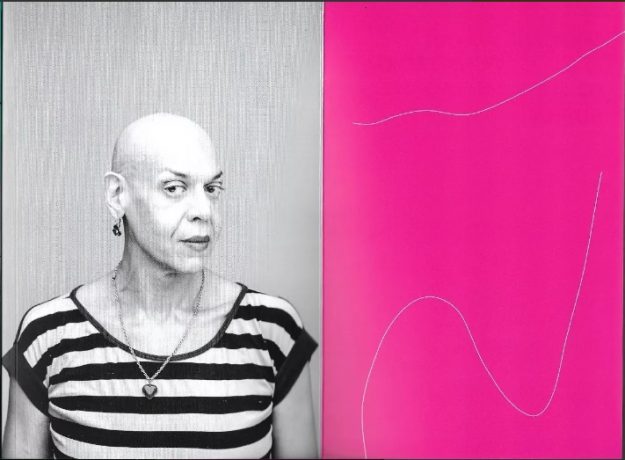
"I'm not a lesbian sometimes, I'm bisexual all the time."
September 23rd is International Bisexual Visibility Day. Journalist María Sanz shares her personal experience of the prejudices faced by people with bisexuality.
With Analía Higui de Jesús as the protagonist, there was football, music and resistance from the afternoon until midnight.
Cristina Espíndola, a trans woman, reported to the Justice that on Saturday, September 8, she was assaulted and beaten in a store in Escobar.
In July of this year, UNAIDS and the World Health Organization (WHO) confirmed what many of us already knew: an HIV+ person on antiretroviral treatment who maintains undetectable viral load does not transmit the virus.
I, who am not trans, never experienced a radical sense of alienation from my body, nor was I rejected by my family because of my sexual orientation. During my adolescence, I spent my mornings at school, my afternoons with friends, and my evenings at home. I started working at a young age, but that didn't prevent me from completing my higher education.
María Eugenia Ludueña, director of Presentes, spoke with Franco Torchia about the repercussions of the Gender Identity Law in Chile and the international outcry over its exclusion of minors under 14. She also discussed how the law does not provide access to rights beyond legal gender recognition. Regarding…
The La Plata Justice system has brought to trial the attempted murder of Otrans activist Claudia Vázquez Haro, and considered hatred of gender identity as an aggravating factor.
While the passage of a gender identity law in Chile is a historic event, this motion is not without its critics. It fails to address the regulation of the economic, social, and cultural rights of transgender people, nor does it tackle the structural discrimination that the transgender population has historically suffered.
The trans population of Paraguay suffers violence, discrimination and lack of access to work, health and education, says the report “Waiting for Death”.