Disability emergency: how to provide care without transportation or treatment
Defunding key sectors for the development of people with disabilities impacts their caregivers. These are their stories.
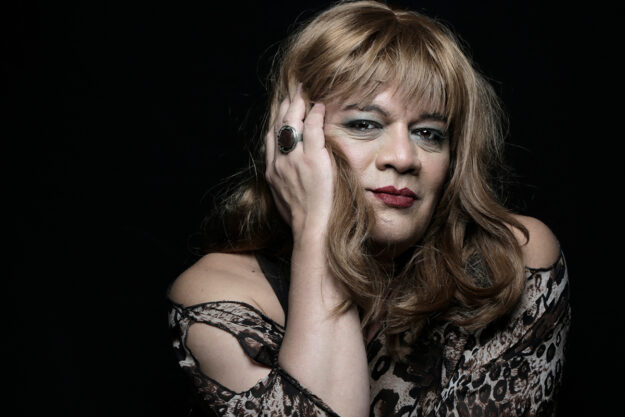
Trans people, transvestites and non-binary people organized a Trava Assembly in front of the National Congress to make their voices heard in response to the official call for a seminar on the Gender Identity Law in an anti-rights context.
In a trial marked by irregularities, the Federal Oral Court of Comodoro Rivadavia sentenced Cruz Ernesto Cárdenas to three years of suspended imprisonment and María Belén Salina to one and a half years for aggravated damage and usurpation.
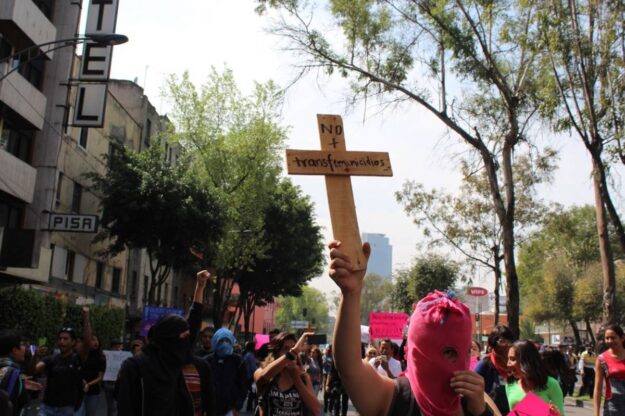
After a trans woman was prevented from using a women-only carriage, a protest is being called in front of the Mexico City Metro.
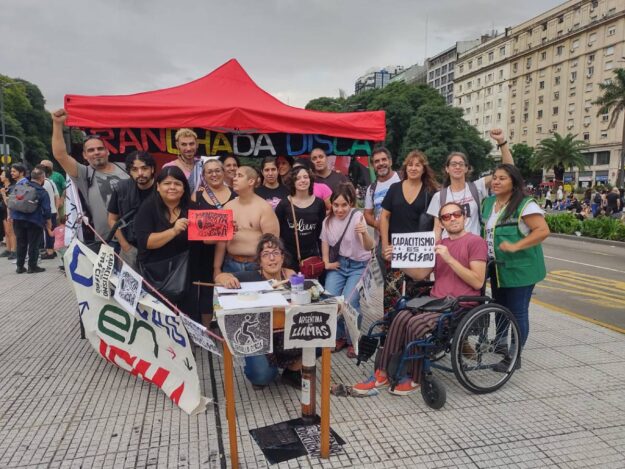
Children without transportation to school, centers closing, and people of all ages abandoning their treatments. "The situation is more critical than ever," warns disability activists, calling for support outside Congress where the Emergency Disability Law, vetoed by Milei, will be debated.
The Paraguayan justice system sentenced Sebastián Coronel, manager of the La Chispa Cultural Center, to nine months in prison, suspended. For the cultural sector, the sentence is an attempt to punish a space that makes those in power uncomfortable.
The artistic project of twins Luchi and Ferni de Gyldenfeldt, Queer Opera, has arrived on the Buenos Aires theater scene to expand the boundaries of a genre with a binary tradition. Self-management as an option so that no one is left out.
Have you heard of T4T bonds? We explore them through the stories of a group of trans and non-binary friends, and we tell them in this comic.
The La Chispa Cultural Center, a leading independent art venue in Asunción, faces a legal process that puts its existence and that of other self-managed cultural spaces at risk.
At 27 years old, with four plays currently running in Buenos Aires, Juanse Rausch, from Bahía Blanca, is also a CONICET researcher and a doctoral candidate in History. In this interview, he discusses his plays, which recover stories of dissent through archival research and by placing humor at their center.