
 Support us

“The outrage is in the streets”: protest for the trans women attacked in Palermo
A press conference was held outside the Buenos Aires City Legislature to condemn the attack against transgender sex workers in Palermo. They also reiterated the community's long-standing demands and called for participation in the 35th Pride March on Saturday.
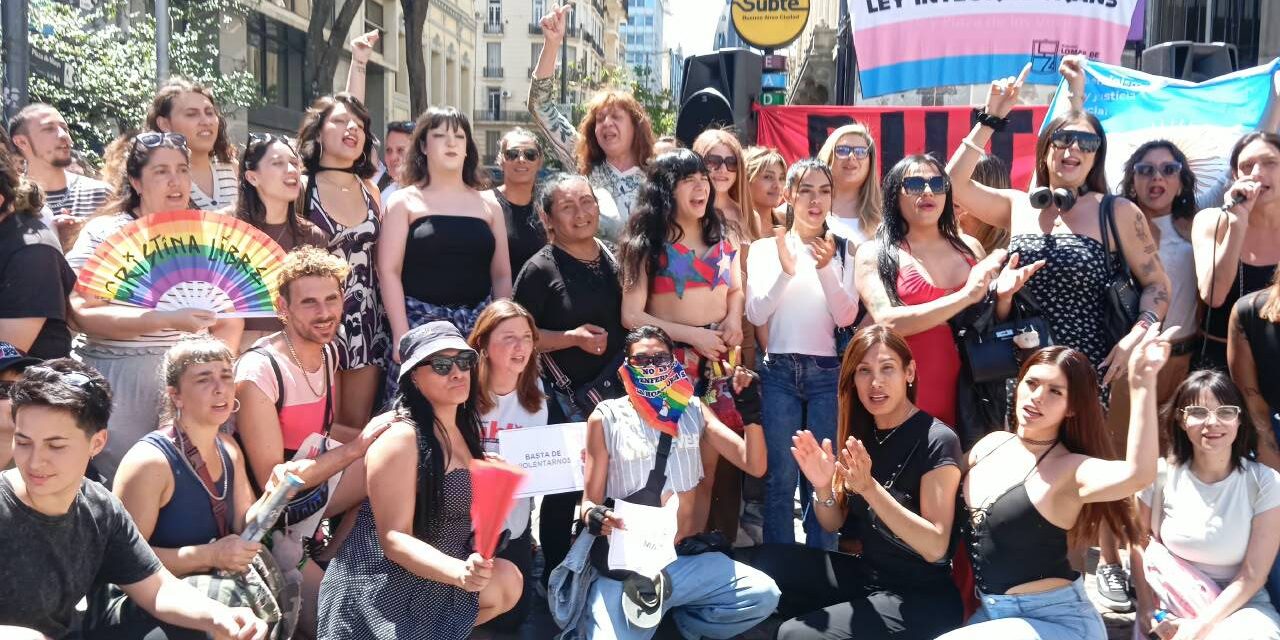


BUENOS AIRES, Argentina. Transgender and transvestite sex workers held a press conference this Thursday outside the Buenos Aires City Legislature to protest the attacks on their colleagues in the Palermo Woods. Addressing dozens of people who had gathered independently, as well as representatives from unions, organizations, and political parties, they demanded labor rights, public policies, and an end to the violence and persecution they are experiencing. They also announced: “See you Saturday at the Pride March!”
“I hope all of this serves a purpose. That there is a before and after, please! We are not going to wait for another colleague to die,” said Julieta Miranda, a trans sex worker who works near the area where the multiple assault occurred.
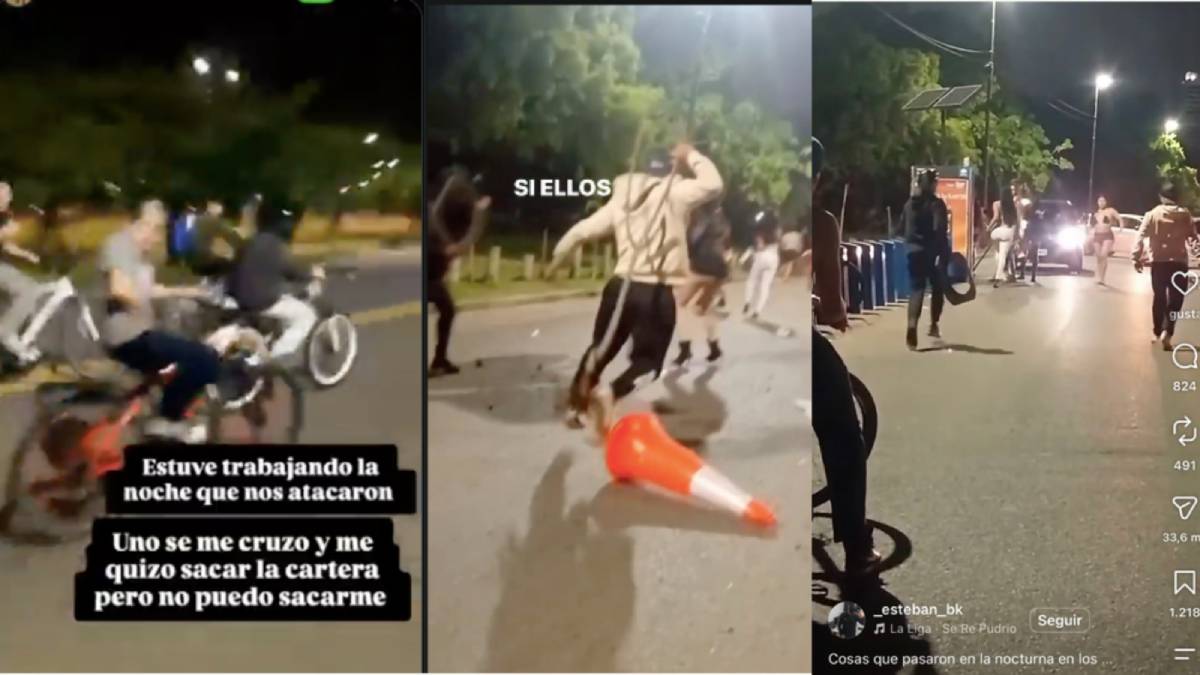
Last Sunday in the early hours of the morning, a group of approximately 150 cyclists participating in a nighttime bike ride attacked transgender and transvestite sex workers in the Palermo Woods area with sticks, branches, and other objects. The incident went viral on social media.
Two of the people attacked that night were present at the conference, one of them with a black eye. They later went to give statements to the prosecutor's office. The other women were unable to attend due to their injuries.
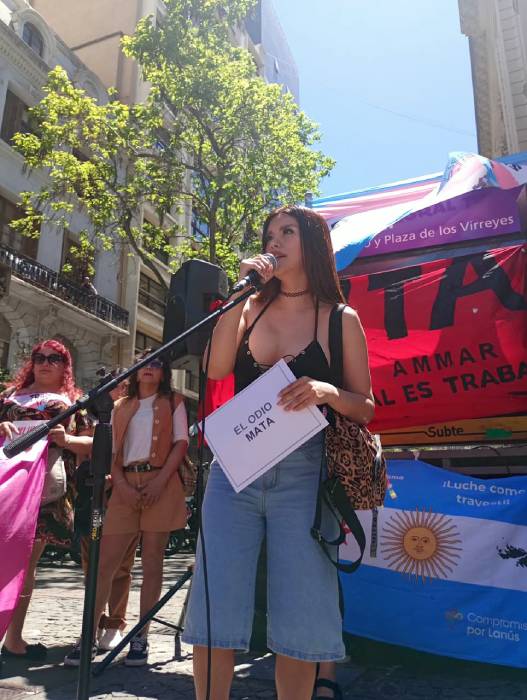
“We need guarantees and security”
The press conference began at noon at the entrance to the Legislature. Minutes earlier, they had been received by legislators to discuss what had happened. During that meeting, they presented a resolution condemning the attack they had suffered, which will be voted on today.
“What we want to say is that the repudiation is already social, the repudiation is in the street, on the networks, in the work area, it is here in the solidarity that we receive with union, feminist, social organizations,” said Georgina Orellano, sex worker and general secretary of AMMAR, the Sex Workers Union of Argentina.
And she emphasized: “We don’t want a simple statement saying ‘we condemn the violent acts suffered by our colleagues in the Palermo Woods.’ We need guarantees and security. That’s what we’ve come to ask of the legislators. We need labor rights: that when our colleagues return to work in the Woods, in Constitución, in Flores, in Floresta, in Once, they have the guarantee that they won’t continue to be attacked, neither by young men nor by the police, because the City Police also attack us.”
This is not the first time sex workers in that area have suffered attacks. For over a year, they have repeatedly reported instances of harassment and persecution by the Buenos Aires City Police. This was one of the demands of the Sex Workers' Strike held on Tuesday.
City of order and discrimination
“While this violence occurs throughout the country, we want to point out that in this City of Buenos Aires, where 20 police officers appear in five minutes to chase you or to seize 20 crates of strawberries, there wasn't a single police officer when our trans comrades were being chased. And that is a political decision by Jorge Macri,”stated Lucía Campora, a national deputy from the Union for the Fatherland party.
In this context, the attack against trans women occurred amidst a "Law and Order" campaign by the Buenos Aires City government, headed by Jorge Macri, which persecutes informal economy workers and harasses residents of working-class neighborhoods with large-scale operations. Meanwhile, Clara Muzzio, the deputy mayor, constantly attacks sexual diversity and promotes the false notion of "gender ideology" to undermine Comprehensive Sexuality Education.
Attacks in the Forest
Social aggression is also on the rise. “A few months ago, more than 100 kids on bikes rode by. There were about a thousand of them. There were three of us. First they just stared, then they started recording, mocking us. I'm no court jester. I'm outraged by what happened. I'm not afraid because I've died many times in this area. I've been standing up since 2019 when I was 22,” said Atenas, known as Wonder Woman.
Among those who spoke was a trans child. “This is a government that doesn’t want us here, that banned hormone therapy. We have a future that doesn’t offer us hope, it doesn’t give us any vision of what the world will be like, and it worries me. I would like things to get better, and that’s why I think we have to keep doing things. We have to march on Saturday and be there,”she said, microphone in hand, visibly moved.
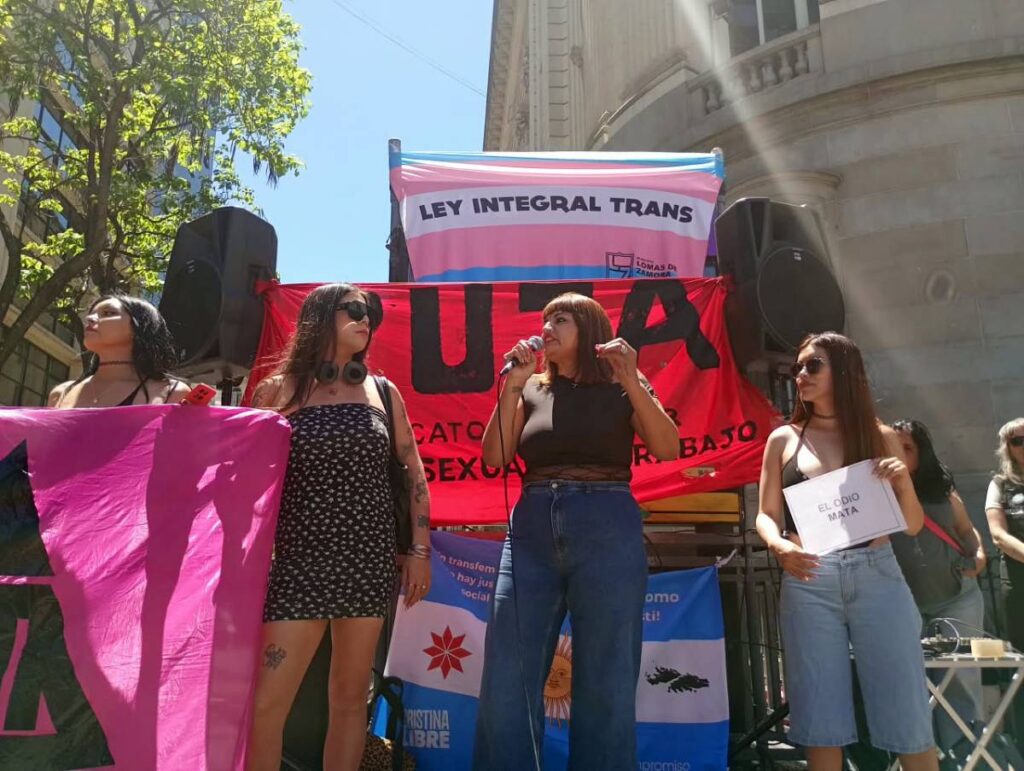
Noelia “La diosa” is an actress and activist from the city of Rosario who traveled to support her fellow trans women who had suffered violence. When she spoke, she decided to share a text she had written: “At what point did walking, working, laughing, or meeting with other trans women become grounds for persecution? We are not animals to be hunted. We are not bodies available for hatred, we are not a spectacle for the cruelty of those who believe they can decide who deserves to live in freedom. Behind every trans woman there is a story, a chosen family, a struggle, a friend waiting for us to return. A life that also has dreams.”
Political support
Also present at the conference were national deputies Juan Grabois (Union for the Homeland) and Esteban Paulón (United Provinces), in addition to Cámpora. In his remarks, Grabois recalled the words of Pope Francis: “He taught many Christians that any act of hatred, any discourse against human dignity, any attitude against a person belonging to a diverse group is a grave affront to the message of Jesus. And that we have an obligation to defend human dignity, especially in contexts of greatest injustice, exclusion, and violation of rights.”.
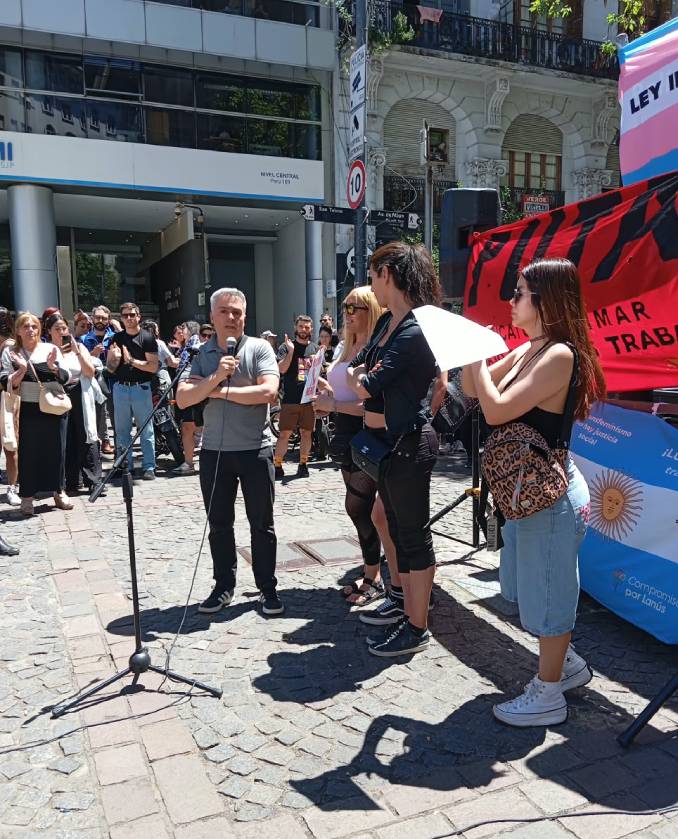
“I would like to apologize. I know that each of us in public service bears some responsibility for what we did and what we failed to do. And I pledge that Congress will pass the Comprehensive Trans Law sooner rather than later because there cannot be a country and a democracy without trans people included—in education, in universities, in housing, in food, in work,” said Congressman Paulón.
Also present were unions and professional associations, such as the Central de Trabajadores de la Argentina (CTA), the Unión de Trabajadores de la Educación (UTE), and the Sindicato de Prensa de Buenos Aires (SiPreBA). In addition, several other organizations and associations participated, including Mocha Celis, Yo no fui, the Federación Argentina LGBT , and the Parlamento de Mujeres, Géneros y Diversidades.
To the streets with pride
In their speeches, the trans and travesti women described the difficult socio-economic situation they are experiencing under Javier Milei's far-right government. Some who had found employment through the trans and travesti job quota were fired and returned to working on the streets. Most struggle to make ends meet, and many are homeless.
“We’re fed up with constantly thinking about how to survive. We want to live with dignity. Not just us, trans women, and sex workers. We want the working class to live with dignity again. Here, we also embrace the struggle and stand in solidarity with the pensioners who demand rights and guarantees every Wednesday; with our comrades with disabilities; with the state workers who have precarious wages and have to go on strike to improve their working conditions; with Nancy, the teacher who was murdered for demanding better working conditions,” Orellano emphasized. And the rest chanted, “Workers unity, and if you don’t like it, tough luck, tough luck.”
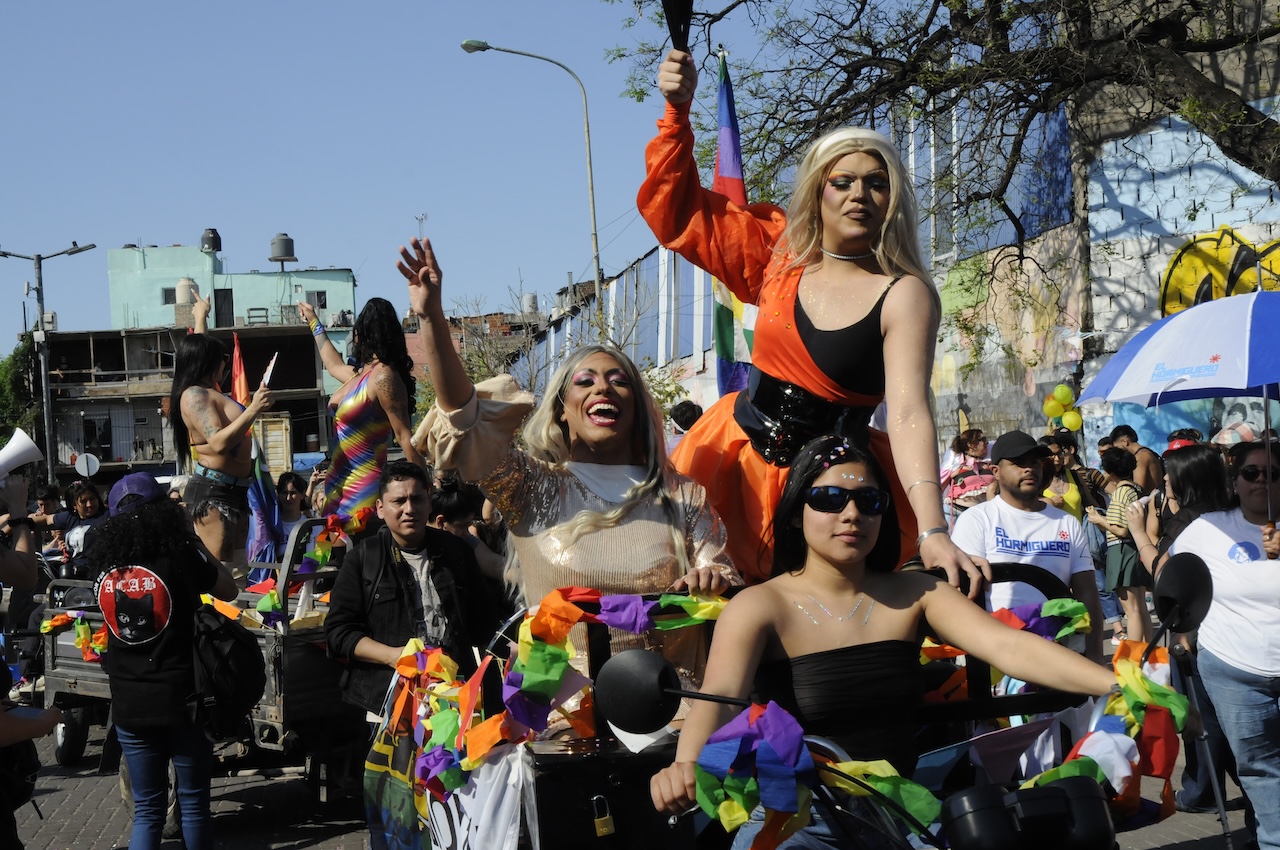
During the conference, a series of demands were made: reparations for older transvestites and transgender people, the approval of the Comprehensive Trans Law, the recognition of labor rights for sex workers, and the enforcement of the Transvestite and Transgender Employment Quota Law. For all these reasons, and for an end to violence, they called for a massive turnout in the city center next Saturday for the 35th Pride March.
We are present
We are committed to journalism that delves into the territories and conducts thorough investigations, combined with new technologies and narrative formats. We want the protagonists, their stories, and their struggles to be present.
SUPPORT US

FOLLOW US
Related notes
We are present
This and other stories are not usually on the media agenda. Together we can bring them to light.