
 Support us

New Disability Law: What changes and what guarantees are missing?
What changes for people with disabilities under the law being debated in Congress? Progress and doubts. "Without a budget, there are no rights.".
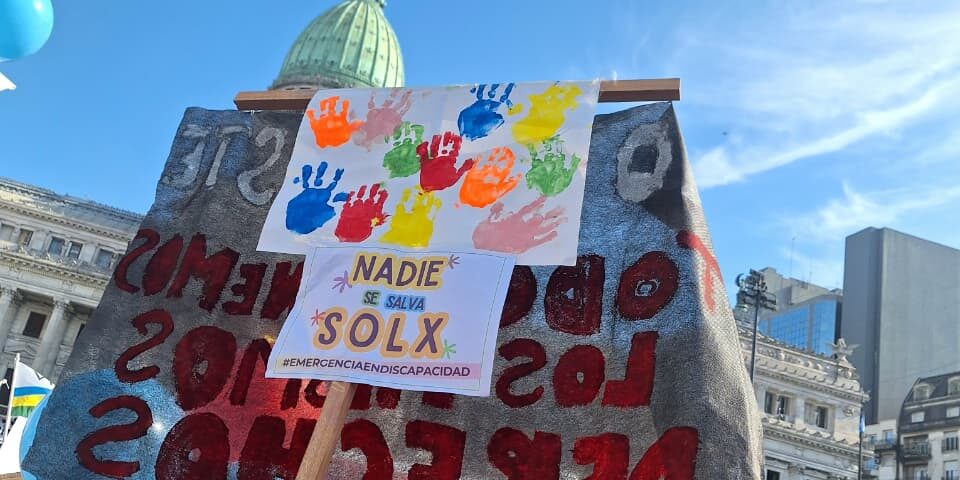


BUENOS AIRES, Argentina. The Senate approved the bill for the Strengthening, Sustainability, and Permanent Efficiency of the Disability System, which had already received preliminary approval from the Chamber of Deputies. A new Disability Law has now been enacted. What changes and what guarantees are required?
The project originated as an initiative of the national government and incorporated various demands from the disability community. In this way, all points of the Emergency Disability Law (Law 27.793), in effect until the end of this year, were included.
The new law is presented as a step forward, because it seeks to move beyond the temporary nature of the Emergency and establish a permanent framework for public policies aimed at people with disabilities.
He arrives at the venue amid a severe crisis in the sector, marked by delays in payments to providers, the devaluation of the nomenclature, and difficulties in accessing and maintaining pensions.
Although various sectors acknowledge some progress in the text, doubts persist about its effective implementation and, especially, about the inclusion of the funds in the 2027 budget.
What does the new Disability Law propose?
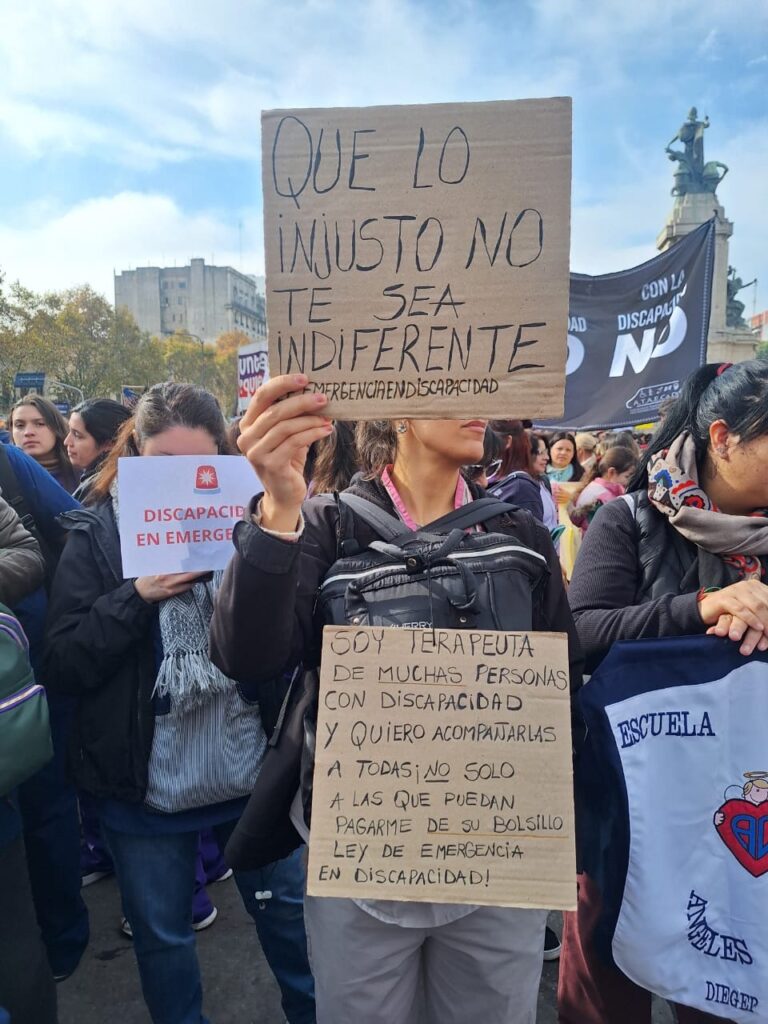
Its main provisions include:
- pensions : establishes a benefit equivalent to 70% of the minimum retirement pension.
- Compatibility with employment: allows pension holders to work formally or register in the monotributo, provided that their income does not exceed two minimum, vital and mobile wages.
- benefits : maintains the continuity of the benefits system of Law 24.901 and the Nomenclature of Basic Benefits.
- Tariff update : incorporates mechanisms for the periodic updating of the values of the services.
- coverage : includes coverage from Incluir Salud for holders of disability pensions.
- Financing: establishes budgetary provisions and coordination mechanisms between the Nation and the provinces.
- Audits: incorporates controls over pensions and resources allocated to the system.
- Debt with lenders: establishes a mechanism to regularize outstanding compensation.
The pension system: progress and doubts
One of the most significant changes is the introduction of the possibility of combining receiving a non-contributory disability pension with formal employment. This measure aims to prevent individuals from having to give up their pension to enter the workforce, provided their income does not exceed the established limit.
However, questions remain about the mechanisms for applying for pensions, the certification of disability, and the effective implementation of the system.
Verónica González Bonet, journalist and member of the Network for the Rights of People with Disabilities (REDI), explained that the organization worked together with deputies to correct aspects of the project that did not clearly guarantee access to health coverage for all people receiving non-contributory pensions.
“We were very concerned that it wasn't clear whether health coverage would apply to both those receiving disability social protection pensions and those receiving non-contributory pensions. We believe that as it is now worded, this is clear. It is also clear that the Nomenclature will not be annulled.”.
However, he points out that, despite the fact that the Emergency Law is still in force, pensions are not being granted.
González Bonet expressed concern about the situation of those working in sheltered workshops: although the Incentive Allowance was updated, the last two minimum wage increases were not incorporated. Nor was the compensation intended to offset losses due to inflation in 2024 and 2025 granted.
Uriel Weicman, an activist for the rights of people with disabilities and a member of the board of directors of the Argentine Federation of Institutions for the Blind and Visually Impaired (FAICA), highlighted the importance of establishing the compatibility between pension and employment in a national law.
He recalled that this possibility had already been incorporated through a decree in 2023, but it was never implemented and was subsequently repealed.
Regarding audits, Weicman called for accessible mechanisms to certify disability and more effective participation of organizations in the Federal Council for Disability (COFEDIS) and in the monitoring bodies of the Convention on the Rights of Persons with Disabilities.
Critical voices: "The Emergency Law was not applied"

Photos: Marcela Osa/Presentes Agency archive
Some sectors of the disability community question both the content of the initiative and the lack of participation of the community in its development.
Laura Alcaide, a member of Orgullo Disca and the Asamblea Discas en Lucha, expressed her distrust regarding the proposal and the Government's willingness to guarantee its fulfillment.
“Our position is that we don’t trust anything the Government wants to pass in the name of our well-being, because the Emergency Law, which was a step up from this law, was already extremely poor. Even so, they never implemented it.”.
According to the activist from Orgullo Disca (Disability Pride), the initiative primarily responds to the demands of companies and service providers, but relegates the living conditions of people with disabilities themselves to the background. “There’s more talk about our benefits, our treatments, our support systems, our transportation. But there’s no talk about the fact that our pensions aren’t enough for basic necessities, that sheltered employment is worse than a system of slavery.”
Alcaide also questioned why most organizations of people with disabilities were not invited to participate in drafting the project.
The budget: the key to ensuring implementation
The project establishes a permanent framework and includes budgetary mechanisms, but the sector warns that without sufficient and effectively executed funds, the provisions may be reduced to mere declarations.
Daniel Arroyo, former national deputy and author of the Disability Emergency Law, considered the Senate's approval a step forward. However, he warned that three conditions must still be met for the initiative to have concrete effects.
“The first step is for the Senate to vote on it; that will happen. The second is for the articles that cut funding to be removed from the current budget; I understand that this will be done. The third and most difficult step is for it to be allocated a budget.”.
Arroyo focused on the treatment of the 2027 Budget, the discussion of which would be left pending for the extraordinary sessions in December.
According to the former congressman, the difference between enacting a law and ensuring its enforcement lies precisely in the allocated resources. “A law without a budget is just a collection of ideas: it needs a budget so that pensions can be paid, so that the salary schedule can be implemented, and so that there can be compensation for everything that was lost for so long.”
Include Health: without a budget there are no rights
The project includes coverage under the Incluir Salud program for people receiving disability pensions. However, the group warns that simply guaranteeing it formally is not enough: the program needs to function effectively and its administrative and funding problems need to be resolved.
In that regard, Uriel Weicman stated that “we need a coherent Incluir Salud program, because it has always been very bureaucratic. People with private health insurance or social security coverage have a greater chance of accessing benefits. These are generally middle-class or formally employed people. For those of us who are self-employed, it's more difficult to get benefits approved. So we really need to strengthen Incluir Salud and also PAMI, which is underfunded.”.
For Weicman, the inclusion of these funds in the budget, which will be discussed later, will be crucial in determining whether the announced strengthening measures translate into concrete improvements. “We always say that without a budget, there are no rights.”
We are present
We are committed to journalism that delves into the territories and conducts thorough investigations, combined with new technologies and narrative formats. We want the protagonists, their stories, and their struggles to be present.
SUPPORT US

FOLLOW US
Related notes
We are present
This and other stories are not usually on the media agenda. Together we can bring them to light.