
 Support us

Why the Patent Treaty threatens access to healthcare
The Argentine government hopes to approve its accession to the patent treaty. This represents a setback for the public healthcare system and the domestic pharmaceutical industry.
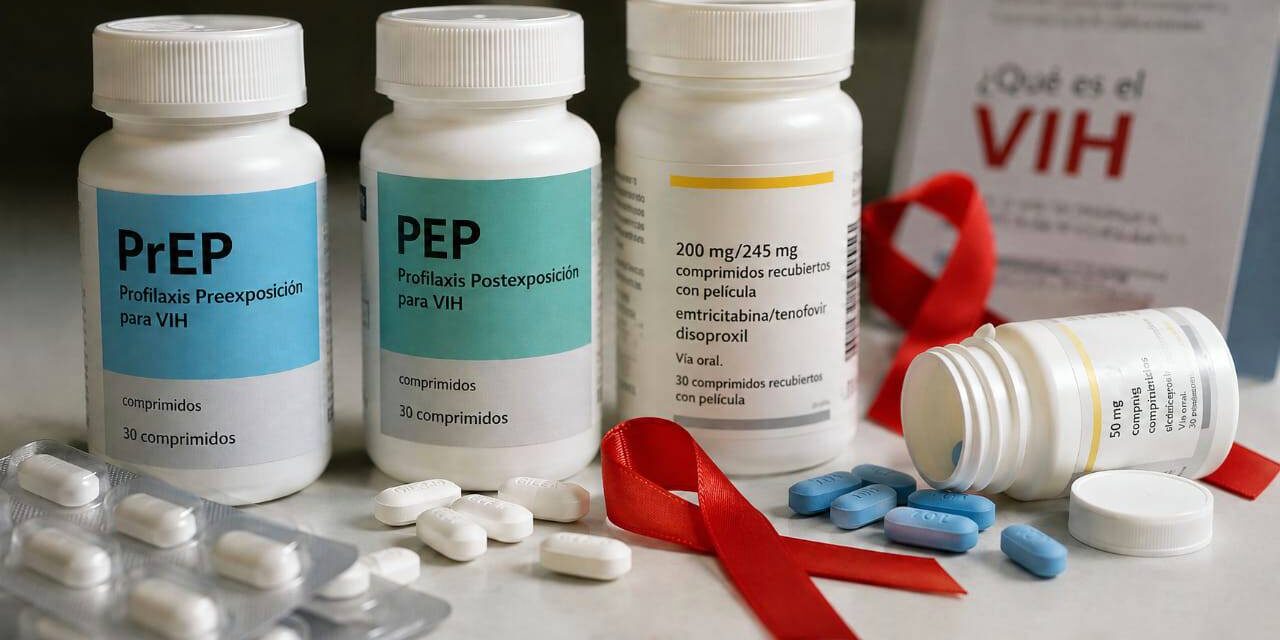


BUENOS AIRES, Argentina. Argentina's accession to the Patent Cooperation Treaty is causing concern among activists and organizations. They denounce the danger this measure represents for national industry, especially the pharmaceutical sector, and for access to medicines for the entire population. The national government insists on joining this measure, which is detrimental to Argentinians. In the National Congress, Senator Patricia Bullrich, a member of the ruling party, led the defense of the accession.
Behind this approval lies the debate over trade commitments with the United States and the role of multinational chambers of commerce. Organizations such as the Fundación Grupo Efecto Positivo (GEP) and the Argentine Chamber of Pharmaceutical Laboratories (CILFA). They all warn of the weakening of the industry and the barriers to competition and the production of affordable generic drugs.
“Joining the PCT will mean the ratification of the weakening of patentability standards that we have been able to maintain for more than 14 years to protect our science and technology system, the national industry and ultimately, most importantly, to guarantee access to medicines and vaccines for the entire population,” explains the Positive Effect Group Foundation (GEP) in a statement.
The Argentine government's account
On October 15, the Senate committees issued their opinion, allowing the bill to move to the floor for a vote. It reached this stage after its approval in the Chamber of Deputies on August 26, with a reservation regarding Chapter II.
While joining the PCT does not guarantee the approval of patent applications filed by international companies, it would allow for the processing of international applications through the PCT. However, the granting of protection in Argentina would still depend on the review by the National Institute of Industrial Property (INPI) and on national legislation.
“What this Treaty does is establish an international cooperation procedure to facilitate the filing, search and processing of patent applications,” Senator Bullrich said during the working session in the Senate.
Why is the United States so insistent on this accession?
In February 2026, the Reciprocal Trade and Investment Agreement (ARTI) was signed. It explicitly establishes the commitment to eliminate restrictive patentability criteria in order to align the local regulatory framework with international protection standards. To this end, the patentability guidelines were repealed through Joint Resolution 1/2026, signed by the Ministries of Health and Economy, and the National Institute of Industrial Property (INPI).
These guidelines were intended to guide the technical examination of each patent application in order to prevent "evergreening," that is, corporations patenting an existing drug as if it were new.
“These are patents that protect minor innovations related to already known medicines, but which do not provide therapeutic effects or any other value, except to preserve monopolies and hinder the launch of competing medicines for years,” the Argentine Chamber of Pharmaceutical Laboratories (CILFA) elaborates on evergreening.
Who will be able to decide?
“For more than a decade, the Argentine State defended these guidelines, as a matter of national importance, against legal challenges from the Argentine Chamber of Medicinal Specialties (CAEME), which represents large multinational pharmaceutical companies intent on maximizing their profits,” explains GEP. Now, with the signing of the ARTI and the pursuit of accession to the PCT, the organization argues that Argentina is ceding these decisions to the United States in favor of these corporations.
Without the patentability guidelines and with the PCT agreement, the decision to accept or reject patent applications will remain with the INPI. That is, in the hands of the same agency that eliminated the guidelines after the agreement with the United States.
“The multinational pharmaceutical industry uses this system, based on a profit-driven logic. It introduces minor modifications to existing medications and seeks to extend commercial exclusivity for another 20 years,” explained lawyer Lorena Di Giano, a member of the Argentine Network of Health Researchers and the Latin American Network for Access to Medicines, and part of GEP, to the committee
Chapter II—which was rejected and whose exclusion prompted the bill's return to the Senate—would have allowed an international office to issue a non-binding opinion on whether an invention met the patentability requirements. This would have provided an additional assessment among the factors that the INPI (National Institute of Industrial Property) must consider when making its decision on each application.
Official sources, including the WIPO, explain that the international evaluation of the PCT is not binding, and that decisions will remain within each country's jurisdiction. Therefore, it is necessary to examine the full range of stakeholders.
Who is driving the membership?
Supporters include U.S. Ambassador Peter Lamelas, who, during the AmCham Health Forum , stated that this membership could help attract $8 billion in investments over the next six years.
Alejandro Cacace—former congressman for the UCR and currently part of the Ministry of Deregulation—explained that approving this accession would benefit us. He did so in a thread on social media, stating that “According to WIPO, in 2022 Argentinians applied for 324 patents abroad, and 153, almost half, were filed through the PCT, even though we are not a party to it.” Regarding this, the GEP Foundation explains in an August 2026 report that the World Intellectual Property Organization (WIPO, based in Switzerland) stated that China requested review of 73,718 patents and the United States of 52,617. In other words, local use is minimal in comparison.
Who rejects it?
In addition to GEP, CILFA is among those who reject the PCT. In one of its latest available reports, the chamber states that domestic production of biosimilar and complex medicines has generated an estimated cumulative savings of USD 10.287 billion for the Argentine health system from the launch of the analyzed medicines until August 2025.
“One of the main problems facing the Argentine pharmaceutical industry in launching generic or biosimilar drugs is the so-called evergreening patent applications,” explained CILFA in a statement . They denounce that both the elimination of patentability guidelines and the acceptance of PCT patent claims would seriously compromise national production and the creation of affordable generics.
For many years, people living with HIV have been demanding an end to patenting. On the contrary, moving towards this measure represents a setback of years for people with HIV within the healthcare system.
We are present
We are committed to journalism that delves into the territories and conducts thorough investigations, combined with new technologies and narrative formats. We want the protagonists, their stories, and their struggles to be present.
SUPPORT US

FOLLOW US
Related notes

We are present
This and other stories are not usually on the media agenda. Together we can bring them to light.