
 Support us

Repercussions of Pope Leo XIV's visit to Argentina: between hope and debts
What legacy does Pope Leo XIV's visit to Argentina leave for the future? His messages and the absence of sexual diversity on the visit's agenda. Leonardo Grosso, Alba Rueda, Norma Morales, and Ezequiel Aldorino share their opinions.
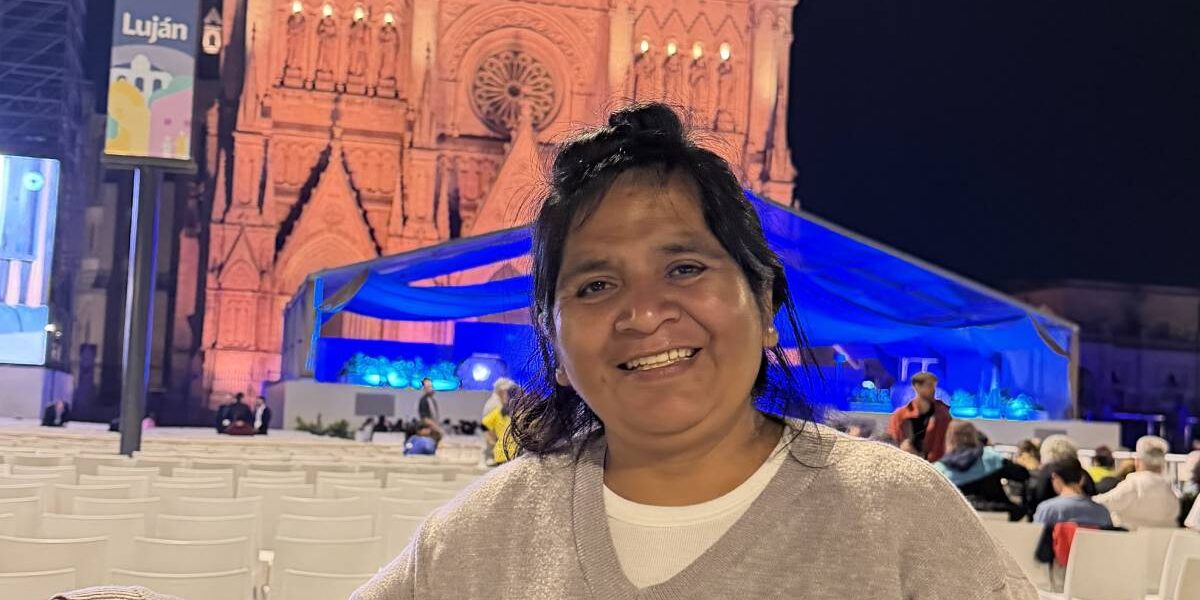

BUENOS AIRES, Argentina. Pope Leo XIV's visit to Argentina from November 8 to 11 sparked debates and raised questions in various fields, including for social organizations and LGBTQ+ activists. The Catholic Church leader's visit, in a political context marked by cruelty and hatred, dominated the media and political agenda during those days. At Presentes, we were struck by the fact that, amidst the outpouring of support for various marginalized groups—people with disabilities, prisoners, among others—there was no gesture toward LGBTQ+ individuals. Pope Francis had previously spoken inclusively and explicitly about diverse sexual orientations and gender identities.
From Presentes we spoke with Leo Grosso, political and social activist, and former deputy; with the transvestite/trans activist and writer Alba Rueda, with Norma Morales, community worker and feminist activist and with .
They shared their reflections, analysis, and feelings with us.
Leonardo Grosso: “The Pope’s visit sets a high bar for sectors of Argentine politics”
Leonardo Grosso is a political scientist, a resident of San Martín, and a popular and social activist.
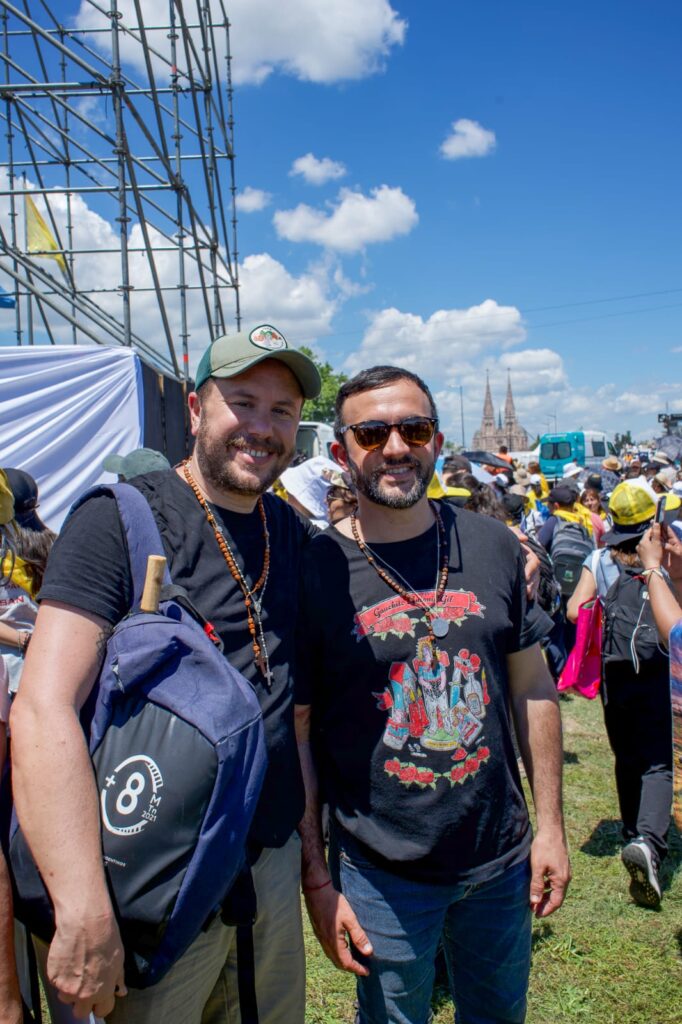
-I experienced Pope Leo's visit with great joy because of the level of popular fervor it generated, the level of hope awakened by his message of charity, fraternity, and above all, humanity, of helping one's neighbor, of embracing the vulnerable. I think thatsuch a popular, massive papal visit, with such a human message in such an inhumane time for humanity, gives me joy and hope. I was surprised by the level of unity or ideological and pastoral cohesion between Leo and Pope Francis.
While it was suggested that León represented a continuation of Pope Francis's approach, which aimed to open the Church to "everyone," I was surprised by the level of fidelity to those principles. Visiting prisoners and embracing them, going to the Cottolengo, speaking about poverty, speaking about work, speaking about humanity at the heart of the economy or the planning of any society— I was struck by the ideological and philosophical consistency between León and Pope Francis, which also brings me great joy.
-What do you think his visit leaves behind?
–This massive popular mobilization, fueled by faith, demonstrates that our people are a people who believe, who have faith, who have hope, who have expectations for a different future. They are proud of who they are. It sets a very high bar for the political sectors in Argentina. No one from any political sector is addressing the same majorities that Pope Leo XIII addressed. It sets a benchmark for us to consider what we are going to do in this country, and it doesn't just set a high bar in terms of mobilization and support. No one today expresses this vision of a more humane humanity with the clarity that Leo did.
-During the visit there was no explicit mention of sexual diversity.
While Pope Francis did or has done this throughout his papacy, I'm one of those who believe you can't expect the impossible. It seems to me that rather than focusing on what the Church lacked or what it doesn't do, I try to think about what united us and the strategic approach to a more humane humanity. Thisconfrontation with tech magnates, this idea of building a society that puts work and human dignity at its center, the economy of work and the human dignity that it entails, is a nod to all of us. We are part of that vast majority who live by their work and who suffer the discrimination and exclusion that global capitalism imposes on us. The more unjust society is, the more discrimination and exclusion of our group deepens. When society is more just, inclusion deepens. We only have to look at our history and the struggle for our rights to understand that when the people as a whole won rights, we were able to secure the rights of our community, and vice versa. In that sense, there is common ground. "No individual can thrive in a community that does not thrive," Perón said. There is no possibility that our community can achieve rights or advance toward the equality we demand and fight for if inequality and exclusion deepen in society.
Alba Rueda: “It is unacceptable that he has not had a word of support for transvestites and trans people.”
Alba Rueda is a trans activist. She was the Special Representative on Sexual Orientation and Gender Identity for the Ministry of Foreign Affairs, International Trade and Worship, and the first Undersecretary of Diversity Policies in the country. She has just published the novel *Las lágrimas saben por qué* (Tears Know Why), co-authored with Fabrizio Petri.
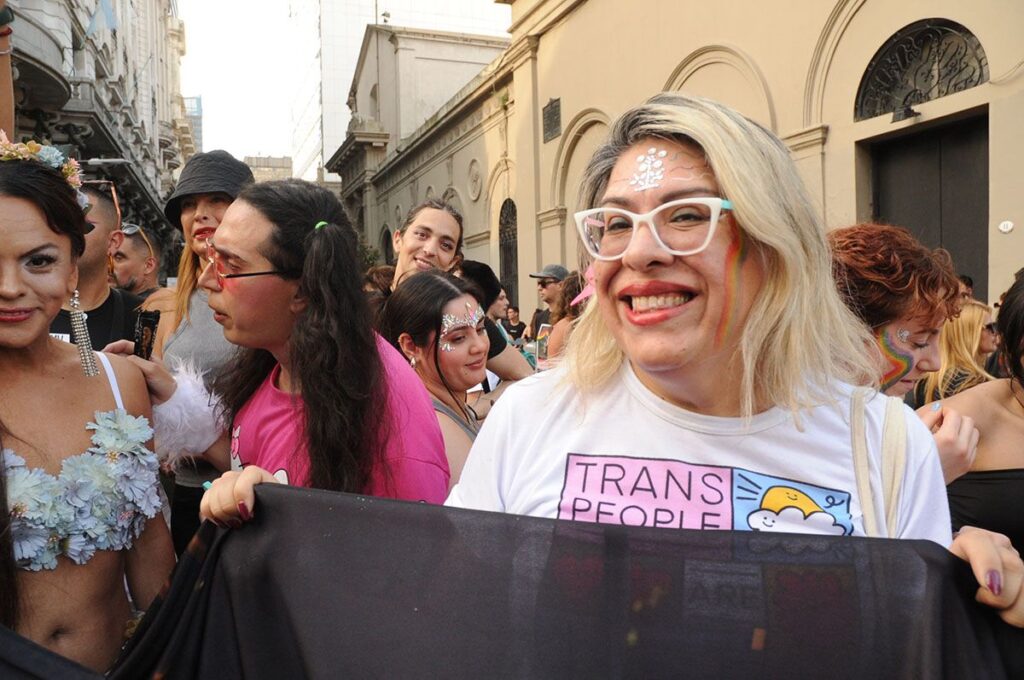
–Regarding the Pope's visit, I value his role as head of state and the diplomatic work he did, which allowed him to speak about his commitments. That was very assertive; the social commitments he proclaimed, both at the Cottolengo Don Orione and at the Caseros prison, are important messages. I value his role as head of state at the former CCK, where he strongly emphasized a political stance of respect and the importance of careful discourse.
The most controversial aspects of the Pope's visit, in my opinion, are two points where he bears a tremendous responsibility. The first is the doctrine of the Catholic Church. He explicitly stated that he understands sexual diversity, gay people, and transgender people, but that the Church has its own doctrine. This is absolutely questionable, because what he's saying is that if Church doctrine creates inequality, he upholds it within his institutional structure. For a leader who seeks peace or who aims to deliver a message of unity and acceptance for all, this is unacceptable. It's unacceptable that there isn't a review of the structure of papal doctrine regarding LGBT people. It's unacceptable that these people are discriminated against based on their sexual orientation or gender identity.
And in that same vein, while I appreciate the diplomacy with which he handled things, I disagree with the fact that in that social agenda of visiting Don Orione, the Caseros prison, and people who represent exclusion and inequality, he didn't include a single gesture or word of support for transvestites and trans people who live in a country plagued by social violence and attacks that are sadly on the rise, and who live in this context. So, choosing who to engage with and who not to engage with seems brutal to me. That's how I experienced it. And what surprised me is this point.
-What does your visit leave behind?
We'll see what impact his presence had on the social practices of all the thousands upon thousands of people who came to see him and greet him. How committed are they to saying no to violence and to once again talking about an Argentina that respects the rights and lives of all women and all people? And I think this is something we still need to see. He leaves an ambiguous message, but with the expectation that his community, the thousands upon thousands of people who participated, will make a difference.
Norma Morales: “The Pope leaves us with an enormous responsibility”
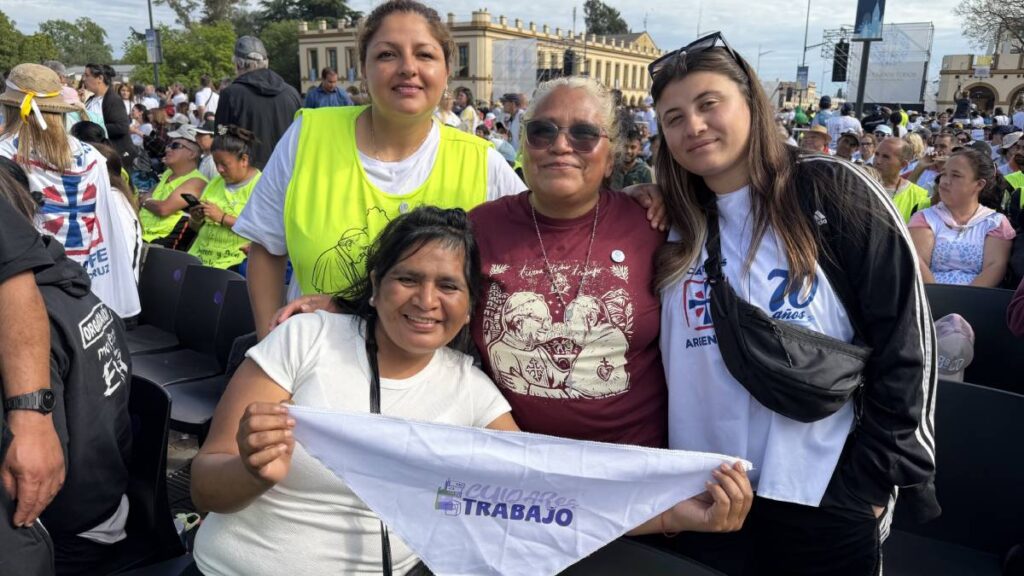
Norma Morales is a national leader of Barrios de Pie and deputy secretary of UTEP. During Pope Leo XIV's visit to Argentina, she attended the meeting with representatives of the labor movement at the Catholic University of Argentina (UCA) and went to the mass held in Luján.
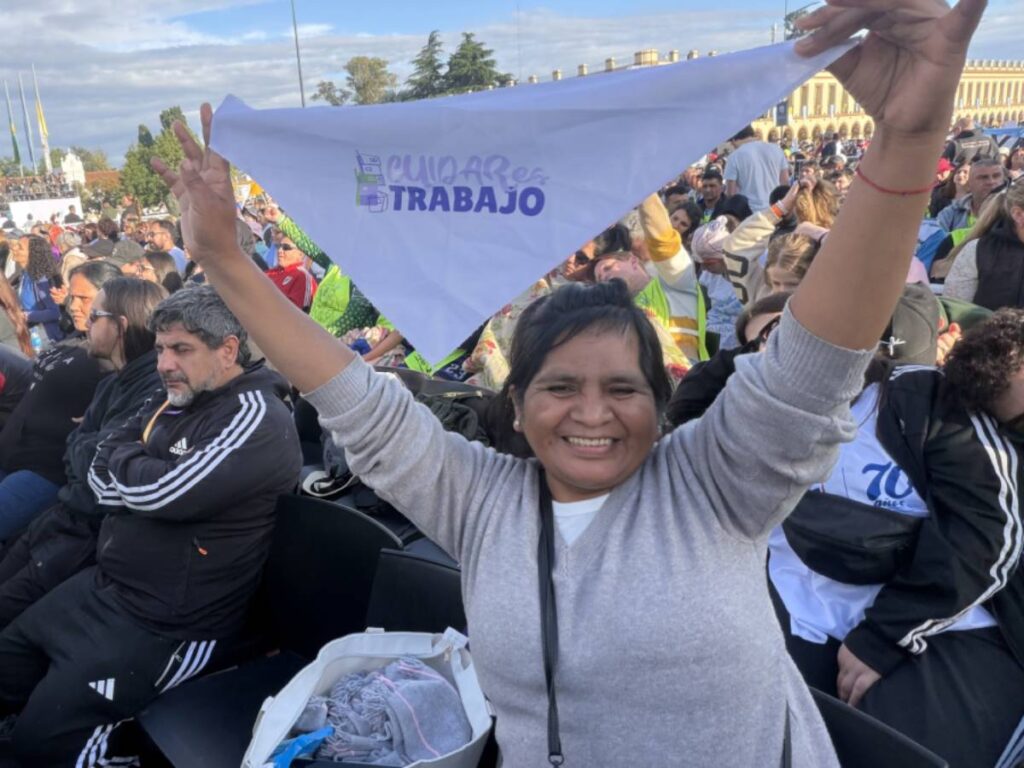
For me, Pope Leo XIV's visit was a moment of profound emotion, hope, and above all, recognition of our collective struggles. Listening to the Pope during his meeting with the world of work at the Catholic University of Argentina (UCA), acknowledging popular movements, and revisiting our history of struggle for land, housing, and work was deeply meaningful. For many years, we have had to fight for the recognition that the informal economy is work, that waste pickers, textile workers, street vendors, cooperatives, and so many other sectors are part of the world of work and of building our country.
-You represented community workers, what was that moment like?
It was one of the most moving moments of my life, but I also felt an enormous responsibility because I was representing thousands of women who build solidarity, organization, and hope every day in the working-class neighborhoods of Argentina. During the three days I spent with Pope Leo XIV, I couldn't stop crying. I arrived with a lot of pent-up anguish over the many needs of my community; I couldn't do everything I wanted to help. And that hurts deeply because when you come from the poor neighborhoods and know firsthand the suffering of your people, you carry that pain with you. And then Leo XIV arrived, and with his words, his gestures, his actions, even his own emotions, he helped me to lighten that heavy burden. When he acknowledged in his speech the quiet work of those of us who dedicate our time to preparing mate cocido for the children in our neighborhood, it was very meaningful. For some, it might seem like an insignificant gesture, but for us, it means so much. Behind that mate cocido are women, life stories, stories of sacrifice, love, and an enormous commitment to our communities.
-As a feminist, what assessment can be made of León's time in our country?
As a feminist, this leaves us with a profound reflection on the responsibility we have as those who build grassroots organizations. Transformations don't happen solely through rhetoric or political backroom deals; they are built from the concrete reality of our people, by listening to their needs, their concerns, and their hopes. And I believe that today we need greater political maturity, a greater capacity for dialogue, and, above all, a closer connection with our people. We cannot spend our lives arguing amongst ourselves while our society needs concrete answers. This doesn't mean abandoning our convictions or our struggles for the rights of women and diverse groups—quite the opposite. It means finding new strategies, building consensus, and recognizing that even with our differences, we can find common ground in the defense of human dignity. We need to recover the ability to listen to each other, to come together, to build collective solutions, even among those of us who have differences. It means finding new strategies, building consensus, and recognizing that even with our differences, we can find common ground in the defense of human dignity. One of the great challenges of grassroots feminism in these times is to reconnect with our communities.
-Which of the messages left by the Pope are the most powerful in this context?
Among the most powerful messages left to us by Pope Leo XVI was his call to defend human dignity and recognize the value of all work, especially that which has been invisible for so long. Another fundamental message is his call to build bridges at such a difficult time for our country. He leaves us with an enormous responsibility. It is not enough to be moved by a speech; we must ask ourselves what we are doing—from the State, from unions, from universities, from social organizations, and from all of society—to ensure that this dignity becomes a right and concrete opportunities. Because hope cannot be just a pretty word; hope must be transformed into organization, into work, into rights, and into social justice. It was not just a pastoral visit; it was an invitation to look at our reality, to acknowledge our wounds, and above all, to ask ourselves what we are willing to do to build a different future. We need more humility to listen, more maturity to recognize our differences, and more generosity to build agreements. Our people have history, they have memory, they have organization, and an enormous capacity to rise again.
Ezequiel Aldorino: “I have hope that the Church can build bridges with diversity from within.”
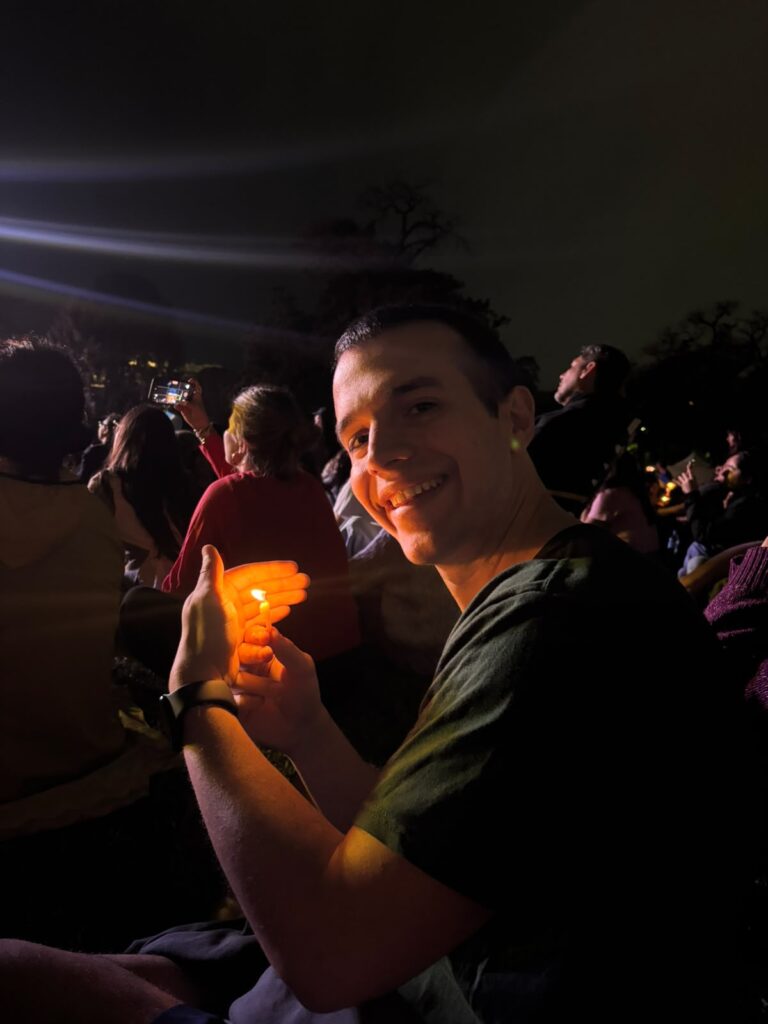
Ezequiel Aldorino, 29, is a public accountant and a member of the board of directors of Comunidad Centu, an organization that seeks to build bridges between sexual and spiritual diversity.
– How did you experience the Pope's visit?
It was a vital visit. I believe the country needed a positive and spiritual leader. Someone who could unite not only the Catholic community but also move us as a nation. The vigil was a very special and hopeful experience for me. We shared it with people who, despite certain differences, are all moved by the same God of love. It was a moment to see the world through the eyes of Jesus. It inspired me to want to make this world a place where there are more bridges connecting us to one another and to our shared humanity.
I thought I might feel a bit distant from the Pope because Francis had set the bar so high. But I think that, through his humility and simplicity, he felt closer, like God himself. The whole feeling and the collective energy pushed you to experience it that way. Another thing I liked was that his visit had a huge impact on so many media outlets and social networks, generating conversations, visibility, and questions. It all resonated deeply with everyone, and I feel that several seeds were planted. Now we just have to wait and see what fruit they bear.
The Pope spoke of "everyone, everyone, everyone." But there were no explicit references to sexual diversity.
That connection, personally, still hurts me. Of course , I would love to see more concrete gestures from the Church toward the LGBT+ community, but I'm aware that there's a long history behind it, a long road ahead. Being Catholic means it's universal, and that means many different perspectives coexist, and the processes end up being slower than I would like. But I have hope because there are people within the Church who are trying to heal this connection and build bridges from within.
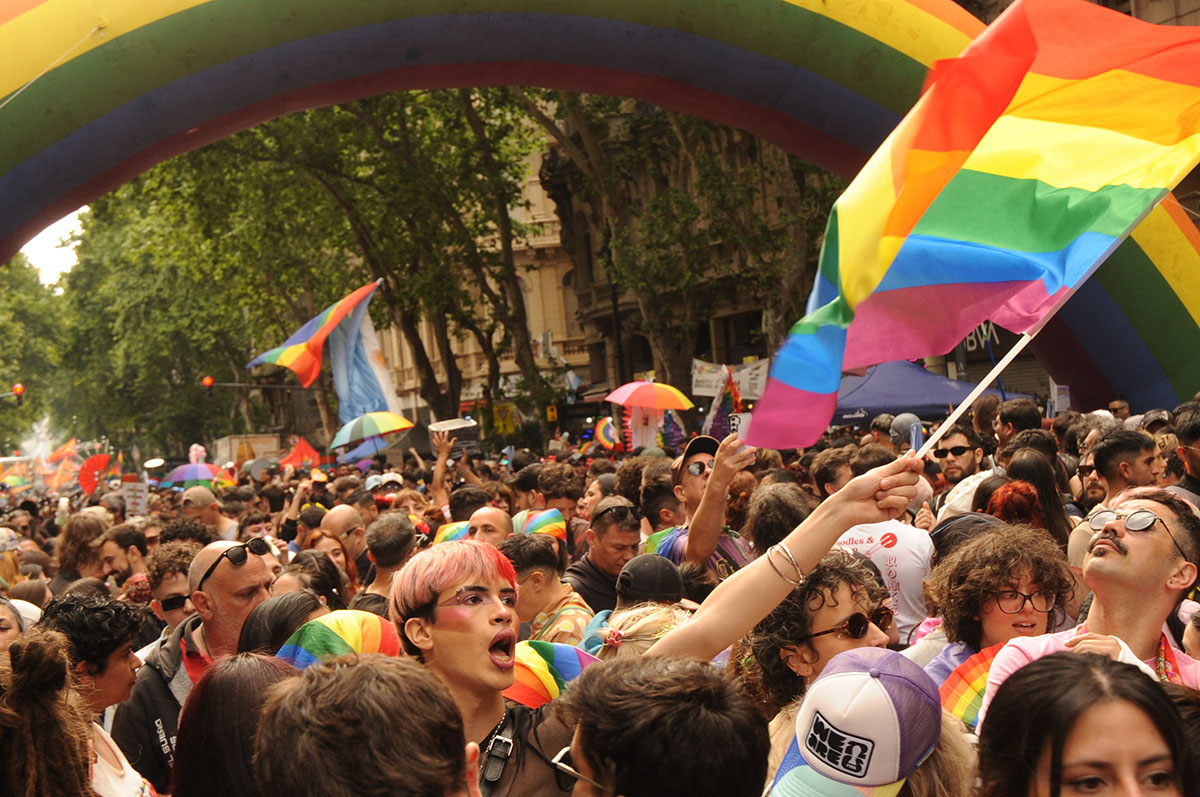
With the Pride March in Buenos Aires just before their arrival, the debate about sexual diversity and faith took center stage. There were both positive and negative voices, but I think the most important thing is that this debate exists, that it becomes visible. And that society knows that there are people within the LGBTQ+ community with a fervent faith who want to live it out in community, something that was unthinkable years ago.
We are present
We are committed to journalism that delves into the territories and conducts thorough investigations, combined with new technologies and narrative formats. We want the protagonists, their stories, and their struggles to be present.
SUPPORT US

FOLLOW US
Related notes
We are present
This and other stories are not usually on the media agenda. Together we can bring them to light.