

HIV: Protests over cuts and patents at the International AIDS Conference in Rio
While scientific advances coexist with healthcare cuts implemented by right-wing governments, Brazil and its universal healthcare model serve as the counterpoint and privileged setting for the International HIV/AIDS Conference organized by the IAS. More than 7,000 people are analyzing the present and future of HIV, achievements, the impact of austerity measures, treatments, and prevention.


Share

FROM RIO DE JANEIRO, Brazil. “Science is advancing at an extraordinary speed, but social empathy must advance at the same pace.” The words of an Argentinian woman, one of the few cases who managed to control HIV without transplants or medication, resonated in a packed room. Activists, researchers, healthcare workers, and representatives of international organizations from around the world listened to them. They had come to Rio de Janeiro to participate, between July 26 and 31, in the 26th International AIDS Conference, the largest global gathering on HIV.
During the day before the official opening, this woman, who lives in the city of Esperanza in Santa Fe province—a place where scientists have been studying for years in the search for a cure—participated via audio message. She encapsulated part of the spirit of these days, summarizing in a few words the various layers involved in the response to HIV. “We still have to cure the stigma, the discrimination, the prejudice, and the loneliness that millions of people live with,” said the woman from Esperanza. This is the first time the Conference organized by the International AIDS Society (IAS) has been held in South America. And it comes at a critical moment for strengthening the response to HIV and AIDS, with the motto: “Rethink. Rebuild. Move Forward.” That urgency permeated the entire day: while science advances, international budget cuts threaten to hinder access to prevention, treatment, and research.
Activists protested against Trump's cuts
©Felipe Varanda/ IAS.
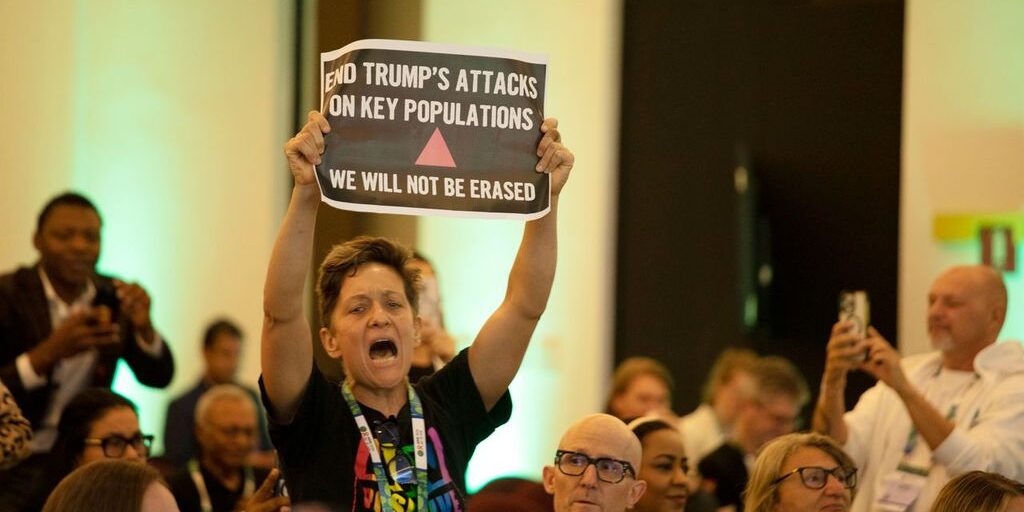
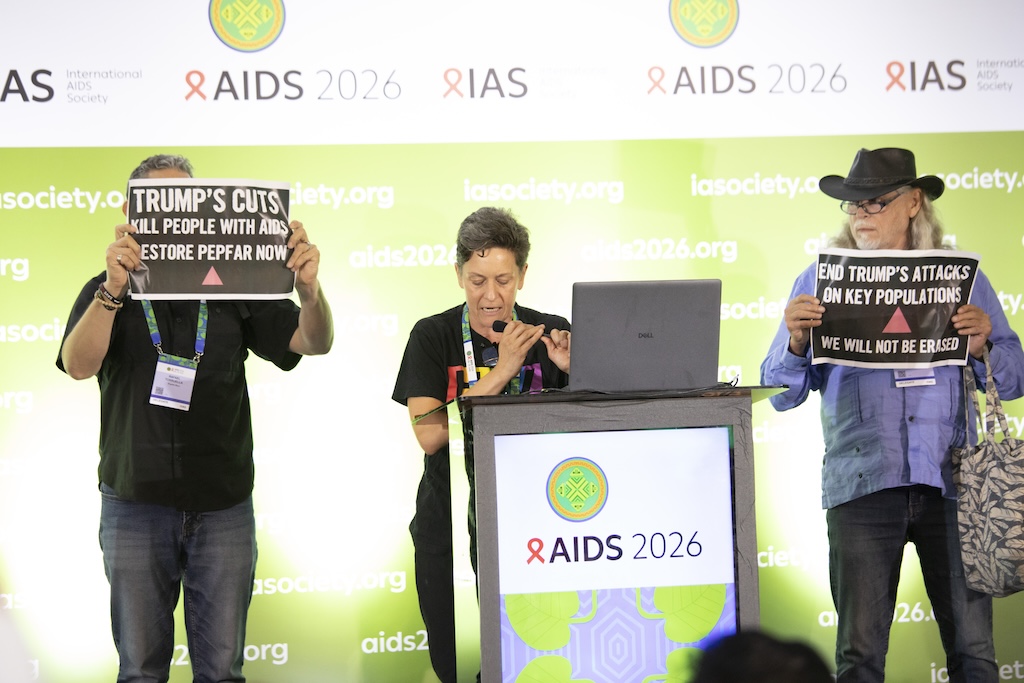
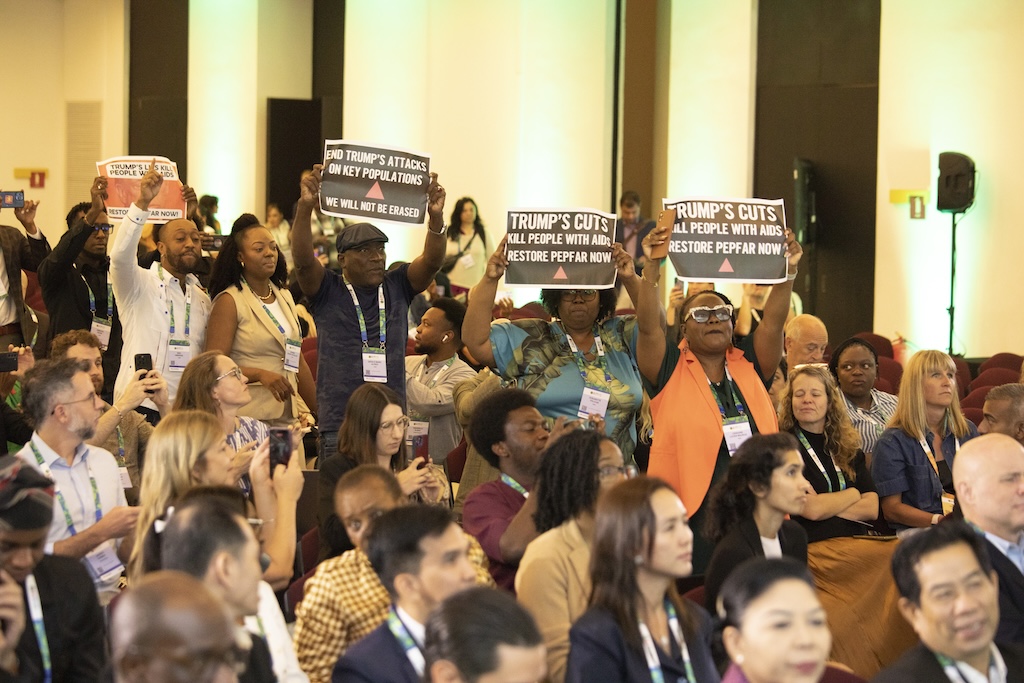
The pre-conference opened on Sunday with a protest. Activists from around the world targeted one of the main figures responsible for dismantling HIV prevention and treatment policies: the President of the United States. They stormed the stage and interrupted the speech by the US government's envoy, Jeff Graham, to denounce Donald Trump's current health policies, the cuts to the HIV response, and the exclusion of key populations.
“Trump’s lies and cuts are killing people with HIV and AIDS,” read the signs they held up. They demanded the restoration of the Presidential Emergency Plan for AIDS Relief (PEPFAR) while reaffirming, “We will not be erased, we will not be erased.”
Why in Brazil?

There are several reasons why the Conference is being held in Brazil. It is a country that has historically been committed to a paradigm where the scientific approach is based on a human rights perspective and universal and free access to health services (Unified Health System). Furthermore, it was the first low- and middle-income country to provide free access to highly active antiretroviral therapy (HAART) for people living with HIV in the late 1990s. Brazil has also historically participated in research demonstrating the efficacy of long-acting injectable drugs (cabotegravir and lenacapavir) for prevention and in the Mosaico vaccine trial.
In December 2025, the World Health Organization certified that Brazil had eliminated mother-to-child transmission of HIV. Beyond being a privileged platform from which to rethink and strengthen global responses to HIV, it is also a key Latin American hub for highlighting the situation in other countries with policies moving in the opposite direction. The Conference is supportedby the Ministry of Health, the Rio de Janeiro City Hall, and the Brazilian Interdisciplinary AIDS Association (ABIA).
Challenges, crossroads and patents
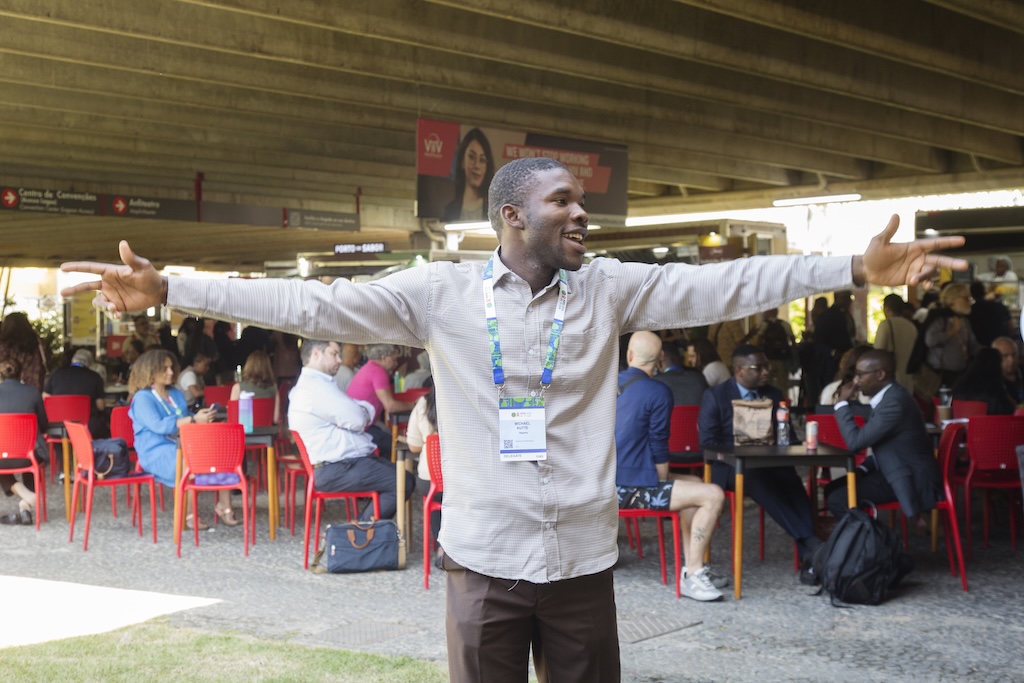
The great advances in scientific research are now being hampered by budget cuts, which are already impacting the lives of people living with HIV and society as a whole, which is beginning to see restricted access to prevention. This was one of the main concerns that permeated every session of the pre-conference. The areas of analysis focused on HIV cures without borders: Scientific, community, and Latin American and Caribbean perspectives; Science and access in HIV prevention; HIV and women; and Treatments and community power in the era of austerity and algorithms . A symposium on childhood and adolescence and perinatal exposure to HIV was also held , along with a community integration space under the theme "Rethink, Rebuild, and Move Forward."
The issue of intellectual property restrictions imposed by patents on the generic production of medicines also poses a challenge to a conference that is supported by the same laboratories that do not enable the production of more affordable medicines.
The situation in Argentina
At the pre-conference of “Treatments at the Crossroads” activist José María Di Bello, from the Positive Effect Group Foundation, highlighted the case of Argentina where activism managed to stop, through opposition, the monopoly in the production of medicines for the prevention and treatment of HIV and also hepatitis C.
“In Argentina, Gilead filed 15 patent applications, and we decided to work by filing an opposition on five of them. We succeeded in having them rejected, allowing, for example, the availability of sofosbuvir, a medication for Hepatitis C when used in combination with other antiviral drugs. Through collaboration with the Pan American Health Organization (PAHO), we were able to bring technology to the country and also establish domestic production of the medication,” the GEP activist emphasized. He pointed out that this halt to the patents resulted in savings of $428 million for the government, expanding HIV treatment options and enabling access to PrEP.
Lorena Di Giano, executive director of GEP and member of the Latin American Network for Access to Medicines, spoke at this community forum about the dismantling of health policies by Javier Milei's government. Regarding the "A Shield for Health" campaign, , "We are alerting the community about the negative effects that the signing of the trade agreement with the United States (Argentina-United States Reciprocal Trade and Investment Agreement, ARTI) will have on Argentina. It is supposed to be reciprocal, but all the obligations have fallen on Argentina. And it is drastically changing the health protections we had. So we are asking members of Congress to reject it."
Power to the communities
The importance of ensuring that the community and people living with HIV are heard when designing public policies, and that they can monitor and evaluate programs, was also a central theme. Kristhoper Daniel Ambelis de León, from ITPC-LATCA—a regional network that promotes the collective power of communities in Latin America and the Caribbean to guarantee access to medication in Guatemala—highlighted the importance of opening a dialogue with communities and sharing the findings of their participation. He also stressed the need for a paradigm shift: moving away from perceiving people and communities living with HIV as users of health services and recognizing their collective power to generate evidence and drive change. Concern about the rise of far-right governments, such as the one recently elected in Colombia, was also part of the conversation among the activists who came from that country.
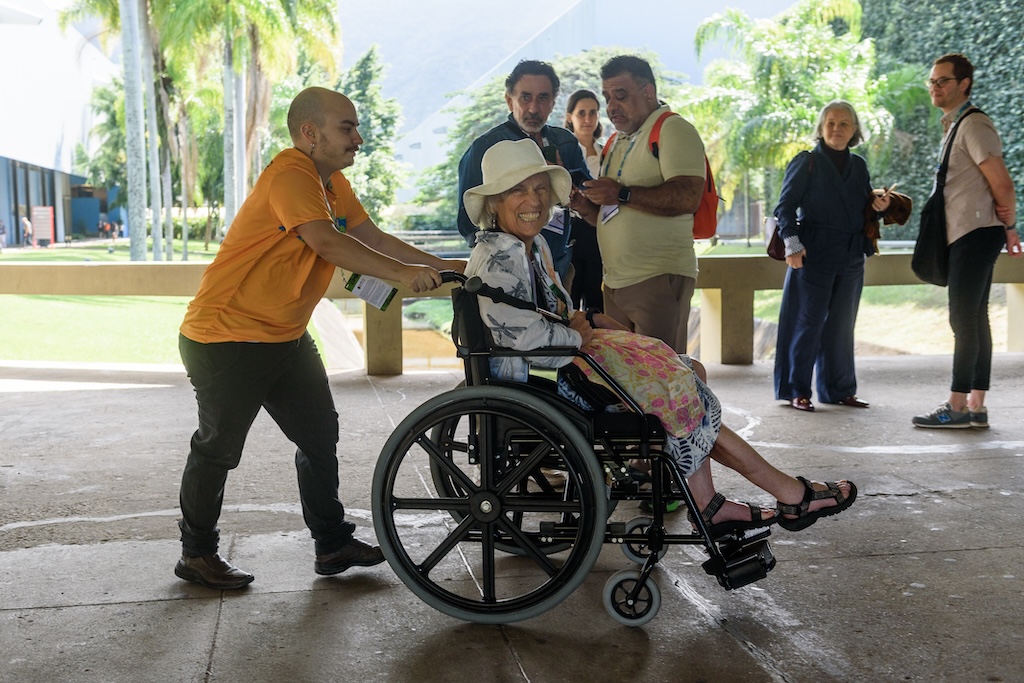
From Argentina, there will also be activities this week from members of the Positive Cycle and Equality Zone. Mariana Iacono, from ICW (International Community of Women Living with HIV), participates in various initiatives that support and bring a gender perspective to HIV. This week she will present a documentary she co-directed, "HIV Fell in Love with Me," about women's sexual desire and rights. Yesterday there was a session, "Women Know What Works," which focused on the achievements of women and diverse individuals living with HIV, but also on the stigmas that continue to criminalize HIV-positive women and their families.
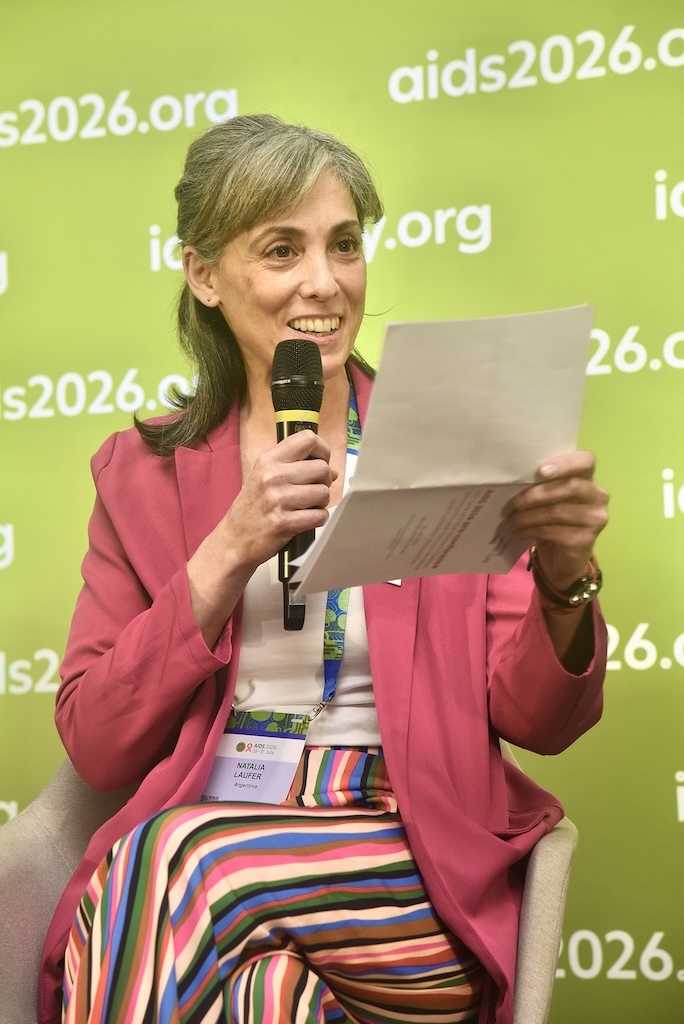
In one of the panels on "Cure Without Borders," Argentine researcher Natalia Laufer, along with researchers from other continents, shared details about her findings as an infectious disease specialist and member of the Institute of Biomedical Research on Retroviruses and AIDS at the University of Buenos Aires (INBIRS UBA-CONICET). Natalia is investigating the case of the patient from Esperanza and other so-called "elite controllers"—that is, HIV-positive individuals who control the virus without medication. Lucía Baquero, from the same team, shared her presentation on Measuring HIV Reservoirs: Optimal or Feasible?
At the end of the day, journalists were able to ask Beatriz Grinsztejn, a physician, researcher, and president of IAS, a few questions. She expressed her concern about meeting the goal of reducing HIV infections and AIDS-related deaths by 2030. The IAS director pointed out that while this is not the case in Brazil, almost all of Latin America is far removed from the production of generic drugs. Grinsztejn, who founded the HIV/AIDS Service at Fiocruz, the largest healthcare provider in Rio de Janeiro, shared that the most important thing is "that people can receive treatment, care, and prevention policies, regardless of who they are or where they live."
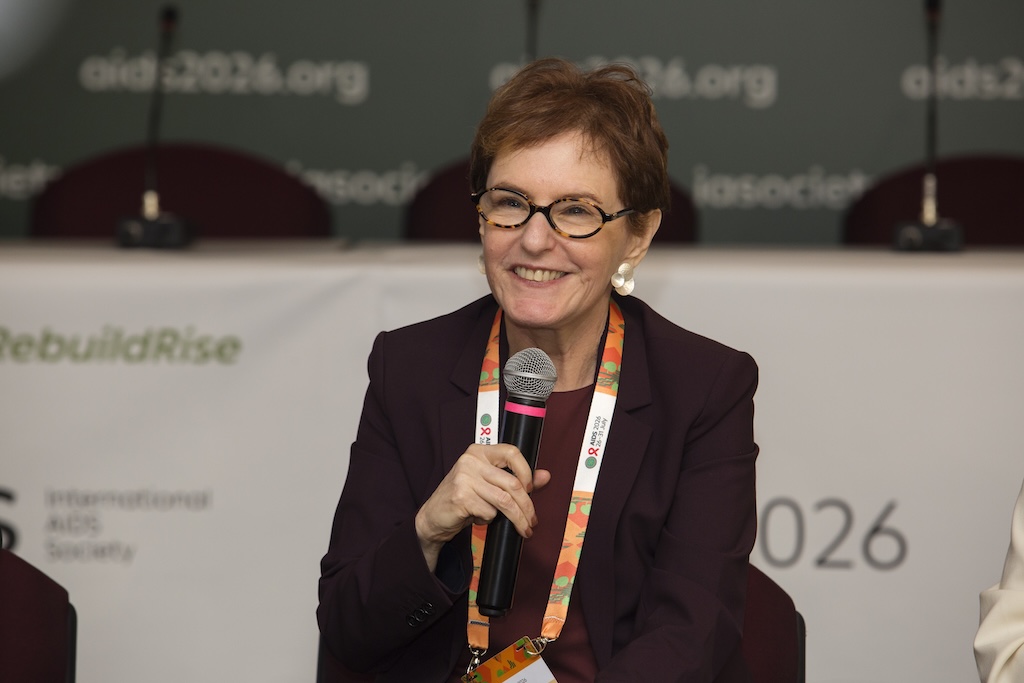
And this morning, on the first day of the Official Conference, the IAS director stated: “Homophobia and transphobia, stigma and discrimination continue to limit access to essential services.”.
Present at the International AIDS Conference
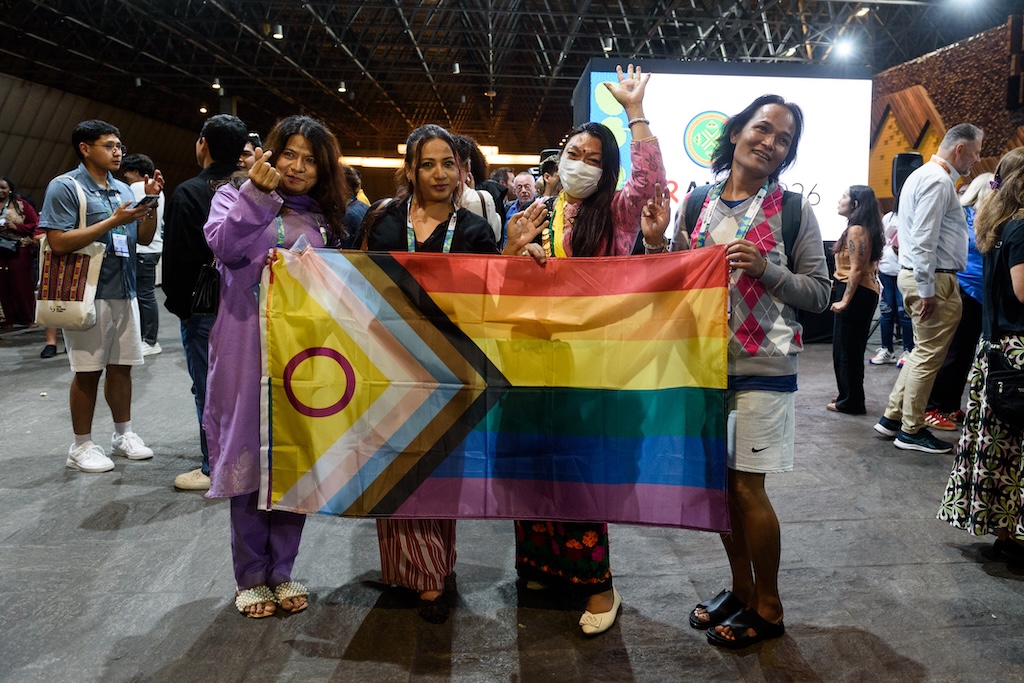
Presentes is attending the AIDS Conference for the first time – on social media it's known as #AIDS2026. On Tuesday, July 27th at 2 PM, we'll be participating in the "Stories, Impact, and Community Projects" session (Community Project Grants) at the Global Village, a meeting place for artivism and civil society groups. Presentes was one of the organizations awarded a grant to develop a communication project on HIV and AIDS.
Our media outlet also received support, along with 800 other people from around the world, to participate in this event, which this year brings together more than 7,000 participants. You can follow our coverage on Presentes' social media channels throughout the week.
Social media coverage from Rio de Janeiro: Lucas Fauno Gutierrez and Maria Eugenia Ludueña
This article is part of a project supported by the IAS (International AIDS Society) through Community Project Grants, as part of the preparations for the AIDS Conference 2026.
We are present
We are committed to journalism that delves into the territories and conducts thorough investigations, combined with new technologies and narrative formats. We want the protagonists, their stories, and their struggles to be present.
SUPPORT US

FOLLOW US
Related notes

Cannon fodder: the book that recovers silenced stories of transvestites and trans people during the civic-military dictatorship

Lechedevirgen: “Undoing art means restoring its ritual and collective dimension”
Why the trial for the murder of Eldin and Milton could be historic for Guatemala's LGBT community
We are present
This and other stories are not usually on the media agenda. Together we can bring them to light.