

Research: How to build a cure for HIV
What do we mean when we talk about a cure for HIV? What do the cases of those who have managed to control the virus reveal? This research explores what we know to date, as well as the paths taken by science, governments, and activists in the search for a cure.



Share

Timothy Brown has told his story hundreds of times: he is the first HIV-positive person to be cured. Born in Seattle, USA, he had moved to Germany and was living in Berlin in 1995 when he received his HIV-positive diagnosis. A year later, the three-drug antiretroviral treatment was approved. Thanks to this, he was able to transform living with the virus into a chronic condition. In talks, conferences, and interviews, he can be seen with a smile that tempers his calm with the lingering pain of a cure that is not yet available to everyone else.
Those of us living with HIV follow these cases hoping to find some clue to a universal cure. Meanwhile, we need to understand how the virus works and what pharmaceutical companies and governments are doing to find not only a cure, but also to improve the quality of life for both HIV-positive and HIV-negative people by working on prevention. A cure is often illustrated with laboratory images: cells and viruses under a microscope, in isolated contexts. We know that a cure involves a scientific journey, but also, and above all, a profound connection to health, ethics, business, and most importantly: our lives. This is the path this research proposes.
The Berlin Patient
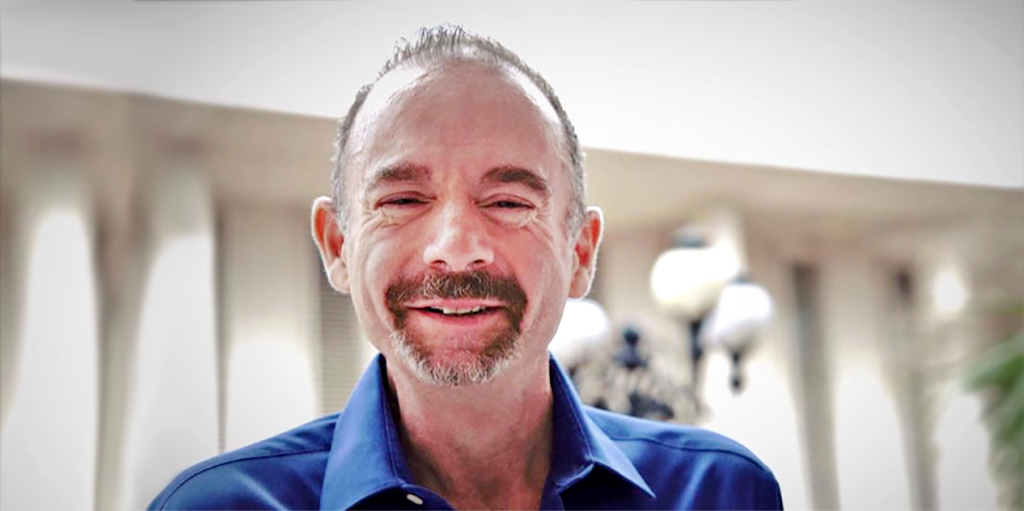
Timothy's positive life in the 1990s wasn't much different from most people's: he worked as an English and German translator and also tended a café when, shortly after, he was diagnosed with acute myeloid leukemia (AML). He underwent chemotherapy and seemed to be responding well. Although this cancer was unrelated to his HIV diagnosis, his doctor suggested a bone marrow transplant that could address both conditions. There was a possibility of eliminating both HIV and leukemia: Timothy was one of the few people in the world compatible with a type of stem cell mutation that prevented HIV from taking hold. But at that time, he refused: "I didn't need to be a guinea pig or risk my life by receiving a transplant that could kill me," he wrote in a first-person letter, explaining that approximately 50% of people who undergo this treatment die.
In 2006, the leukemia returned. This time, Timothy decided to undergo a transplant. After going through it, even after stopping medication, the HIV virus did not reappear. Shortly afterward, and for the third time, the cancer returned. He had to undergo another transplant from the same donor. “The recovery wasn't good. I suffered from delirium, I was close to going blind, and I was almost paralyzed,” the man who for years was known as “the Berlin patient” would later recount. In 2010, he decided to abandon his anonymity to present himself publicly with his full name and share his journey. “I finally learned to walk again at a specialized center for patients with severe brain injuries. Six years later, I had almost completely recovered.” To this day, there are no more than ten similar cases to his.
Esperanza's patient
In Argentina lives one of only two people who, without having received a transplant or taken medication, controls HIV to the point that she may have eliminated it. She is known as "the Esperanza patient," not only because her body may hold a clue to a cure, but also because she lives in the Argentine city of Esperanza, in the province of Santa Fe.
In 2013, a former partner informed her that he was HIV-positive in an advanced stage. From that moment on, she took the test several times: it came back neither negative nor positive, but “uncertain.” “There were no answers for my situation, and therefore it was very hopeful. But at the same time, I had to learn to live with the uncertainty of feeling healthy but without the certainty of being so,” she explained in an interview with the Télam news agency in 2021.
What are cure-remission and eradication cure?
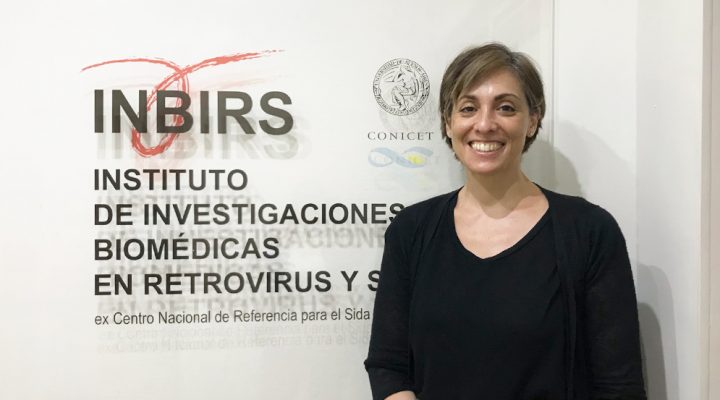
One of the doctors closely following his case is Natalia Laufer , an infectious disease specialist and member of the Institute of Biomedical Research on Retroviruses and AIDS at the University of Buenos Aires ( INBIRS UBA-CONICET). Natalia also investigates other cases of "elite controllers," that is, HIV-positive individuals who control the virus naturally without medication. When the virus remains present but under control, it is referred to as "remission." People in this situation represent 1% of all HIV-positive individuals.
In contrast, when it could have been eliminated, it is referred to as an “eradication cure.” This is the case of only two people in the world: “Esperanza” and Loreen Willenberg , “the San Francisco patient” (United States), who passed away in April 2026.
At just over 30 years old, Esperanza has had two pregnancies, and neither her children nor her partner are HIV-positive. “She has been incredibly generous; she donates blood, her placenta, and her breast milk,” says Natalia. When Esperanza became pregnant, it was the only time they decided she should take antiretroviral medication to prevent the risk of transmission. Although she and her medical team decided against breastfeeding, the milk she donated helped with research and advancements in the field. For this patient, her greatest hope is that her situation will be “a gateway to a cure for HIV.”
Natalia, along with other professionals like Dr. Gabriela Turk, supports this and other cases through research. She gives talks in various countries, works in the Argentine public health system, and co-coordinated the pre-conference organized by the Towards an HIV Cure program at the International Association on HIV/AIDS (IAS) International Conference in 2025.
From its first conference in 1985 until the one to be held at the end of July 2026 in Brazil, the IAS has been working on the global response to HIV by linking science, policy, and activism. This initiative brings together global voices and perspectives from diverse fields related to the search not only for a cure, but also for a better quality of life for people living with HIV.
“At the moment, we don’thave a single answer because there isn’t a common pattern among all these people. We’re trying to understand if those who achieve this extreme control can show us where to focus our strategies,” he explains. These are just a few cases compared to the more than 40.8 million people living with HIV registered as of 2024.
Being positive and a migrant in London
Adam Castillejo is the second HIV-positive person to have the virus eradicated from his body. This followed a bone marrow transplant using a special type of mutation. The London patient—as he is known—is a Venezuelan chef who migrated to the United Kingdom. In a conversation with Gastón Devisich, head of community engagement in the Research Department of Fundación Huésped(Argentina), he said that even today he “feels the discrimination.” As if being positive once meant being positive for life . “The stigma only evolves, because I have suffered more stigma after being cured than with the disease,” he explained in an interview with RTVE.
Gastón explains that something similar happens with HIV-negative people who take pre-exposure prophylaxis (PrEP) to prevent transmission during sexual encounters: “Part of society looks at you as something dirty, whether you have the virus or not.” Talking about HIV isn't just about a virus we may or may not have in our bodies; there is a lot of prejudice and ignorance surrounding it.
Undetectable is untransmissible
Today we know that when a person living with HIV takes their antiretroviral medication regularly, they can achieve viral suppression: there are so few copies of the virus that it becomes undetectable. To maintain this, they must continue taking their medication daily. An HIV-positive person with an undetectable viral load does not transmit the virus during sexual intercourse. This is known as: Undetectable equals untransmittable (U=U).
Gastón Devisich says that being undetectable is “a bit like being cured” because it eliminates the possibility of transmission. This reduces stigma and profoundly changes how people live as HIV-positive. Having sex knowing there's no possibility of transmitting the virus, even without a condom, changes how people with HIV experience not only their sexuality but also the security of their relationships.
To maintain this undetectability, the medication needs to be guaranteed by the state at the most affordable prices and accompanied by information campaigns. It's not just a pill; many factors determine whether or not it reaches each patient. "We must change the regulatory frameworks so that studies can take place, and so that they can take place in our countries as well," explains Gastón. "We need to change intellectual property laws, patent laws, laws regarding access to medicines, among many others."

“We must change the regulatory frameworks so that studies can happen, and happen in our countries as well,” explains Gastón Devisich.
How local and global budget cuts impact
In Argentina, since Javier Milei took office, science, education, and health have been among the sectors targeted by budget cuts and public criticism. This often leaves them unable to perform even the most basic daily tasks. This situation is not isolated to a Southern Cone country; it also aligns with the policies of the United States government. During his second term, Donald Trump's cuts impacted not only the US but also the US's investment in international cooperation for the HIV/AIDS response.
For a sustainable and universal cure
Professor Christian Gaebler heads the Laboratory of Translational Immunology of Viral Infections and the Personalized Infectious Medicine program at the Berlin Institute of Health. “If a therapy works in Berlin but not in Buenos Aires or Johannesburg, we haven’t solved the problem.” His research analyzes blood samples under a microscope, but also budgets: “The implementation of what we do has to be considered in parallel with development, not afterward. This means designing simple formulations, accessible routes of administration, realistic follow-up protocols, and sustainable prices.”
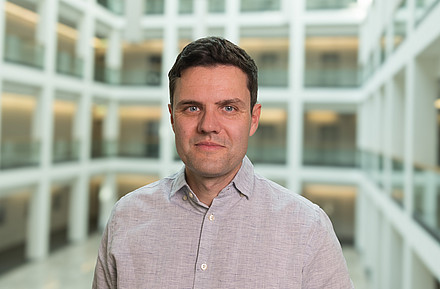
"Science is not done in a vacuum. As researchers, we move within the spaces opened up by activism," says Christian Gaebler, from the Laboratory of Translational Immunology of Viral Infections and the Personalized Infectious Medicine program at the Berlin Institute of Health.
This virus has existed for over four decades and, according to UNAIDS data, had caused over 40.9 million related deaths by 2025. Progress and achievements are largely due to government research and the historical struggles of activists. In the 1980s and 90s, the organization Act Up covered the White House lawns with banners commemorating those who had died, and Roberto Jáuregui appeared on television to speak to and educate the public.
“Science is not done in a vacuum. As researchers, we move within the spaces opened up by activism. Maintaining that link is part of our work,” says Christian Gaebler.
Science, art and HIV
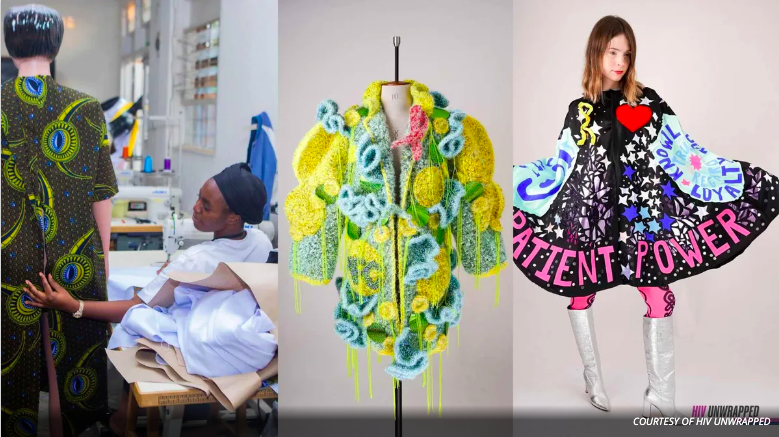
Medical gowns began to transform into a sociopolitical manifesto of Pride and activism in Kigali, Rwanda, during the IAS 2025 World Conference, adorning mannequins in a display of fashion and action. Where there had once been pristine white fabric, there was now color, texture, and activism. One gown became a black cape with stars in different fabrics, a globe at its center, and the message "Power to the Patients." Another former gown exhibited at the conference displayed a Chilean flag amidst images of hands working and HIV tests. "The HIV Unwrapped project is about uniting art and science," explains Brent Allan, a non-binary, neurodivergent, and HIV-positive queer activist

Brent has been uniting clothing designers with scientific teams since 2024, proposing that they unify their perspectives and messages in a single design piece: what was once a medical gown is now a manifesto. “Research and science that don't consider the lived experience of activists and people living with HIV can lead to many developments, but they run the risk that these will never be incorporated into the lives they were intended to transform,” Brent explains from Melbourne, Australia, where he lives.
These gowns evolved like the most stylish Pokémon, spreading the power to make struggles visible, unite stances, and communicate realities. They do so with vibrant colors, textures that give depth to the message, and are adorned with flags that declare their presence in the fight against HIV. “The cure for HIV cannot be the sole mobilizing goal; it must be understood as part of a set of social, medical, political, and practical aspirations, like a sunrise breaking through the clouds with brilliant beams of multicolored light,” Brent writes in his responses to the interview we've included for this article. In his words, you can feel the smile with which he approaches everything he does. Each gown and each runway show demonstrates that art, Pride, and alliances are also part of the cure.

“Research and science that do not consider the lived experience of activists and HIV+ people may bring many developments but run the risk that these will never be incorporated into the lives they were intended to transform,” says Brent Allan from Melbourne, Australia.
When the cure makes the news
In Argentina, the first publicly visible person living with HIV was the actor, journalist, and activist Roberto Jáuregui. In 1989, he joined forces with infectious disease specialist Pedro Cahn at the newly established Fundación Huésped (Huesped Foundation). Cahn was a pioneer in HIV and AIDS research and treatment. Roberto lent his face and voice to the media, television, and interviews, raising awareness about HIV/AIDS. Pedro recounts that one night in those years, in the early hours of the morning, they were sending out invitations for a fundraising event when he said to Roberto:
–Come on, we have time.
"You have time," Roberto replied.

In those years, the main challenge was visibility, stigma, and finding an urgent solution to stay alive. Today, when people who are HIV-positive can develop chronic conditions through antiretroviral treatment, we face other dilemmas. Regarding access to our rights, we must always strive to obtain the medication and the quality of life that allows us to continue taking it. In terms of communication, we continue to demand better information in the media; for example, when reporting on "the patient of [name omitted]," there is often more sensationalism than hope.
The organization Act Up Argentina —a local branch of established groups—is one of those in Argentina that visits cultural spaces and marches, calling for action and promoting and ensuring appropriate communication. We asked them for this article how they view media coverage. “We see how the approach to HIV in the media and on social networks oscillates between revitalized hate speech and discrimination, on the one hand, and the uncritical and insistent reposting of supposed 'good news,' on the other,” they responded through a collective spokesperson. This supposed good news uses expectation as bait to drive traffic to their sites, when in the everyday reality of HIV+, even Adam, a patient in London, explained: “My work is to try to highlight the shortcomings of products considered good, the innovations in treatments, and prevention.” He made it clear that the cure that worked for him could not, at the moment, be applied to every HIV-positive person.
What does it mean to heal?
If a cure is found today, how many years will it take to know if it's effective? A person living with HIV, who preferred to remain anonymous, explains that, for now, they prefer to continue their daily antiretroviral medication and thus remain undetectable. “I don't want to be part of a study, stop taking the pill, and go through life not knowing whether or not I have a viral load. If I were in a monogamous relationship, perhaps I would. Because if my partner is taking PrEP and I have a rebound effect, I won't transmit it to them,” they say.
PrEP (pre-exposure prophylaxis) is a treatment for HIV-negative people. It consists of regularly taking antiretroviral medication so that, if they were to come into contact with the virus, it wouldn't take hold and replicate. PrEP is for people who are HIV-negative to remain so. "But right now, I'm single and have had multiple partners, and I wouldn't feel comfortable not knowing whether or not I have a viral load," he adds.
Infectious disease specialist Natalia Laufer explains that if medication is discontinued for any reason, HIV relapses tend to occur quickly. If any of the treatment options fail, we would notice it relatively soon through regular checkups. "Two to four weeks, in the case of treatment interruption," says Laufer. Throughout the discussion, she emphasizes that it is society and the individuals involved in the studies who must decide whether and how they want to participate in the trials.
Scientific strategies towards a cure today
Currently, several strategies are being implemented on the path to a cure for HIV. According to Professor Christian Gaebler, who focuses his work at the Charité Universitätsmedizin Berlin public university hospital , the approach that could bring us closest to a cure today involves inoculating broadly neutralizing antibodies (bNAbs) to recognize and eliminate different variants of the virus. Gaebler explains that CAR-T cells —which modify the patient's immune system to destroy infected cells—"have conceptual interest and promising initial data."
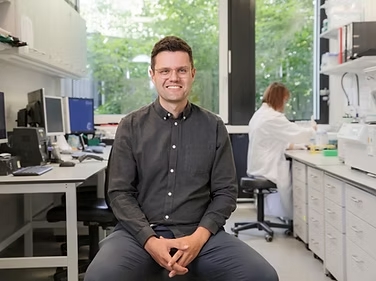
Professor Christian Gaebler is one of the people investigating the approaches that could bring us closer to a cure. "It will come through combinations, not a single path," he says from his laboratory in Berlin.
Other strategies are being implemented in various countries, especially in the United States and Europe. The data we have comes from research conducted at universities and institutions funded by the government or through public-private partnerships. Two antiretroviral therapies stand out: Block and Lock, which aims to contain the latent virus without eliminating it, and its opposite, Shock and Kill, which awakens the virus from its reservoirs to attack it.
In 2024, using CRISPR technology—a kind of "scissors" that cut viral DNA embedded in human cells—a research team in the Netherlands succeeded in eliminating the virus from infected cells. But this achievement is tainted by doubt when considered in terms of ethics and DNA manipulation.
The path to a cure is not singular: it is full of trails, twists, and turns leading to different outcomes. Some of them are worrying, like this latest one that modifies DNA. What might happen in the future with these modified bodies? On whose bodies are these tests performed? Each possible answer requires considering many aspects that go beyond the social and economic. The map of options and possibilities expands and branches out, linking the techniques, as Professor Christian Gaebler explains: “The cure will come through combinations, not a single path.”.

But then, when? How long will it take to verify that the cure is effective? For whom will it be available? There are already some clues in the "patient of…" cases, but these "patients" named after the cities where they live—from London and Berlin to New York and Düsseldorf—number no more than ten. We look at the patient in Esperanza while we think: for these scientific teams to make progress, there must be government involvement.
No one can be absent from this fight because it includes all of us, people with and without HIV. In this context, activism in the streets and on social media, woven together to sustain this path, along with art and science, transforms the abstract idea of a cure into everyday language. From colorful lab coats and furious signs to marches and protests, to research that continues to build upon what we already have and pursue what is still missing.
Roberto Jáuregui died in January 1994. He never got to meet her. But he bequeathed us a mantra that we will continue to repeat until it becomes a horizon of possibility within everyone's reach: "Let us be here for the day of the cure."
This article is part of a project supported by the IAS (International AIDS Society) through Community Project Grants, as part of the preparations for the AIDS Conference 2026.
Share
We are present
We are committed to journalism that delves into the territories and conducts thorough investigations, combined with new technologies and narrative formats. We want the protagonists, their stories, and their struggles to be present.
SUPPORT US

FOLLOW US
Related notes
We are present
This and other stories are not usually on the media agenda. Together we can bring them to light.