

Breastfeeding and HIV: scientific advances in the first person
In 2025, the World Health Organization recognized breastfeeding as a viable option for people living with HIV who are receiving effective treatment. This article explores experiences, essential support, and the latest scientific research on breastfeeding and HIV.


Share

“Pacifiers are prohibited here” and “Bottles are prohibited” read two signs in the Buenos Aires hospital room where Sofía Ocampo was recovering after giving birth to her first baby. Every time a nurse came in, she asked, “How’s your breastfeeding?” Each time, she explained that she wasn’t breastfeeding. “Why?” they insisted. “Because I’m a woman with HIV.” They quickly changed the subject.
Globally, the World Health Organization estimates that approximately 1.3 million people living with HIV become pregnant each year. Over time, the risk of mother-to-child transmission of HIV has decreased from 30% to less than 5%, thanks to early diagnosis, the expansion of antiretroviral therapy (ART), and the use of antiretroviral prophylaxis in children.
World Breastfeeding Week is celebrated in August in more than 170 countries. Information about its importance is everywhere: social media posts, posters in public spaces and hospitals, newspaper articles, and television reports on the best nutrition for your baby, the "golden hour," and the mother-child bond. However, until very recently, people with HIV couldn't even consider the possibility of breastfeeding.
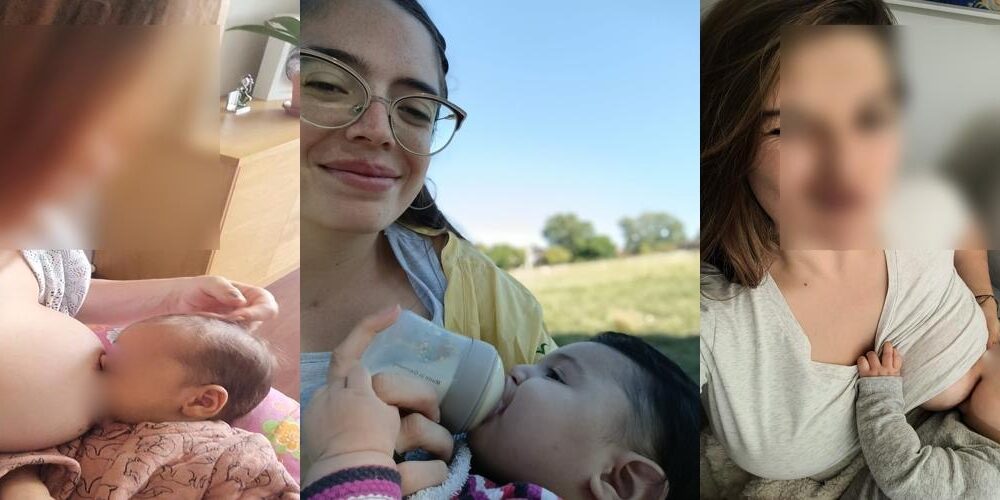
“My first two children were formula-fed. With my first, breastfeeding wasn't an option. With my second, there was more information available, and other mothers were trying, but I was afraid. When my third came along, I still thought about continuing with formula. But this time, at the hospital, they talked to me about the possibility of breastfeeding. They asked me, ‘Do you want to?’” Sofía speaks on the phone with Presentes, while bottle-feeding her six-month-old baby.
A milestone in reproductive rights
In 2025, the World Health Organization (WHO) updated its recommendations and marked a milestone in reproductive rights. For the first time, it recognized breastfeeding as a possibility for people living with HIV who are on effective antiretroviral treatment.
When a person living with HIV maintains an undetectable viral load, the risk of transmission to the baby during breastfeeding drops to less than 1%, according to new recommendations. The possibility of transmission is “extremely low,” say the researchers consulted for this article, although it is not zero. In other words, it cannot yet be guaranteed that undetectable equals untransmittable (U=U) in 100% of cases during breastfeeding, as is the case with sexual transmission.
“We managed to shift from a paradigm where the WHO recommended suspending breastfeeding to one where it considers it a possibility. This came after more than eight years of work raising awareness and advocating for public policy. It was thanks to the involvement of many organizations, the United Nations system, government ministries, and women who put their bodies on the line,” says Mariana Iacono, the activist and social worker.
The International Community of Women Living with HIV/AIDS (ICW), the organization where she serves as national coordinator in Argentina, launched the U=U campaign, whose iconography resembles the image of two breasts. This is a reference to the "undetectable = untransmittable" (U=U) campaign.
“Collectively, it’s a huge achievement. It makes me very happy and a little nostalgic because I wasn’t able to breastfeed, something I wanted to do with all my heart and soul. I tried, I went through all the steps, but I didn’t receive medical support. And I didn’t have the courage to do it alone. But at that moment I thought that if I couldn’t breastfeed, I was going to do everything possible so that anyone who wanted to breastfeed after me could,” Iacono recalls.
What various scientific studies say
The PROMISE clinical trial —Promoting Maternal and Infant Survival Everywhere—is one of the most cited. Published in 2014, it was conducted in India, Malawi, South Africa, the United Republic of Tanzania, Zambia, and Zimbabwe.
“In those settings, breastfeeding is recommended because there is no access to clean water for formula feeding. Therefore, there was much more morbidity and mortality associated with complications from formula feeding than with the potential risk of HIV transmission,” explains infectious disease specialist and researcher Natalia Laufer. The trial indicates a transmission risk of less than 1% in mothers undergoing antiretroviral treatment. However, not all of them had undetectable viral loads.
“A meta-analysis published in July 2025 in The Lancet estimated that the risk of postnatal transmission is 0.1% per month. The studies were done on women who are on antiretroviral treatment. Most of those women had undetectable viral loads, but not all,” Laufer explains.
Breastfeeding and HIV: science, law and criminalization
In Argentina, the updated guidelines on breastfeeding and HIV took place before those at the WHO. It involved two years of dialogue among organizations; infectious disease, obstetrics, and pediatrics societies; civil society; and the impetus of the then National Ministry of Health. The process began in 2022 following a case in the province of San Luis where a 26-year-old mother with HIV , who had undetectable viral loads and decided to breastfeed her baby, was criminalized
According to the HIV Justice Network 's HIV Criminalization Case Database , at least 15 people living with HIV faced legal proceedings related to breastfeeding in various countries (Argentina, Russia, Zimbabwe, Kenya, Uganda, Zambia, Kazakhstan, Malawi, Botswana, and Austria). Furthermore, the article " When Law and Science Diverge: The Criminalization of Breastfeeding by Women Living with HIV ," published in 2022, highlights that in several countries, women living with HIV were threatened with punitive public health proceedings and "child protection" interventions for breastfeeding their children.
Paula's story, HIV and her breastfeeding
Since turning 18, Paula, a 38-year-old urban planner living in Bogotá, Colombia, had been donating blood twice a year. In 2012, a few months after donating, she received a call informing her that her blood test results were ready, even though she hadn't requested them. She was traveling to Mexico to visit her boyfriend, so she picked them up upon her return. "My world fell apart," she says of that moment. Her name has been changed because she prefers not to publicly share her diagnosis.
In 2022, she married her life partner and they decided to have a baby. She started taking medication to become undetectable and told her doctor that she wanted to breastfeed. “I had already read a lot about the benefits of breast milk for babies. He told me it was difficult, but that he would look into it. When I got pregnant, I went back again, full of hope. I asked him what we were going to do about breastfeeding, and he told me: you can’t breastfeed. It was very hard.”
Paula began researching on her own, contacting organizations, activists, and mothers who had successfully breastfed. “While I was pregnant and working, I was also pursuing a master’s or doctorate in breastfeeding with HIV,” she laughs. Her husband, initially unconvinced, gradually gained confidence and eventually supported her. A conversation with the husband of another woman who had decided to breastfeed was key: “If she’s sure she can breastfeed and has researched everything she’s researched, I’m just here to support her.”.
Hours before her baby's birth, she experienced a series of unexpected acts of violence. After signing several waivers assuming responsibility should her child become HIV-positive, social workers approached her. “I hadn't slept or eaten for hours, I'd been given a bunch of injections, I was in pain, and they came to threaten me. They told me I couldn't breastfeed and that if I insisted, they would have to call Family Welfare, the agency that takes in children at risk from their families and then puts them up for adoption. I burst into tears, in a state of terrible anxiety,” she recounts. ICW arranged for a lawyer to go to the clinic to ensure that no one could contact her again to discuss her decision.
Paula finally had her "big moment" when she was given her baby after the cesarean section. She breastfed him for six months and did not contract HIV. Today she lives with him, who is almost three years old, her husband, and their dog.

What are the optimal conditions, according to science?
The optimal conditions for people with HIV to breastfeed with a very low risk of transmission include adherence to antiretroviral treatment and maintaining an undetectable viral load during pregnancy and breastfeeding. Ideally, this should be at least six months before conception.
There are also several factors to consider. One is the importance of establishing a milk bank to ensure continued breastfeeding should any problems arise, such as mastitis, bleeding nipple cracks, fever, or gastrointestinal illnesses in either the mother or the baby. “Another precaution is to avoid giving the baby formula while breastfeeding. Although evidence is increasingly suggesting that mixing foods does not influence transmission, we cannot take any risks because we lack sufficient evidence,” says Soledad Méndez, PhD in Biochemistry and a lactation consultant.
“When we start working with families who express this desire, we look at what support resources they have. It’s very difficult to maintain antiretroviral treatments during such an important and disruptive time as the postpartum period. Therefore, professional support and a good support network are essential,” Méndez shares.
Key support: outside and inside the hospital
Sofía Ocampo was born with HIV and has remained undetectable for many years. She lives in La Matanza, Buenos Aires Province, Argentina, and is the mother of three children. She formula-fed her first two. While pregnant with her third, she was offered the opportunity to breastfeed at the hospital for the first time.
“They proposed it to me when I was about eight months old. I wasn’t sure. They started telling me what it was about, saying that we were going to talk to the whole team, that they were going to accompany me. So I decided to give it a try. Everything was going well, but then there was a series of unfortunate events,” she says.
After the cesarean section, the nurse who was supposed to assist her with breastfeeding didn't appear until several hours later, in the evening. She was told she would be discharged, but due to a lack of communication between the neonatal and obstetrics departments, the discharge was postponed. A nurse gave her baby a bottle of formula, something contraindicated in her medical record. Finally, the medical team called her to say that, since her baby wasn't gaining weight and her bilirubin levels were high, they had decided to discontinue breastfeeding. “I left there and burst into tears. Just when I was most determined to make breastfeeding work. They had told me I would be able to do it and that they would support me, but that never happened,” she says, still upset with the team's performance. She managed to breastfeed her daughter for a few days. “My breasts hurt,” she recalls. Her daughter, like her other two children, did not contract HIV.
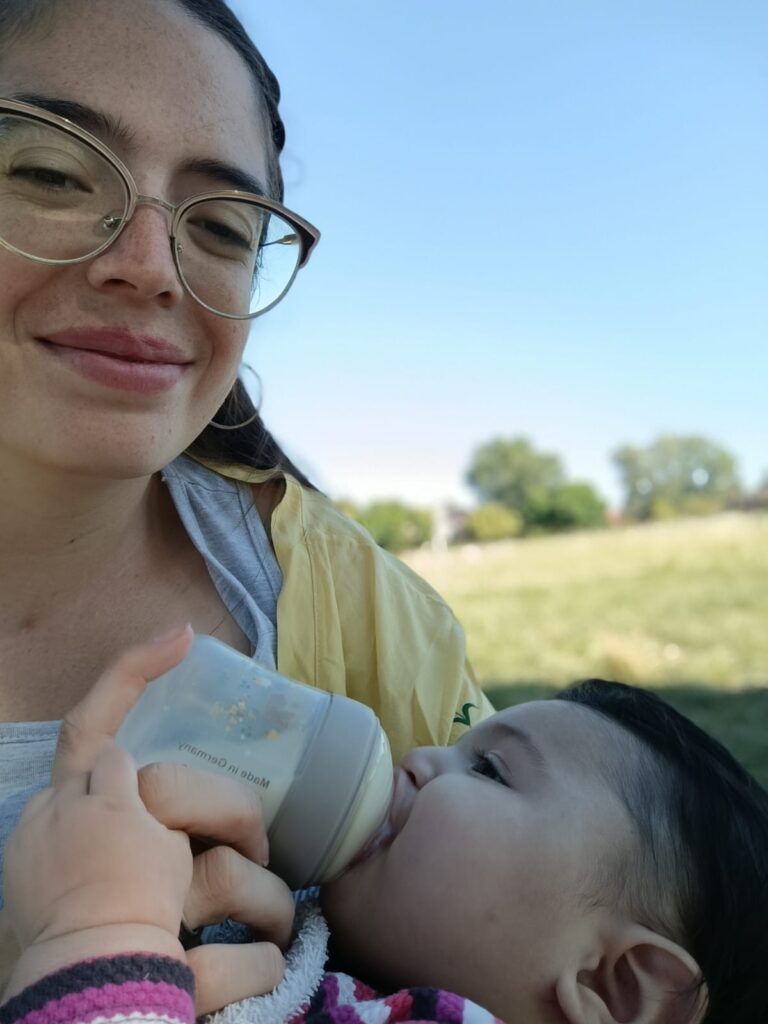
For Sofía, “it’s crucial to have support, both inside and outside the hospital, to accompany the decision to breastfeed.” She also emphasizes that “it’s important to know that if you don’t want to breastfeed, you can give your baby formula. Your baby won’t be unprotected, and they won’t lack love or food because of it,” she says.
“I had strong medical support for breastfeeding”
For Isabel C., originally from Mexico City, the experience was different. On a vacation, she began experiencing acute symptoms—very high fevers, bone pain, arthritis, and pneumonia—until a month and a half later she received an HIV diagnosis. She began treatment at the National Institute of Medical Sciences and faced a long recovery process. The news opened a Pandora's box for her religious and conservative family.
Some time later, she met the man who would become her daughter's father. “I breastfed my oldest son, who is now 16, for two and a half years, before I had my diagnosis. And I thought: I'm not going to deprive my daughter of breastfeeding. So I did a lot of research and decided to breastfeed her for nine months. I had a very strong medical support team from the Spanish Hospital of Mexico and the Institute. The hospital's Director of Pediatrics helped me with a lot of information,” she says. For her, they were “nine beautiful months.” Then she decided to start weaning because her daughter was constantly being tested for HIV, and she felt she had had enough. She never tested positive. Beyond the joy she experienced while breastfeeding, she also felt fear. That's why she believes there needs to be more public information about HIV.
She hasn't spoken about her diagnosis with her seven-year-old daughter yet, but she has with her 16-year-old son. "I always try to tell him that without condoms there's no party. Besides HIV, there are many other diseases.".
Benefits and challenges
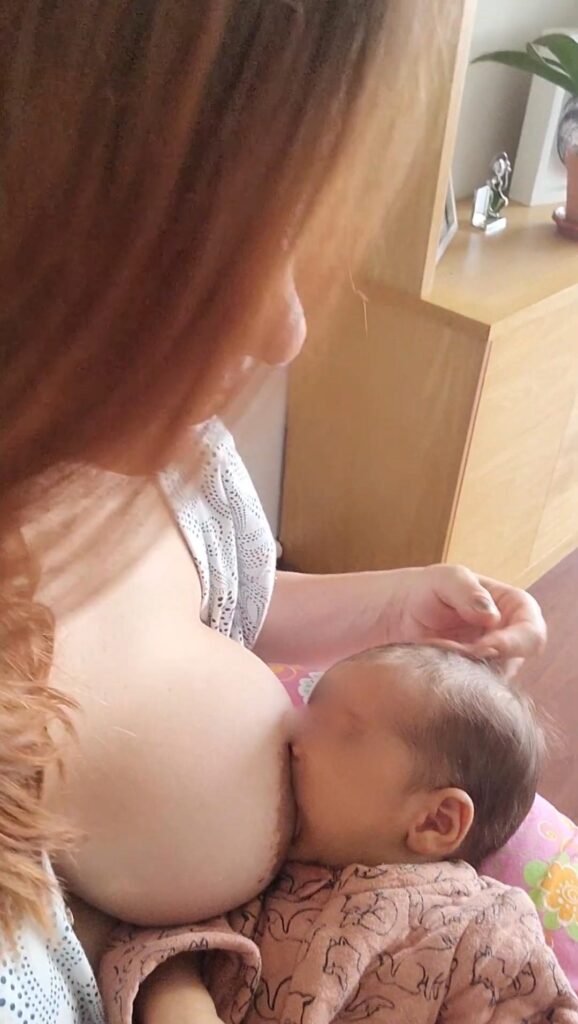
When a person with HIV approaches lactation consultant Soledad Méndez to share their desire to breastfeed, she supports the process with information and, if they wish to continue, with technical and emotional support. “Breastfeeding continues to be a highly valuable practice. It provides immunological protection to the baby, promotes the development of an optimal gut microbiota for their health, and strengthens the bond, among many other things that are still being studied,” she shares.
“Now, there are also important challenges that need to be addressed,” she adds. “It’s a complex decision, one that isn’t the same for everyone. And it needs to be accompanied by clear information, medical follow-up, and respect for each family’s decision.”
More research and cooperation on HIV and breastfeeding
At the Institute of Biomedical Research on Retroviruses and AIDS, UBA-CONICET (INBIRS), Natalia Laufer and her team have been investigating the breast milk of women with viral suppression for years. They evaluated cell-free HIV and HIV DNA associated with cells in breast milk during the first seven weeks of lactation in two patients. “In one case, we found no virus. In the other, we did find virus, but it was completely defective (it cannot generate a new virus or transmit HIV). The significance of this first study is that it allowed us to demonstrate that we can determine the characteristics of the virus associated with cells in breast milk,” she explains. However, she cautions that further research and an increased number of samples are necessary.
“Our main problem is the global defunding of research. It's leaving us in a very difficult situation to continue. Research is being commercialized, and that leaves countries with fewer resources with few options. Besides the decrease in subsidies, those that remain don't provide enough money to cover costs,” explains Laufer. In the region, Brazil is the country providing the most significant support for HIV research.
In Argentina, since Javier Milei took office, the budget allocated to science has suffered a sharp reduction. By March of this year, the Science and Technology Function (FCyT) of the National Public Administration had accumulated a real decrease of 50.8% since 2013. It represents 0.14% of GDP, the lowest percentage since 1972.
“Everyone is leaving for industry. I’ve never seen the debacle that has been happening since 2024. It has fallen dramatically,” says Laufer, who has been a researcher at INBIRS since 2005.
In addition to funding, she believes that increased cooperation is necessary to advance research on breastfeeding and HIV . “We could create international cohorts and have strong, reliable data that would allow us to estimate risk, standardize follow-up guidelines, and draw conclusions from there.”
.
This article is part of a project supported by the IAS (International AIDS Society) through Community Project Grants, as part of the preparations for the AIDS Conference 2026.
We are present
We are committed to journalism that delves into the territories and conducts thorough investigations, combined with new technologies and narrative formats. We want the protagonists, their stories, and their struggles to be present.
SUPPORT US

FOLLOW US
Related notes

We are present
This and other stories are not usually on the media agenda. Together we can bring them to light.