

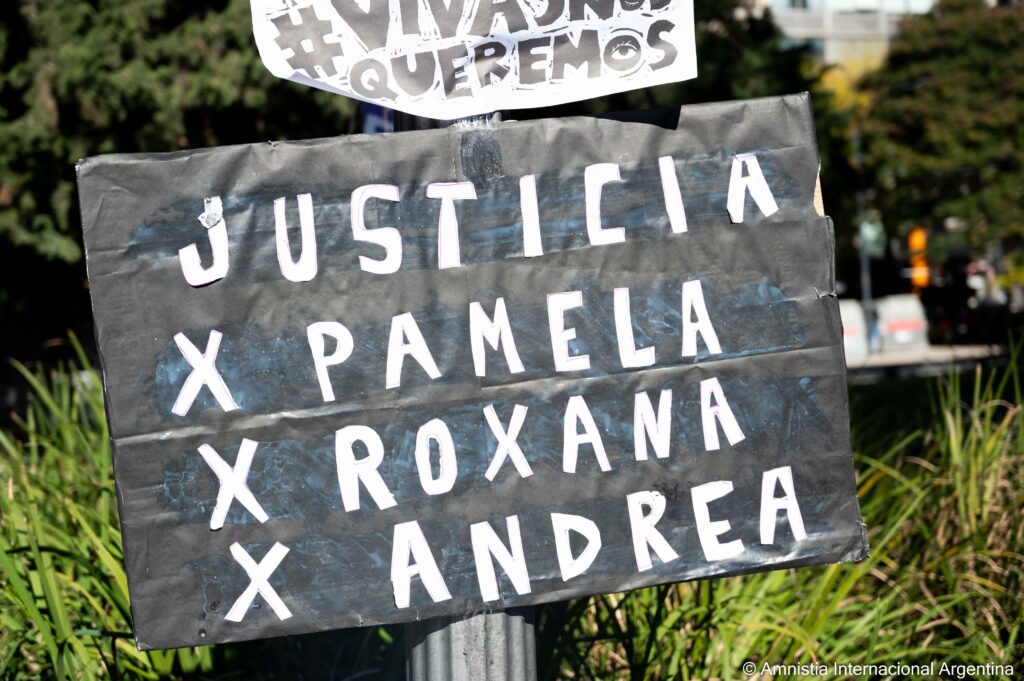
The trial for the triple lesbian murder has begun: Justice for Pamela, Roxana and Andrea, and reparations for Sofía
The trial has begun for the triple lesbian murders of Pamela Cobbas, Mercedes Figueroa, and Andrea Amarante, and the attempted lesbian murder of Sofía Castro Riglos. The prosecution seeks to have the justice system recognize the crime as a hate crime. The accused chose not to testify. A day of protest is taking place outside the courthouse.


Share

BUENOS AIRES, Argentina. Today, Monday, May 18, the trial began for the triple lesbian murder of Pamela Cobbas, Mercedes Roxana Figueroa, and Andrea Amarante, and the attempted murder of the sole survivor, Sofía Castro Riglos, who continues to suffer serious injuries. The proceedings are taking place before the Oral Criminal Court No. 5. The defendant, Fernando Justo Barrientos, was present and chose not to testify. The prosecution and the plaintiffs' arguments considered the context of discrimination motivated by hate based on the victims' sexual orientation, all of whom were lesbians.
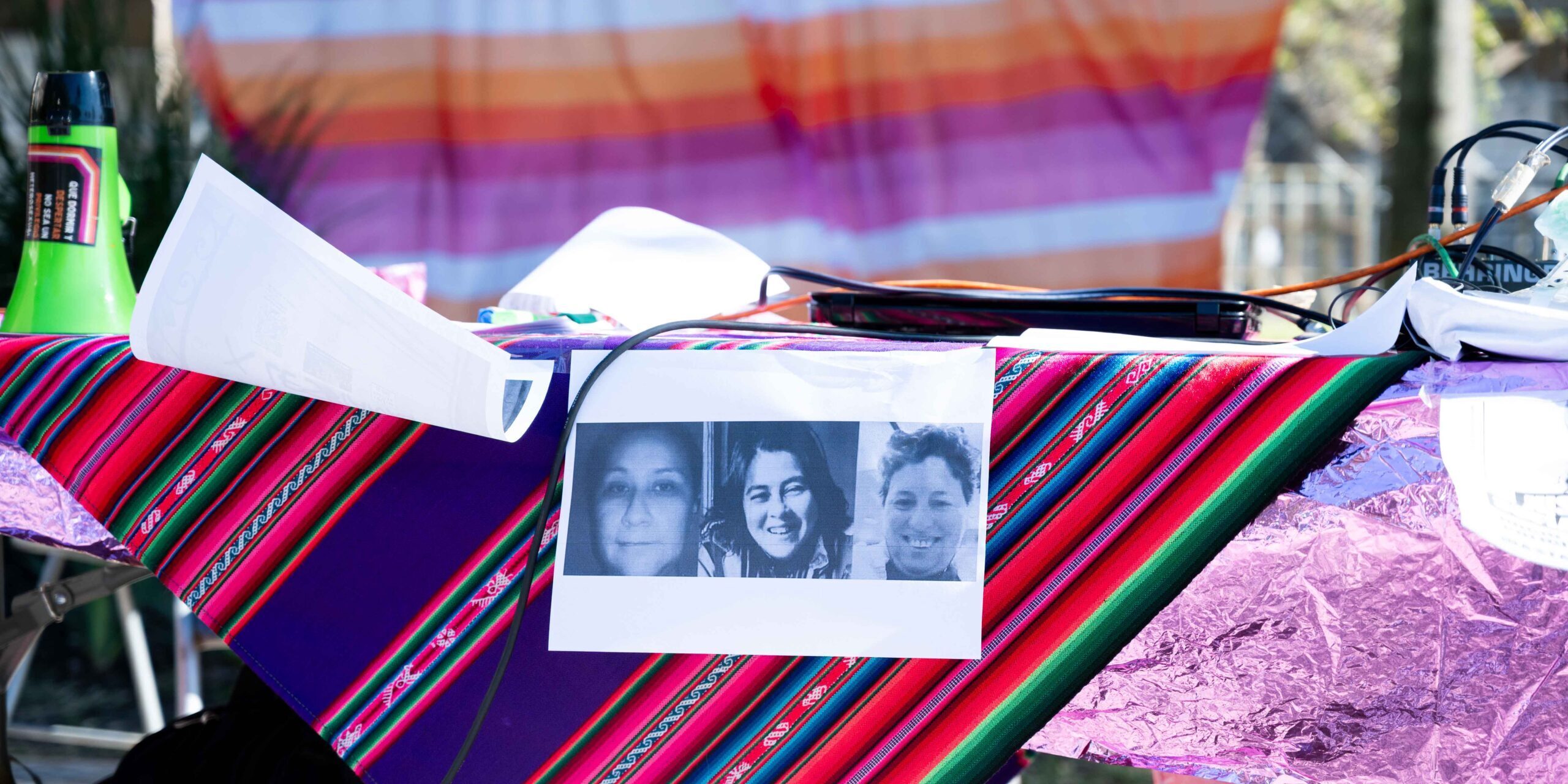
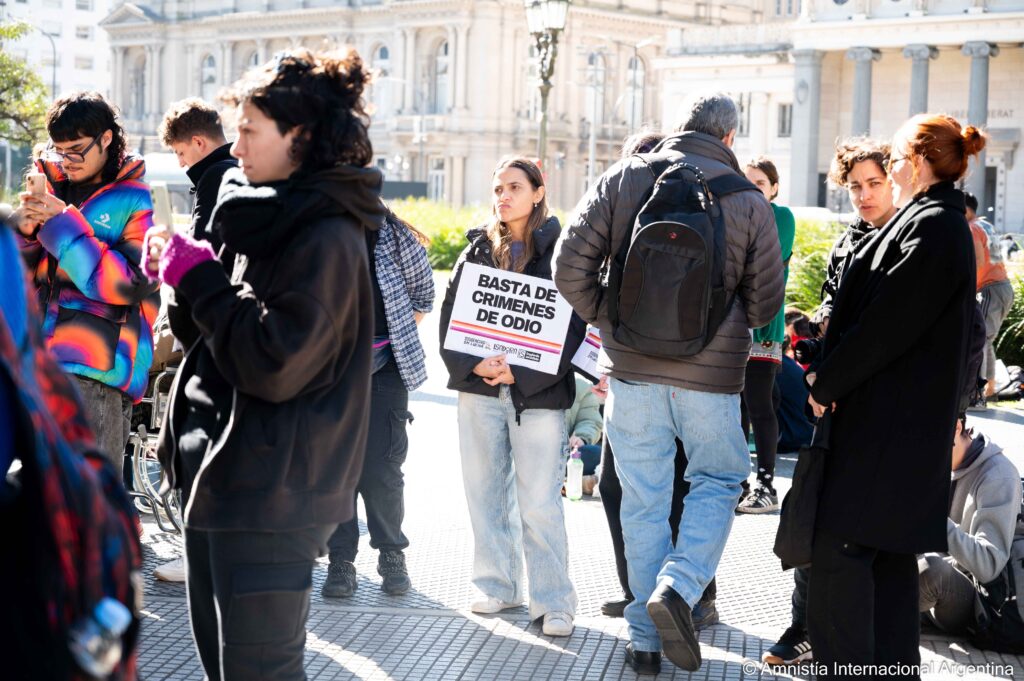
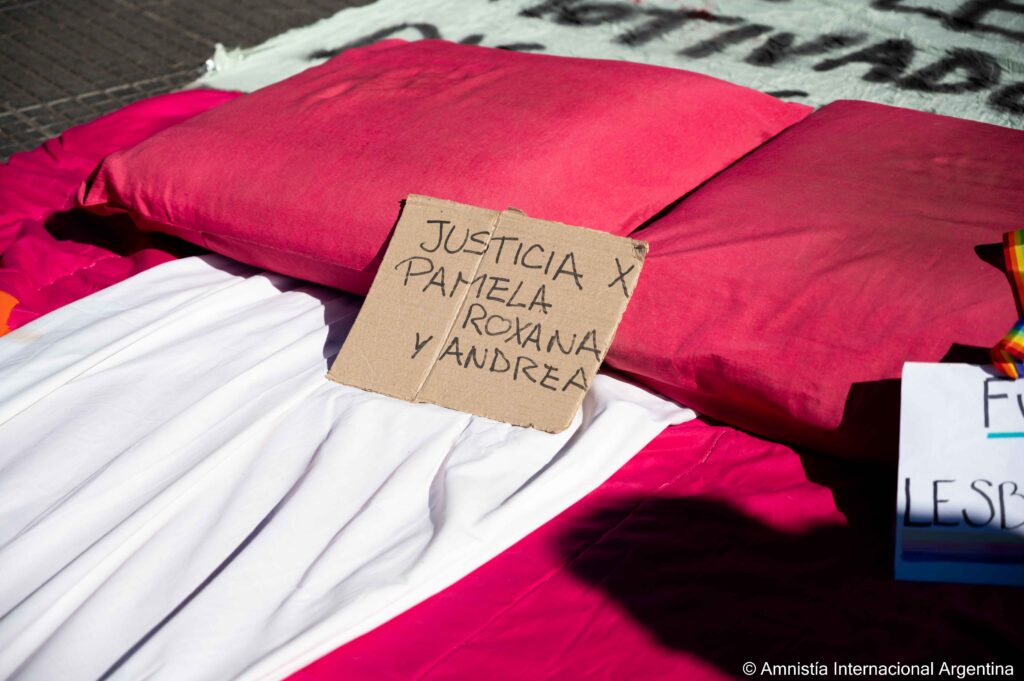
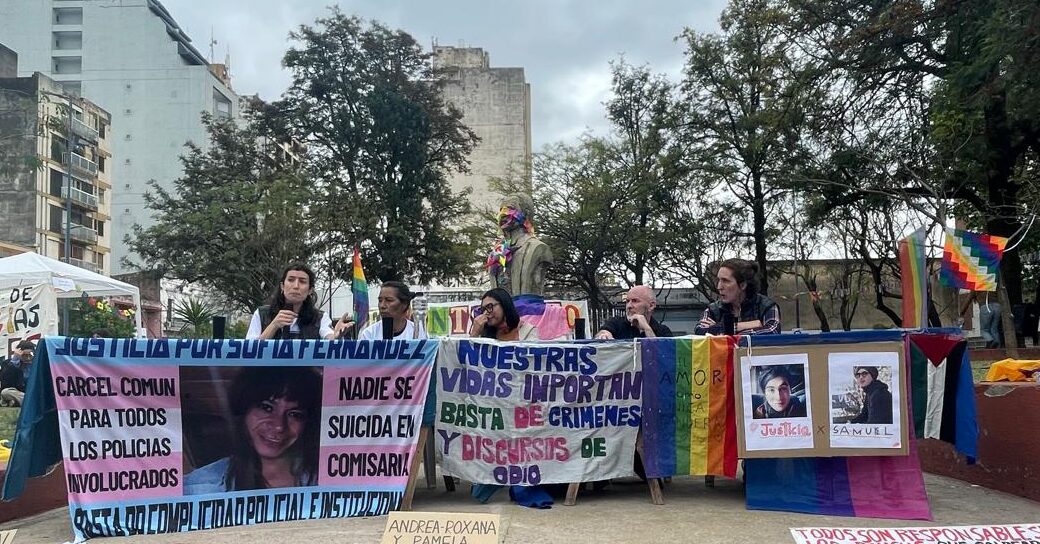
Starting at 9 a.m., organizations and activists gathered in Plaza Lavalle, near the courthouse located at 550 Talcahuano Street in downtown Buenos Aires. The day of action continues throughout the day with an open radio broadcast, performances by artists, readings, and sports activities.
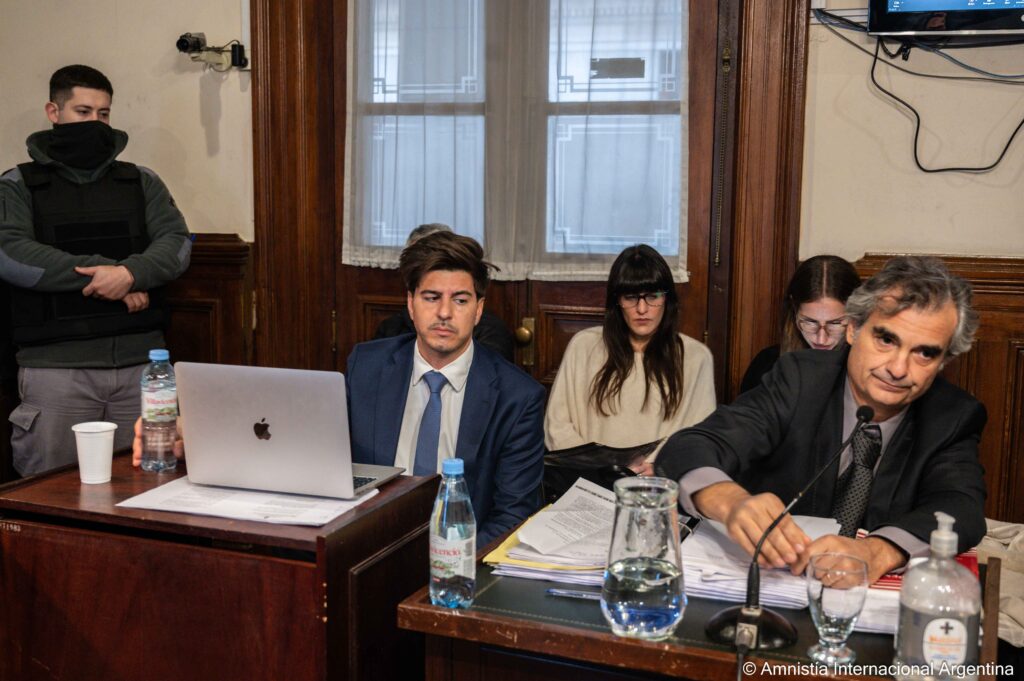
The initial hearing, presided over by Judge Adrian Augusto Perez Lance, along with Cinthia Raquel Oberlander and Juan Manuel Grangeat, began at 9:45 a.m. On this first day, the prosecution's and the plaintiffs' indictments were read aloud. They spoke twice because the defendant claimed he had not withheld the information. All parties emphasized the context of discrimination based on the victims' sexual orientation in which the massacre took place.
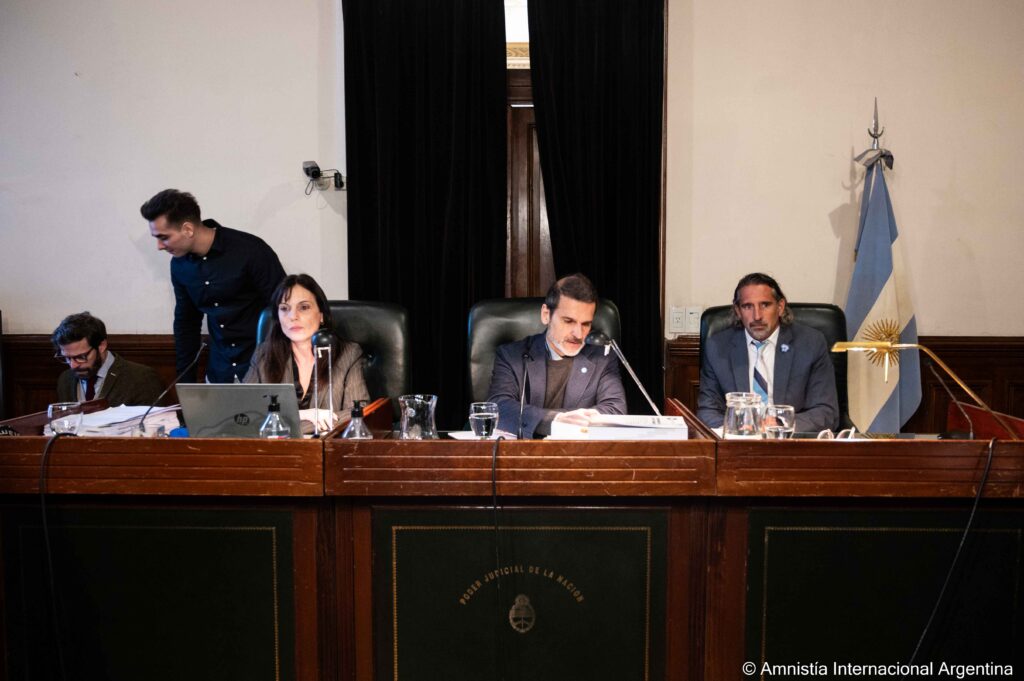
Photo: Tomás Ramírez Labrousse/Amnesty International Argentina
“I accuse Justo Fernando Barreintos of killing Pamela Fabiana Cobbas, Mercedes Roxana Figueroa and Andrea Amarante and of attempting to kill Sofía Castro Riglos, whom he seriously injured, in a prior context of discrimination due to hatred of her lesbian sexual orientation and involving gender violence,” was part of the request of the prosecutor, Juan Manuel Fernández Buzzi.
There are three lawsuits in the trial. The first is from survivor Sofía Castro Riglos, represented by lawyer Luciana Sánchez; the second is from the families of Roxana Figueroa and Pamela Cobbas, represented by the National Public Defender's Office; and the third is being pursued by a team of lawyers from sexual diversity organizations, including the Argentine LGBT Federation (FALGBT).
What happened that night?
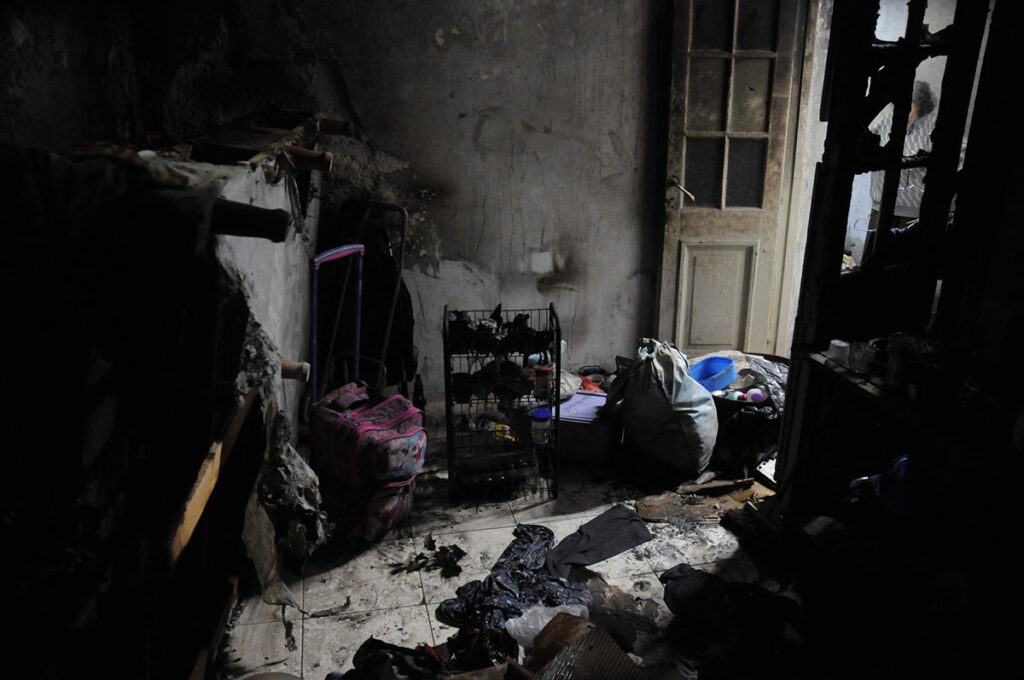
The prosecution and the plaintiffs alleged that between the night of May 5, 2024, and the early morning hours of May 6, Barrientos threw a lit object into the room where the four women were, causing a fire. They also described the brutality with which Barrientos acted. After throwing the object, "the defendant struggled with and pushed one of the women who was on the floor, throwing her back into the fire that had spread through the hallway. Finally, he attacked them again as they escaped toward the bathroom, at which point he threw buckets of fire toward the showers where Sofía and Andrea were taking refuge and struck Andrea again," the prosecution's indictment stated this morning.
As a result of the attack, Pamella died a few hours later on May 6, and Roxana two days later. Both suffered second- and third-degree burns over 90% of their bodies. Andrea died on May 12, with burns covering 75% of her body. Sofía was the sole survivor. She suffered burns over 3% of her body (hands and face), and experienced the attack as both a victim and witness. She was left with a prolonged physical disability.
The context: discrimination for being lesbians
The context of discrimination based on the victims' sexual orientation was established by the plaintiffs and the prosecutor. There were mentions of the harassment they suffered at the hands of the perpetrator. In the words of Sofía's lawyer: “The lethal attack was not an isolated incident, but rather part of a pattern of constant physical, psychological, and sexual harassment to which the women victims, perceived as lesbians, were subjected by the accused, through threats, discriminatory remarks and behaviors regarding their gender and sexual orientation, and attempted sexual abuse, all within a context of discrimination, prejudice, and structural violence against lesbians and women.”
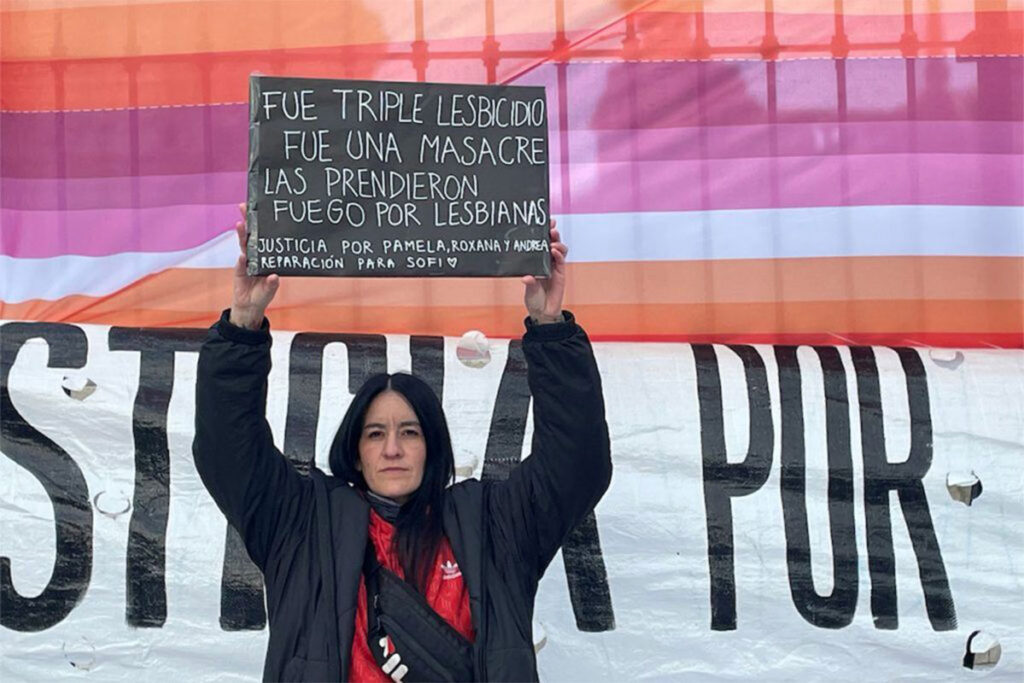
Both the prosecution and the complaints filed by LGBT+ organizations and the families of Cobbas and Figueroa refer to it as a hate crime, while Castro Riglos's complaint refers to it as a prejudiced crime. However, all agree that it was a crime motivated by the victims' sexual orientation, that is, because they were lesbian women (lesbicide).
Hate crime: what it means and where it comes from
The concept of hate crime emerged in the United States in 1985, initially termed "hate crime," in response to a wave of crimes based on racial, ethnic, and nationalist prejudices. It later expanded to include other groups, such as the LGBTQ+ community.
In Argentina, Law 26.791 (2012) introduced into Article 80 of the Penal Code on homicides the aggravating circumstance of hatred based on a person's sexual orientation, gender identity, and/or gender expression (paragraph 4). Organizations such as FALGBT describe these crimes as “a conscious, voluntary act, generally carried out with cruelty, which includes—but is not limited to—violations of the right to dignity, non-discrimination, equality, personal integrity, personal freedom, and life. This aggression is intended to cause harm or even death to the victim and is based on rejection, contempt, hatred, and/or discrimination toward a group of people who have been historically vulnerable and/or discriminated against.”.
#Trial #TripleLesbicide #Barracas
— Presents (@PresentesLatam) May 18, 2026
🇦🇷📢“We want it to be recognized as a hate crime, a lesbicide,” says @mariarachid of @FALGBT
⚖️“We want the State to recognize these victims so that public policies can be generated.”https://t.co/9v1pI8Nq0O pic.twitter.com/c9nIi8Ck21
Violence and hate crimes
Over the years, and due to the difficulties posed by the concept of hate crimes in legal proceedings, the term "bias and discrimination crimes" also began to be used. The Inter-American Commission on Human Rights refers to bias-motivated violence to emphasize that these are crimes that do not occur in isolation but rather involve social complicity.
The lawsuit, filed by Dr. Sánchez, argued that Barrientos should be tried for aggravated homicide because it was committed out of prejudice against the sexual orientation and gender expression of the four victims, who were perceived as lesbians. It was also argued that the crime was perpetrated by a man against four women through gender-based violence (femicide).
“We have been working on a line of argument developed by Say Sacayán in the context of the transphobic murder of Diana Sacayán and in various other transphobic murders where we represent the victims. We are also bringing it to this case of lesbicide. We are not talking about hate crimes, but rather about prejudice against people with lesbian identities as a manifestation of social and structural violence. That is why we speak of the systematic context of discrimination against people with lesbian identities. Particularly in this case, high-ranking state authorities had exacerbated this violence and social exclusion against the entire LGBT community through their rhetoric and actions—such as the closure of the Ministry of Women, Gender and Diversity , ” Sánchez shared with Presentes upon leaving the hearing.
The broadcast of the trial
The first hearing was broadcast via La Retaguardia and the National Judiciary's YouTube channel. Attorney Luciana Sánchez requested the repeal of the court's restriction prohibiting the broadcast or recording of testimonial hearings. After a brief recess, the judges decided to maintain the restriction only for the testimonies of neighbors of the hotel where the crime occurred. Therefore, the testimonial hearings involving experts and police officers will be broadcast, as well as the closing arguments and the verdict. The courtroom is small for both the public and journalists, but the court refused to change venues to accommodate more people, even though many had to remain outside.
Barrientos chose not to testify
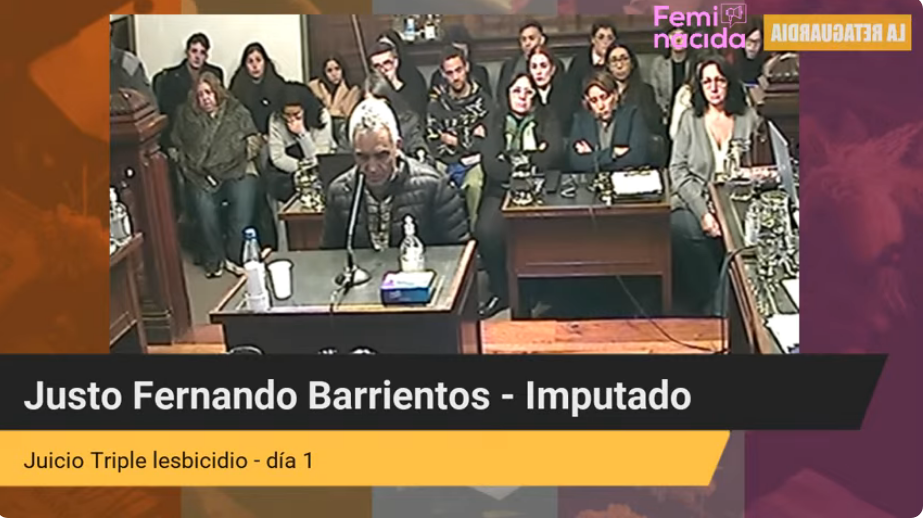
The accused, Justo Fernando Barrientos, has been in pretrial detention for two years and appeared in court today. Dressed in jeans and a black jacket, he chose not to testify, but answered questions unrelated to the crime itself, focusing instead on his identity. The 70-year-old man stated that he was born in San Miguel de Tucumán and moved to Buenos Aires at the age of 26. He was the third of seven siblings, with whom he has had no contact since the crime. He also has no relationship with his two children. At the time of his arrest, he earned a living selling candied peanuts and drinks at soccer fields.
“The presiding judge was appropriate to the situation. The defense was quite aggressive, questioning many things, including the absence of survivor Sofía Castro Riglos. They tried to delegitimize Luciana Sánchez's lawsuit, attempting to create arguments where none exist. We are waiting to hear from each witness,” lawyer Samanta Pedrozo, a member of the plaintiffs' group comprised of organizations, told Presentes
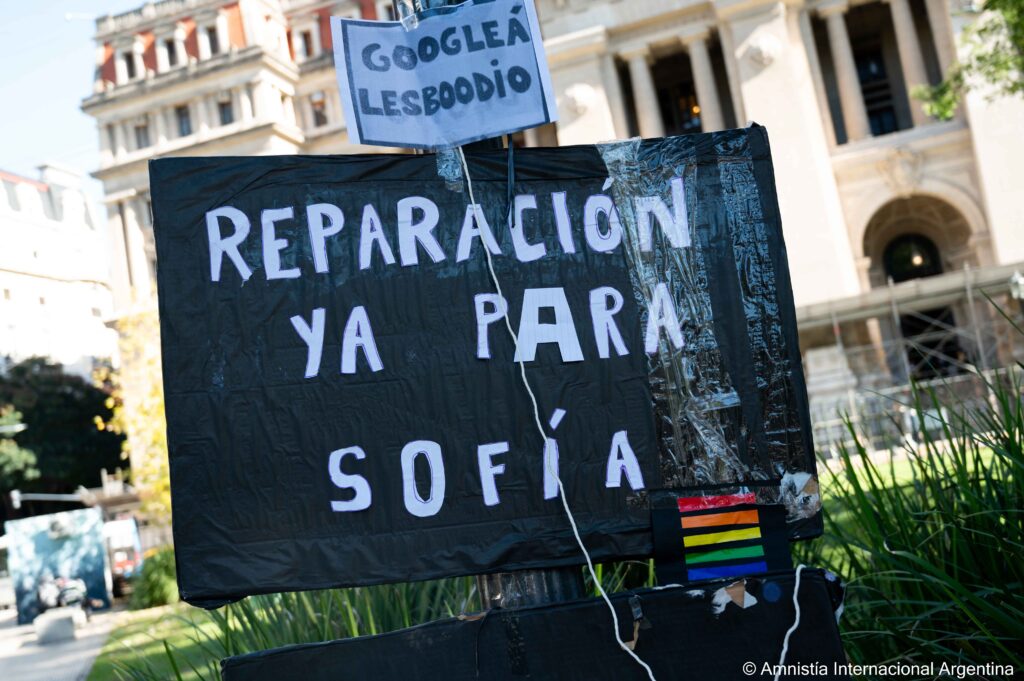
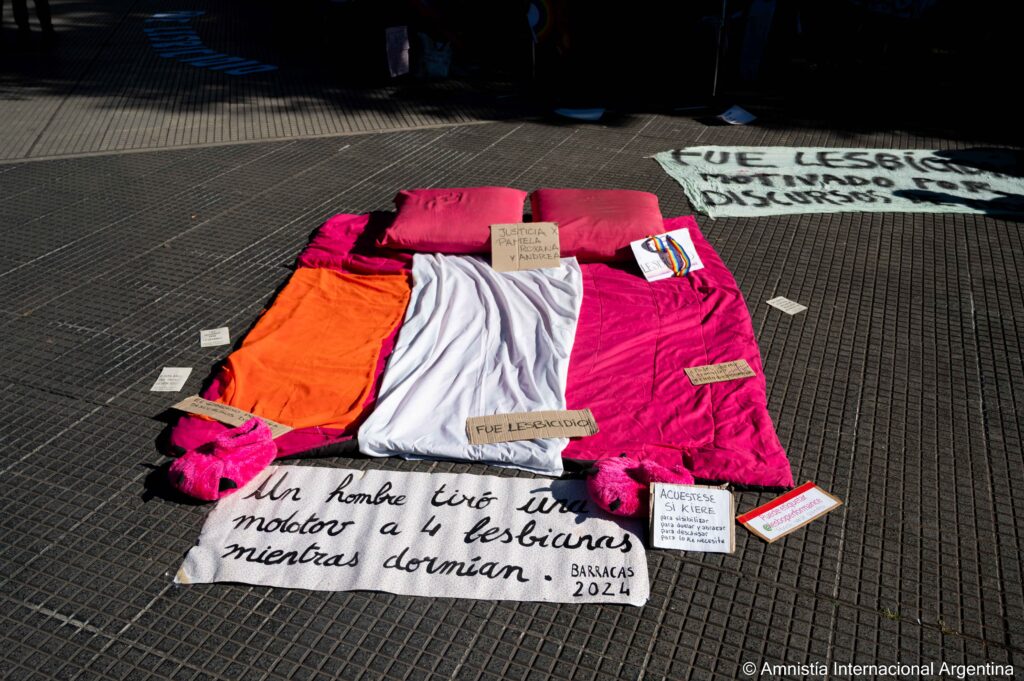
Outside the courthouse, dozens of people were arriving at Plaza Lavalle to participate in a day of support and protest. “We demand a strong conviction from the Judiciary, with the aggravating circumstance of hate, and full reparations for Sofía. Because two years after the massacre, the housing situation of the only survivor of the crime remains unresolved. We demand that it be treated as a hate crime, as a lesbicide, and that the reparations be effective,” stated the Coordinadora Lesbicidios Nunca Más (Lesbicides Never Again Coordinator), one of the groups that organized the demonstration.
Next hearing
The next hearing will be on Friday, May 22, and will include testimony from two city police officers. It will begin at 10:00 a.m. and will also be televised. Subsequent hearings are scheduled for June 22, 8, 10, and 29, and July 1. Approximately 50 witnesses are expected to testify.
Greta Schulte collaborated with the coverage.
We are present
We are committed to journalism that delves into the territories and conducts thorough investigations, combined with new technologies and narrative formats. We want the protagonists, their stories, and their struggles to be present.
SUPPORT US

FOLLOW US
Related notes
We are present
This and other stories are not usually on the media agenda. Together we can bring them to light.