

Searching mothers in Mexico: “The ball comes home, but when will our disappeared ones be found?”
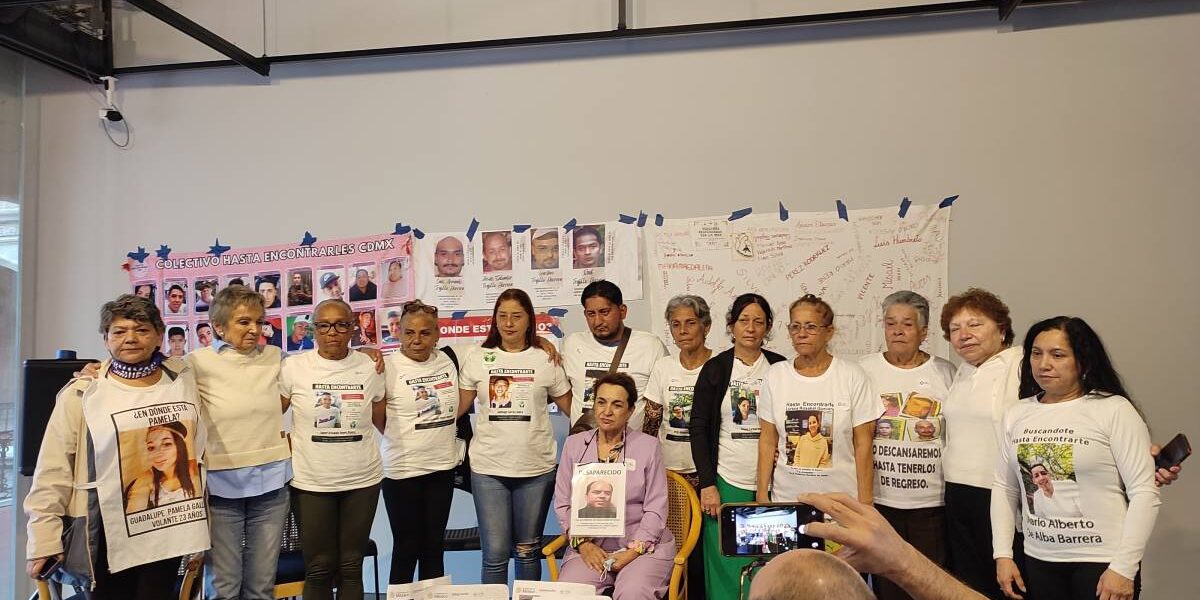
Mothers searching for their missing children in Mexico are creating strategies to raise awareness of their plight during the 2026 World Cup. Currently, 134,000 people are registered as missing.


Share

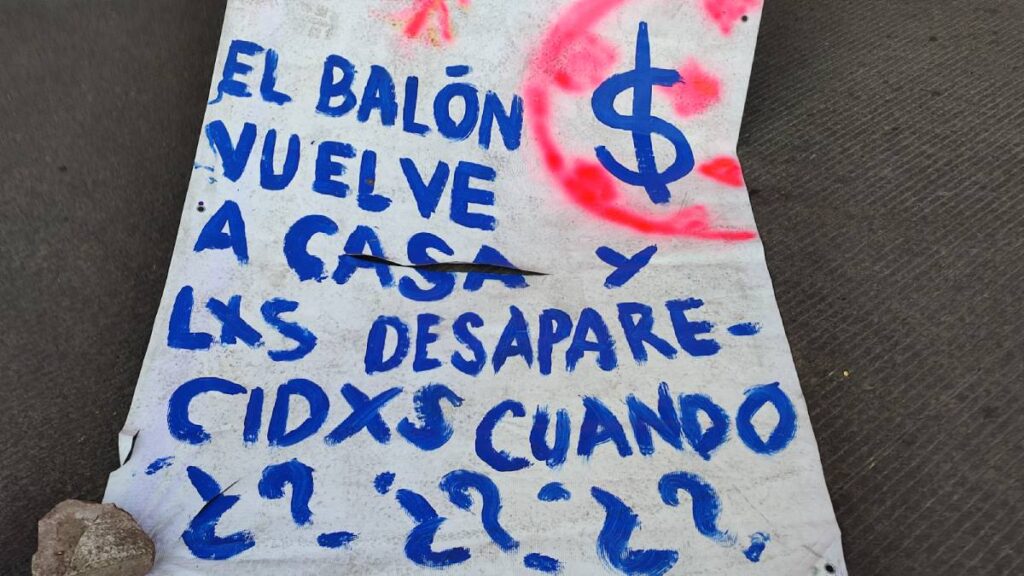
MEXICO CITY, Mexico. This year, the 2026 FIFA World Cup will be played, and three Mexican cities will host matches. Because of this, the mothers searching for their missing children are asking, echoing the government's slogan, "The ball is coming home, but when will our disappeared ones be found?"
Today, more than 134,000 people are missing in the country, according to the National Registry of Missing and Unlocated Persons. And there is a forensic crisis with more than 72,000 unidentified bodies in forensic services, medical schools, and mass graves.
The mothers searching for their missing children warn that the globalist policies of the federal and local governments are attempting to make this human rights crisis invisible. Recently, the UN Committee against Enforced Disappearances (CED) described as “a widespread and systematic practice” and “a humanitarian crisis.”
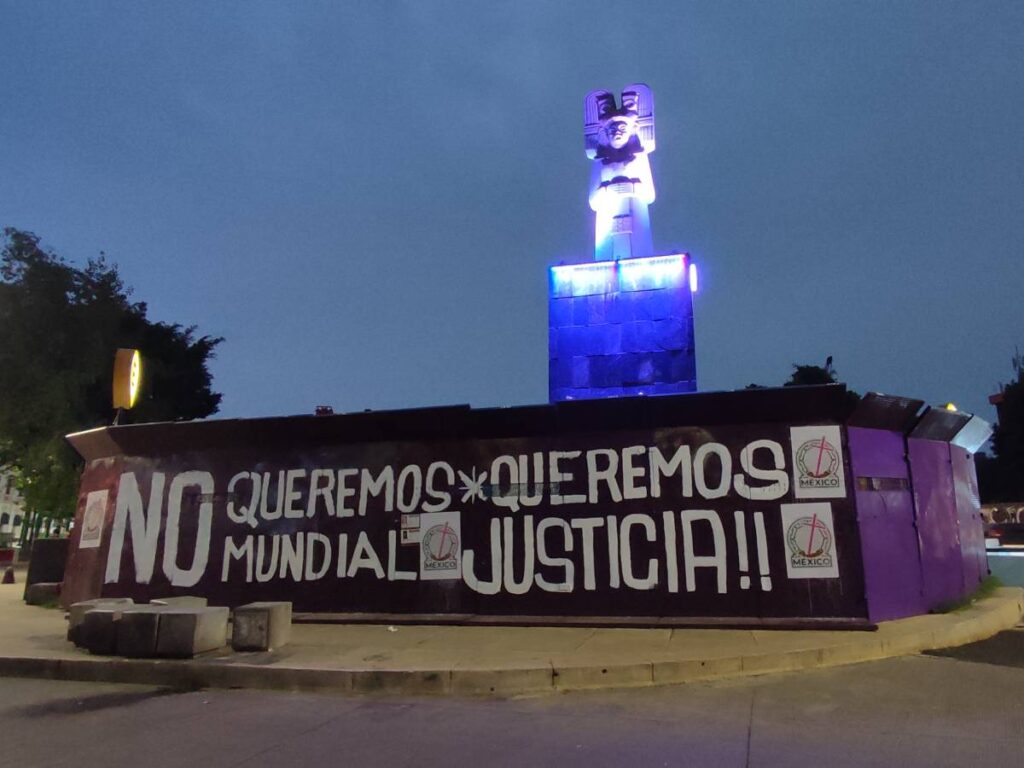
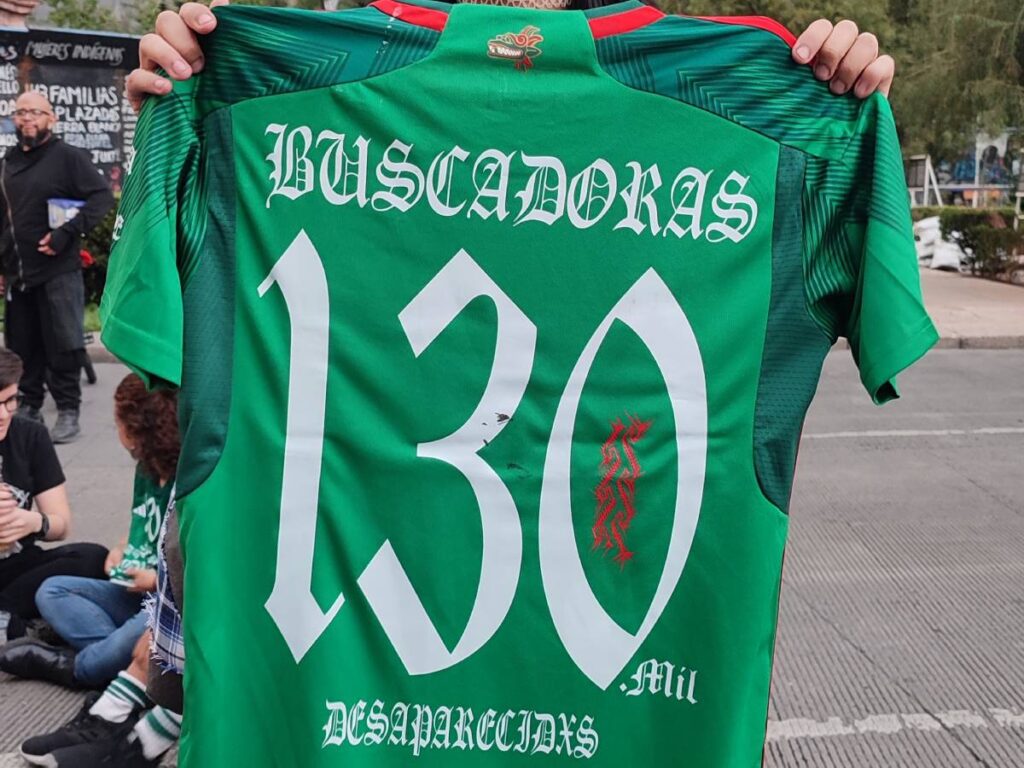
“Today we speak to them using football metaphors to see if they will see us, listen to us. We will score as many goals as possible against impunity. We will continue playing in every cup necessary until the disappeared return home,” said mothers searching for their missing loved ones during an event held on May 10 (Mother's Day).
They added: “Yes, we care about football, but we care even more about our missing loved ones. We wish they felt the immense void in a society with thousands of missing children, teenagers, men, and women as much as they feel losing a football match.”
A resource gap: the Kukulcán Plan versus the search efforts
The contrast between the investment in security for the World Cup and the search for missing persons is one of the most critical points of the complaint that groups searching for their missing persons have been making for years.
Bibiana Mendoza, from the Guanajuato collective Hasta Encontrarles, questioned this gap during the presentation of a report by the Inter-American Commission on Human Rights (IACHR).
“How much money is being distributed for the World Cup? How many people are dedicated to searching for how many missing persons? It’s truly shameful to see. And that’s why we women searchers have to get up every day to do the work that the authorities don’t do, even if it costs us our lives. Because we have to find them, and because we are also fighting so that people who aren’t going through what we are, don’t have to.”
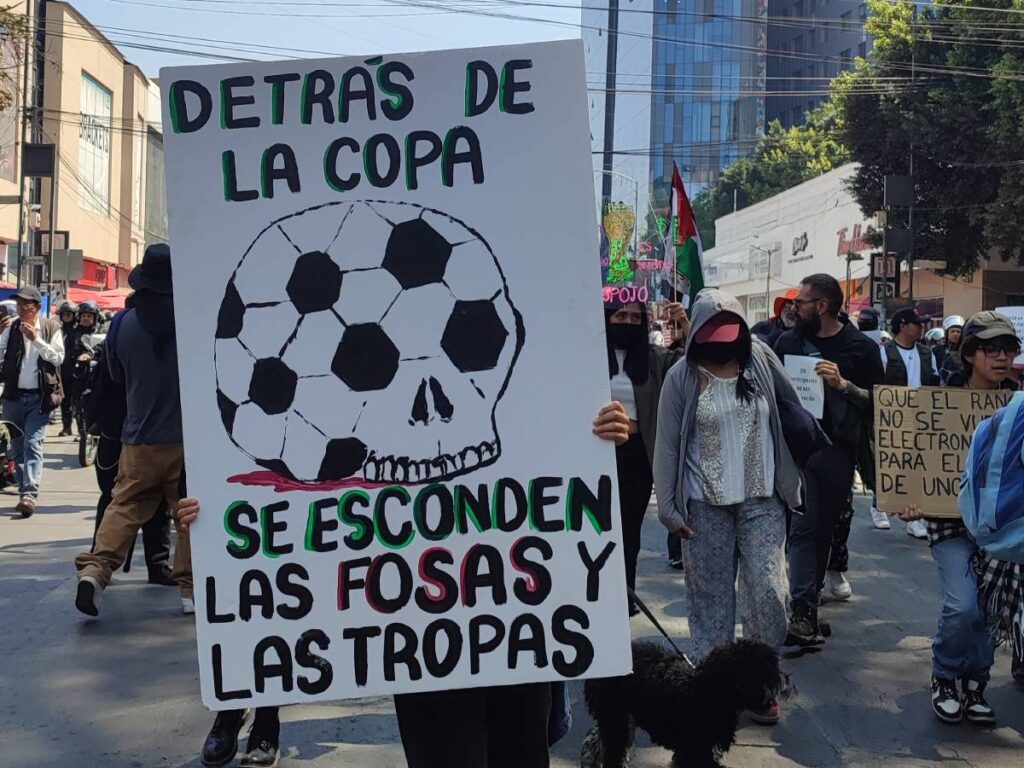
With the so-called "Plan Kukulklán," a global security strategy, the state is fortifying stadiums, airports, and hotels with cutting-edge anti-drone technology, aerial surveillance, and preventative sweeps against chemical and nuclear attacks. Meanwhile, the mothers searching for their missing children must pay for their own tools, including tools like pickaxes, dowsing rods, and shovels for field searches. They lack state protection and face the risk of being murdered or disappeared for carrying out the work that should be done by the authorities.
Between 2010 and 2026, 44 people searching for their missing loved ones were murdered or disappeared in Mexico. Five of these attacks occurred during the administration of President Claudia Sheinbaum, according to Article 19.
Search actions: mass pasting of cards, pickup games, and videos with AI
Groups in at least fifteen countries are organizing a series of peaceful demonstrations, protests, and memorial events. They intend to use the World Cup as an international platform to demand that missing persons be searched for alive and that truth and justice prevail.
Distributing and posting missing person flyers and building memorials are not new actions. They are part of the search strategies employed by numerous collectives and mothers searching for their missing loved ones throughout Mexico. However, families have noticed something particularly concerning this year: the destruction and vandalism of missing person flyers by police and public officials.
The families searching for their missing loved ones denounce these erasure actions as "part of a 'clean-up,' to present a 'clean image' to tourists. To say 'nothing is happening here.'".
“It’s shameful to hear that (the authorities) want to cooperate with the victims when they’ve been covering up all the missing persons cases to host a World Cup. It’s more important to see a soccer player’s picture than my brother Manuel’s, who has been missing for eight years,” said Bibiana Mendoza during her speech at the presentation of the IACHR report.
Given the World Cup situation, the searchers are planning a series of actions in which they ask for the participation of society to show solidarity on June 11, the day of the inauguration, at the Banorte Stadium (formerly Azteca Stadium).
What are the actions
- Mass distribution of search cards: the idea is to distribute sheets with the ID cards of missing persons at the entrances of stadiums so that attendees entering the matches can show them.
- "Soccer games for remembrance": symbolic soccer matches will be held in various public squares to honor the victims. Families searching for their missing loved ones say it's also a way to keep their memories alive, because many of the disappeared enjoy this sport.
- AI Campaign : The Luz de Esperanza collective created videos using artificial intelligence that show missing persons describing the humanitarian crisis the country is going through.
“These videos were made with photos of our children. Using AI, they narrate topics related to the World Cup, the government's actions to avoid searching for them, and at the same time, missing person posters appear. There are thousands of people missing, and this campaign aims to reach all the people who come to enjoy the football. Enjoying football isn't wrong; what's wrong is forgetting them,” explained Hector Flores, co-founder of this search collective, in an interview.
The map of horror at the World Cup venues
The World Cup venues in Mexico coincide with some of the regions most affected by this human rights crisis.
Jalisco, home to four matches, is the state with the highest number of disappearances nationwide, with more than 16,000 victims. Extermination centers like the Izaguirre ranch, where hundreds of pants, shoes, backpacks, and documents revealed the scale of forced recruitment and the disappearance crisis in Mexico. And less than 20 kilometers from Akron Stadium, multiple clandestine graves have been located containing hundreds of bags with human remains.
Nuevo León, with BBVA Stadium as its venue, ranks fifth nationally in disappearances. And Mexico City (CDMX) is registering an increase in disappearances of women and teenagers, especially in the southern boroughs of the city, where the stadium hosting the opening match is located.
“Disappearances in Mexico are crimes against humanity”
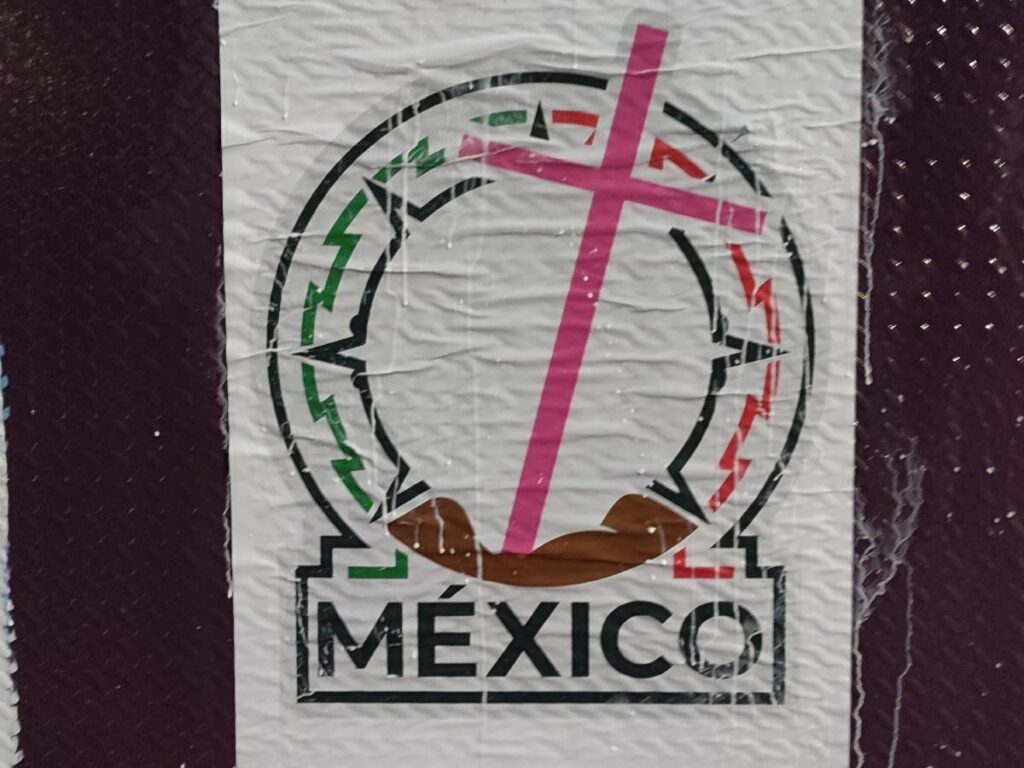
On April 2, 2026, the UN Committee against Enforced Disappearances invoked Article 34 of the International Convention for the First Time, requesting that the situation of disappearances in Mexico be brought before the General Assembly. The Committee concluded that there are “well-founded indications” that enforced disappearances in Mexico “constitute crimes against humanity due to their systematic and widespread nature.”.
The report documents the direct involvement of public officials and state complicity with criminal groups, and points to “almost total impunity.” The UN has offered Mexico technical cooperation and financial support “to strengthen forensic analysis and the investigation of links between authorities and organized crime,” an offer rejected by the federal government. The president of Mexico reiterated her position, arguing that “in Mexico, there are no enforced disappearances perpetrated by the state.”
For its part, the Inter-American Commission on Human Rights (IACHR), in its recent report Disappearances in Mexico, stressed that “the responsibility of the State is unavoidable due to the lack of prevention, search and justice (…) even if there is no deliberate federal policy of disappearance.”
“The State’s response is a narrative of denial”
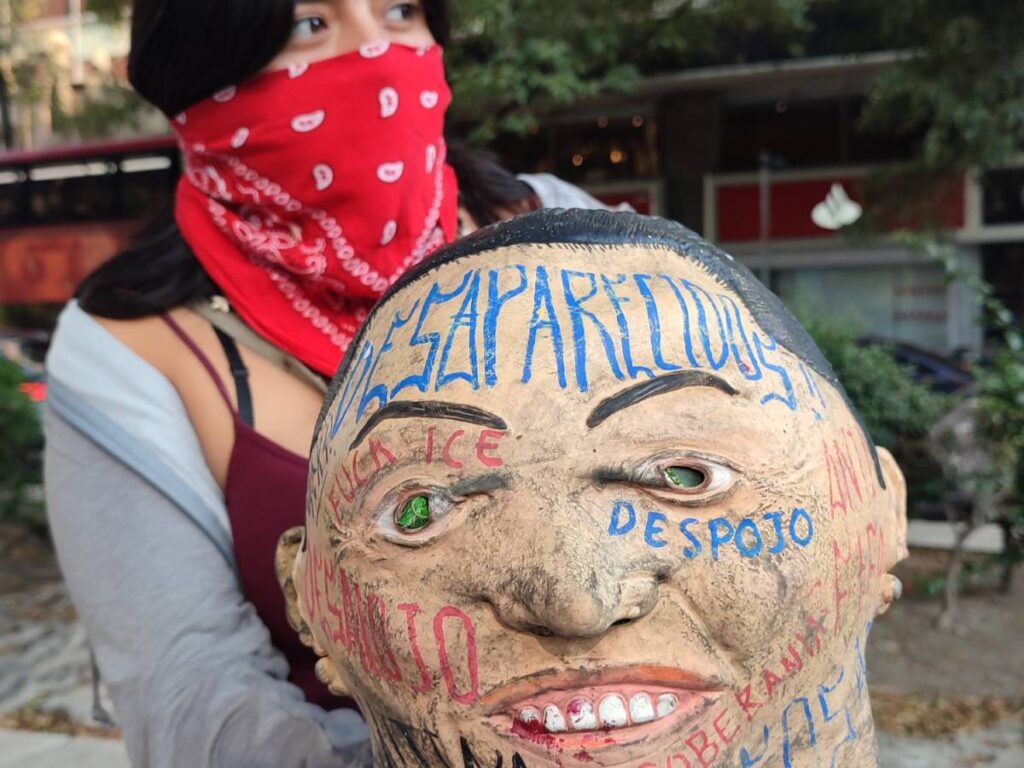
In response to the UN and IACHR's findings, President Claudia Sheinbaum's administration has opted to reduce official figures without methodological or legal basis, and has denied enforced disappearances—that is, those in which the State is involved.
The government described the UN report as "biased," "partial," and "lacking legal rigor," arguing that enforced disappearances committed by federal authorities have "disappeared" since 2018, the year the president's political party and model nation came to power with the government of former president Andrés Manuel López Obrador.
"The State's response is a narrative of denial. They say there are no more forced disappearances, but we continue to experience them at every checkpoint, in every omission by the prosecutors who refuse to meet with us. We experience it in every threat we receive. Every time they don't take our reports, don't investigate, and much less investigate their own agents who are also involved in this horror we are living through," denounce the mothers searching for their missing loved ones.
We are present
We are committed to journalism that delves into the territories and conducts thorough investigations, combined with new technologies and narrative formats. We want the protagonists, their stories, and their struggles to be present.
SUPPORT US

FOLLOW US
Related notes
We are present
This and other stories are not usually on the media agenda. Together we can bring them to light.