

Same-sex marriage in Guatemala: calls to declare its prohibition unconstitutional
Activists filed legal challenges for the first time seeking to have the restriction on same-sex marriage declared unconstitutional.


Share

GUATEMALA CITY, Guatemala. The Lambda Association and other organizations working for the rights of LGBTQ+ people and migrants filed a constitutional challenge with the Constitutional Court. They are requesting a review of the civil code and the reform of Article 78 to allow for same-sex marriage.
Background
In 2017, a group of conservative members of parliament, led by Aníbal Rojas of the Vision with Values party and Cristian Bussinot of the Todos party, along with other members, introduced Bill 5272, known as the Law for the Protection of Life and Family. According to local press reports, Bussinot served a sentence in 2019 for extortion, abuse of authority, embezzlement, and misuse of public funds. The proposed bill sought to expressly prohibit same-sex marriage in the civil code. It also aimed to ban comprehensive sex education and increase penalties for pregnant people who had abortions. Furthermore, it included penalties for healthcare personnel who assisted such individuals. This anti-rights initiative did not pass.
However, the State of Guatemala had already issued a statement regarding Advisory Opinion OC-24/17 requested by Costa Rica. There, through the then COPREDEH, it expressed the following:
“It is established that, in general principle, in matters of human rights, treaties and conventions accepted and ratified by Guatemala have preeminence over domestic law.”.
Despite this, in an unusual turn of events, during the commemoration of the International Day for the Elimination of Violence against Women on March 8, 2022, the bill that had been shelved in 2019 resurfaced and was approved by a majority of 101 members of parliament. It received only 8 votes against it.
This approval was deemed unconstitutional by sectors of civil society for violating the human rights of women and sexual diversity, as well as negatively impacting healthcare workers. Civil society mobilized to the Congress of the Republic to demand its repeal, and due to social pressure, it was vetoed by then-President Alejandro Giammattei.
What's happening now?
Although the Guatemalan civil code does not contain any article that expressly prohibits marriage between people of the same sex, article 78 of the same code states the following:
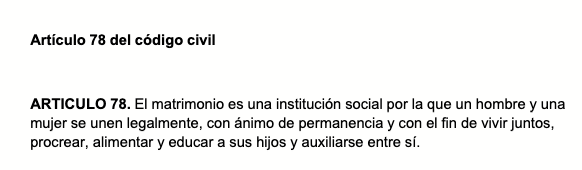
In this regard, Diego Lima, representative of the Lambda Association, told Presentes that they filed a constitutional challenge "so that the court can question said article of the civil code." Legally, Lima explained that constitutional challenges allow the Constitutional Court to exercise constitutional review over laws. That is, to ensure that all domestic regulations comply with international standards and the principles established by the constitution. The purpose of the constitutional challenge is to have the words "man and woman" and "procreate" in the civil code removed because they violate human rights and undermine equality and non-discrimination. Furthermore, the action seeks to ensure that same-sex couples have access to property protection, healthcare, and social security, which they currently lack.
What's next?
We asked Lima about the role of Congress, and she emphasized that at this point, two things could happen indefinitely: either the Constitutional Court could rule in favor of the unconstitutionality claim presented by the Lambda Association and remove the words "man and woman" and "procreate" from the civil code. This would grant rights that same-sex parent families currently lack, such as widow's pensions, inheritance rights, and access to their spouse's health insurance or post-mortem arrangements. Alternatively, the Constitutional Court could order the Congress of the Republic to legislate in favor of marriage equality. She noted that this could take many months or even years.
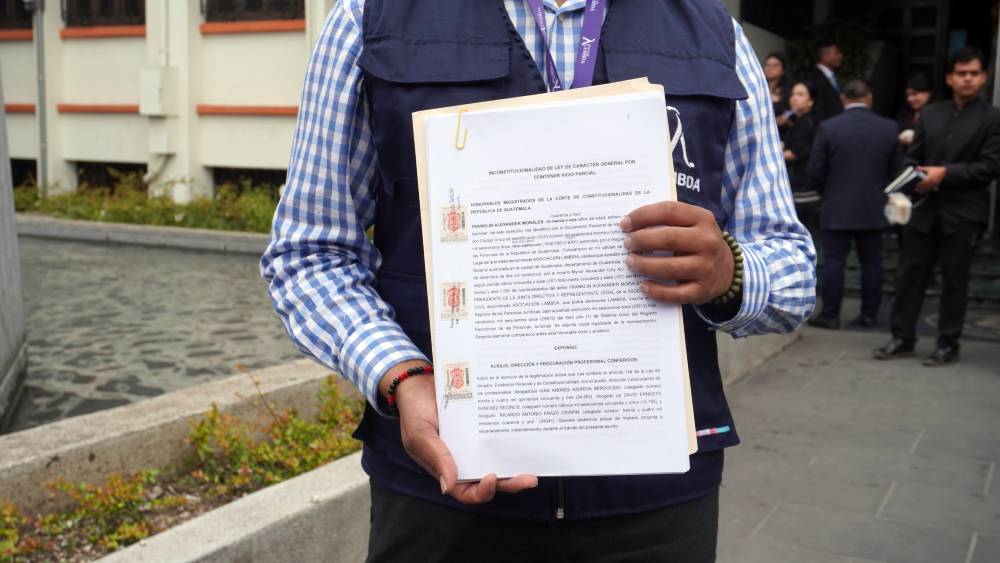
At the time of this writing, the Constitutional Court has issued a “temporary” ruling, according to a statement from the Lambda Association. The Court, in case file 6086-2026, has decided “not to grant the provisional suspension of the terms ‘man and woman’ and ‘Procreate’ contained in Article 78 of the Civil Code.” The Lambda Association statement clarifies that this recent ruling is only a preliminary step and does not constitute a rejection of the legal action.
We contacted Raíces , a supposedly progressive political party with representation in Congress and a former member of the ruling coalition. The party issued a statement in June, Pride Month , in support of the LGBTQIA+ movement. We wanted to know their position on the issue and whether they would support this constitutional challenge until it is fully resolved. As of the time of publication, we had not received a response.
We are present
We are committed to journalism that delves into the territories and conducts thorough investigations, combined with new technologies and narrative formats. We want the protagonists, their stories, and their struggles to be present.
SUPPORT US

FOLLOW US
Related notes
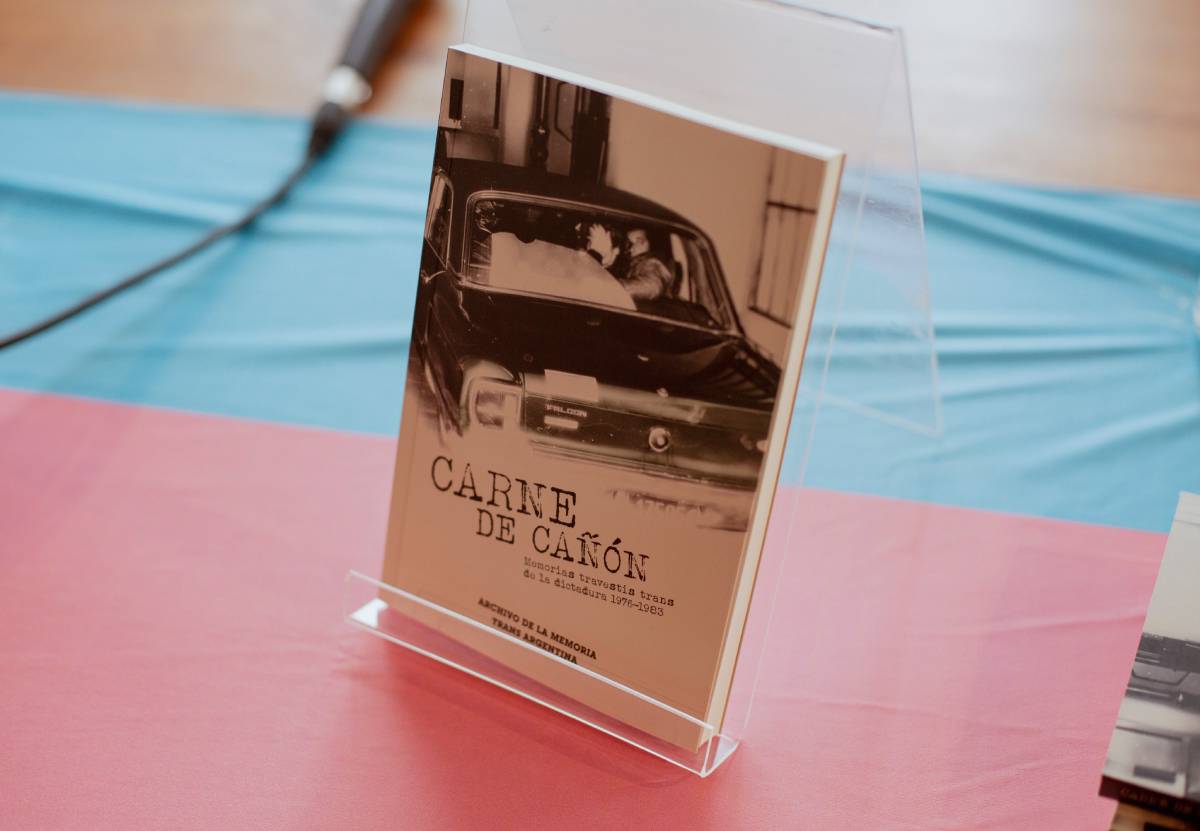
Cannon fodder: the book that recovers silenced stories of transvestites and trans people during the civic-military dictatorship
Lechedevirgen: “Undoing art means restoring its ritual and collective dimension”
Why the trial for the murder of Eldin and Milton could be historic for Guatemala's LGBT community
We are present
This and other stories are not usually on the media agenda. Together we can bring them to light.