

Transfeminicide in Mexico: landmark ruling and legislative neglect in Nuevo León
In Nuevo León, the murder of two trans women was recognized as femicide. Activists are demanding legislative reform to include transphobic violence in the state's penal code.


Share

MEXICO CITY, Mexico. The Nuevo León Attorney General's Office, through its Specialized Prosecutor's Office for Femicides, handed down a landmark sentence. For the first time, it recognized the murder of two transgender women as femicide. Julio César 'N' was sentenced to 96 years and 5 months in prison for the femicides committed in the municipalities of Guadalupe and Monterrey. The crimes occurred in 2024, and the victims' identities are being withheld.
In the oral trial, the judge issued his ruling, establishing gender-based reasons in the facts to support the charge of femicide, including the identities of the victims. This was reported by the prosecution in a statement. To reach this landmark sentence, the Femicide Prosecutor's Office demonstrated aggravating factors such as cruelty, the public display of the bodies, and evidence of sexual violence.
🔺96-YEAR PRISON SENTENCE FOR FEMICIDE🔺
— Nuevo León Prosecutor's Office (@FiscaliaNL) September 22, 2026
The Nuevo León Attorney General's Office, through the Specialized Prosecutor's Office for Femicides and Crimes Against Women, in the first conviction handed down in Nuevo León for… pic.twitter.com/tXi0m1j8Df
A landmark ruling with the wording of the trans activists
The reasoning behind this ruling stemmed from social mobilization and the work of trans activists. For two years, they have been demanding a reform of the penal code to recognize transphobic violence within the chapter on the crime of femicide.
“The ruling is a document we drafted in a working group. I think it’s good that they did it, but it’s not what we’re asking for or what we’re hoping to achieve. A ruling is necessary, but it should be based on the law, not on the prosecutor’s goodwill,” explains Ana Eugenia Rodríguez, a trans activist from Monterrey. Rodríguez maintains that this ruling does not address the underlying demands.
“It’s good that they did it. It’s good for the families of the people involved, but it’s not enough. It will be enough when this reform that we are requesting is approved in the Nuevo León Congress,” he adds.
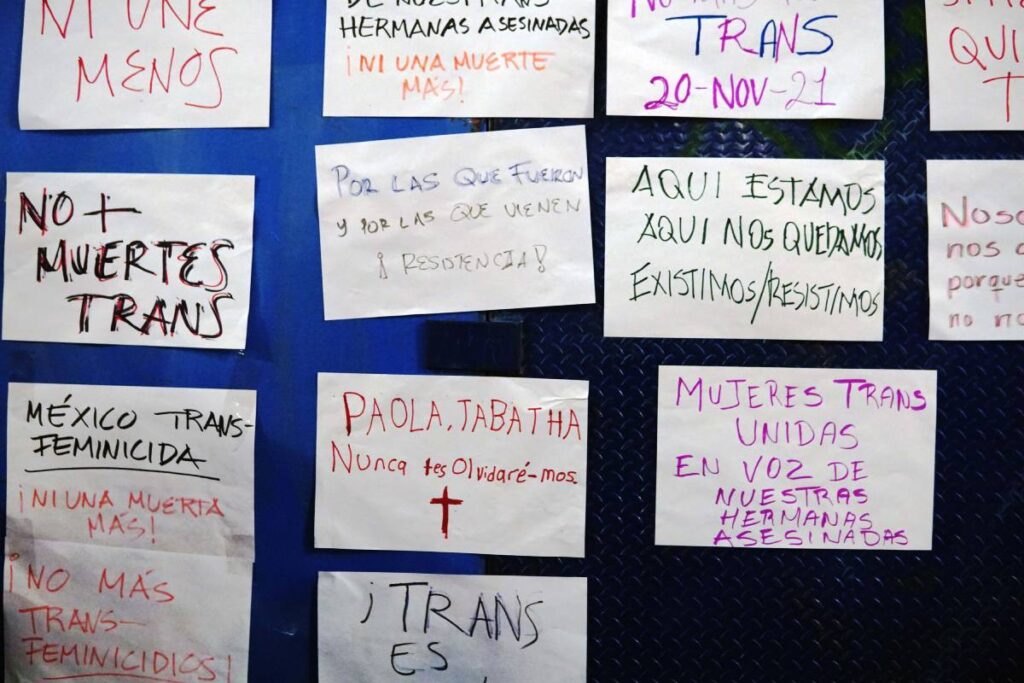
Prevent and generate public policies
Beyond this ruling, the proposed reform to the Nuevo León Penal Code was introduced in 2024. That is, it has been stalled in the Justice Committee of the state Congress for two years. What they are demanding in Nuevo León is that the chapter on the crime of femicide address the contextual realities and vulnerabilities faced by trans women, and that specific aggravating circumstances be established for those who threaten their lives.
For trans activists, criminalization is not solely a punitive endeavor, but the only legal way to force the State to build prevention mechanisms, budgets, and official statistics, which have been nonexistent until now at the state and federal levels.
“What isn’t named doesn’t exist, and that’s precisely where the fight begins. There are no investigation files for the murders of trans women. To stop demanding justice and to lower the rates of violence against us, there must be prevention. And if it isn’t named, it will be very difficult to create the corresponding protocols,” explains Ana Eugenia.
“We need to have real data. We need to have complete and unbiased investigation files, and we need to have public policies with earmarked budgets to increase prevention of violence against trans people. This will happen once legislative progress is made,” she adds.
How many states in Mexico have criminalized transfeminicide?
Unlike other entities or legislative discussions that call for the creation of transfemicide as a new criminal offense, as happened in Mexico City in June 2024 and in 2025 in the State of Mexico and Campeche, the proposal from trans activists in Nuevo León goes further. It consists of incorporating an explicit chapter within the framework of the existing Femicide Law in the state's Penal Code.
This same strategy was implemented in Nayarit in 2024. A new criminal offense was not created; instead, an aggravating circumstance was added to the existing definition of femicide to consider gender as a motive when “the crime is committed against a trans woman or a person whose gender expression falls within the female gender spectrum. In 2025, Baja California and Baja California Sur also expanded the definition of femicide to include trans women.
The rest of the country's penal codes, including the federal one, still do not include transphobic violence within their penal codes. The Comprehensive Trans Law seeks to address this, but the authorities continue to ignore and disregard the activists who are promoting it.
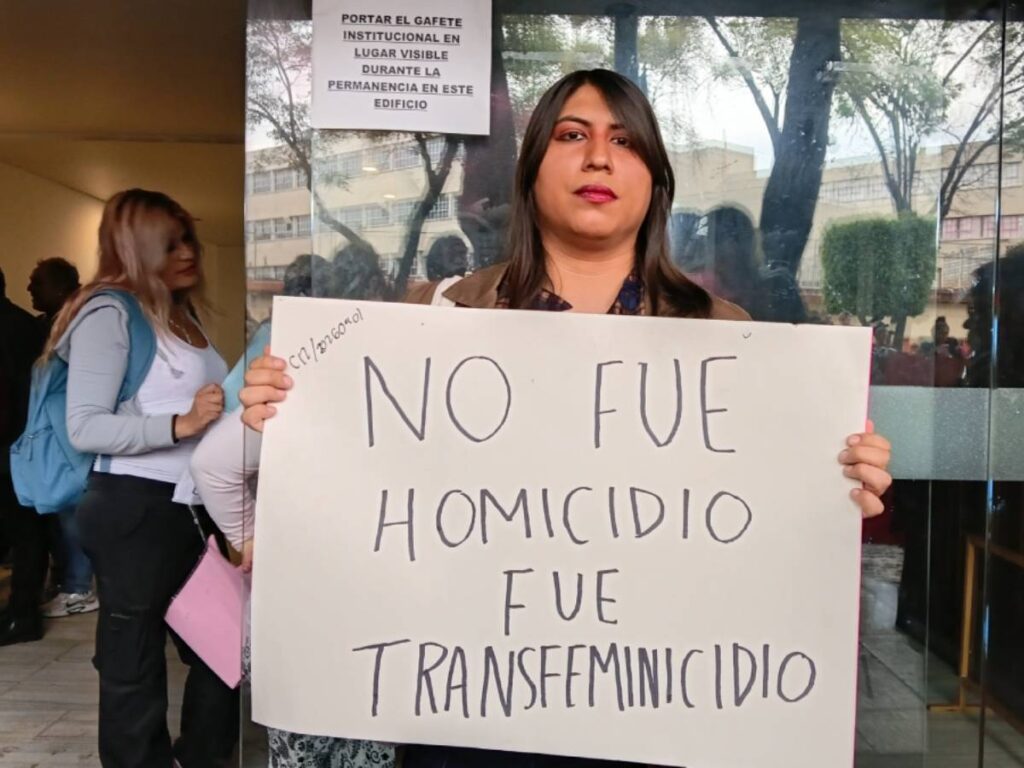
“Breaking down the anti-rights wall” in a conservative state
In Mexico, "plantones" are protest strategies that have been used by various social movements over the years to demand social justice. They consist of setting up tents and continuously protesting outside government institutions to ensure their demands are heard.
The trans encampment outside the Nuevo León Congress will mark its first anniversary on November 20. During this time, the protesters have denounced constant attacks and the deprivation of basic necessities such as water, access to restrooms, and electricity. “They constantly come to take pictures of us from the front and mock us. Theytry to instill fear in us through harassment and intimidation so that we give up, but they haven't succeeded. We have endured it in a superhuman way,” says Ana Eugenia.
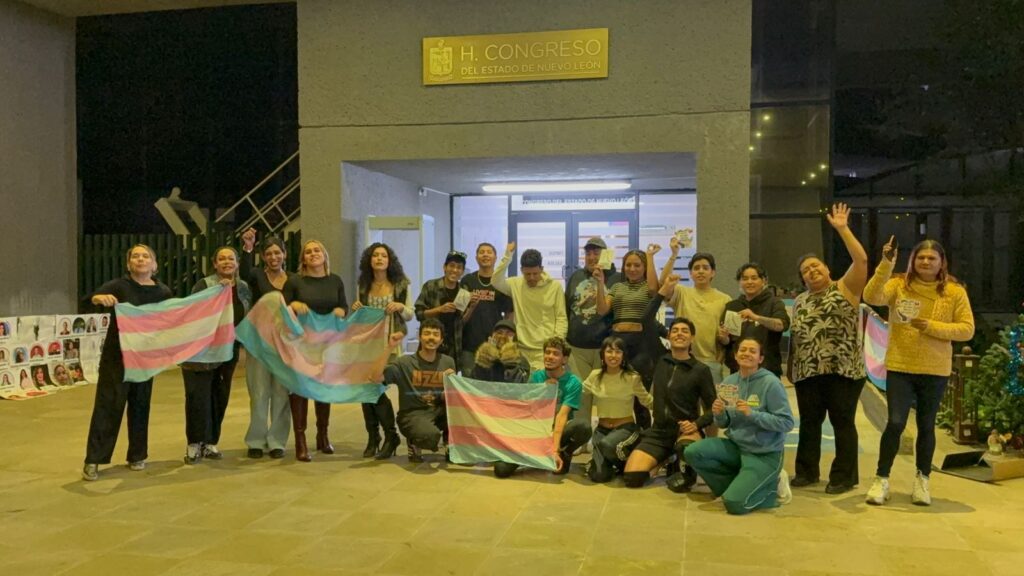
Despite the harassment, the protest has forged alliances with other social causes in Monterrey, such as demands for the right to the city, the Santa Catarina River water crisis, public transportation , and the rights of people with disabilities. The goal, says Ana Eugenia, is to “break down the wall of anti-rights.”
“In Nuevo León, the three levels of power (legislative, executive, and judicial) have always favored conservative causes and have always been against or not in favor of social justice. We want to set a precedent by breaking down this wall of anti-rights legislation so that not only our issues can move forward, but also everything else that remains to be resolved,” she explains.
Transfeminicide convictions in Mexico are few and far between
In Mexico, the prosecution of violent deaths of trans women and the convictions with a gender perspective that respects their identities and recognizes transfeminicidal violence are few and far between.
According to Letra S's reports on LGBT+ hate crimes in Mexico, "authorities show a systematic lack of interest." "Only in 10% of homicide cases involving LGBT+ people is an investigation opened focusing on hate crimes. The remaining 90% are usually mistakenly filed away as robberies or under the prejudiced concept of 'crimes of passion.'"
The first landmark ruling recognizing the gender identity of a murdered trans woman and classifying the crime as femicide occurred in 2020 in the state of Morelos. Honorio 'N' was sentenced to 26 years and 8 months in prison for the 2019 murder of Ana Paula. The judge recognized the victim's gender identity.
In the case of activist Agnes Torres, murdered in 2012, her four attackers were sentenced in 2018 and 2022 for homicide and aggravated robbery. The judges' ruling did not cite any prejudice based on Agnes's gender identity, despite a requirement from the Inter-American Court of Human Rights (IACHR) to investigate this crime "because of her gender identity and/or because of her human rights work."

In Presentes we tell the story of Mireya Rodríguez Lemus, murdered in 2020. Although there was a sentence for femicide only in April 2026, the judicial process was plagued by institutional transphobia.
We also reported the case of Naomi Nicole, known as La Soñaré, who was murdered by two soldiers in Mexico City in 2020. In 2022 they were sentenced for the crime of homicide, although the judge in his reading argued the circumstances of Naomi's vulnerability as "a hate crime due to transphobia".
The landmark 96-year prison sentence handed down in Nuevo León to Julio César 'N' for the femicide of two trans women whose identities are being withheld demonstrates the effectiveness of the trans movement and its resilience during the sit-in. However, it also underscores the urgent need for the Nuevo León Congress to translate the judiciary's goodwill into what activists are demanding: reforming the penal code to include transphobic violence within the crime of femicide.
We are present
We are committed to journalism that delves into the territories and conducts thorough investigations, combined with new technologies and narrative formats. We want the protagonists, their stories, and their struggles to be present.
SUPPORT US

FOLLOW US
Related notes



We are present
This and other stories are not usually on the media agenda. Together we can bring them to light.