

Comprehensive Trans Law and historical reparation: the urgent demand in Mexico
Activists and survivors of institutional violence demand that the Mexican State comply with recommendation 42/2024 of the CNDH to guarantee comprehensive protection and justice for older adult trans people and non-binary people.


Share

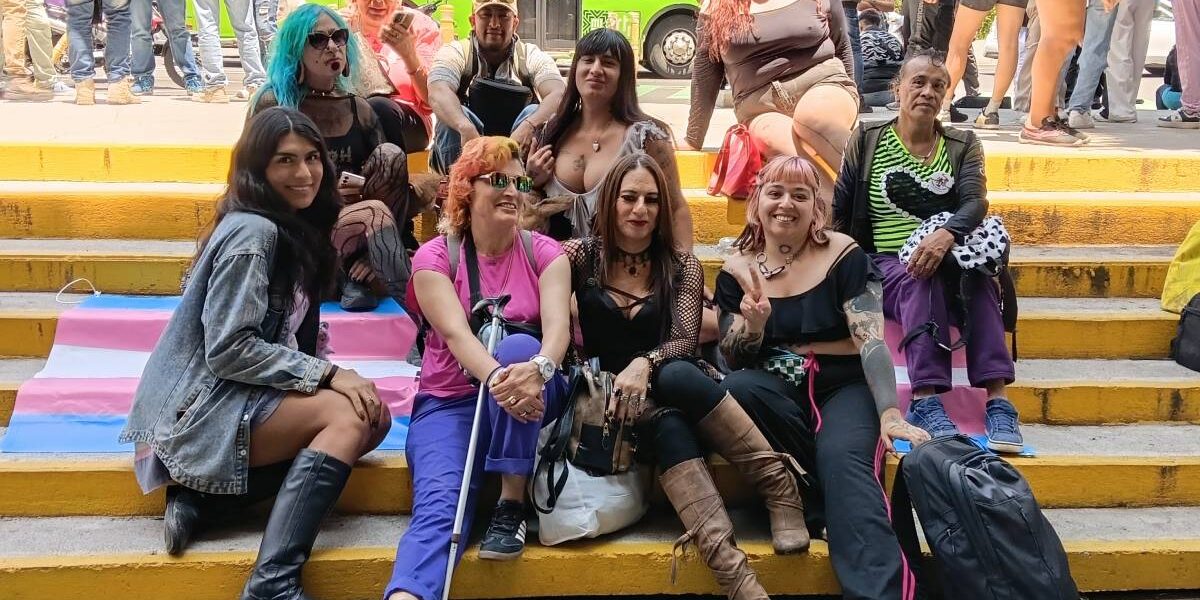
MEXICO CITY, Mexico. Trans and non-binary activists, along with older trans women who survived state persecution in Mexico during the 1970s, are demanding the passage of the General Law on Comprehensive Access to the Rights of Trans Persons, also known as the Comprehensive Trans Law. This demand is based on Recommendation 42/2024 from the National Human Rights Commission (CNDH), which recognizes the systemic violation of basic rights and the legislative omission in protecting this population from violence and exclusion.
After more than two years of waiting, on July 24, the first dialogue table was held with officials from the federal government and Mexico City to move the law forward.
The trans and non-binary people who attended the first meeting are organized in the Lupilla Xiu Common Front. It is named in honor of Lupilla Xiu, an Indigenous trans activist who died due to lack of access to healthcare in front of the Ministry of the Interior (Segob) in September 2023.
This dialogue was made possible after a street protest held by trans people for more than 20 days, in what became known as the trans sit-in.
During this first dialogue session, the collectives denounced the fact that the material living conditions for trans and non-binary people in Mexico have not improved. Before entering the meeting, trans women reminded everyone that trans femicides continue to occur, with as many as four in a single week. They demanded the urgent guarantee of rights, an end to the criminalization of protest, and historical reparations for older trans women.
What is recommendation 42/2024 and what does it require of the Mexican State?
Recommendation 42/2024 arose from complaints filed on February 1, 2024, by various organizations, including the collective Lleca, "Listening to the Street," dedicated to providing shelter to transgender people experiencing homelessness. The document states that there is a lack of legislative harmonization at the constitutional level and that this limits the rights to health, work, housing, and access to justice for the transgender and non-binary population.
The CNDH is asking the Congress of the Union for four fundamental legislative actions:
Amendment to Article 1 of the Constitution to include gender identity as a category protected against discrimination. Currently, only "sexual preference" is mentioned.
Reform to Article 73 of the Constitution to empower the federal Congress to legislate on the matter and guarantee the General Transitional Law.
Classification of transfeminicide as an aggravating factor of the crime of femicide in the Federal Penal Code.
Reform to the Federal Discrimination Law to include gender identity and transphobia as suspect categories of discrimination.
Although the Senate accepted the recommendation on March 20, 2024, it requested an extension, citing the need for “political consensus and agreements.” Two years later, there has been no progress.
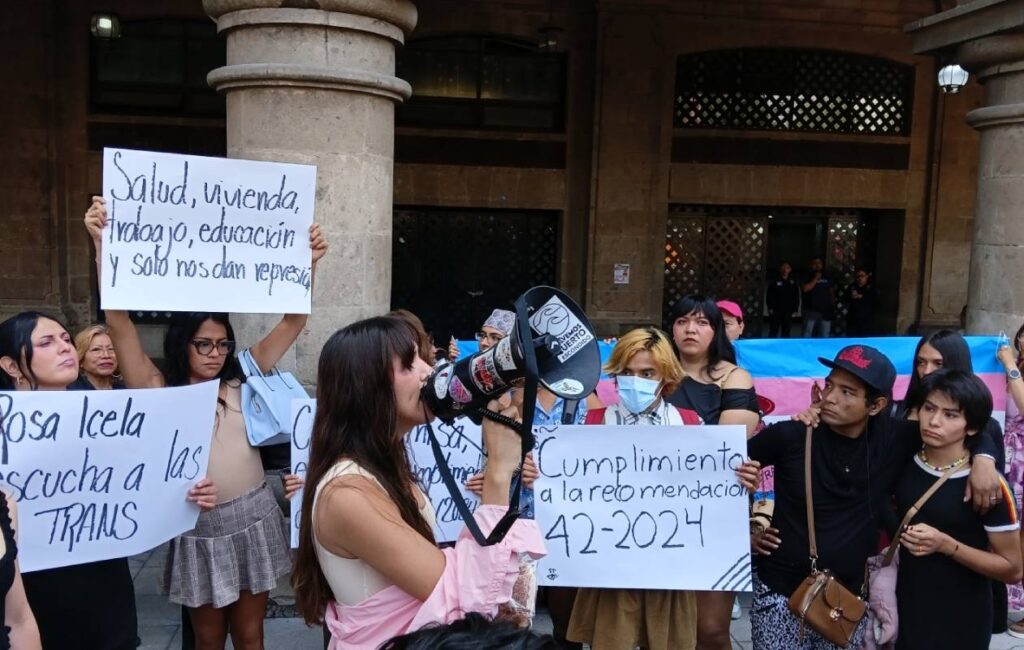
“The State owes us reparations for damages”
For older trans women, the General Trans Law is “a miracle” and a debt of reparation for decades of police repression, exclusion, and institutional violence. July, one of the survivors, told Presentes about the brutality she experienced during the period of state terrorism, known as the “dirty war,” which took place between 1964 and 1990.
During this period, politicians, the military, and police persecuted, tortured, and disappeared dissidents, guerrillas, students, farmers, teachers, sex workers, and, with particular brutality, transgender women. This information was gathered by the Historical Clarification Mechanism (MEH), a group of independent experts that is part of the Commission for Access to Truth (CoVEH) tasked with investigating the crimes and state terrorism of those decades.
“Of course the State owes us reparations because they persecuted us, beat us, shaved our heads, and gang-raped us. Some were even killed and their bodies dumped in the Tula River. It wasn't so great to be gay back then and go out on the street. The DIP (Crime Prevention Investigation Division) would grab you and do all that to us, right here in the Tlaxcoaque cellblocks.”.
This first meeting took place in a government building about 150 meters from the basements described by July.
The survivors of that state violence were teenagers just beginning to explore their identities. Exclusion from their families, and consequently from the education and employment systems, forced these generations into sex work. This allowed them to secure income and afford cosmetic procedures and surgeries performed by unqualified individuals or by their friends.
Today, some of these older adult trans women live with pain, an inability to walk, experience skin necrosis, or have suffered thrombosis as a consequence of the lack of the right to health since they were young.
Transmasculinities and non-binary people present
Cain Villanueva, representative of the Transmasculine Memory Archive of Mexico, participated in the dialogue and denounced the lack of real progress. In an interview with Presentes, he explained that he emphasized the access and gaps that non-binary people experience regarding the recognition of their legal identity, and the lack of knowledge and understanding of transmasculine people and their sexual and reproductive rights.
“I called for the specific needs of this population to be taken into account, primarily regarding reproductive justice, legal abortion, access to family planning, and support for those who choose to become pregnant and parents. Regarding non-binary people, they boast that the process exists, but the issue of legal recognition has not been resolved. There are still many obstacles,” she explained.
In most states of the country, there is no federal reform recognizing the right to identity for non-binary people, and where such reforms exist, they face obstacles. Many non-binary people, even with a birth certificate that recognizes their gender identity, live in legal gaps that prevent them from accessing other rights.
The urgency of national representation
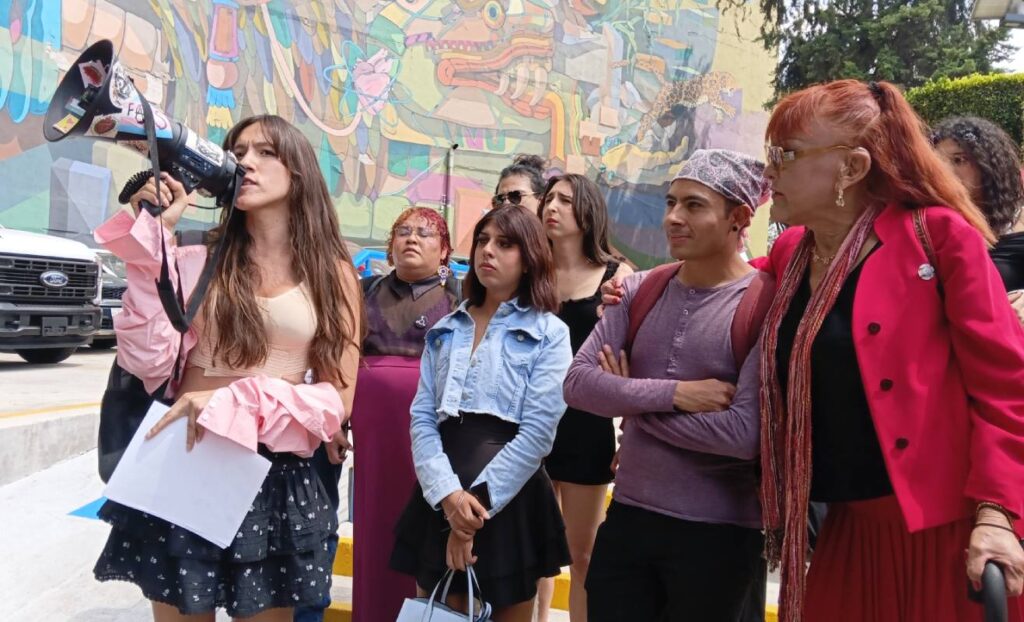
The Lupilla Xiu Common Front denounced the centralism of this meeting and the limitations imposed by the authorities on the number of attendees. Only seven people were allowed in: one transmasculine person, two non-binary people, and four trans women, including an elderly woman who survived state terrorism.
Recommendation 42/2024 has federal scope, but during the dialogue table, the authorities "made excuses, preferring to address each case individually as a strategy to demobilize us and not address this as what it is, a systemic and structural problem," Villanueva explained.
“There were people here who took action from Mexico City, but this is a nationwide recommendation , and there are often many obstacles to advancing the rights of trans people because it's argued that it falls under state jurisdiction. We have the opportunity because we're here, but it needs to be open to as many voices and experiences as possible from across the country to best understand the needs of the population,” she added.
“It is vile to forget a survivor.”
The meeting with officials César Cravioto, Secretary of Government, and Arturo Medina, Undersecretary of Human Rights, was marked by some tension regarding the way in which this first meeting between trans people and the authorities came about to advance the Comprehensive Trans Law.
“They (the authorities) resorted to criminalization to evade their responsibility. They emphasized that 'this isn't the way,' literally telling us, 'we achieved change without breaking a single window.' We emphasized that they shouldn't criminalize protest, especially after more than two years of waiting. They even questioned the existence of torture from the years of state terrorism. Mrs. Verónica lifted her clothing to show her scars and asked, 'How can you say there was no torture?' Undeniable. And their lack of memory is vile, especially when faced with a survivor,” Villanueva recalls.
The agreements reached at this meeting and the absence of the CNDH
Victoria Sámano, from the Lleca collective, delivered a petition with immediate demands. It calls for the opening of recreational spaces that are providing employment for transgender women experiencing homelessness, an end to the criminalization of activists, and specifically addresses the case of Razzia Santillán, who is facing a federal lawsuit for 200,000 pesos for protesting at the National Film Archive after experiencing discrimination in the restrooms.
In addition, there will be a meeting to activate support for sex workers on Calzada de Tlalpan who were excluded from social programs for protesting against the World Cup that displaced them from their work spots.
It was also agreed that the files for reparations for damages to elderly transgender women survivors of state terrorism should be in place next year.
Finally, Sámano denounced the absence of the CNDH at the meeting, despite being the body that issued the recommendation for the Comprehensive Trans Law.
Given the absence, a meeting was agreed upon for Friday, August 7, at the CNDH facilities to review the non-compliance with recommendation 42/2024 and to demand that Rosario Piedra Ibarra, president of the organization, be present and attend to the trans and NB population.
We are present
We are committed to journalism that delves into the territories and conducts thorough investigations, combined with new technologies and narrative formats. We want the protagonists, their stories, and their struggles to be present.
SUPPORT US

FOLLOW US
Related notes


We are present
This and other stories are not usually on the media agenda. Together we can bring them to light.