

The Right to Abortion in Mexico: “We have legal access but not real access”
In Mexico, 25 states have decriminalized abortion. But real access faces barriers for women and LGBTQ+ people, as Ninde MolRe, a lawyer, and Hened Musalem, an independent midwife and support worker, explain.


Share

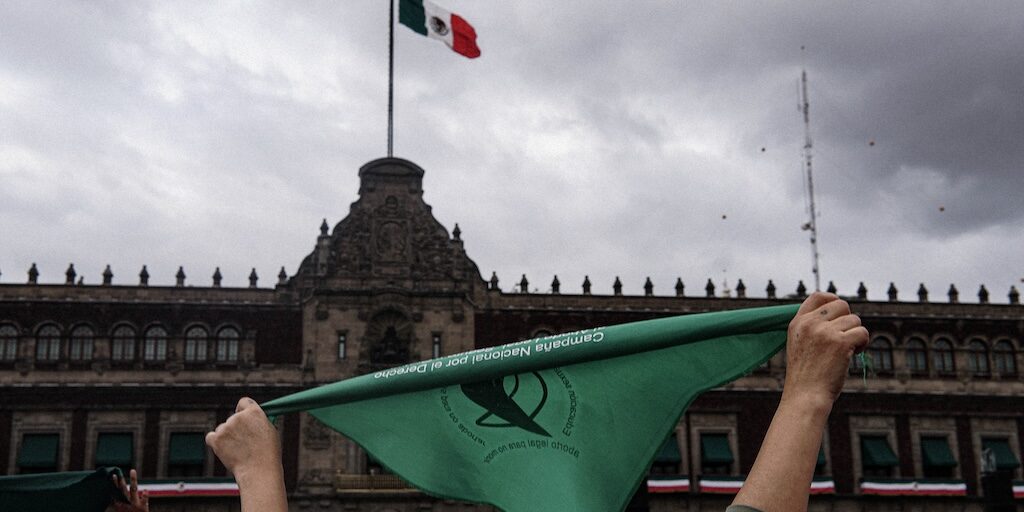
Mexico City, Mexico. Faced with a wave of threats and setbacks to sexual and reproductive rights in countries like Argentina and the United States, Mexico remains in a “privileged” position. Abortion is decriminalized in 25 states and in the rulings of the Supreme Court of Justice of the Nation (SCJN). However, actual access to abortion services still faces serious challenges.
Presentes spoke with Ninde MolRe, a lawyer and member of the organization México Igualitario , which includes the Abortistas MX , and with Hened Musalem, an independent midwife and abortion companion. We asked them: What is happening with abortion in Mexico, and what about access for women and trans people?
In recent years, the slogan “it’s now the law” has been repeated with greater force following reforms to penal codes and Supreme Court rulings. This is a tremendous achievement. But in practice, this right faces criminalization, territorial inequalities, a lack of training, stigma, gender-based violence, and a lack of medical supplies and funding.
“What’s needed socially is to understand that the phrase ‘it’s now law’ has come at a high political cost. People think criminalization is over, that there’s access now. In reality, that’s not the case. We have legal access, but not real access,” explains lawyer Ninde MolRe.

What is the legal status of abortion in Mexico?
On the one hand, judicial and legislative action has allowed 25 states to remove abortion from their penal codes under varying timeframes and procedures. However, abortion is still not decriminalized in seven states and in the Federal Penal Code.
In the states of Tlaxcala, Coahuila, and Chihuahua, voluntary abortion has been completely removed from the penal code. Sinaloa allows it up to the 13th week. In Mexico City, Veracruz, Oaxaca, Tabasco, and Hidalgo, it is permitted up to the 12th week . Aguascalientes reduced the limit from 12 to 6 weeks , following a setback by the local Congress
In Michoacán and Guerrero, abortion has been decriminalized for people who can become pregnant. However, they impose sanctions on medical personnel who provide the service after the 12th week of pregnancy. In Jalisco, San Luis Potosí, and Chiapas, the opposite is true.
Durango, Tamaulipas, Nuevo León, Morelos, Guanajuato, Querétaro and Sonora still do not decriminalize abortion.
Ninde MolRe explains: this fragmentation surrounding the right to abortion is compounded by political resistance in states governed by right-wing parties. In Chihuahua, for example, despite decriminalization and existing court rulings, the National Action Party (PAN) blocks abortion services in public health institutions.
Right to abortion for trans people
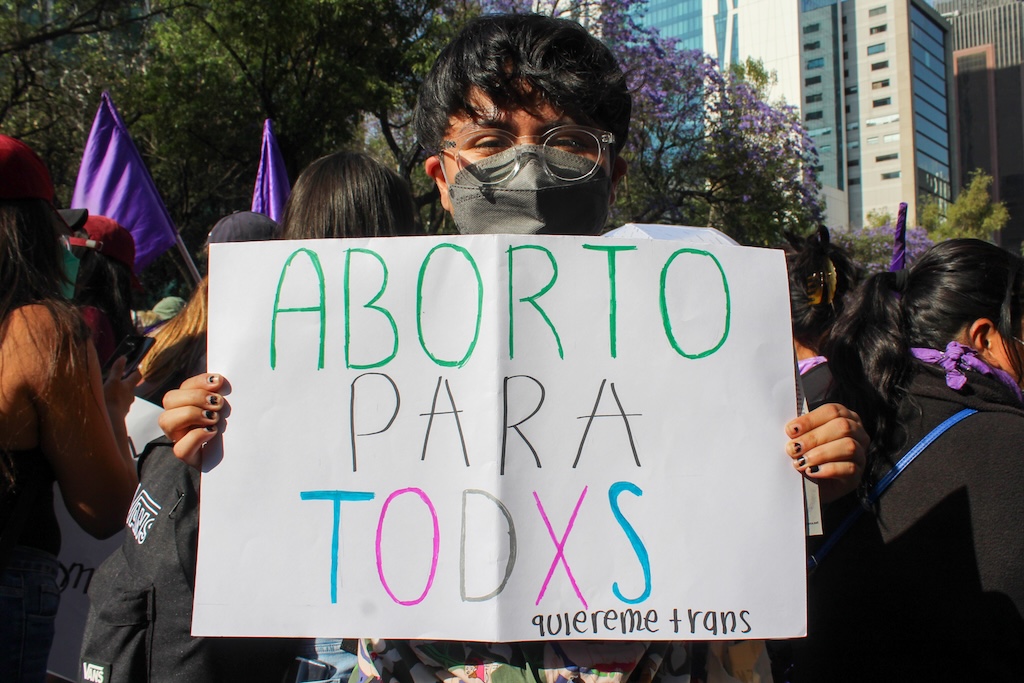
Barriers are increasing for trans and non-binary people who decide to have an abortion. For trans men, transmasculine people, and non-binary people who are able to become pregnant, the experience of seeking abortion services in public institutions is often marked by gynecological violence, ignorance of their experiences, and the invalidation of their identities.
Healthcare professionals in Mexico often lack basic training on sexual and gender diversity. They confuse identities and even assume that gender-affirming treatments, such as testosterone replacement therapy, negate the need for sexual and reproductive health care.
Among the main forms of aggression documented by Ninde MolRe and Hened Musalem in health centers are: the assignment of trans men to maternity or gynecology wards to punish their decision to have an abortion. This also occurs with cisgender women.
The lack of training of health personnel on trans identities and systematic misgendering discourage trans people from going to public services to care for their health, not just their right to abortion services.
Faced with this scenario, independent companions implement "mirroring language." This means adopting the exact way the person names their body and their processes. "A lot of what we ask when we talk about trans abortion is, 'How do you want to be called?' You ask about pronouns, and if the person says 'bleeding' instead of 'menstruation,' it's naming what the other person is naming. It's part of the empathy you have to have (when providing support)," Hened explains.
Companions: grassroots activism
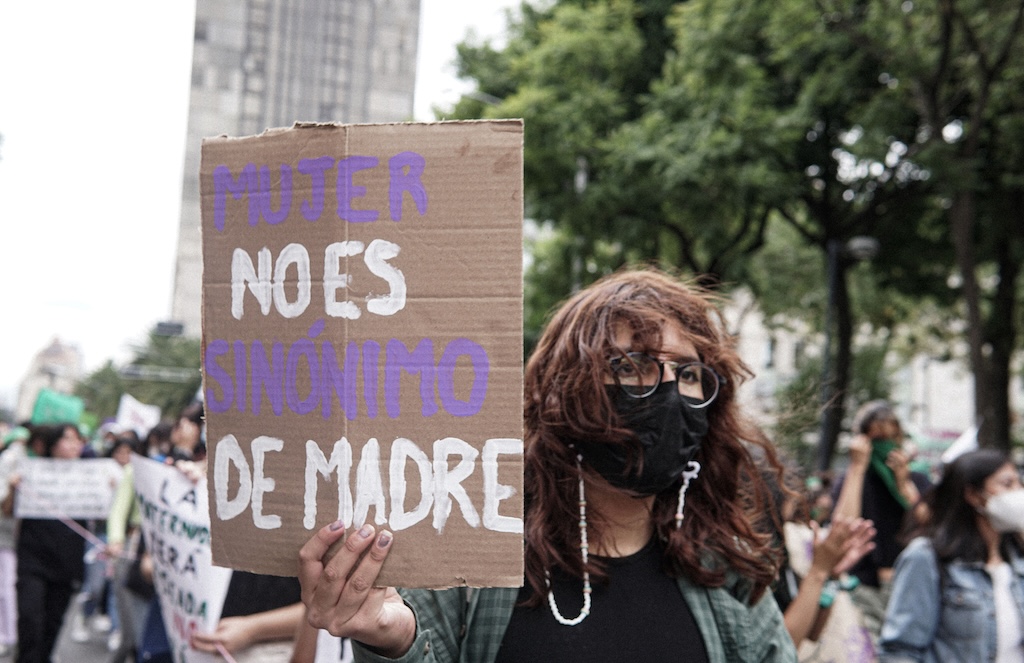
Faced with state inaction and a scarcity of resources, local collectives and autonomous support groups have demonstrated a high capacity for response thanks to their historical trajectory in grassroots activism and clandestinity, even before the green wave.
Hened explains that the collectives and independent caregivers connect through digital spaces and in-person meetings, when resources allow. They organize themselves into WhatsApp groups by state and/or region. They share self-care practices, donate medications, exchange knowledge, and create raffles to self-finance the purchase of medications and shipping costs to deliver them to those who need them, among other activities.
“The local movement is more accustomed to working without money or funding, doing incredible things. I don't mean to celebrate precariousness, but I think it has made it a more resilient movement,” says lawyer Ninde MolRe. She adds, “It's important to differentiate that even within social movements there's a class issue. Because there are high-profile organizations with millions in funding, and then there are the local and grassroots movements that have never had a penny.”.
Another barrier: the general crisis of the right to health
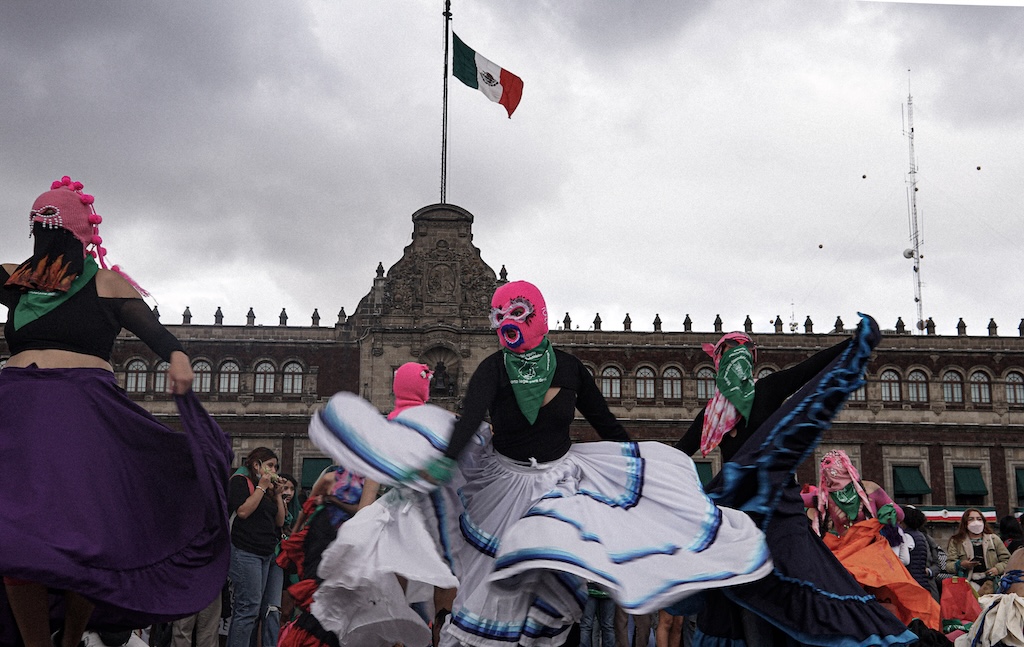
Access to abortion in Mexico also faces widespread shortages of supplies in public hospitals and a drop in international funding for sexual and reproductive rights.
In daily practice, public hospital services themselves, lacking updated protocols or drug banks such as misoprostol and mifepristone, sometimes informally refer users to autonomous support groups.
“In public hospitals, they send patients with their companions because they don't have protocols. They don't keep up to date in that regard, or sometimes they don't have the medications, another issue related to the shortages in the health systems in general,” Hened comments.
Getting organized: regaining knowledge and autonomy
Lawyers, collectives, and independent support workers are clear: abortion and trans identity are issues that anti-rights groups, right-wing political parties, and the trans-exclusionary feminist movement exploit to generate moral panics and roll back rights. This can be seen in everything from the withholding of public fundingand the dissolution of organizations to the denial of human rights for women and trans people.
“In Mexico, we are in a rather privileged environment (…). Being able to see that legal continuity gives us a certain peace of mind. This privileged position also forces us to think creatively and innovatively about how to organize ourselves, because we don't know if the conditions will eventually arise that could lead to setbacks,” MolRe explains.
Hened Musalem believes that “in the face of the advance of neo-fascism it is very urgent to recover ancestral knowledge, to pay attention to bodily autonomy so that (access to abortion) is not sustained by large pharmaceutical companies.”.
Ninde believes that alliances with other struggles will be vital to confront the advance of the far right.
“Since abortion is a health service, we are experiencing the same consequences of the general health crisis. We need to connect with the HIV movement, the cancer movement, and the dignified death movement. Because what is affecting us is not only the stigma and prejudice, but also a whole crisis, including a budgetary one, that exists within these health systems.”.
If you need information to access abortion services in 26 states, you can consult the networks and organizations at Abortistas MX, and the national network of companions for trans men, transmasculine people and non-binary people who need abortions, Vacas Aborteras.
We are present
We are committed to journalism that delves into the territories and conducts thorough investigations, combined with new technologies and narrative formats. We want the protagonists, their stories, and their struggles to be present.
SUPPORT US

FOLLOW US
Related notes
We are present
This and other stories are not usually on the media agenda. Together we can bring them to light.
1 comment