

Why the trial for the murder of Eldin and Milton could be historic for Guatemala's LGBT community
The trial for the murder of Eldin and Milton is nearing its end. The police lie and the Guatemalan state's historical debts to the LGBT population are at the heart of the case


Share

Guatemala's High-Risk Court "B," presided over by Judge María Eugenia Castellanos, is about to issue a decisive ruling. Seven agents of the National Civil Police (PNC) face charges of extrajudicial killing, torture, and cover-up following the illegal detention and murders of Eldin Choc Xi and Milton Santamaría in April 2024.
This process has not only highlighted police actions in a rural area, but also confronts the Guatemalan state with its historical debts to human rights, LGBTI+ people, and indigenous populations.
A ruling that recognizes hate against LGBT people would set a historic precedent in Guatemala. It would also break a long history of impunity, becoming the first case in which a hate crime against LGBT+ people perpetrated by state agents is prosecuted.
The precedent in the region is the case of Vicky Hernandez, a trans woman and Honduran sex worker murdered by Honduran state forces in June 2018.
What happened to Eldin and Milton?
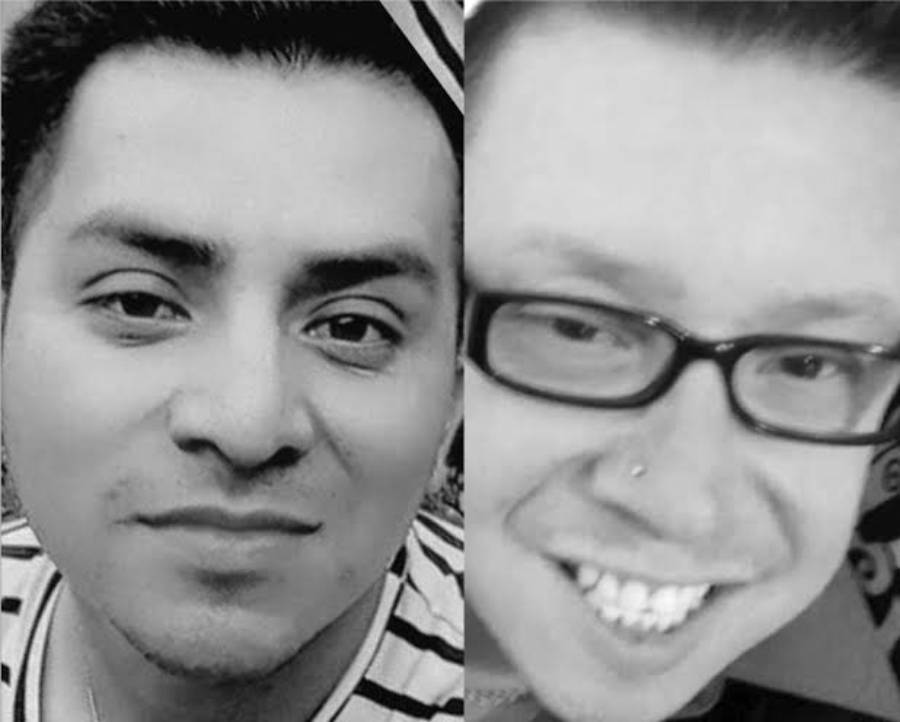
On April 18, 2024, Milton Santamaría, of Salvadoran-Canadian nationality, and Eldin Choc Xi, a young Mayan Q'eqchi' man, who were boyfriends, were in a neighborhood store in the municipality of San Andrés Itzapa, Chimaltenango.
In an interview with Presentes, Guatemalan journalist Jovanna García, who has been following the case, recounts that Milton and Eldin “were having a normal time.” They were carrying a considerable sum of money because “they were in the process of buying land as a couple for a future together.” Under the initial pretext of a supposed call regarding “disturbing the peace,” they were detained by PNC agents.
Witnesses who testified at the trial contradicted the police version of events. They stated that "they weren't causing any kind of disturbance in the street." According to the case's expert analysis, the true motive for the intervention was intimidation and extortion after the police noticed the amount of money they possessed.
Milton and Eldin were taken to PNC substation 73-15 where, “handcuffed and defenseless, they suffered brutal beatings and homophobic insults.” This, as Jovanna García notes, was documented in case files and evidence presented at the hearings.
What did they do with the young people?
That same night, April 18, 2024, as a result of the physical assaults, Milton Santamaría was murdered inside the police station. To cover up the execution, the police transferred his body to a medical center, claiming that he had been run over.
Two local firefighters participated in this execution. García comments that they were the ones who later “accepted the charges and admitted to having moved the young man, who had already been murdered inside the station, to the hospital, giving a completely different version: that he had suffered an accident.”.
Eldin was also a victim of enforced disappearance. Police secretly removed him from the substation in a private vehicle without informing anyone of his whereabouts. After days of community searching, his body was found on April 25 with clear signs of strangulation and torture.
How the truth about what happened came out
The National Civil Police's attempt to present the events as a traffic accident and an "isolated" disappearance crumbled as the investigation progressed. Journalist García explained that everything "fell apart" from within. "It all began to unravel because of a policewoman's testimony to the authorities that she knew what had really happened.".
The police officer's complaint was corroborated by other pieces of evidence that ultimately pieced together the truth. This is how those responsible began to be linked. There are three key moments: the firefighters' confession, audio recordings of torture and homophobic slurs , and testimonies that refuted the official version of the reason for the young men's arrest.
During the oral trial hearings, the prosecution and the plaintiff organization Cristosal, a regional human rights organization in Central America, presented expert reports, phone recordings, and WhatsApp chats between the police officers themselves. Jovanna says that in these recordings, the victims' agony can be heard as they are tortured. Another recording reveals that Eldin and Milton were boyfriends. This information further intensified the police officers' aggression, torture, and homophobic slurs.
Neighbors and those involved appeared before the court, and their statements dismantled the excuse for the arrest.
When the criminal investigation began, it was confirmed that the sub-inspector in charge, Edilberto Vásquez, was the one who ordered the operation and the cover-up. To avoid prosecution, he fled to the United States and was later located by INTERPOL and deported to Guatemala. His attempt to evade justice strengthened the accusation against him, the journalist reports.
Legal loopholes and invisibility of LGBTIQ+ people, indigenous people and migrants
The police brutality against Eldin Choc Xi, an indigenous Q'eqchi' Maya man, and Milton Santamaría, a Salvadoran-Canadian, occurred within a context of profound vulnerability in Guatemala. The country's legal and institutional framework lacks even the most basic tools for protection against bias-motivated violence.
In Guatemala there are also no specific laws against discrimination based on sexual orientation or gender identity, nor is same-sex marriage or registered gender identity recognized.
These legislative omissions are compounded by the complete absence of official data from the State. As in most Latin American countries, records of hate crimes are compiled by activist groups themselves. States do not separately record the violent deaths of LGBT+ people. In Guatemala, this work is carried out by the Lambda Association.
This case also highlights the historical impunity surrounding institutional and state violence against LGBTI+ people. Police records from before the signing of the Peace Accords reveal this, as do historical documents that confirm human rights violations committed by the police against this population.
Furthermore, the intersection between Eldin's indigenous identity and Milton's migrant status highlights what Human Rights Watch documentsas a recurring practice of arbitrary and illegal detentions, intimidation, extortion, and systematic criminalization of mobile populations, indigenous and rural communities, and LGBT+ people.
Why could the court ruling be historic?
The litigation organization Cristosal, along with the Public Prosecutor's Office and the groups supporting the case, have clear expectations regarding the scope of the court ruling. First and foremost, they demand a final conviction that imposes the corresponding prison sentences on the seven National Civil Police officers accused of extrajudicial killings, torture, and cover-up.
Beyond the individual criminal sanction, the main expectation of the litigating lawyers is that the Court will issue its verdict formally incorporating a human rights perspective.
Although the Guatemalan Penal Code does not include hate crimes based on sexual orientation, Cristosal presented expert and argumentative work during the oral trial to demonstrate the existence of discrimination and gender hatred in the extrajudicial execution, disappearance and torture of which Eldin and Milton were victims.
The central demand is that the judges recognize that the couple's sexual orientation was a determining factor in the torture and murder.
A ruling that recognizes hate against LGBT people would set a historic precedent in Guatemala. It would break a long history of impunity and become "the first case in which a hate crime committed by state forces is prosecuted" in Guatemala, says Jovanna García.
Since it was handed down in a High Risk Court, which specializes in judging crimes committed by public officials and high-impact cases, the ruling can help promote future legislative reforms in the Penal Code that allow hate crimes to be classified in the country and guarantee non-repetition.
We are present
We are committed to journalism that delves into the territories and conducts thorough investigations, combined with new technologies and narrative formats. We want the protagonists, their stories, and their struggles to be present.
SUPPORT US

FOLLOW US
Related notes
We are present
This and other stories are not usually on the media agenda. Together we can bring them to light.