

Beyond condoms: what are the methods of HIV prevention
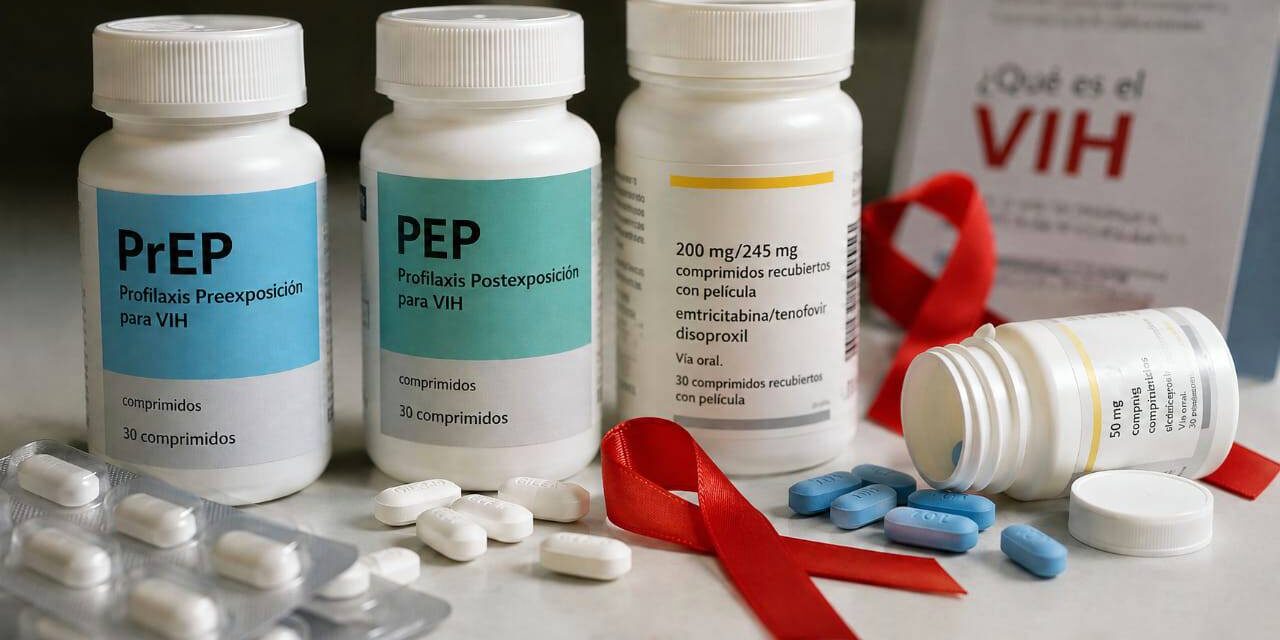
PrEP and PEP are two methods of prevention used at different times when exposed to transmission. What are they and how do they work?.

Share

BUENOS AIRES, Argentina. Talking about HIV prevention isn't just about condoms. For some time now, there have been options that expand the possibilities for care. For example, the use of antiretroviral medication before or after potential exposure to prevent a negative person from becoming positive.
Pre-exposure prophylaxis (PrEP) and post-exposure prophylaxis (PEP) are two such methods. Discussing this isn't just about a way to prevent HIV; it's about rethinking healthcare systems, comprehensive sexuality education (CSE), and questioning access to patents and medication. Health is a state of complete physical, mental, and social well-being, not merely the absence of disease or infirmity. It also means considering people's sociopolitical realities, their access to rights, and being able to challenge the system in which we live.
In this article we tell you a little more about Pep, Prep and some other ways to take care of your health.
How to use PreP?
As its name suggests, this is a prophylaxis that should be taken before potential exposure to the virus. It is recommended that a daily dosing schedule be agreed upon with healthcare professionals. This medication prevents the HIV virus from taking hold in the event of exposure to the virus if the person is on PrEP treatment.
This tool prevents HIV but not other sexually transmitted infections (STIs), meaning it does not replace condoms. It is also important to use this treatment in conjunction with healthcare providers, as regular testing for other STIs such as syphilis, chlamydia, gonorrhea, etc., is also necessary.
Who can take it? Ideally, this tool should be considered in light of the individual's practices. For a person who is HIV-negative but has been exposed to the virus, for example, through unprotected sex, this is a recommended option.
Is it only taken before an encounter? Yes, but in this case, the doses must be taken very strictly and cannot be skipped or taken outside of the indicated time. Any omission or delay drastically reduces its effectiveness.
Currently, injectable and even once-monthly PrEP options are being tested, but they are still in the trial phase and access is restricted by certain pharmaceutical companies and their patent systems. For example, the drug Lenacapavir is the most innovative response in HIV prevention, but Gilead Sciences excluded most Latin American and Caribbean countries from a pricing agreement with the Global Fund to Fight AIDS, Tuberculosis and Malaria.
What is the PEP?
PEP is an emergency prophylaxis that should be taken if you believe you may have been exposed to the virus. In other words, it is taken after a potential exposure. It is very important that it be taken within 72 hours of exposure, as the effectiveness of the treatment decreases with time.
When should I take it? After unprotected sex, workplace accidents involving elements that can transmit the virus, or any situation in which we believe we may have been exposed to the HIV virus.
What if I have doubts about whether the contact involved HIV-positive fluids? For PEP to be effective, it must be started within 72 hours of exposure; otherwise, it loses effectiveness. We say "started" because it's usually a 28-day course. If there are doubts and they can't be confirmed within these first few hours, it's suggested to start treatment and then decide whether to continue or stop. PEP is an emergency tool; it's not a post-exposure prophylaxis method, nor is it a "morning-after pill."
In Argentina, both PrEP and PEP must be guaranteed by both public and private healthcare systems. This is stipulated by National Law 27675, the Comprehensive Response to HIV Act.
Both options have excellent outcomes, but to achieve this, they must be taken correctly. This requires support from healthcare systems that can provide the necessary information, guidance, and follow-up care.
In this video, Dr. José Barletta, an infectious disease specialist at the Fernández Hospital in Buenos Aires, explains a little more about PrEP and PEP:
Have you heard of doxyPEP?
This is a method of preventing other STIs, not HIV. DoxyPEP involves taking a dose of doxycycline after sexual intercourse to prevent chlamydia and syphilis; it does not protect against HIV, nor is it 100% effective against gonorrhea.
Because it's an antibiotic, the long-term effects of drug resistance in some STIs are being evaluated. Currently, it's a tool being used, but it's still under observation, so it's important to take it only under the supervision of healthcare professionals.
What's happening with condom use?
According to a 2021 survey conducted by the AHF organization of 6814 young people consulted, only 17% stated that they used a condom in all their sexual relationships.
According to the HIV and STI Response Bulletin in Argentina (2025), 99% of HIV transmissions in men and 98% in women occur through unprotected sex. Furthermore, there was no pre- or post-exposure prophylaxis (PrEP) system in place.
In recent years, condom use has drastically decreased, even for penetrative sex. This raises the question of what happens with oral sex, for example. There are many STIs that require attention, not to instill fear or moralizing messages, but to understand our own safety, encounters, and pleasure.
This project is supported by the IAS (International AIDS Society) through the Community Project Grants, as part of the preparations for the AIDS Conference 2026.
We are present
We are committed to journalism that delves into the territories and conducts thorough investigations, combined with new technologies and narrative formats. We want the protagonists, their stories, and their struggles to be present.
SUPPORT US

FOLLOW US
Related notes


We are present
This and other stories are not usually on the media agenda. Together we can bring them to light.