

Not One Less: Feminist movements took to the streets en masse against gender violence
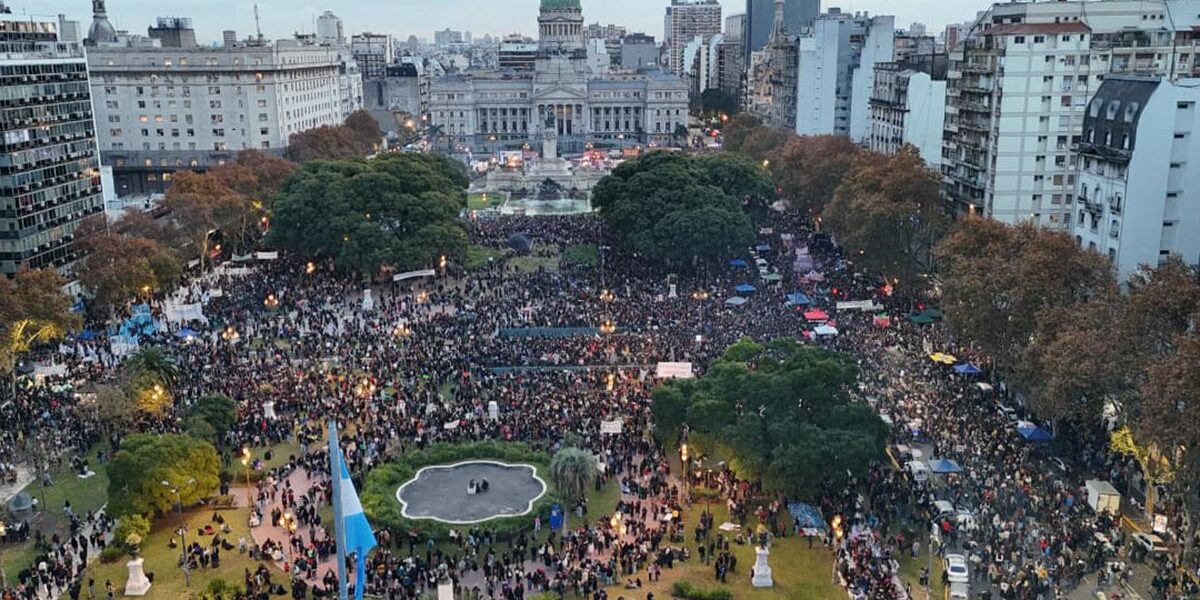
Eleven years after the first Ni Una Menos (Not One Less) march, the fight against gender-based violence and the grief over the femicides of Agostina, Dulce, and Noelia mobilized Argentina on a massive scale. Demands were also made for justice with a gender perspective, more comprehensive sex education, and the right to a life free from violence. These voices from a packed plaza were echoed in various locations across the country.


Share

Collaborative coverage by Presentes and Tiempo Argentino: Aldana Somoza, Clara Pardi, Ayelén Cesare, Emiliana Delgado and Eugenia Siman, Maby Sosa, Agustina Ramos and María Eugenia Ludueña. Photos: Ayelén Cesare, Antonio Becerra, Eduardo Sarapura.
BUENOS AIRES, Argentina. “If I disappear tomorrow, give my mom a big hug,” reads a sign held by a young woman, probably under 20, on the subway on her way home. She's wearing a blue checkered smock, like a kindergarten teacher, and is with another woman whose sign says, “Your teacher believes you. Not One Less.” They've just filled Plaza del Congreso in another powerful feminist demonstration. The events surrounding the femicide of Agostina Vega in Córdoba were a turning point, prompting women, LGBTQ+ people, and men to take to the streets once again this year to demand an end to gender-based violence and patriarchal justice.
The demand for a State and a Judiciary with a gender perspective is a constant refrain from trans feminist movements, in the face of a government that denies gender violence, such as that of Javier Milei. In recent days, marked by the news of three femicides, these concepts were finally brought to fruition. The murders of Agostina, Dulce, and Noelia could have been prevented if the Justice system and the State had not turned a blind eye. And this is what Argentine society demanded en masse on another Wednesday, June 3rd, 11 years later. And what Patricia Bullrich tried to downplay yesterday, criticizing the march in line with the official narrative.
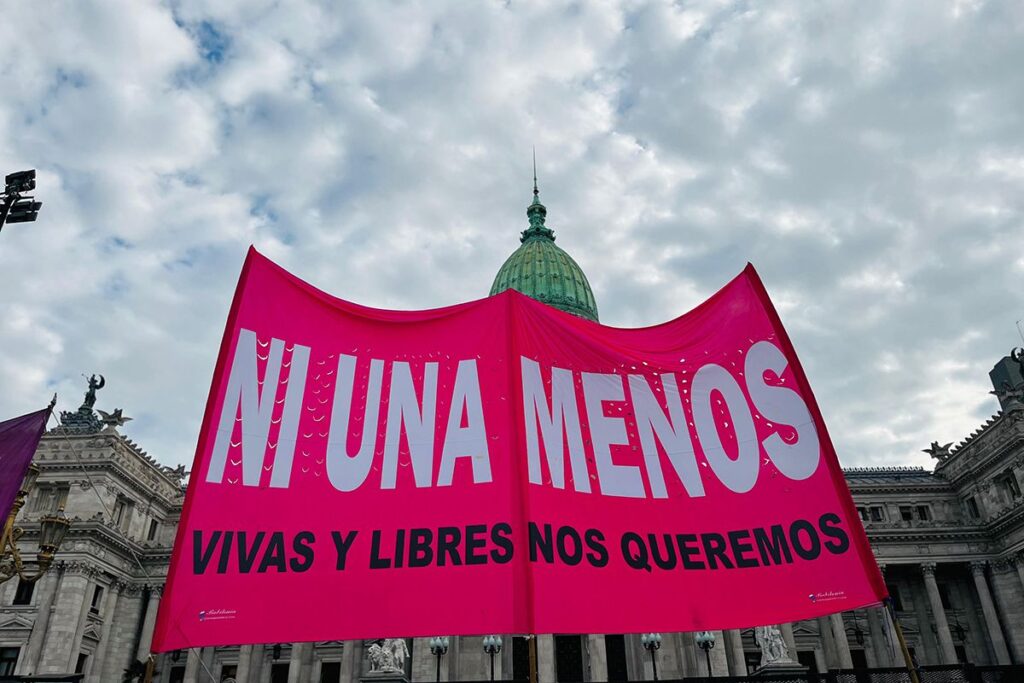
The main event began around 6 p.m. and concluded with the reading of a statement by musician Cazzu, actress Thelma Fardin, and journalist Liliana Daunes. At 8 p.m., as night had already fallen in the plaza, people were still arriving to demonstrate: the spirit was constantly being renewed. “We came to take over all the towns,” several signs read, a nod to the stigmatization of feminist demands, which have been dismissed by various sectors in recent years.
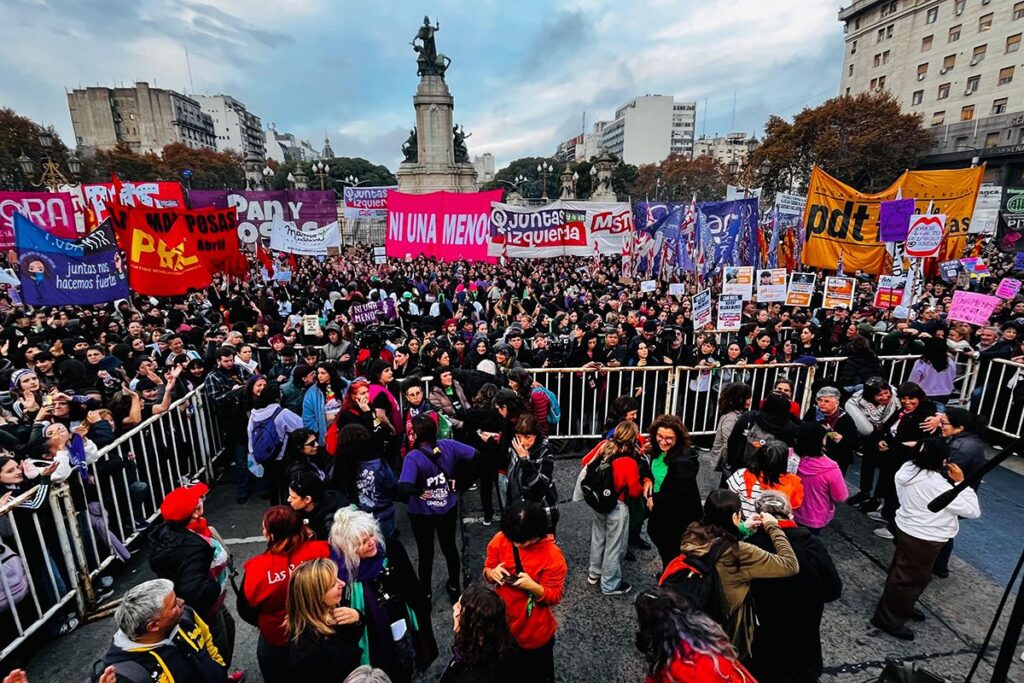
June 3rd was once again a political response, drawing on the diverse perspectives of organized feminism, as well as groups of friends, mothers, and sisters who feel compelled to act by the magnitude of gender-based violence and the lack of preventative policies. This year, many children were present in the square, along with several young men who were encouraged to participate.
Memory and plea from relatives of victims
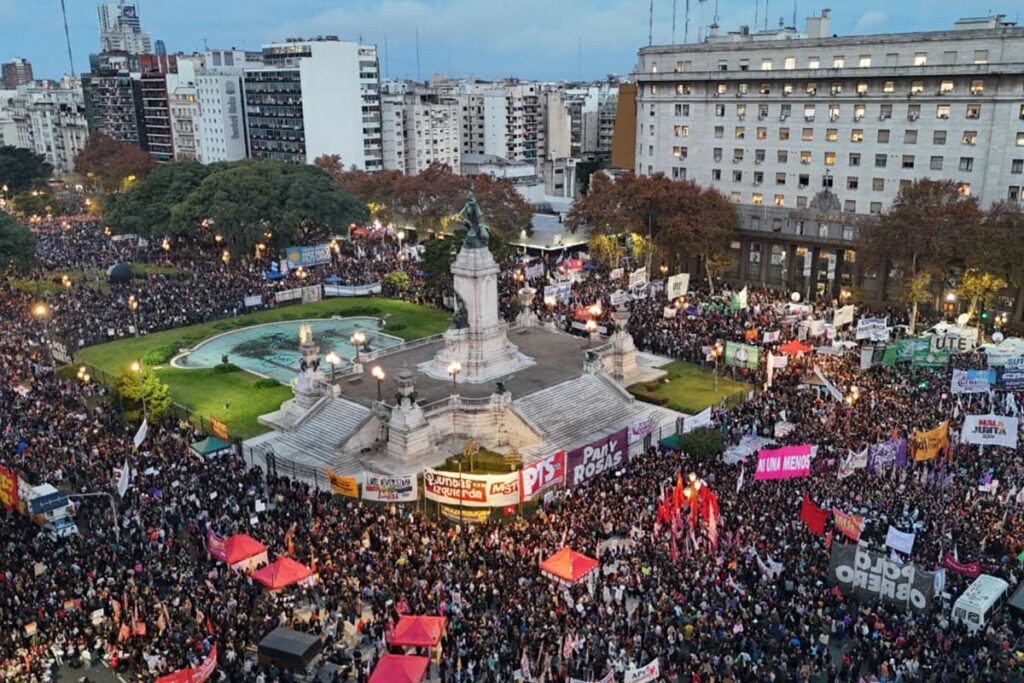
Before 3 p.m., Plaza Congreso and its surroundings began to fill with people and activities. In the morning, the group Atravesados por el femicidio (Victims of Femicide) began setting up their annual installation. “Celeste Encina,” “Julieta Mena,” “Ruku Silva,” “Vanesa Bulacio,” and “Janet Zapata” are some of the more than 200 names that family members embroidered on a painfully large purple banner spread out on the plaza floor. This year, the group debuted a new banner for marches. After midday, they walked around the plaza and distributed butterflies bearing the names of their murdered relatives. Most are calling for an end to femicides, but also for the Brisa Law, which is not being enforced, and for cases to be brought to a close in the courts.
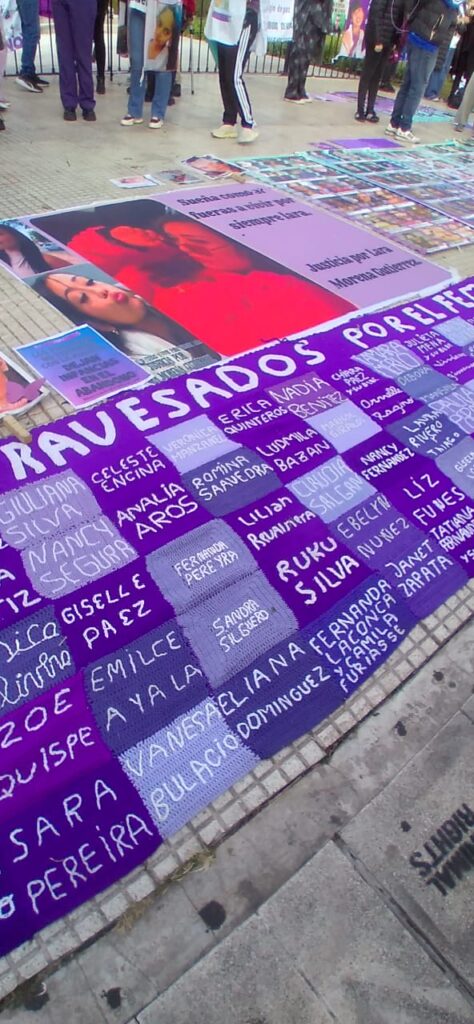
Patricia Ortiz, Micaela Rascovsky's mother, joined the group after seeing how little progress was being made in the judicial investigation into the femicide of her only daughter, initially classified as a "suspicious death." Despite the evidence, the court acquitted the young woman's ex-partner, lawyer Guido Pascuccio. "We are waiting for the Supreme Court to review the case. We know it may take time because the justice system operates on a different timeline. But we will not give up," she told us, visibly moved, after marching with the organization around the Plaza de Congreso.
Against patriarchy in all its forms: economic violence
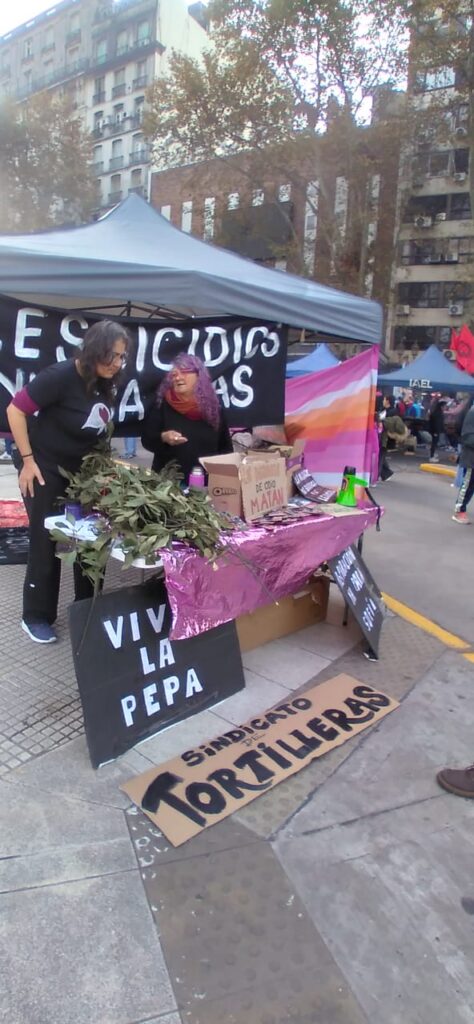
From early morning, stalls selling feminist and activist merchandise—the purple scarf made a massive comeback yesterday—and food vendors were set up. “I’m a single mother, I sell bread, breaded cutlets, and pastries,” read one of the signs pointing to a stall. The march was full of women vendors: the economic crisis hits single-parent households headed by women much harder.
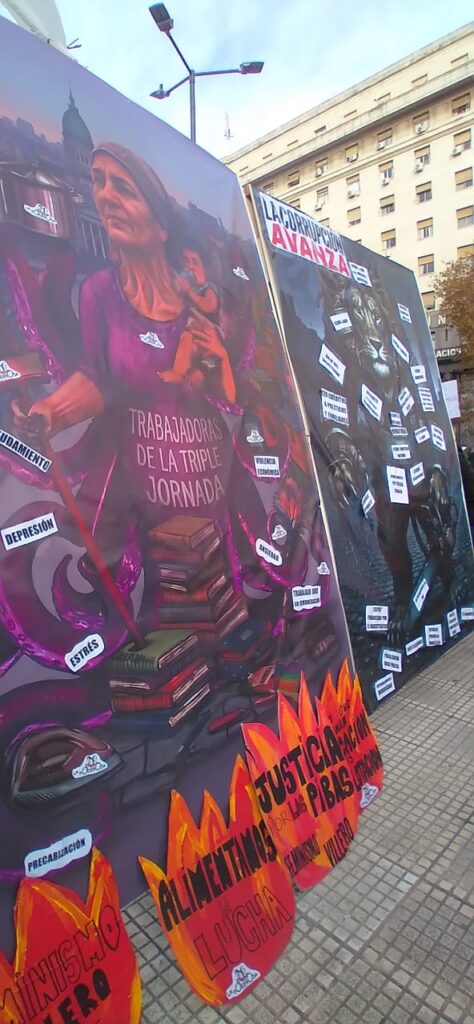
For this year's June 3rd, La Poderosa revived the installation of "The Octopus Woman." "She's the one who does all the housework and community work, running soup kitchens, after-school programs, and shelters for women and LGBTQ+ people," explained La Negra Albornoz, a leader in La Poderosa's working-class neighborhoods. "Many women take out loans with loan sharks in the neighborhoods, who are generally drug dealers. Then they start making demands in a particular way and threaten you. So, our comrades live with a lot of stress.".
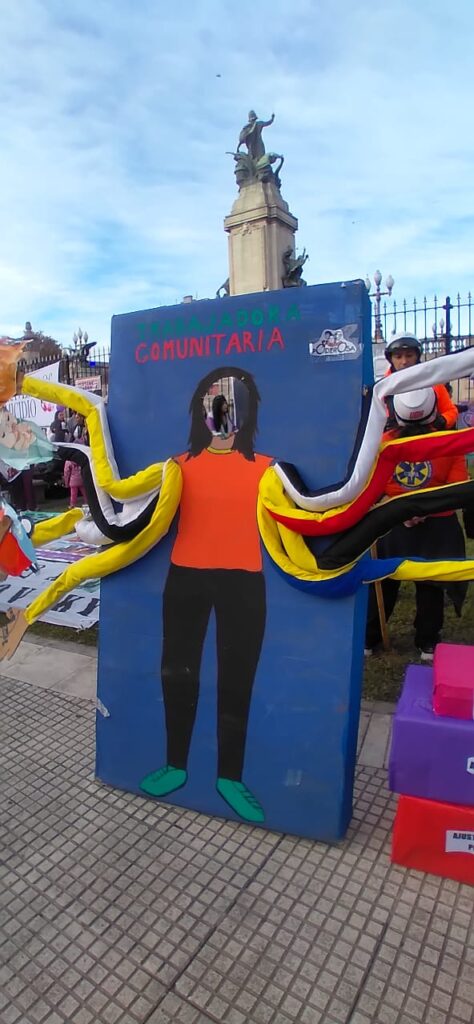
“Our installation addresses economic violence. We fight against gender-based violence and institutional violence. Jorge Macri throws the police inside your home but doesn't go after the drug traffickers, and they end up stealing even the gas cylinders.” Regarding the recent femicides, she expressed: “It hurts us deeply, much more so that the victims are girls and teenagers, but we ask ourselves, why does a man exert all that violence against a girl or a teenager? What's going on in their heads? We want them to answer for it too,” she added. “We have to work, take care of our families and our neighborhood while the men are hurting and frustrated by the lack of work and resources. Milei denying that this inequality exists is also violence,” Albornoz said.
More comprehensive sex education, less violence
In one section of the plaza, a group of female education workers were painting signs with slogans against violence. Julieta Rojo, a primary school teacher and principal of School 11 in the San Vicente district, said: “Society cannot become accustomed to what happened to Agostina. My first experience of femicide was with Candela's case; I was very young, and it's 2026 now. Our rights continue to be violated, and it happens again. Habit also makes you say: unfortunately, she's just another one.”
For Julieta, education is one of the greatest challenges in preventing violence. “We have to educate. And all genders. The 'take care of your daughters' message is very prevalent, but educating boys is also fundamental,” she said. “Men and new masculinities have to support this struggle that runs through feminism. It's essential because these are fights for basic rights: education, decent paid work.”.
Lourdes Patzi arrived with a group of women from Villa 31 and walked through Plaza del Congreso carrying a wiphala, the seven-colored flag of the Andean peoples. “Something crucial to stopping gender-based violence is to continue funding policies with a gender perspective. And one of the greatest tools for transformation in that sense is Comprehensive Sexuality Education (CSE) in schools, kindergartens, and universities. Because it is a tool that can transform the reality for everyone. As women from the shantytowns, Indigenous women, and women of color, we demand more CSE in all educational spaces, that it continues to be funded. It is a policy that encourages us to start talking about violence and can greatly help to eradicate it.”.
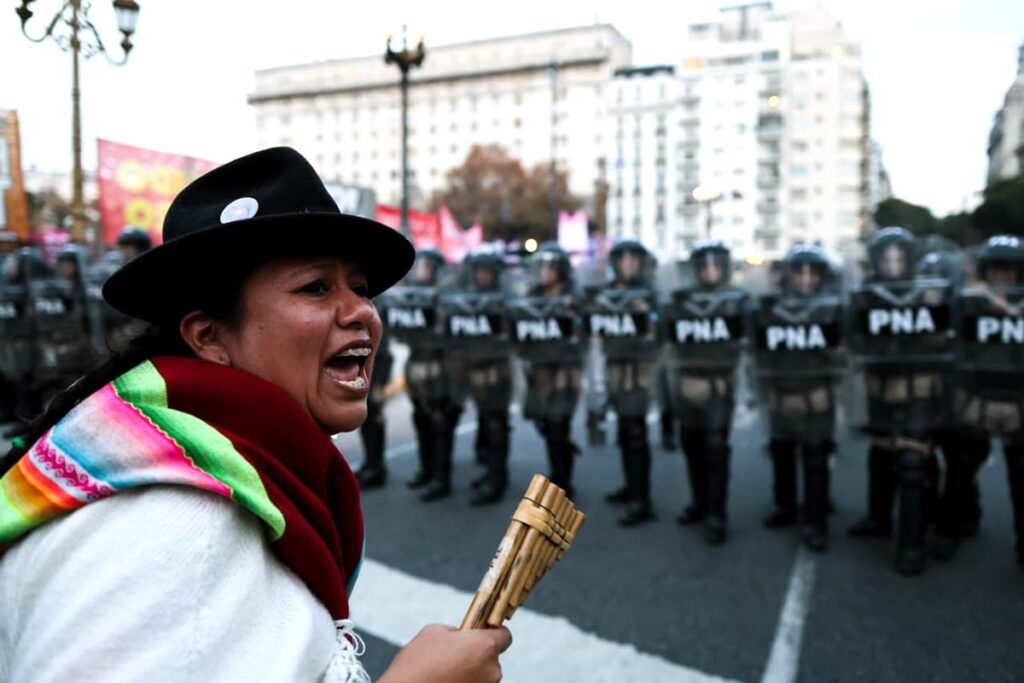
Not One Less with boys and children
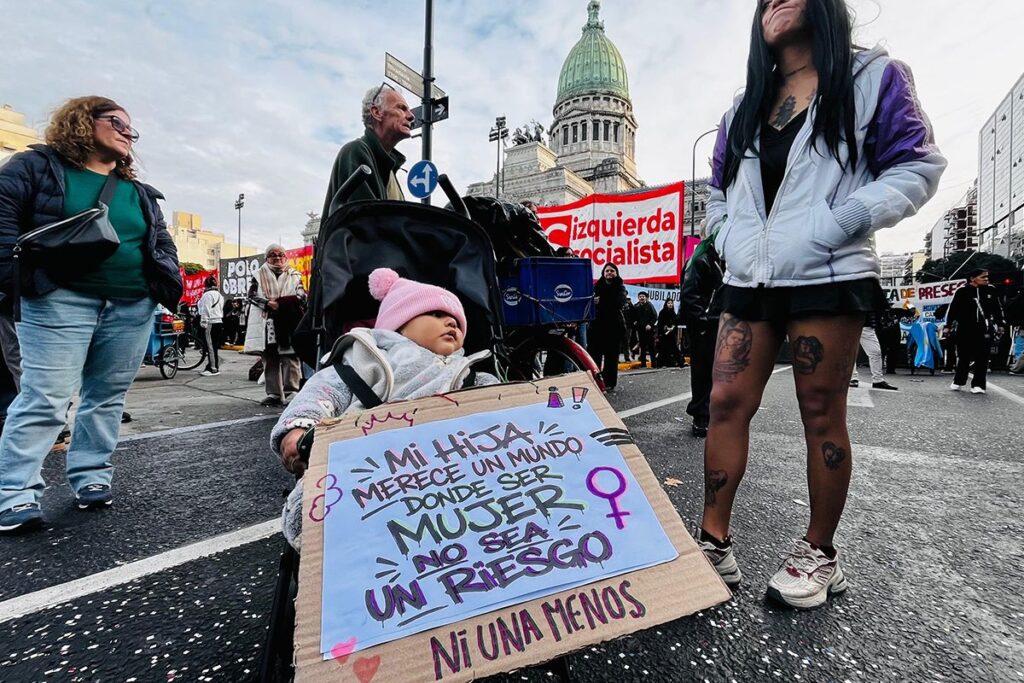
“The first march! How was it?” a woman asked a group of teenagers. This image reflected a striking characteristic of the mobilization: the presence of many children, teenagers, and even babies throughout the day.
Diego arrived at the plaza with his 10-year-old daughter, Juli. “I came because she asked me to,” he said. “It’s not the first time we’ve come, but I think it’s wonderful that the concern came from her. We have to keep going down this path.” Juli added, “We’ve talked several times with our teachers about gender violence. Sometimes we even hold events about it. I think it’s very wrong, and I think it’s something we fight against so that it doesn’t happen again, and so we always try to prevent it from happening again.”.
On Rivadavia Avenue, heading towards 9 de Julio, a van plastered with Gardel's face displayed the message: “Between jokes, your machismo peeks out.” It's Sanata, a traveling tango group, which, in addition to speakers blasting tangos, has a stage on its roof. “Maybe we'll set it up in a little while so you can come and dance,” said David, the person in charge of the setup. “We're here because we decided to support the march, so that femicides don't keep happening. We want to be here all the time.” A father of two daughters, he and his partner are concerned that “they can't walk alone on the street or late at night.” He says his male friends also notice this situation. “We all have families, and we all think this has to end.”.

Santiago, 18, a student at UNSAM, arrived with two friends from San Andrés. “I’m here to support them, but also representing my family who work and can’t be here. And my sister, because she’s still young and couldn’t come. As men, this is something that challenges us; we can’t just ignore it. Before we can talk about this problem, we have to acknowledge that we are part of it. That sometimes we are also oppressors, maybe we don’t realize it, but we have to start listening and changing what we’re doing wrong,” he told us while holding a sign that demanded “Justice.”.
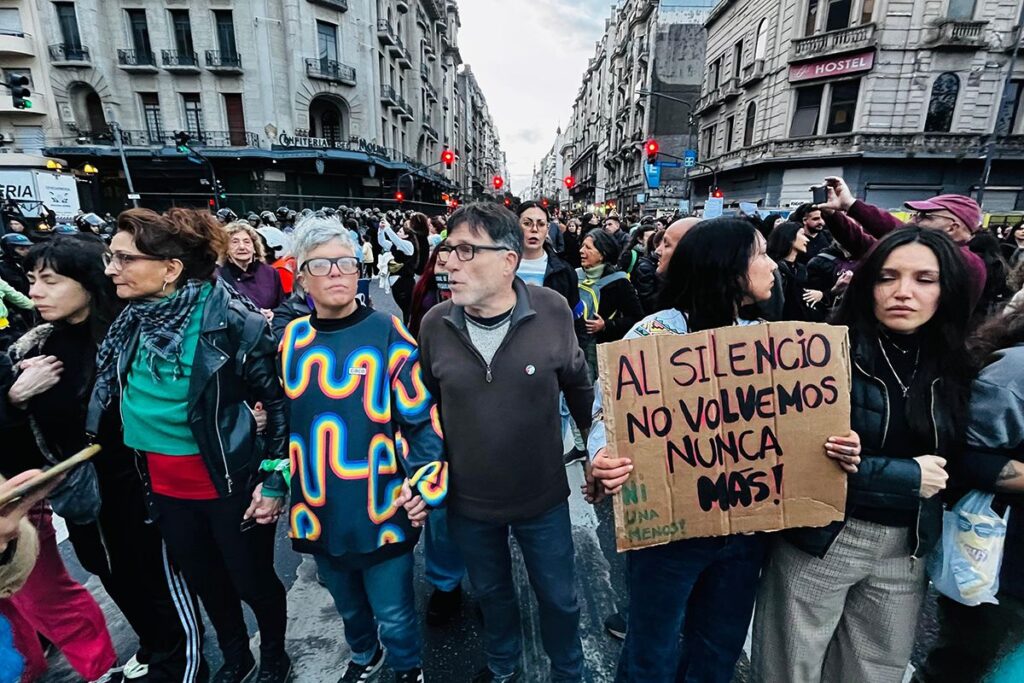
Father Paco Olveira stood with others in front of the police barricade surrounding Congress. He said, “From my faith, I must support just struggles. If there is a just struggle, it is that of women and feminism. I belong to an absolutely patriarchal church (the Catholic Church), and you give us the example that things are transformed in the streets and through struggle.”.
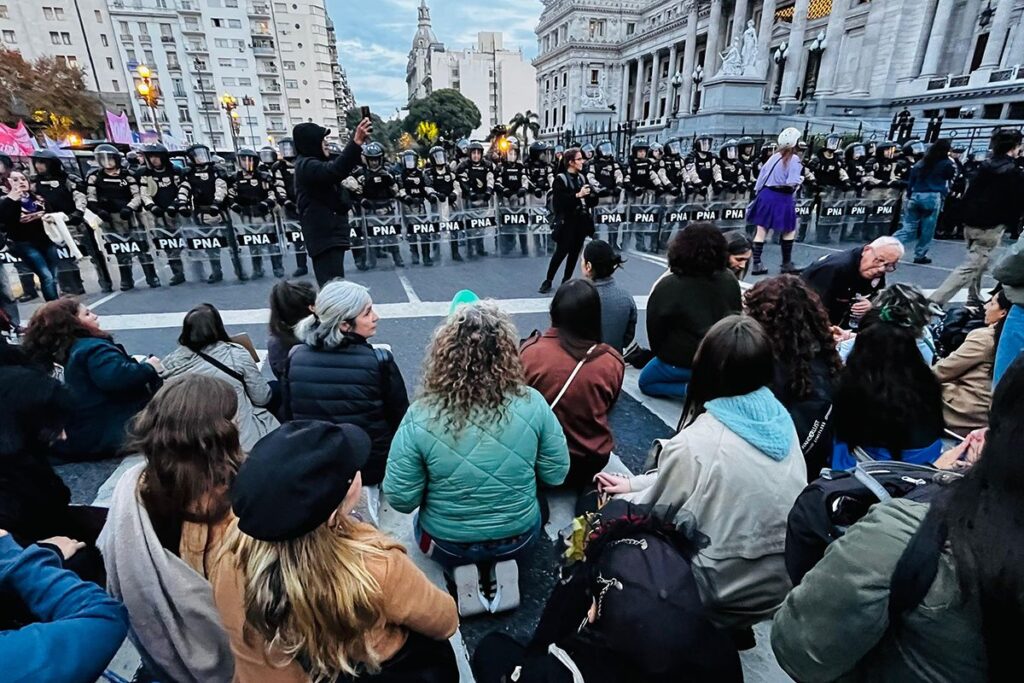
How to stop gender-based violence?
Flor Guimaraes is a trans feminist activist. She arrived at the demonstration with the same sign she carried at the first Ni Una Menos march in June 2015: Stop the murders of trans women. “Faced with sexist violence, it is urgent that we organize ourselves as we did many years ago. Today, more than ever, given the context of hatred, cruelty, and precariousness that trans women, transvestites, and diverse gender identities are experiencing. It is important, it is necessary to shout loudly and collectively, 'We want to live, not one less,' 'Stop the deaths from hate crimes,' 'Stop sexist and patriarchal violence.'”
Actress and singer Lucía Adúriz Bravo went to the plaza with her partner, holding a sign with her arms raised. The printed image depicted Ángeles Rawson, whose femicide shocked Argentina in 2013, with media coverage rife with prejudice and sensationalism. “The challenge is to re-examine these forms of agreement, to engage in self-criticism of how we think about the language surrounding women's bodies, and trans masculinities and femininities. The best way is always through organization, gentle resistance, and art that helps us think about things differently. Not being alone, supporting each other, and coming to stand up for those who are no longer here.”.
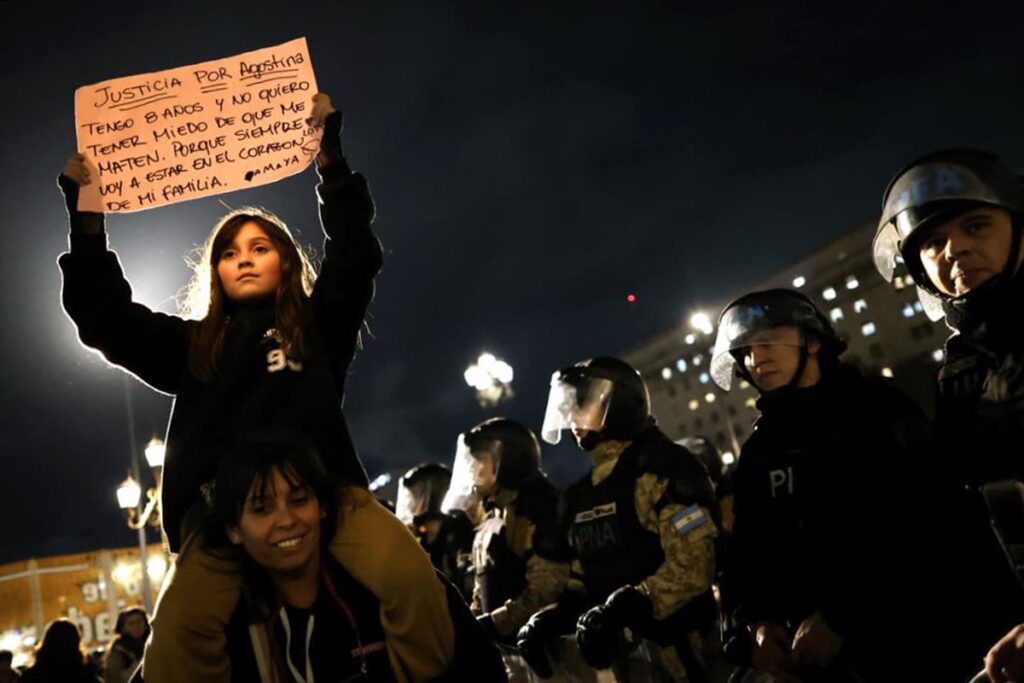
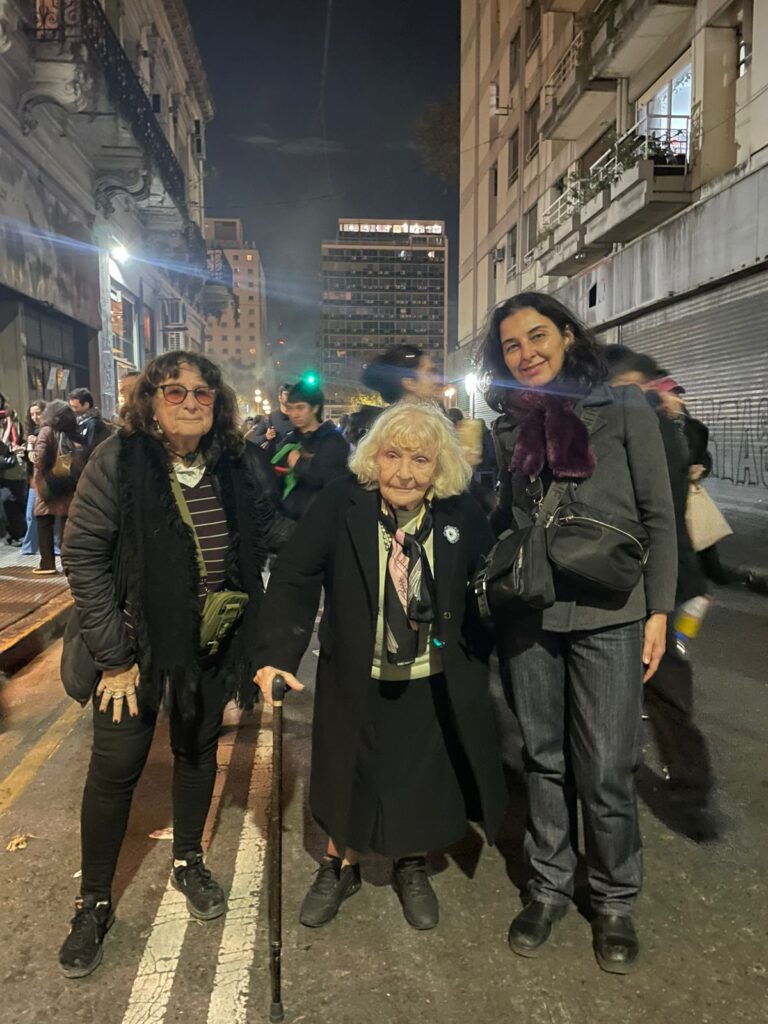
And that's exactly what happened yesterday in many cities across the country. The message was expressed in thousands of ways and languages, from a wide range of identities and generations. In the sign in Florencia: Stop the murders of trans women. In the installation by the families of victims. In the columns of women from unions, neighborhoods, and universities. In the quinceañeras who marched in their party dresses with signs that read, "I wear it for those who couldn't." In the girls behind signs that said, "I don't want to live in fear." In the pioneering activists like Nelly Minyersky, the feminist lawyer who is now over 90 years old and who, leaning on her cane and accompanied by her companions, stayed in the plaza until nightfall.
In a global context where, in the words of Gabriela Borrelli Azara, “violence and male chauvinist power are laid bare, and their ultimate representation is found in figures of power like Milei and Trump,” how do we make Ni Una Menos (Not One Less) a reality? “I don’t believe that male chauvinist violence will stop immediately, but I do believe in what we are doing today,” the writer and poet told us. “I believe in the persistence of this great conviction that we feminists in Argentina have in defense of life. I think it’s time to unite the struggles of retirees, university students, and all those affected by the male chauvinist violence that condemns us to hunger and kills our young women. Strengthening our conviction in life is one way forward.”
We are present
We are committed to journalism that delves into the territories and conducts thorough investigations, combined with new technologies and narrative formats. We want the protagonists, their stories, and their struggles to be present.
SUPPORT US

FOLLOW US
Related notes
We are present
This and other stories are not usually on the media agenda. Together we can bring them to light.
2 Comments