

El Zapallar Massacre: The Indigenous Slaughter Seeking Justice After 90 Years
The indigenous massacre occurred in 1933, and they are seeking a trial for the truth in August. The precedent of Napalpí.


Share

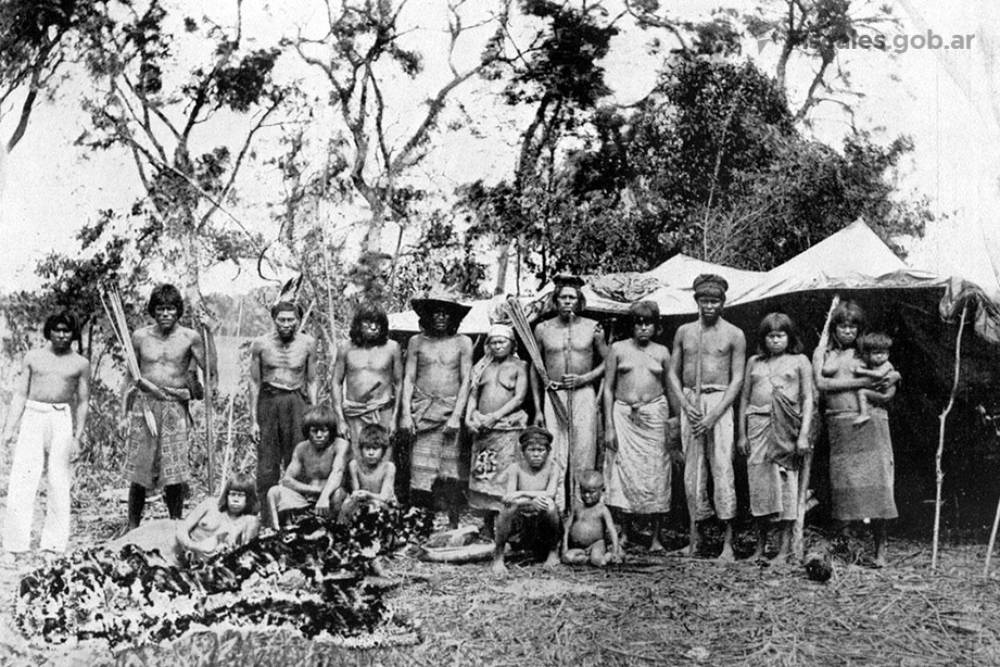
BUENOS AIRES, Argentina. Led by Chief Luis Durán, they set out from the Napalpí mission and walked for days, covering more than 100 kilometers. The approximately 300 people of the Moqoit and some Qom communities were driven by drought, lack of work, and hunger. At the front of the group walked the children and women, followed by the elders, and finally the men, as a gesture of peace. When they arrived in the town of El Zapallar on September 7, 1933, the Argentine state's response was immediate. They were met with a hail of gunfire from the police of the Chaco National Territory and some civilians. Some managed to escape, but the massacre left at least 50 Indigenous people dead.
More than 90 years later, a judicial investigation seeks to reconstruct what happened in order to hold a Truth Trial to judge these crimes. The Human Rights Prosecutor's Office in Resistencia is investigating the case as a crime against humanity and expects to file the request to bring the case to trial before Judge Zunilda Nirenperger of Federal Court No. 1 in Resistencia in August of this year.
The investigation began in 2014 and takes as its precedent the Truth Trial for the Napalpí Massacre. Attorneys General Federico Carniel and Carlos Amad, Federal Prosecutor Patricio Sabadini, Ad Hoc Prosecutor Diego Vigay, and Assistant Prosecutors Horacio Rodríguez and Walter Romero incorporated the testimonies of some survivors, such as Pedro Balquinta, Ramona Pérez, and Justino Lalecori.
For more testimonies
In August 2024, depending on the state of the investigation, the prosecution requested the collaboration of the Moqoit people community to find descendants of survivors of the massacre.
“We followed the investigative experience of the Napalpí massacre and what oral history means for Indigenous cultures. That call for participation was echoed by many media outlets and was translated into the Moqoit language. But we hadn't had any results until the beginning of this year when Moqoit leaders, primarily Juan Carlos Martínez, took up the cause and proposed involving the community. We held meetings in February and March in four locations where the community is present and were able to locate 11 descendants of survivors,” the ad hoc prosecutor Vigay shared with Presentes .
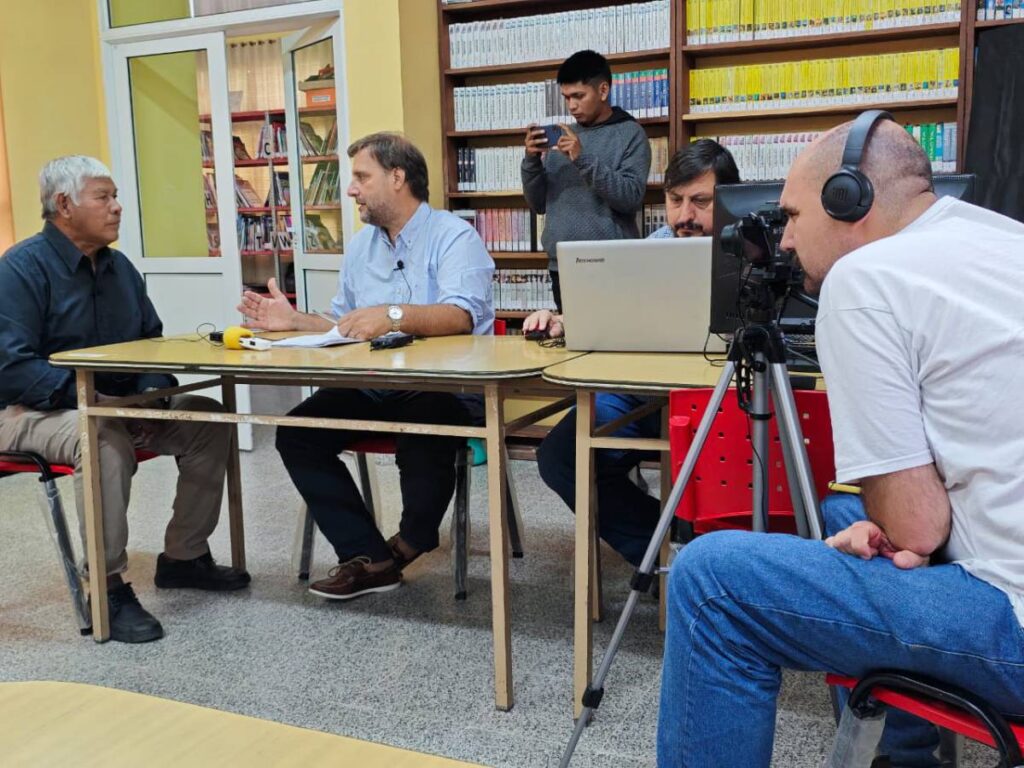
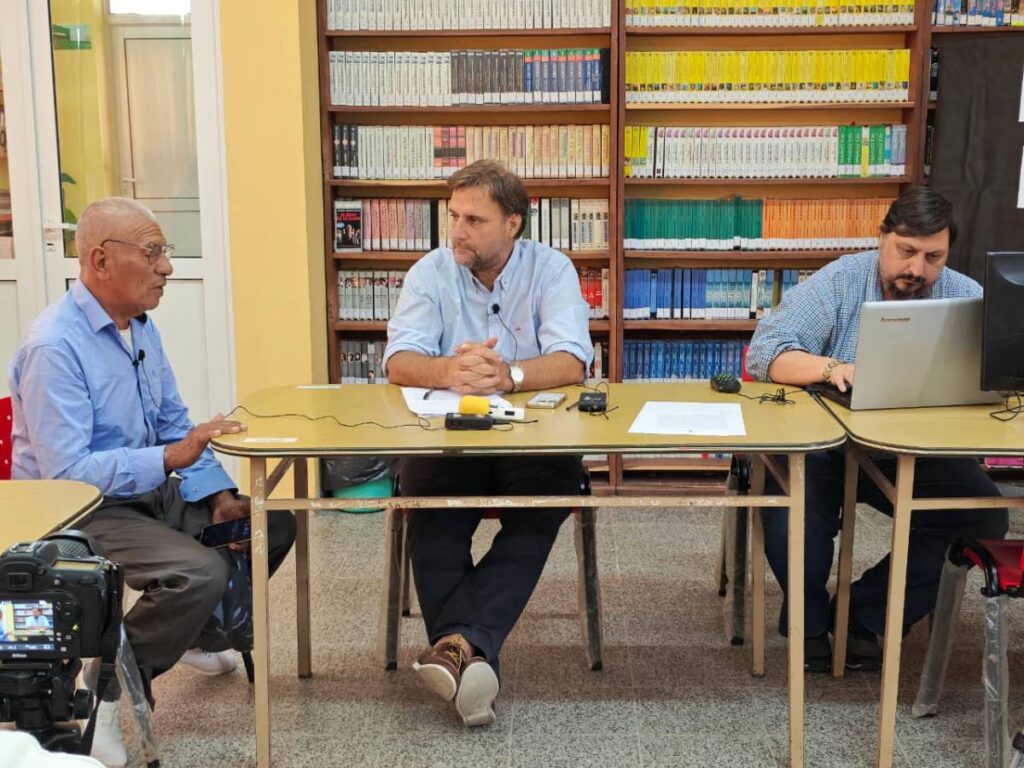
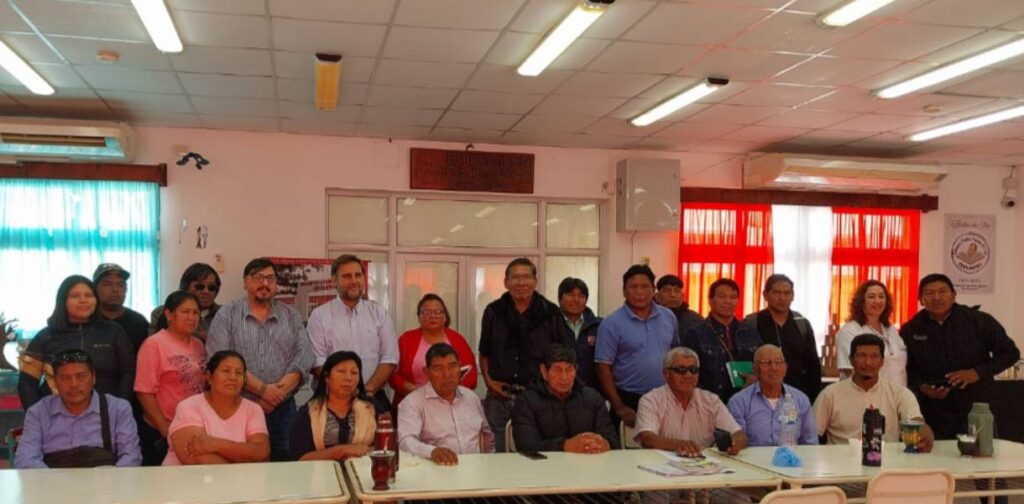
They are all grandchildren of the massacre survivors. On April 6, they testified at the Cervantes Library in San Bernardo, Chaco, before the prosecutors. They shared what their relatives had told them. “They are pieces of a puzzle that is coming together and, in a way, they lend credence to everything we have already pieced together,” Vigay stated.
“We were afraid because of the stories they told us”
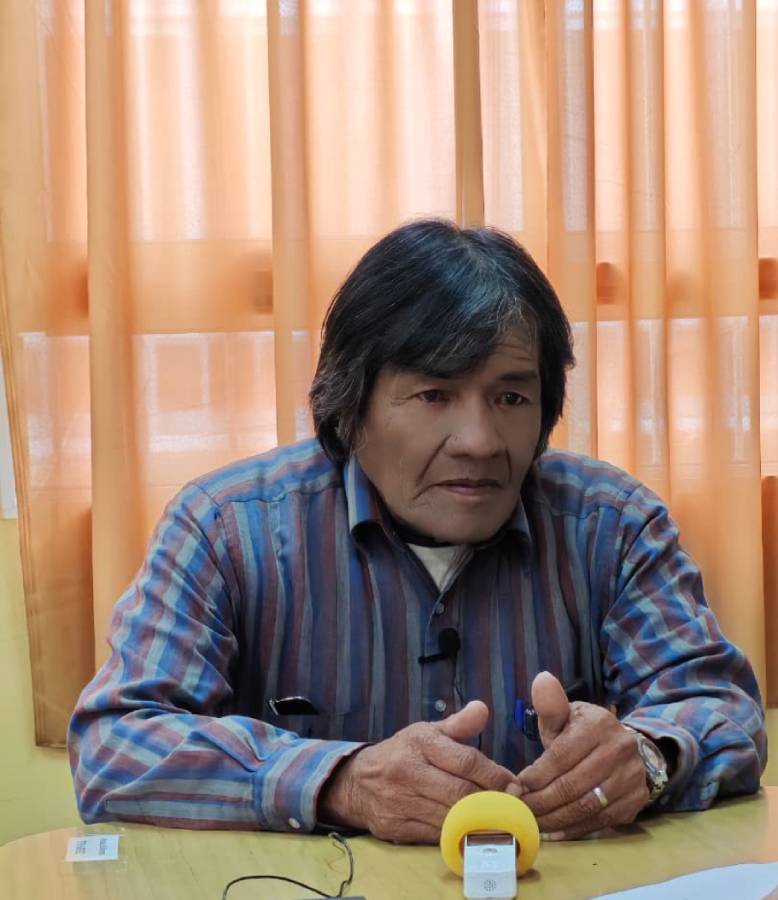
Juan Carlos Martínez is a bilingual teacher in the Moqoit neighborhood of San Bernardo. When he was a child, his grandmother, Ramona Pérez, told him about her experiences. “She told us everything that happened, why we had to be careful or afraid of… She called them 'the soldiers.' And we were always afraid because of the stories she told us,” Martínez shared with Presentes. It wasn't until he started school that he decided to delve into that family history. So he went back, pen and notebook in hand, and interviewed her for a course he was taking. His professor, Mercedes Silva, was a historian and immortalized that testimony in the book Memorias del Gran Chaco (Memories of the Gran Chaco).
Ramona was 7 or 8 years old when the massacre occurred. “She said there was widespread hunger and a local chief who went around the communities inviting people to a place where there was a feast and food. He said that chiefs gained powers there, like making firearms ineffective. Some older chiefs didn't accept the offer; they were afraid, but many were convinced to go to El Zapallar. They sold their land and their animals,” Martínez told this agency.
What remained of a massacre
In September 1933, approximately 300 people left the Napalpí settlement in search of work, amidst a severe drought. They walked 100 kilometers to reach the town of El Zapallar, now General San Martín, where they established a camp. On September 7, they attempted to enter the town in groups of 20. However, they were repressed on the orders of Police Commissioner Francisco Prestera. The official explanation was that it was a raid, despite the fact that the groups were led by women, children, and the elderly. The prosecutor's investigation estimated that around 40 officers and some civilians fired on the crowd, resulting in the deaths of approximately 50 Indigenous people.
“My grandmother was the youngest of three siblings. When the massacre happened, my great-grandmother put her on a horse and they swam across a river. They had just arrived with their group at a gathering where several other groups were camped,” she shared during her testimony. She continued, “Many Moqoit died, and two of Chief Durán’s brothers were murdered. Children, women, and the elderly were victims of the shooting. Some families lost their children and don’t know what happened to them.” She also recounted that many people drowned in the river, and many other elderly people died of hunger.
In the book Memoirs of the Gran Chaco, Mercedes Silva recounts Ramona Pérez's words: “Many men and women were taken prisoner for a few days. All those caught were punished and taken away, while those who escaped felt the bullets whizzing past them. Every woman and child had to pass through thistles and thorns, leaving all their belongings and their horse behind to flee that horror. (…) Tired, hungry, and lamenting, and without land, they returned to the place without hope.” And upon arriving at the place from which they had departed, the survivor recounted that they found the land “occupied by a group of several gringos; the plots had owners and were off-limits.”
The background
During the trial for the Napalpí Massacre, it was proven that it was not an isolated incident, but rather part of a genocidal process. This 1924 massacre was followed by the El Zapallar Massacre in 1933 and the Rincón Bomba Massacre in 1947. Prior to this, the so-called "Desert Campaign" and the massacres of San Antonio Obligado (1887) and San Javier (1904), both in Santa Fe province, took place
The ruling issued by Judge Zunilda Niremperger determined that the Napalpí Massacre, in which between 400 and 500 Moqoit and Qom people died, was a crime against humanity committed within the framework of a genocide against Indigenous peoples. She thus recognized the responsibility of the national government in the planning, execution, and cover-up of the crime of aggravated homicide with cruelty and enslavement.
This time, the prosecutor's office is also investigating the El Zapallar Massacre as a crime against humanity within the context of genocide. “Clearly, it wasn't a raid. They were marching peacefully, asking for food and work. In fact, they had their tools with them when they were taken to the police station to give their statements. They had organized themselves so that the women would enter first, then the elderly, and finally the men. The response from the national government was to fire indiscriminately on the people,” explained Prosecutor Vigay.
Contributions to memory
The investigation led by the prosecutor's office compiled the court records from that period, newspaper articles, death certificates, and extensive research by historian Rubén Guillón. Relevant chapters from history books were also included, such as * From Carob to Cotton*by Edgardo Cordeu and Alejandra Sifredi; * History of the Indigenous Peoples* by Orlando Sánchez; *From Oblivion to Hope* by Eduardo Barreto; *Zapallar: We Have a History* by Rubén Guillón; *Guaycurú: Rebel Land. Three Indigenous Uprisings* by Jorge Luis Ubertalli; *Millenarian Movements of the Indigenous Peoples of the Chaco Region between 1905 and 1933* by Leopoldo Bartolomé; *Indigenous State Reductions: Concentration Camps or Civilizational Advancement?* by Marcelo Musante; and * Memoirs of the Gran Chaco* by Mercedes Silva.
The Monsignor Alumini Historical Archive also provided documentation for the legal case, such as reports and newspaper articles about the Massacre from the newspaper La Voz del Chaco and the newspaper Nueva Estampa Chaqueña.
“I believe justice will be served. There are many people, lawyers who know our history, unlike before when no one worked in our favor. We must acknowledge that this happened and that the Argentine State was responsible. We expect a ruling that provides historical reparations in the moral, cultural, and spiritual realms, and in the identity of our people. And I hope the State recognizes that there is a people who pre-existed this history, recognized by the National Constitution.”
We are present
We are committed to journalism that delves into the territories and conducts thorough investigations, combined with new technologies and narrative formats. We want the protagonists, their stories, and their struggles to be present.
SUPPORT US

FOLLOW US
Related notes

We are present
This and other stories are not usually on the media agenda. Together we can bring them to light.