

Lechedevirgen: “Undoing art means restoring its ritual and collective dimension”
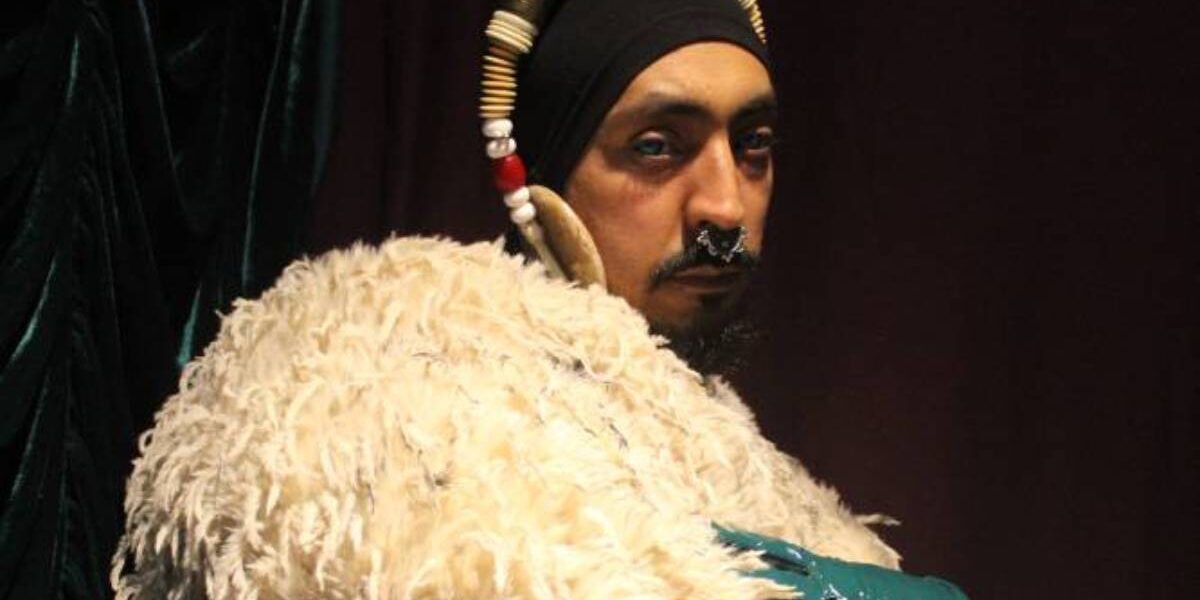
Lechedevirgen is a trans artist from Querétaro. She seeks to break down hegemonic structures and promote inclusion in institutional art spaces. "We need to create a world for ourselves.".


Share

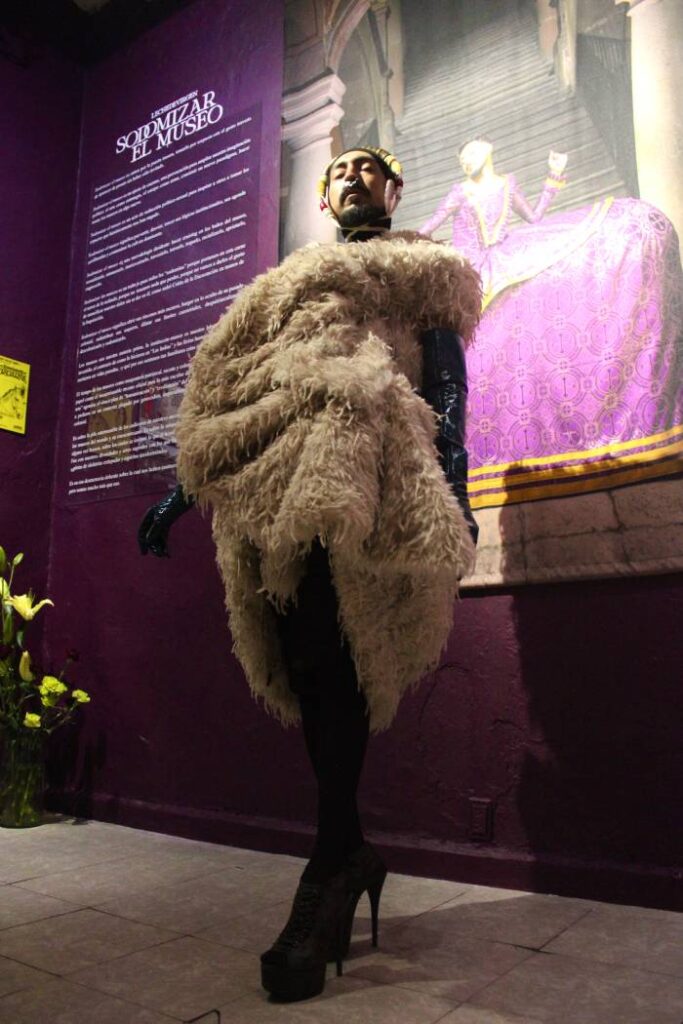
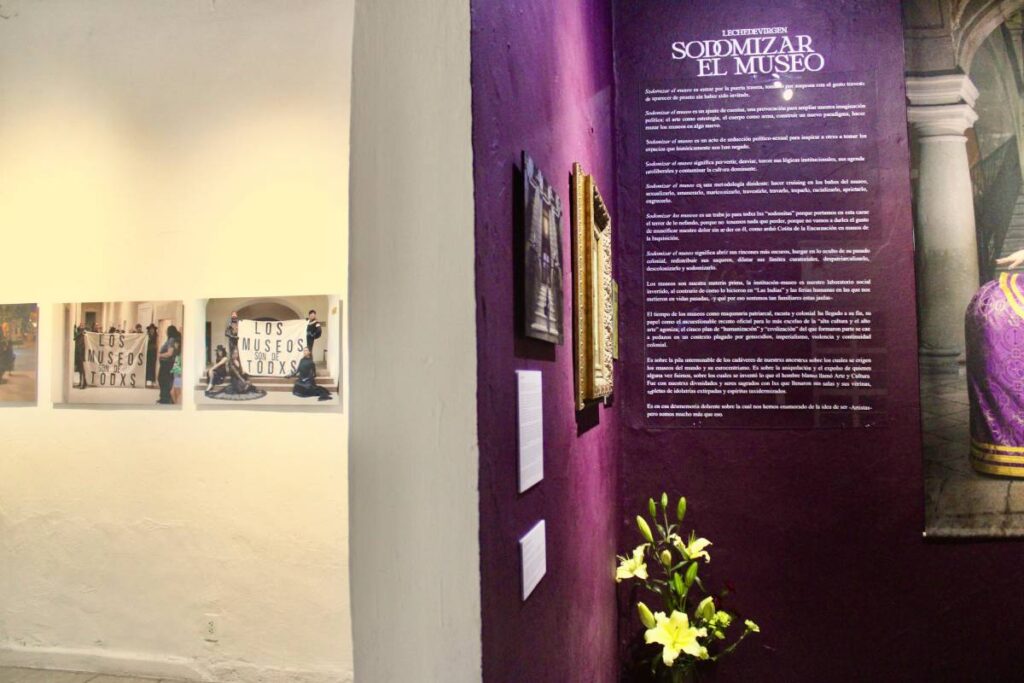
MEXICO CITY, Mexico. “Sodomizing the Museum” is not just the title of an exhibition. It is a proposal “to enter through the back door, invade unannounced and occupy, destabilizing those sacred spaces of cultural power.”
Behind this phrase is Lechedevirgen, a racialized, non-binary, and radical transvestite artist originally from Querétaro. For over fifteen years, she has been transforming flesh and rage into anti-patriarchal and anti-racist artistic tools.
Lechedevirgen presents his first solo exhibition in Mexico City: “Sodomizing the Museum”, in the self-managed space Eucalipto 20, which is the historic headquarters of the Revolutionary Action Homosexual Front (FHAR), a Mexican LGBT+ organization active between 1978 and 1981 and one of the first to activate marches that demanded the rights of LGBT+ people of the time with a close link to workers', union and student struggles.
In this conversation, Lechedevirgen tells us about the body as a “survival trench.” She proposes her methodology of “undoing Art” as a ritual, collective, and decolonial practice in opposition to the hegemonic art market.
Through concepts she calls “dagger thinking” and “expanded transvestism,” she proposes the occupation of cultural institutions to destabilize the “fiction of neutrality” of museums and demand concrete material transformations. She demands that museum budgets and spaces be placed at the direct service of community needs.
–What was it like growing up and creating in a deeply conservative territory like Querétaro, and how did that shape your political and aesthetic stance?
My work was a form of survival in the context I lived in. Querétaro is a mix of conservatism, whiteness, aspiration, and deeply rooted LGBTQphobic violence. For me, starting to do performance art between 2010 and 2013 wasn't an academic luxury, but a compelling necessity. It literally allowed me to stay alive in a society that pushes you into isolation. Faced with a heteronormative and violent environment, dedicating myself to art became a tenacious response and a personal act of revenge through symbolic acts of disobedience, to remind transphobic and racist groups that this world doesn't belong to them alone.
–You have developed the methodology “undoing Art” - what do you mean by this? Why do you speak of art with a capital A?
I arrived at that phrase because for years many people told me that I don't make art, something that happens to many people who are denied recognition by the exclusionary structures of hegemonic art. Instead of begging for validation, I decided to accept that I don't make art, but rather that I deconstruct it as a decolonial practice and methodology.
The official history of art has been written with the same 'H' of hegemony and heteronormativity, omitting non-white, trans, or precarious people. Undoing art means restoring the ritual, collective, spiritual, and political dimensions that the neoliberal and bourgeois market mutilated, turning it into mere commodities. We seek art in lowercase, as a minority movement focused on community transformation.
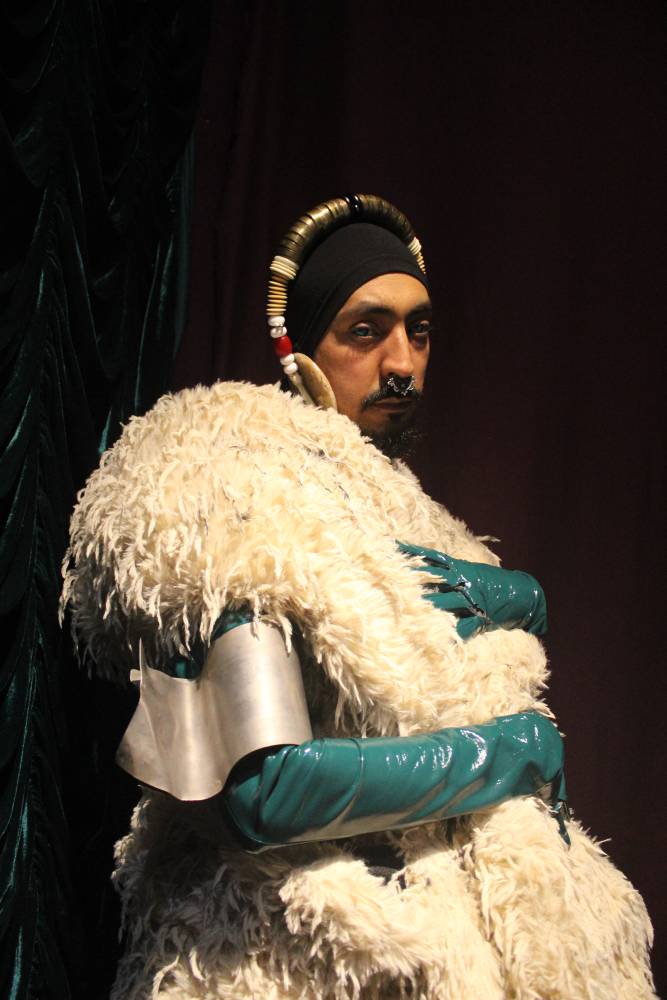
–Your exhibition at Eucalipto 20 is titled “Sodomizing the Museum.” Why revisit this historically criminalized concept?
-Sodomize is a word laden with persecution, crime, and moral condemnation of dissident bodies. Using it is a political game: sodomizing the museum means entering through the back door, invading unannounced, and occupying those sacred spaces of cultural power.
Museums are colonial and imperial machines in crisis. Infiltrating them with transvestite and queer presence disrupts their power dynamics. Museum institutions, or those of official art and culture, also have the opportunity to rethink and reevaluate how they utilize the economic, cultural, and symbolic capital they possess, capital that didn't appear out of thin air. This wealth was built from the perspective of people who have always been relegated to the bottom of the power pyramid.
So, I feel it's a really good time for museums to open up. Now, as that saying goes in anal politics: "open your ass and your mind will open.".
-In your work you have developed the notion of “dagger thinking” and you speak of “expanded transvestism” as a methodology of intervention. How does the reappropriation of a historical insult like 'dagger' connect with the irruption of the transvestite body in museums?
-Reclaiming and insisting on words like "dagger" or "transvestite" is a political and poetic imperative. The violence of the system cuts us directly into our flesh. Dagger Thought arises from embracing this bodily violence not from a place of victimization, but as a theoretical trench. It is about disarming the aggressor by wresting away their own insult and transforming it into a tool of thought that springs from the flesh.
Furthermore, in my imagination, transvestites are flowers and gay men are hummingbirds. There is a poetic plasticity in naming our identities through our own metaphors. Hence, transvestism, more than a matter limited to gender, functions as an expanded transvestism: a dissident methodology of invasion, infection, and occupation of spaces. When I speak of the transvestite body in museums, I am referring to the combative tactic of appearing unannounced, of being present in spaces where historically we are not wanted or expected.
The mere presence of a racialized transvestite body in an official museum destabilizes its hegemonic power dynamics. As Camila Sosa Villada said, "One transvestite is enough to undermine the foundations of a house." And I would add that one is enough to transform a museum, all museums, and the entire world if we so choose.
–You speak of having the right to political imagination to rewrite this reality. Faced with a world where the far right establishes ways of being, loving, and living, and an art world that often treats dissent as an object of study or exhibition, what are your political horizons in this regard?
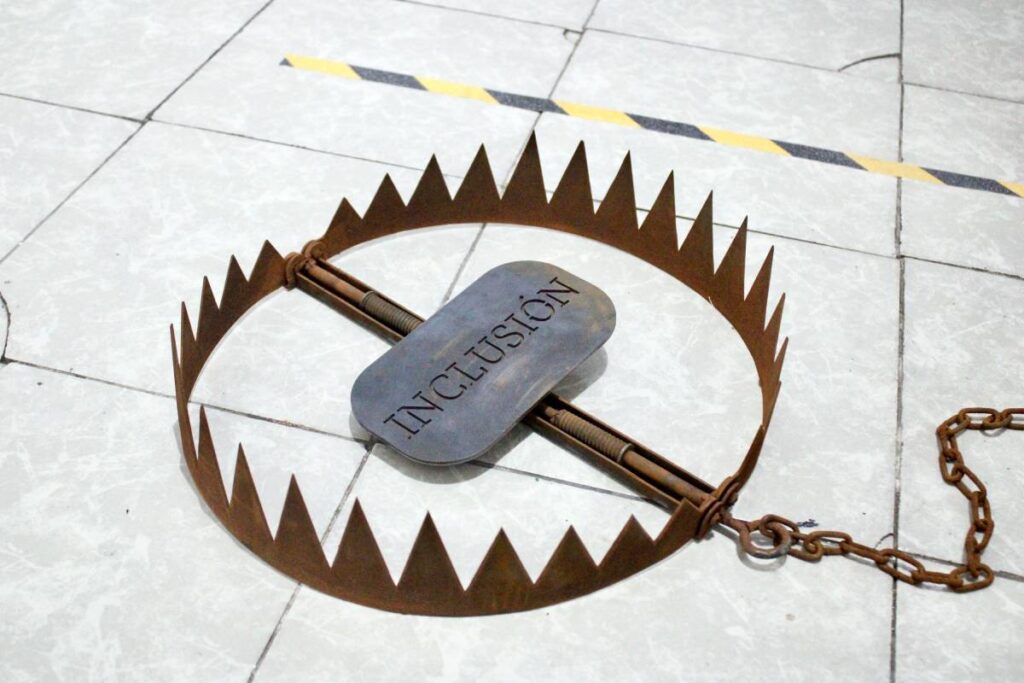
I'm not the only one who has thought or said this, and it's wonderful that so many people are joining forces to make it happen. But yes, we have every right to rely on our imagination, our forms of memory and resistance, to rewrite this reality. We've been living for a long time with a hegemonic art that doesn't name itself, but which is a white, cisgender, heterosexual, imperial, and fascist art, where dissidents are only included under subtitles or treated as mere content for institutions to legitimize themselves.
Faced with this onslaught, my political horizons do not lie in continuing to knock on doors to see if we will be accepted, nor in asking for tolerance from a system that has annihilated us; we need to create a world for ourselves. My horizon is a commitment to art that has a direct political and social impact, one that strengthens our communities, far removed from that individualistic, commercial, and neoliberal figure of the artist.
I have learned a lot of that from the global south, from my comrades in Colombia and Ecuador: to bet on coming together, on community alliances, on affection, and to generate an underground revolution where art is the excuse to meet and organize ourselves.
And specifically, my goal with museums and the art world is to demand real and tangible changes. It's not right that they address these issues from the comfortable position of using our lives as mere entertainment.
If they are going to expose our pain, it is necessary that they burn with that pain and put their budgets at the service of life.
I would like to see museum galleries used for the homeless, community kitchens set up inside museums for those who have nothing to eat, or places of rest and transition for those in the final stages of chronic illnesses or living with HIV. We have every right to reclaim these spaces as reverse social laboratories, to build our own archives of memory, and to rewrite the world from our own perspective.
We are present
We are committed to journalism that delves into the territories and conducts thorough investigations, combined with new technologies and narrative formats. We want the protagonists, their stories, and their struggles to be present.
SUPPORT US

FOLLOW US
Related notes
We are present
This and other stories are not usually on the media agenda. Together we can bring them to light.