

Intersex love: the story of LGBTIQ+ Pride and migration of Bea and Pan
On International LGBTIQ+ Pride Day, Perú Intersex, in partnership with Agencia Presentes, presents a series of articles about intersex love stories in Latin America. We inaugurate this series with the stories of two women activists and migrants in Argentina.
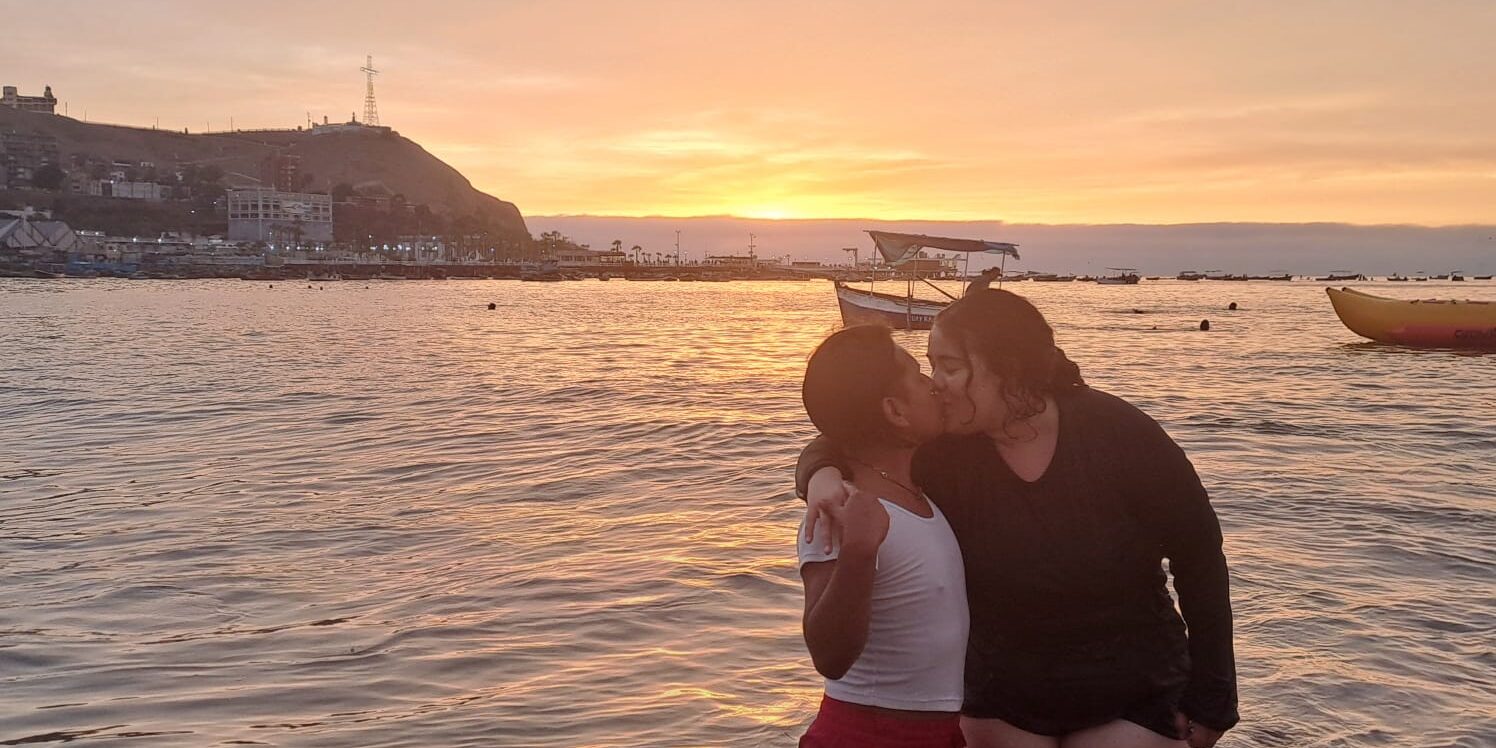


Share

When they matched on Tinder a little over a year ago, they knew nothing about each other. Bea, 30, an intersex, lesbian Peruvian woman, founder of Perú Intersex , and a sociology student in the Autonomous City of Buenos Aires (CABA), had just ended a relationship and was looking for new friends. Pan, 29, a lesbian Brazilian woman, a language teacher and tour guide, also in CABA, joined the app because she was bored. On her profile, Pan uploaded six photos and selected the option: “fun, but I’m open to anything.”
Bea also had some pictures. But she doesn't usually indicate on any app that she's an intersex woman because she believes there's a lot of fetishism surrounding it. The "I" in the LGBTQ+ acronym refers to those born with sex characteristics that don't fit into the male or female binary. According to UN data, this form of bodily diversity encompasses 1.7% of the world's population, making being intersex as common as being a redhead. However, there's a huge lack of awareness. "Even without indicating anything, I've received somewhat random requests," says Bea.
They liked each other and moved to WhatsApp. Over the course of a month of text messages, Bea was discouraged by their differing interests.
"We disagreed on almost everything," he recalls.
Pan was attracted to that.
"She wanted to talk about the war in Palestine and I would say to her: 'Why are we going to talk about something so sad and ugly?'" she says, laughing.
–For me it was a resounding 'no' when I mentioned something about queer and politics, and he replied that he wasn't interested– Bea replies.
Pan has a different perspective.
"I prefer it this way. I feel there's something very narcissistic about people always looking for their reflection in others. My way of protesting against that is by choosing people who are different from me.".
The worst first date of my life
Bea found out that the intersex documentary * The Violet Circle* was going to be shown in La Plata—the capital of Buenos Aires province, about ninety minutes from her home in the City of Buenos Aires. She suggested to Pan that they go see it, without telling her what it was about. “I had to stay overnight at one of my friends’ houses or somewhere, because I hate going to La Plata and coming back the same day. Then I remembered this girl I’d been talking to a lot,” Bea says. Pan warned her that documentaries bored her a bit and that she might fall asleep, but she agreed to go with her.
Before the date, Bea sent him a photo emphasizing that she was a woman with a beard. She asked if that bothered him. “That’s my way of mitigating my insecurities. I don’t want to go on a date and have someone say to me, ‘Hey, what’s up? Are you a man? Are you a woman? Are you trans? What are you?’ It’s happened to me before, and it hurts to be rejected,” she shared. Pan replied that everything was fine.
Bea didn’t go to the date with her hair down, nor did she wear lipstick, her white top, or her tight pants; it was cold, and she preferred to bundle up. Pan arrived lightly dressed.
"I went in a huge, fuchsia top with a low neckline. I was freezing cold just to look pretty. And she looked like a marshmallow with all the clothes she wore," Pan recalls, smiling.
“I wasn’t really worried about whether he liked me,” Bea adds. “On that first date, I didn’t dress up to impress him in typically feminine clothes, like I usually do with other girls, and that was something very different. With her, I could be my most comfortable self and myself from the very beginning ,” she says, as their hands touch.
They arrived at the performance.
“Everything was a jumbled mess. I was talking to intersex activists, to friends I hadn’t seen in ages, and at the same time, it was our first date. I didn’t know whether to get closer or let her talk to other people. It was the first time I’d been in a situation like that and I didn’t know what to do,” Bea recalls.
"Maybe you shouldn't have ignored me all night," Pan interrupts.
And so the hours passed, glancing at each other out of the corner of their eyes while interacting with the rest.
"It was a very strange date," Bea says.
"The worst first date of my life," Pan replies.
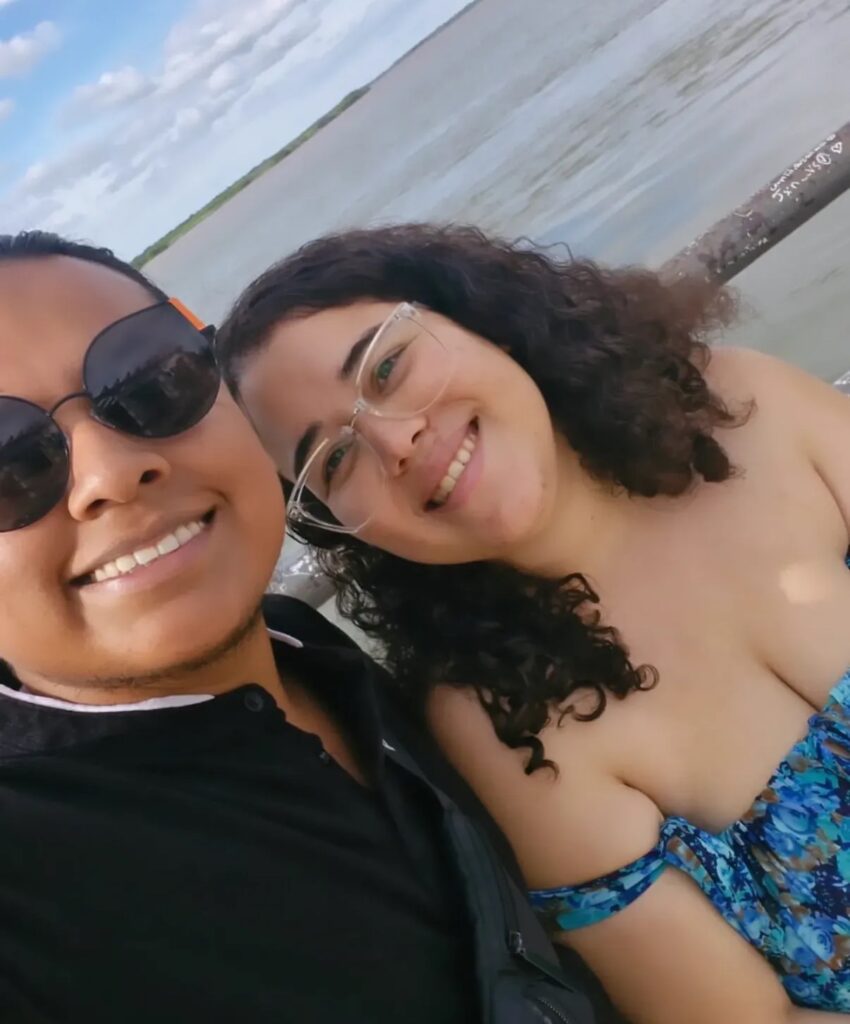
Personal archive of Bea and Pan.
Proud to be who we are
The early morning hours gave them time to settle in. They had a couple of drinks and went to Pan's house. The hostess showed them her small room with a double bed, they put on their pajamas, and lay down to rest. Pan turned off the light and closed the blackout curtains. "Total darkness scares me, but I felt completely comfortable with her," says Bea. "What else are you afraid of?" Pan asked her that night. And so they continued for a while, sharing their fears in the dim light. Until Bea took the initiative: "I think you're a pretty girl," she said. "You too," Pan replied. And they kissed.
Before taking off their clothes, Bea told her that she was an intersex woman. Pan caressed her face and confessed that she had already realized it, ever since they were in the documentary. “I usually hold back from talking about intersex before undressing. I assume that people who expect to have sex with a woman expect to find the typical vagina and vulva, which isn't my case. And I don't want any discomfort or rejection,” Bea shares.
They share a pride in their bodies. Pan loves her body; and Bea, her intersex, brown body. For Bea, this self-love is also accompanied by gratitude: she emphasizes that, thanks to her mother's wise decision, her body was never mutilated. At this point, it's vital to remember that the main demand of intersex activism worldwide is an end to mutilating surgeries on the genitals of intersex children, classified as torture by the UN.
This respect for their bodies is also reflected in their intimacy: they practice safe sex, they add. Before continuing to undress, Bea asked her how she protected herself from sexually transmitted infections (STIs), and Pan gave her details about her latest medical tests. Afterward, they slept in each other's arms, feeling they wanted to stay that way forever. The next night, they went to a party and reaffirmed how comfortable they felt together. “We danced. And I danced. I danced so happily… I felt so happy and so comfortable. I would never dance with someone I've just met because I don't know how to dance,” Bea recalls.
I walk as I go
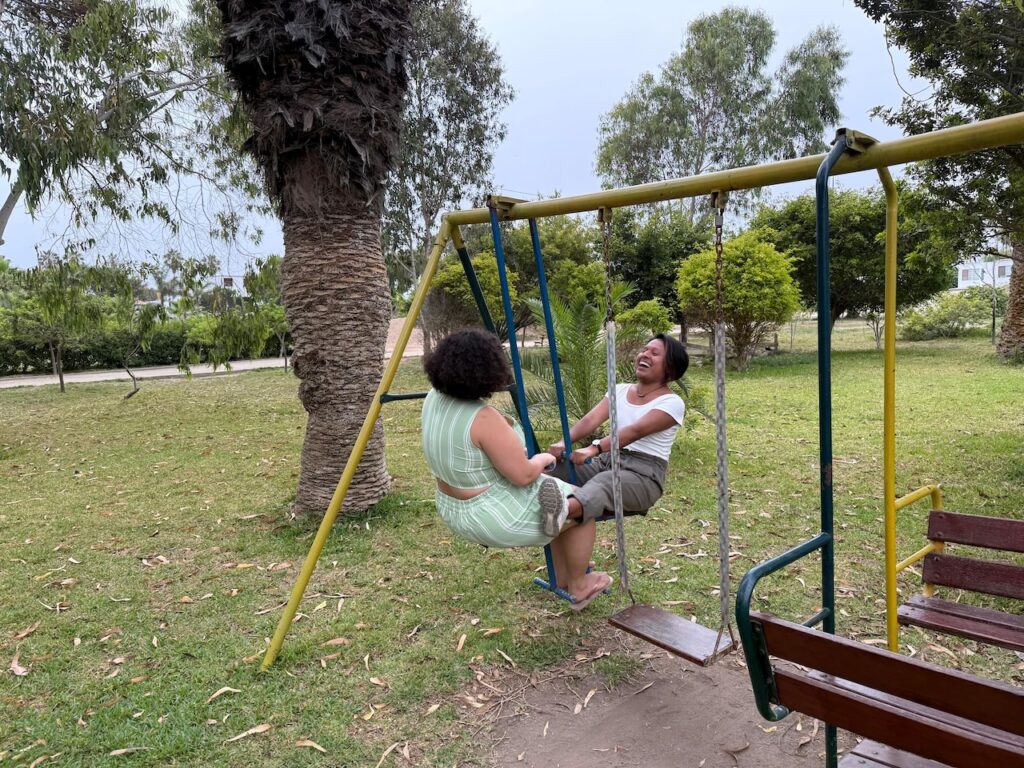
Photo: Juan Pablo Uribe
As the days went by, they discovered more things they liked about each other. “I love her smile and her hands. I like that her body is muscular all over: good for squeezing and biting,” says Pan, who admires how his girlfriend achieves what she sets out to do, especially in activism. “When I see her smile with her beautiful eyes and her curls, I’m happy. When she bursts out laughing at anything, I love it,” confesses Bea, emphasizing that her girlfriend knows what she wants, even if what she says or does isn’t always to everyone’s liking.
Both enjoy nature, though with different perspectives. Bea prefers to contemplate the entire park, while Pan focuses on the details: a bird's beak, an insect's wings. They also share a love of learning. Pan does so without a specific goal; she's interested in knowing, for example, what types of leaves exist or what colors cockroach wings are. In contrast, what Bea learns usually leads her to develop tools that are useful or that she's passionate about. "It horrifies me that university is only about getting a job. The goal of education is to generate knowledge for its own sake, not to conquer something," says Pan. They enjoy reading aloud. The last book they shared was "That One I Was," by the intersex journalist Candelaria Schamun. Pan reads, and at the most impactful parts, they pause to discuss.
A few months ago, they moved in together at Bea's house in Buenos Aires. It's the first time Bea has lived with a partner and shared projects with a girlfriend. Currently, both are co-founders of Miles, a collective that helps LGBTIQ+ migrant women in Argentina. They recently started a business making colorful, handcrafted candles, with proceeds going to support the intersex community.
Their activism differs in terms of time commitment. Bea is almost fully immersed in it, while Pan makes time for other things. “For me, politics is a practice and a part of life. There’s time to be at a march, but also time to spend hours playing on a swing.” Bea says her girlfriend helps her get more rest. “Pan balances me, and that gives me peace.” In February, they traveled together for the first time to Peru. There, they organized a workshop on Intersex Peru in the city of Arequipa. In Lima, they divided their time between intersex activism and relaxing on the beaches.
Living in Argentina: protesting in the streets
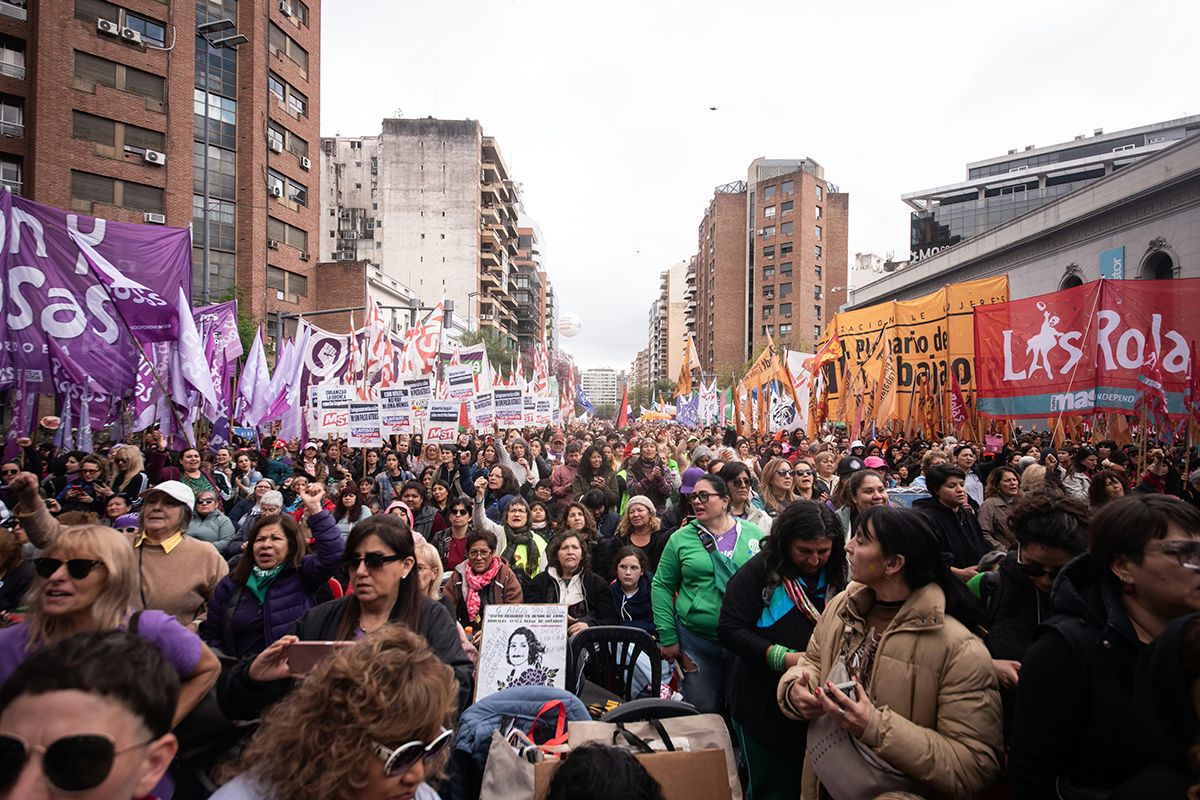
Part of the experience of living in Argentina is marching; historically, the streets are filled with protests demanding rights that have been violated. Pan and Bea have been present—both independently and representing their organizations, Perú Intersex and Miles—at marches for pensioners, at the 38th Plurinational Meeting of Women, Lesbians, Transvestites, Transgender, Bisexual, Intersex, and Non-Binary held in the province of Corrientes, at the Pride marches in Buenos Aires and La Plata, and at the recent June 3rd mobilization for Ni Una Menos (Not One Less).
Bea recalls that when she first migrated, she didn't participate in street activism; she felt that, because she wasn't Argentinian, she didn't have the right to protest and preferred to disengage and relax, something that was very difficult for her in Peru. However, since Javier Milei's government came to power, reality has become harsher for her friends, her community, and herself, leading her to actively participate in the sit-ins organized by collectives. Pan, for her part, joins the street activism in any country she visits. “I’m a master of cultural appropriation,” she laughs. “I feel very Argentinian, so I’m always at the protests. Besides, they make delicious choripanes; defending rights is one part, and the other is the food,” she shares. Pan also feels very Peruvian now, and that’s why on June 27, 2026, she participated in her first Pride March in Peru, accompanying the intersex contingent led by the woman she loves.
Gazes and intersex adolescence
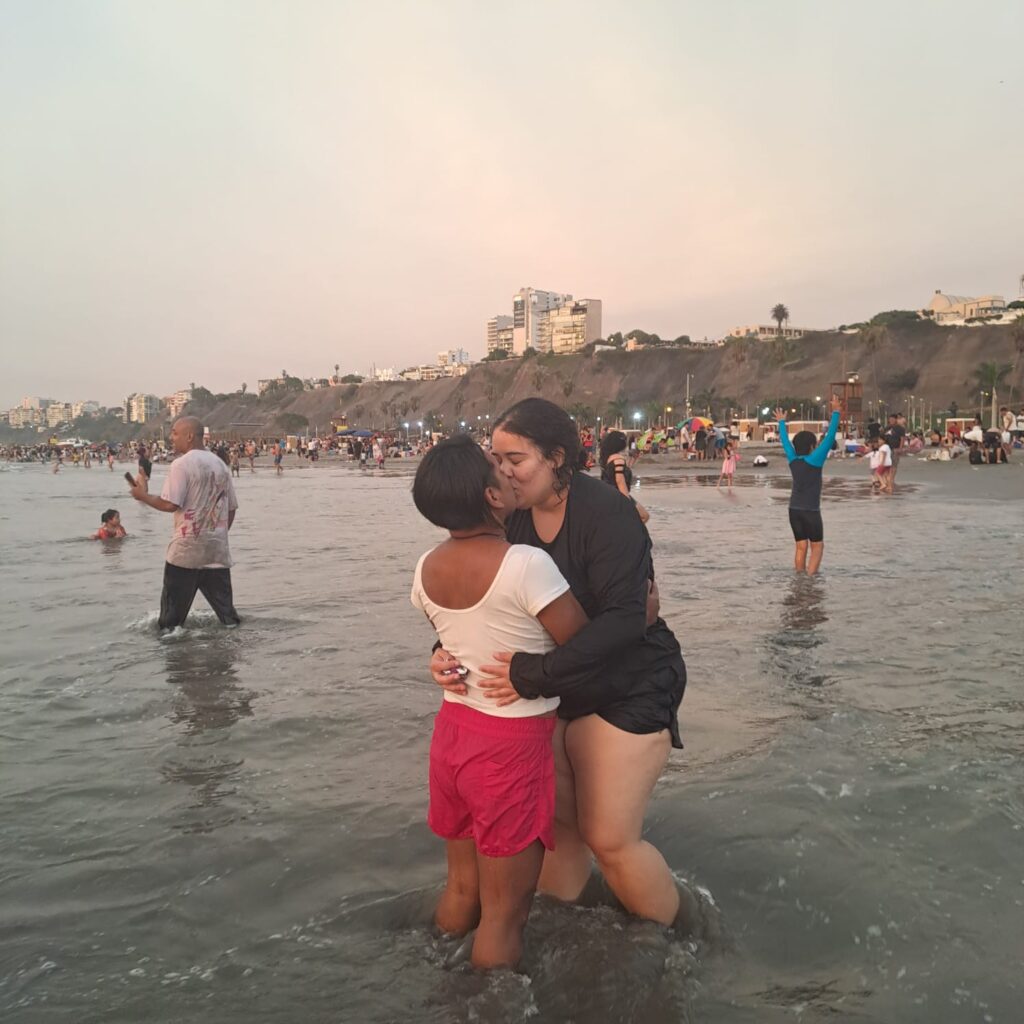
Photo: Melissa Goytizolo
One of Bea's biggest fears as a migrant is being forced to move again; the university she attends is in Argentina, and settling there has been very difficult. Returning to Peru isn't an option that particularly excites her: although in Buenos Aires, she says, she faces the complexities of racism, in her own country, the stares directed at her body are much more inquisitive and constant.
She recently stayed with Pan in temporary accommodation in Chorrillos—a district of Lima—and the building's residents reminded her, in her words, of "the stares I've endured my whole life." "In my case, because I'm intersex, I developed androgyny. So, when I dress in more typically feminine clothing, people look at me as if to say, 'What's up with that?' My whole life I've experienced these situations of having to walk past a group of people and hear this comment: 'Is she a man or a woman?' That constant, questioning scrutiny of my body," she recounts.
These kinds of looks during her adolescence, especially from men, profoundly impacted her self-esteem and self-worth. Bea was born in Villa El Salvador, a district of Lima, in a humble house with sand floors. Her parents—both people with disabilities—and her sisters lived in a room made of woven mats covered with plastic sheeting to keep out the cold and protect themselves from the rain. “We lived practically in a garbage dump. Even the school I attended, which was next to my house, was called 'Little Trash' because at that time it was a construction waste dump,” Bea shares.
During her adolescence, when they didn't have enough money to buy water, her sisters would dress as femininely as possible, put on makeup, and flirt with the water vendor, who would give them a full jug of water with the promise that they would pay later. Bea was aware that she couldn't contribute to her household income in the same way. “I had a beard and a lot of hair on my legs. I also had no breast development and my hips weren't growing. So I felt incapable of flirting with the water carrier, which forced me to do other jobs that involved physical labor,” Bea shares. And she emphasizes: “In places with such precariousness, flirting becomes a form of currency to get something as basic as water or even a job. It's important to highlight how a person in extreme poverty, with variations in their sexual characteristics, can face challenges and violence that a typically feminine girl wouldn't experience.”
Growing up on an island in Brazil
Pan was born in Brazil, on an island of five thousand inhabitants, named after a small coconut that grows there. Her paternal grandmother raised her, as her parents, she says, were largely absent from her life. She is the eldest of ten siblings: four biological children and the rest who joined the family over the years. She remembers that during her childhood and adolescence, her house was always full of kids, something she loved because they had fun together in the pool and jumping on trampolines. Lavish birthday parties were frequent, where the main attraction was giant cakes, one square meter in size.
Beyond the financial comfort of her early years, Pan emphasizes that she had the privilege of not experiencing lesbophobia within her family; at least until recently, when she decided to come out. “My grandmother sent me three hours of audio telling me how disgusting I am. My grandfather left us all a trust fund, and my grandmother wants to take it away from me under the excuse that I’m no longer part of the family because I’m a lesbian,” she shares. When this point comes up in the interview, Pan breaks down for the first time. Bea approaches her, and they hug for a long time.
Pan, for his part, packed a couple of backpacks at 18 and traveled as much as he could through South America. He was eager to explore new places beyond his beloved literature, but also to escape the lesbophobia of his surroundings; he shares that his first girlfriend's father even threatened to kill her indirectly. “I arrived in Argentina and fell in love with its atmosphere and its sky. I thought, ‘This is where I want to stay,’” he recalls. Before that, he had traveled through Chile, Bolivia, and Peru, among other countries, where he experienced hostility and insecurity because of his sexual orientation. Rosario was the first Argentine city where he settled down. “All the men looked kind of like faggots —that's what gay men are called in Argentina. There were lesbians kissing in the street, and I thought, ‘Wow, I want that too,’” he shares.
Migrating and living in Argentina
Unfortunately, Pan says, since Javier Milei took office, racism has become institutionalized. She recounts that when she goes to buy spices and fruit in Liniers—a neighborhood with a strong Peruvian and Bolivian presence in Buenos Aires—Bea can't go with her because the police often conduct operations to arrest people of color, even if they have their documents in order. “Buenos Aires is open to white tourists, but when it comes to brown or Black tourism, the policies and the treatment change. It's happened to me that I've been walking, approached someone to ask for directions, and out of nowhere they think I'm going to steal their cell phone,” Bea says. She adds that even internal migrants from other Argentine provinces feel rejected in the capital.
Mitigating these injustices collectively was precisely one of the reasons for founding Miles. Together with other allied organizations from various provinces, they have taken a series of precautionary measures, such as always carrying their documents—whether it's their national ID or temporary residency permit—and walking cautiously through certain areas. They are also considering launching a regularization campaign for migrants who do not have their papers in order, assuming that the current government will not facilitate these processes.
Pan deeply values the chosen family she built a year ago in La Plata. They are her neighbors: an elderly woman, a 42-year-old woman, and a nine-year-old girl. “Bea came to spend Christmas with my chosen family, because she is also my family. It was lovely because the children there still believe in Santa Claus. A lot of children came, and at midnight we went out with fireworks, played on the swings, and ate filled panettone. Bea ate one all by herself,” she says, laughing, before dropping a bombshell: “I want to marry Bea in the not-too-distant future, in the Rose Garden of Buenos Aires. And I want to have a daughter with her.” In a world where intersex people are made invisible and their bodies pathologized, Bea and Pan’s love rebels as pure Pride.
Text and project coordination: Melissa Goytizolo (journalist ally of Peru Intersex), in collaboration with our allies from Agencia Presentes for editing and dissemination.
This text is published in Agencia Presentes and Perú Intersex as part of a cooperation alliance.
We are present
We are committed to journalism that delves into the territories and conducts thorough investigations, combined with new technologies and narrative formats. We want the protagonists, their stories, and their struggles to be present.
SUPPORT US

FOLLOW US
Related notes
We are present
This and other stories are not usually on the media agenda. Together we can bring them to light.