

Searching mothers: why they camped for almost a month and what they demand from the Attorney General's Office of Mexico
More than 50 mothers searching for their missing children ended their sit-in, which they had set up almost a month ago in front of the Attorney General's Office. They denounce impunity, violence, and state neglect. They expect answers by November 9.


Share

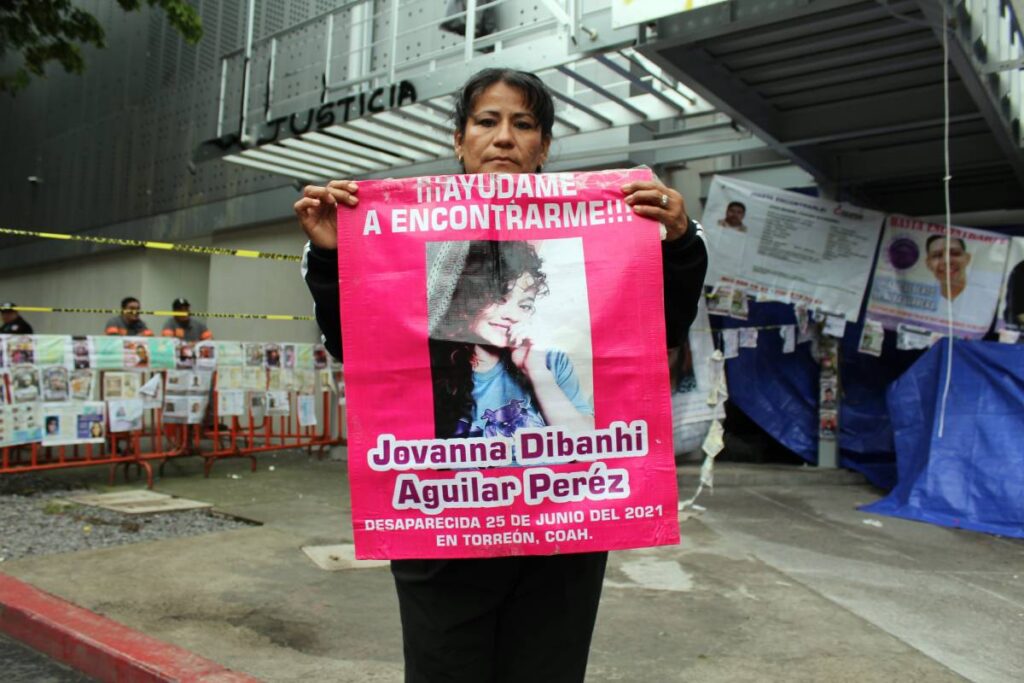
MEXICO CITY, Mexico. “We are not demanding a car, we are not demanding a piece of land, a salary increase. We are demanding a human being, we are demanding our children because we need them, because we love them,” says Guadalupe Pérez. She is searching for her daughter, Dibanhi Aguilar Pérez, who disappeared on June 25, 2021, in Torreón, Coahuila.
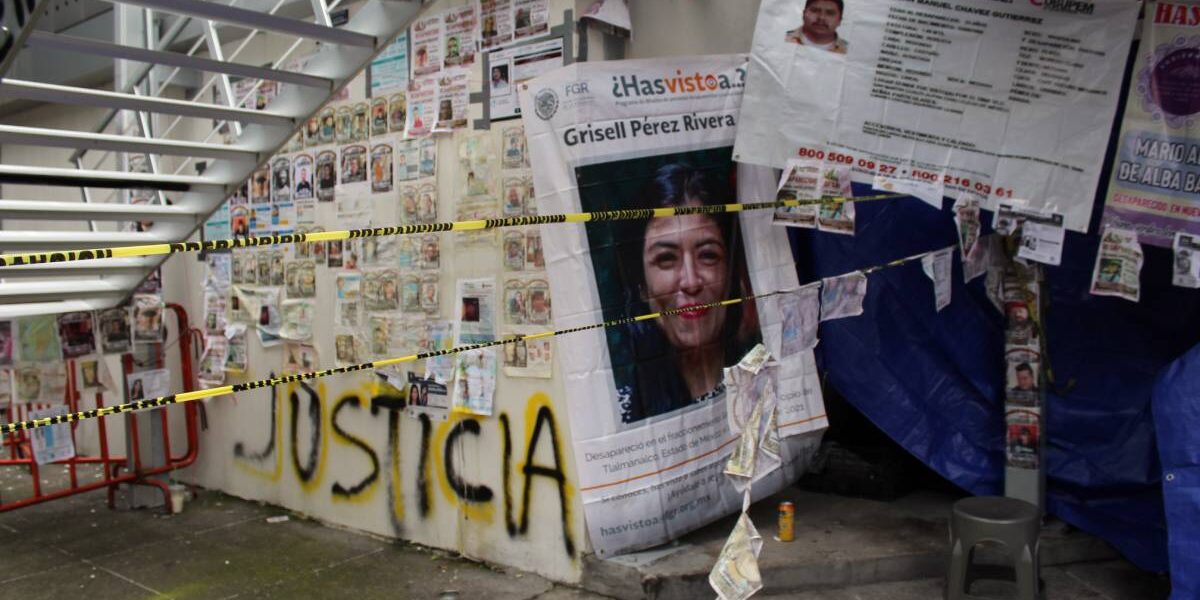
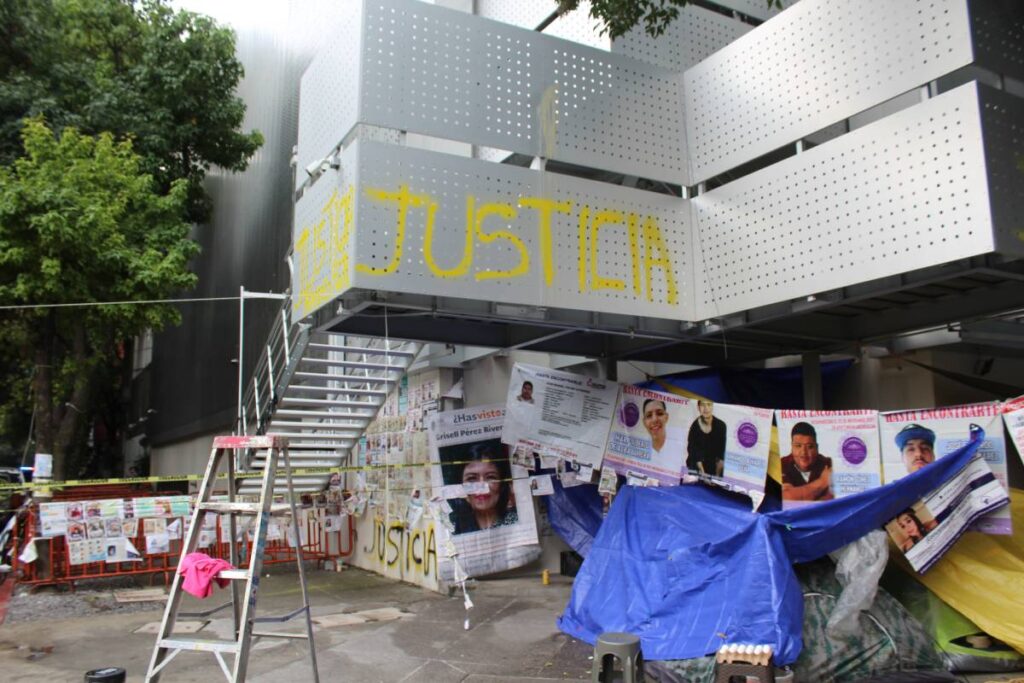
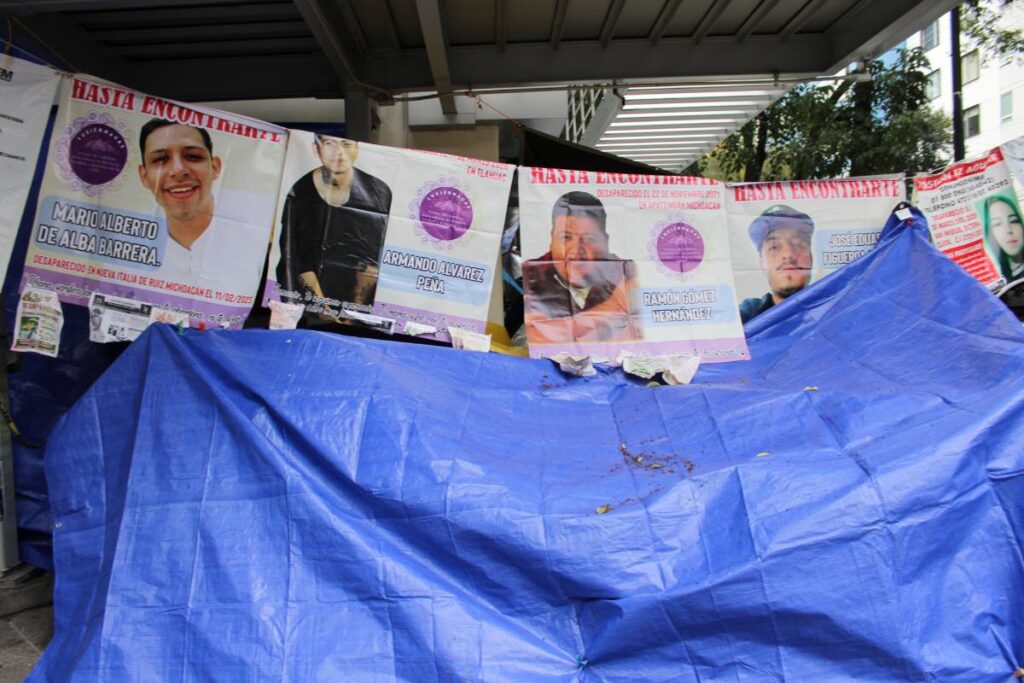
Armed with five-page investigation files, revictimized by authorities, and haunted by violence, more than fifty mothers from various Mexican states camped for 29 days in the nation's capital. They demand that the Attorney General's Office (FGR) take over the investigations of their missing loved ones.
The mothers searching for their missing children ended their sit-in after the Attorney General's Office (FGR) promised on Thursday, October 8, to review their request to take over the investigations. The mothers agreed to return on November 9 to receive a response from the authorities.
This situation arises after the recent pronouncement by the United Nations (UN) to the Mexican State, which has repeatedly warned that in the face of State inaction, the search tasks cannot fall on the families and demands guaranteeing protection measures for the women and mothers who are searching.
For two decades, Mexico has been experiencing a human rights crisis with over 135,000 people missing and a forensic crisis with more than 72,000 unidentified bodies. This is the result of a failed security strategy to combat drug trafficking.
Why did the mothers searching for their missing children camp out, and what are their demands?
On Thursday, October 8, after 29 consecutive days of camping on the sidewalks surrounding the Attorney General's Office, more than fifty mothers set up tents, mattresses, and a makeshift kitchen. This followed the Attorney General's Office's commitment to review the case files of their children and relatives— a right guaranteed to families and established in Article 5 of the Law of the Attorney General's Office.
The mothers searching for their missing loved ones came from Michoacán, Coahuila, Jalisco, the State of Mexico, Veracruz, Guanajuato, and even Mexico City itself, for one reason: the negligence, impunity, revictimization, corruption, and collapse that prevail in the state prosecutor's offices, which fail to investigate the disappearances of their children and relatives. Because there are also women searching for their husbands, their brothers, their nephews, their grandchildren.
They waited from September 9th, and for almost a month the authorities' response was to ignore them and deny them any assistance. Some even reported being mocked by public officials. They also witnessed what they described as an act of intimidation when, one afternoon, shots were fired in front of their encampment.
The Attorney General's Office's response was not motivated by goodwill. To reach this point, the mothers initiated an amparo lawsuit on September 21st, stemming from a judge's order mandating that the Attorney General's Office immediately accept the complaints filed by the mothers searching for their missing children.
For real research
Also on October 7, they sued the head of the Attorney General's Office, Ernestina Godoy, and the prosecutors of the 32 states of the country, for the alleged omission of ensuring that the National Bank of Forensic Data operates in an adequate and coordinated manner.
The mothers searching for their missing children emphasize that their demands go beyond simply filling out forms. They demand real investigations, not more bureaucratic charades.
As Guadalupe Pérez, Dibanhi's mother, explained to Presentes : “ We demand an answer now, no more templates just changing the date, no more charades . I want objective and truthful lines of investigation, not more random ones.”
The mothers agreed to end their sit-in after the Attorney General's Office made a promise and will return on November 9 to learn the decision regarding the federal government's handling of the investigation of their cases.
“They took away what was most precious to us”
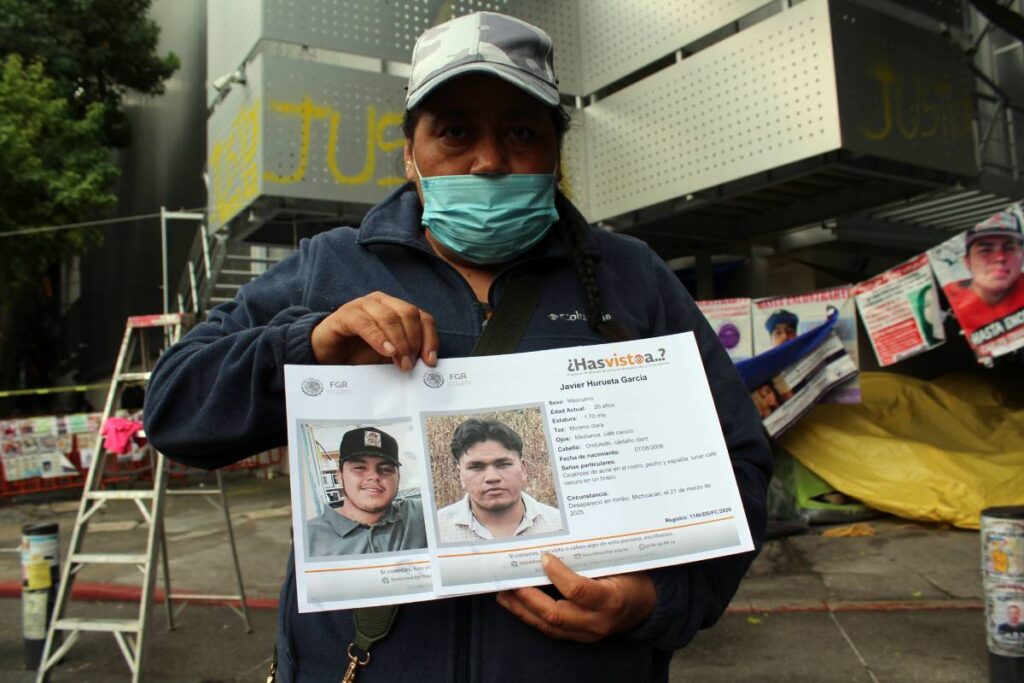
Enriqueta came from Michoacán to demand the location of her son, Javier Hurueta García, who disappeared on March 21, 2025. Enriqueta directly points to the collusion of the municipal police in her son's disappearance.
“Municipal police officers handed my son over to organized crime. There are videos, there are witnesses, there is everything, and the (Michoacán) prosecutor's office did nothing,” he says.
According to Article 24, section five of the General Law on Forced Disappearance, families have the right to request that the Attorney General's Office intervene in the investigations if any public official is involved, even if there are indications of the participation of organized crime.
Faced with inaction and threats in her territory, Enriqueta was forced to flee. When she sought institutional support, she encountered evasive responses from the local human rights commission and mistreatment from her victim advisor.
“They say Mexico is a place full of magical towns. Yes, they are magical because people disappear. They go out for a walk, to eat, to work, anywhere, and they don't come back, they never return (…) From the first day, everything ends: the tranquility, the peace one had, the harmony, the fear—it all ends, it ends because they take away what is most precious to you. In my case, my son.”
A five-page research folder
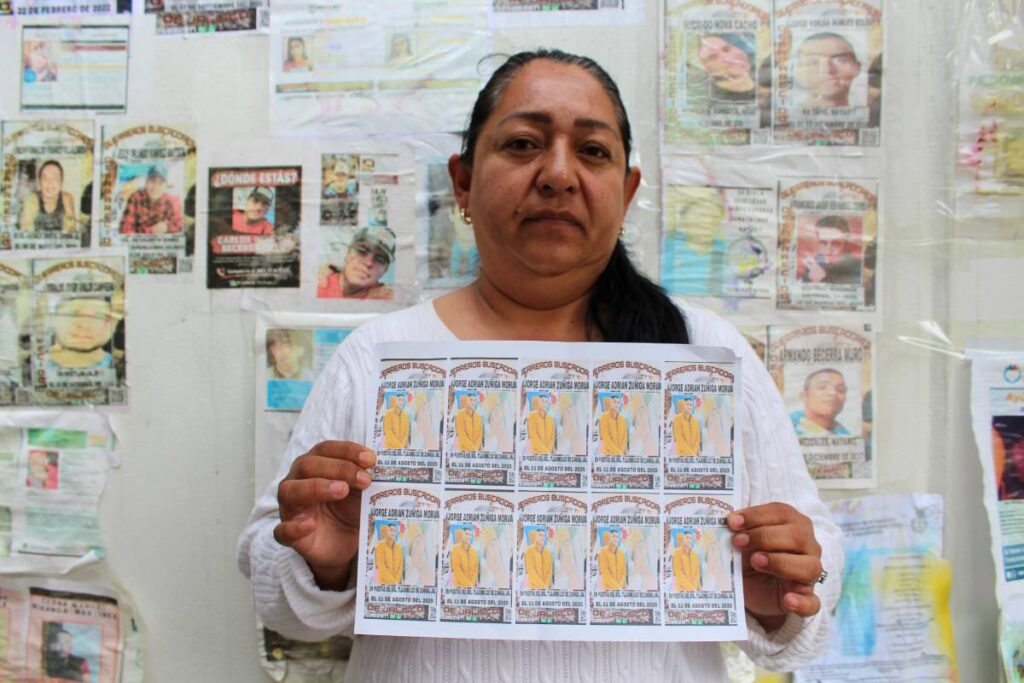
From Jalisco, the state with the highest number of missing persons in Mexico, traveled Eréndira, mother of Jorge Adrián Zúñiga Morúa, who disappeared on August 11, 2025 in Tlajomulco, Jalisco.
“I filed my complaint, and since then, my investigation file has five pages containing my son’s complete information, my own, and my witness’s details. There has been no progress, no C5 videos. Absolutely nothing. That’s why I’m here, because my file is only five pages long and because I want, and I think, that they (the Attorney General’s Office) will finally get to work,” Eréndira told Presentes.
Eréndira has searched for Jorge in clandestine graves, morgues, and during searches for the living. To pursue her search, she quit her job and gave up her livelihood, accumulating debt and receiving extortion calls after her personal information was leaked. This is no small matter, and it's something other mothers we interviewed who are also searching for their missing loved ones have reported.
“I’m not here looking for someone to blame. I’m only asking for help finding my son, whatever the circumstances, alive or dead. But I really need some peace of mind because without my son I am nothing.”
“I want to continue learning so I can defend my daughter’s right to be searched for.”
Guadalupe Pérez Ayala misses the warm climate of Torreón. From there, in northern Mexico, she came to the Attorney General's Office because she is looking for her daughter, Dibanhi Aguilar Pérez, who disappeared in that city on June 25, 2021, at the age of 22.
Despite having an Urgent Action issued by the UN Committee against Enforced Disappearances and a court order issued by the Federal Judiciary in Torreón that mandates the uninterrupted search for his daughter, the Coahuila Prosecutor's Office has limited the search to sweeps of vacant lots without clear hypotheses.
At the beginning of her search for her daughter, Guadalupe faced accusations from local prosecutor's office officials. “At first they told me, 'come back in a month,' they said, 'where were you? Why weren't you there? Why didn't you take care of your daughter?' They were revictimizing me. I didn't know it. They were psychologically abusing me because they made me feel guilty,” she recalls.
The mistreatment by the authorities forced Guadalupe to learn independently about legal, expert, forensic, and human rights matters.
“I have learned and read the General Law on Victims of Forced Disappearance throughout the Republic, and in the state of Coahuila. I have learned about human rights, I even delved into genetics, I have learned about the gender perspective, and I want to continue learning to defend my daughter's rights: to be searched for, to be found, and to be returned to her family.”
The costs of searching in Mexico
“We all have high blood pressure. I’m about to become diabetic, I have asthma, and there are many illnesses that have caused many to give up and leave for their treatments. Many have cancer,” says Eréndira.
Sustaining the street protest for nearly a month has taken a heavy toll on the bodies of mothers who have spent years internalizing the pain and trauma of having their child or family member disappear. On the economic front, the mothers reject any accusations of political funding, such as those made by President Claudia Sheinbaum, which prompted the Ministry of the Interior to launch an investigation into the mothers searching for their missing children in Jalisco.
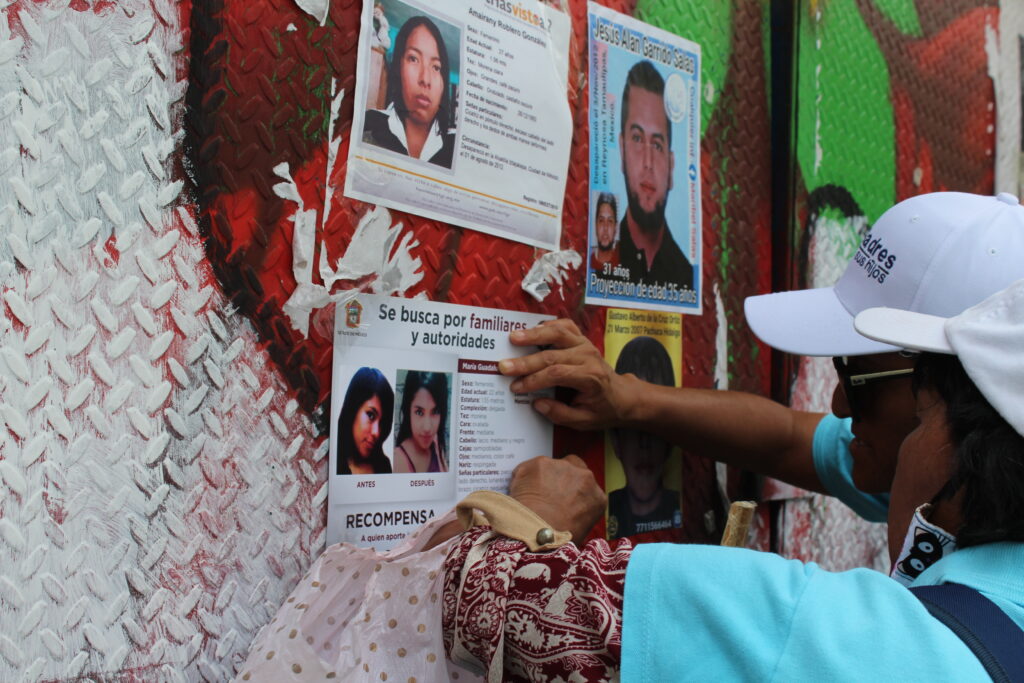
The supplies for photocopying the missing persons flyers, printing banners, and transportation came in some cases from the work of the searchers' husbands, the work of other family members, and the sale of handicrafts made by the women themselves. Citizen solidarity, with donations of water, food, medicine, and clothing, was key to sustaining the protest.
To search despite everything
But in addition to economic hardship, there is also social stigmatization. Enriqueta Hurueta recounts the kinds of rejection she has received.
“Many people say we’re crazy, that we’re sellouts. All I can say to them is that I hope they never find themselves in our shoes, because then they’ll turn to those crazy old women, those mothers who have nothing better to do. Because that’s what they call us, that we have nothing better to do. That’s why we’re here, being troublemakers, gossipers, and we’re going to help them find their relatives.”
While we were conducting these interviews, a woman walked by and yelled at the mothers searching for their missing loved ones, saying they were “in the way.” Guadalupe Pérez recalled another verbal attack: “Yesterday a woman walked by and said, ‘What are you looking for… treasures?’ Yes, they are our treasures. Even though she said it mockingly, they are our treasures.”.
UN: “Women seekers face extreme violence and almost total impunity”
On September 30, the UN issued another appeal to the Mexican government. They warned that women searching for their missing relatives in Mexico face a context of “extreme violence” and “almost total impunity.”
They emphasized that the investigation and search efforts are tasks "that primarily correspond to the State, which must fully assume them and cannot place them on the shoulders of the families, and that attacking them perpetuates the cycle of pain and impunity.".
In the last 15 years, at least 27 women searching for their missing loved ones have been murdered and 3 are missing. Almost half of them are or were mothers, according to data from registry of attacks against people searching for their missing children .
The UN General Assembly approved the designation of December 19 as the “International Day in Recognition of Women Searchers for Missing Persons”, but experts insist that international recognition “is insufficient if local authorities do not guarantee physical protection and effective investigations”.
On November 9, the women and mothers searching for their missing loved ones will return to the doors of the Attorney General's Office to find out if the federal authorities will fulfill their obligations and guarantee the human right of all missing persons: to be searched for.
We are present
We are committed to journalism that delves into the territories and conducts thorough investigations, combined with new technologies and narrative formats. We want the protagonists, their stories, and their struggles to be present.
SUPPORT US

FOLLOW US
Related notes
We are present
This and other stories are not usually on the media agenda. Together we can bring them to light.