

From Jujuy to Congress: Indigenous women walk 1800 kilometers in defense of water and land
Caminata Warmis is the journey that indigenous women undertook from Jujuy to the City of Buenos Aires to defend water, land and territories.


Share

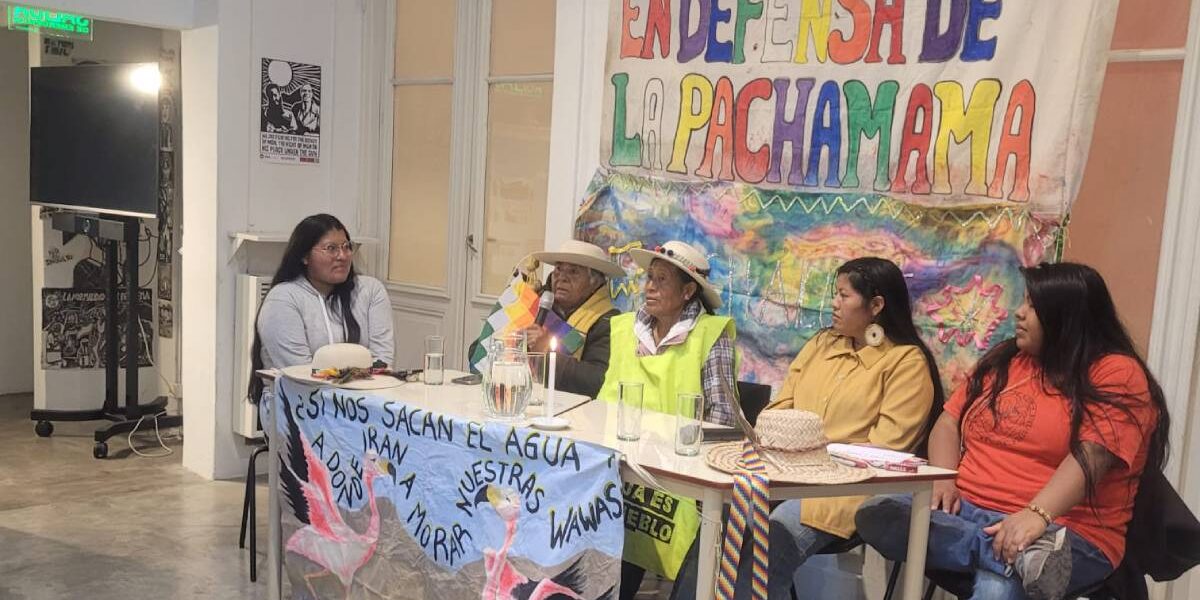
BUENOS AIRES, Argentina. A march of more than 1,800 kilometers that crossed much of Argentina and an international press conference share a common goal: to defend water, land, and ancestral territories from the policies of Javier Milei's government and provincial governments. Within this context, a series of protests led by Indigenous women are taking place , centered in the City of Buenos Aires. "We are on the verge of genocide," they declare.
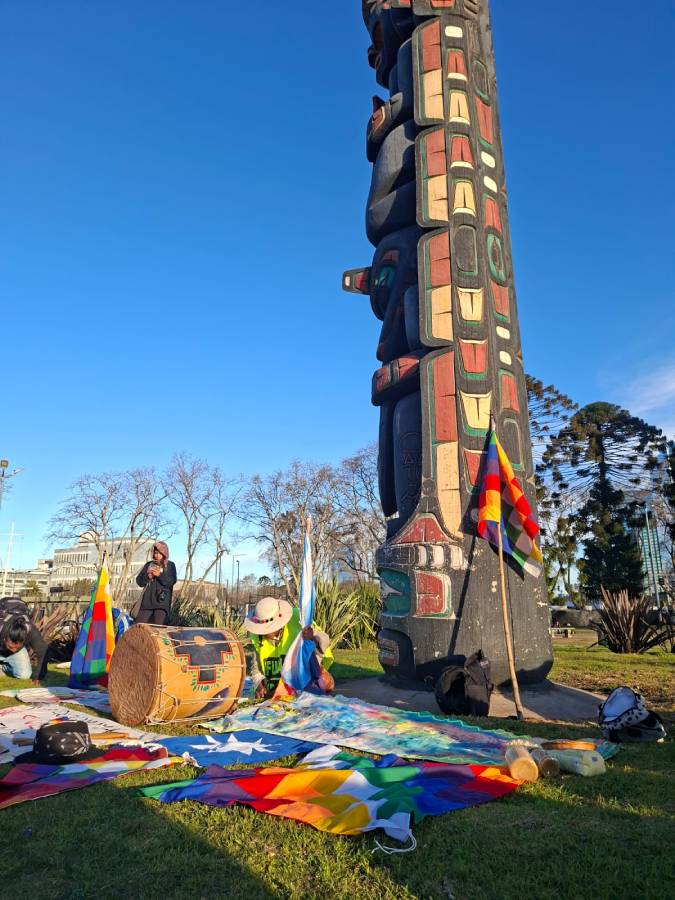
The Warmis (Women's) March in Defense of Pachamama departed from Rinconada, Jujuy, on August 3rd and arrived in Buenos Aires on August 31st. They chose to make the journey in August, the month of Pachamama, to arrive close to the International Day of Indigenous Women, commemorated on September 5th. The women's objective is to deliver a petition to Congress and the President of the Nation.
In conjunction with this event, an international press conference virtually this Friday, September 4th, at 10:00 AM. It is being organized by the Mapuche and Kolla communities of Argentina to denounce “the humanitarian crisis facing the country’s Indigenous peoples as a result of territorial dispossession policies implemented by the government of Javier Milei.”
“ Our concern is water ,” Florencia Solís, a 68-year-old Kolla woman, who arrived in Buenos Aires after a month-long walk, tells Presentes . “Throughout Abya Yala, far-right governments are taking over, governments that don’t care about poisoning the planet. We want them to stop accepting this plundering of resources and to live in a healthy, pure environment. Pachamama is crying out for us to defend her. She can’t take it anymore,” she adds.
Official extractivism
The women claim that the Incentive Regime for Large Investments (RIGI) – approved in June 2024 – and the “Super RIGI” and private property inviolability bills create an unprecedented scenario of extractivism and persecution of indigenous peoples .
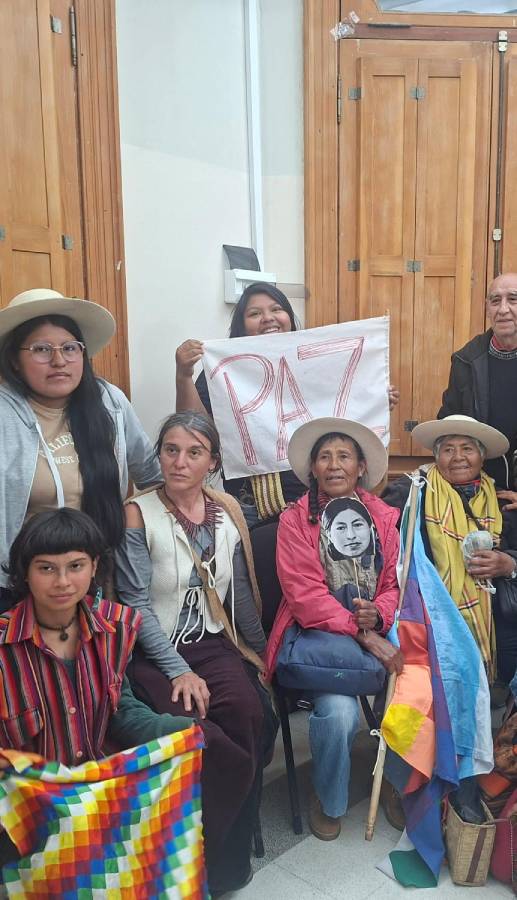
In 2025, they completed the walk within the province of Jujuy and delivered a petition to its authorities. Having received no response, this year they decided to extend their journey and address the national government. They are eight women from the Kolla, Qom, and Diaguita communities of the provinces of Jujuy, Córdoba, and Santa Fe who traveled more than 1,800 kilometers on foot and by bus. The youngest is 25 years old and the oldest is 76.
“Throughout the country, we face the same problems: the presence of large-scale mining, contaminated water, and the eviction of our Indigenous brothers and sisters. If this government continues to grant this extractive industry concessions to multinational corporations, allowing them to destroy our Pachamama (Mother Earth) and our water supply, who will be able to live?” asks Solís.
The water they take away
Florencia lives in a rural town in northern Jujuy called Rodeo, in the Yavi department, at over 3,600 meters above sea level. It is very close to the Pozuelo Lagoon, one of the most important water systems in the Jujuy Puna region, covering 16,000 hectares, considered a Natural Monument and declared a Ramsar Site, as well as a Biosphere Reserve by UNESCO.
“It’s completely deserted. I’ve never seen it so dry as it is right now. It’s not just this lagoon; there are other basins in the area too, and everything is poisoned by mining sediment. The mine also uses millions and millions of liters of water every day, and that’s drying up the aquifers. It’s all linked to that damned RIGI project,” Florencia explains.
“What little water there is is all contaminated with heavy metals. And that's how the animals die. There are places where you can still get water, but you have to walk a long way, through mountains. It's very arduous,” says Emma Alemán, a 76-year-old woman from Huacalera, Jujuy, who is part of the Warmis Walk. She adds: “The earth is making itself known in one way or another, and nobody is paying attention.”
The petition was delivered on Thursday, the 3rd, in Buenos Aires, following a march from Plaza Miserere to the National Congress. The press conference to be held this Friday by the Mapuche and Kolla communities is signed by the Mapuche communities of Melo, Kinxikew, and Pillán Mawiza, and by the Warmis March. Simultaneous translation will be provided into Portuguese, French, English, Italian, and German.
Express evictions in the South
In the invitation document, the organizations denounce the deterritorialization policies promoted by the national government and warn about the preliminary approval of the law on the inviolability of private property. This law, if passed in the Chamber of Deputies, “would exacerbate what is already happening in the territories, where communities describe a scenario of ‘criminalizing, dispossessing, and evicting Indigenous Peoples from their lands’”.
“We are doing this to denounce the situation that Indigenous peoples are experiencing throughout the country. Javier Milei’s policies have left us in a situation of extreme vulnerability, with around 1,300 evictions looming for communities from the 40 Indigenous nations in Argentina. It is an extremely distressing situation,” Moira Millán, a Mapuche weychafe (warrior), told Presentes
For these communities, it's an unprecedented humanitarian crisis. “Many of the communities that have been violently evicted have nowhere to go. There's no state support program, no relocation plan, no assistance. So families are left without homes, without their livelihoods, on the outskirts of cities, in precarious settlements. They have no means of sustenance. This is happening in the middle of winter, in the cold, without food, and with no prospects,” he explains.
“We are talking about a prelude to genocide,” he adds. “Our communities will not easily give in to the demand for eviction. We will stay and do everything possible to defend our homes, our animals, and the natural environment where we live.”.
We are present
We are committed to journalism that delves into the territories and conducts thorough investigations, combined with new technologies and narrative formats. We want the protagonists, their stories, and their struggles to be present.
SUPPORT US

FOLLOW US
Related notes
We are present
This and other stories are not usually on the media agenda. Together we can bring them to light.