

Housing and social crisis: behind the trans murders of Jessica and Gabriela
Activists in Córdoba and Santa Fe, where the crimes occurred, are calling for them to be investigated as transphobic murders. Two women committed to community aid.


Share

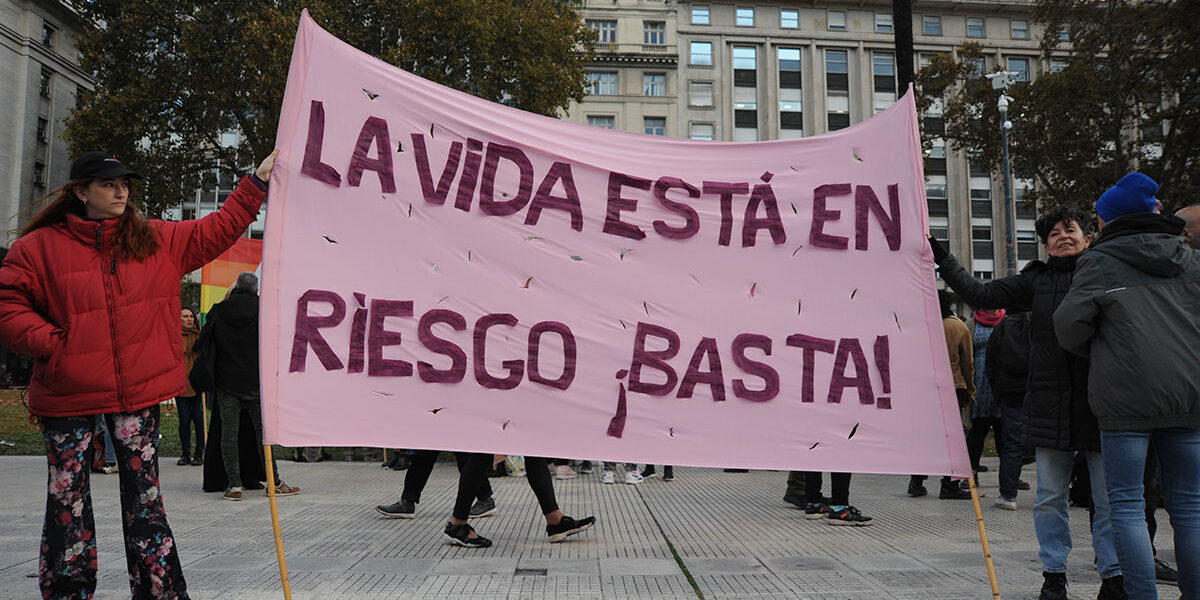
BUENOS AIRES, Argentina. Activists are calling for the murders of Jessica Núñez and Gabriela Denisse Banach to be investigated as transphobic hate crimes. Both trans women were killed last week in Córdoba and Santa Fe, Argentina, respectively. Núñez was attacked with a knife in the street, and Banach died after being beaten. Currently, the prosecutors handling the cases are investigating them as homicides.
“This reflects a situation of increasing hate crimes at the national and regional levels. And it has a lot to do with the discourse coming from certain positions of power,” María Alejandra Navarro, a trans activist from Villa María (Córdoba), told Presentes .
In this regard, 2025 marked a record for violence against LGBTIQ+ people in Argentina. The report from the National Observatory of Hate Crimes recorded 227 crimes based on sexual orientation or gender identity: a 62 percent increase compared to the previous year.
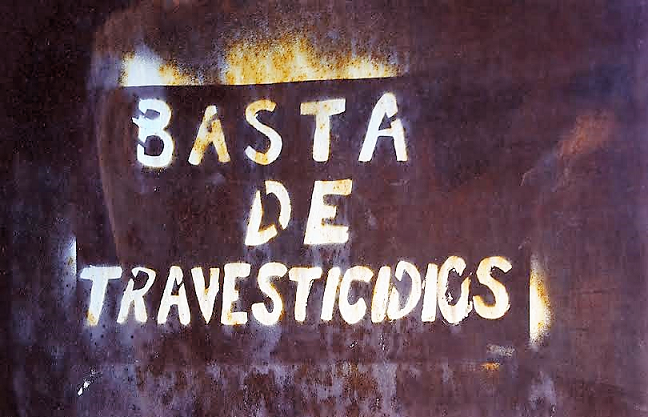
Two transvestite murders in 72 hours
Gabriela Banach was 47 years old. Neighbors heard screams and cries for help on the night of Sunday, August 9, but her body wasn't found until the following Tuesday. The crime occurred in an apartment located at 630 Cerrito Street, in the La Sexta neighborhood of Rosario, Santa Fe. She died after being beaten. The autopsy reported that the cause of death was a traumatic brain injury.
A 24-year-old man, Juan Gabriel A., who worked as a parking attendant, was arrested in connection with the incident. The case is being handled by the Highly Harmful Violence Unit of Regional Prosecutor's Office 2, under the direction of prosecutor Rodrigo Urruticochea. The charge at this time is homicide. The detainee will be brought before a judge for an arraignment hearing in the coming days at the Rosario Criminal Justice Center.
Jessica Nuñez was a 44-year-old transgender woman. She was attacked on Thursday, August 13, in the street with a knife in the La Floresta neighborhood of Villa Nueva (Córdoba). She died upon arrival at the Pasteur Regional Hospital from her injuries.
Johana Rogero (22) and her father, Cristian Rogero (48), were arrested in connection with the incident. The young woman was charged as the alleged perpetrator of simple homicide, and the man as an alleged accomplice. The investigation is being led by prosecutor Juliana Companys of the Villa María Multiple Court.
Who was Gabi Banach?
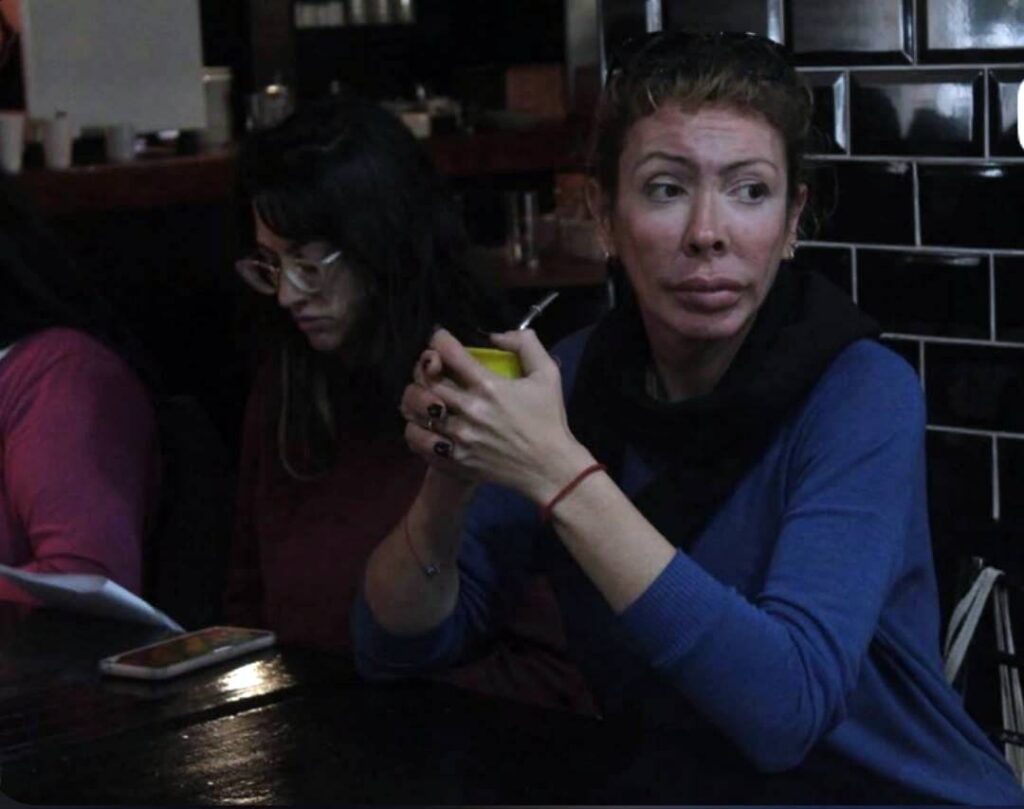
Gabriela Banach's friends, with whom she shared the streets and activism, emphasize her enormous social commitment. “We campaigned for the Trans Employment Quota, the Gender Identity Law, and countless other projects. She was always there to support people in extreme, vulnerable situations. She supported mothers who had suffered gender-based violence,” Claudia Flores, a trans activist, coordinator of Memory, Truth and Justice Local 4, and a friend of Gabriela, told Presentes
She volunteered at soup kitchens and spearheaded a comprehensive housing project for transvestite and transgender people. “The housing system has historically excluded us, not only for being transvestite or transgender, but because we never meet the standards they generally require to be able to acquire or be included in a state housing program,” explains Michelle Vargas Lobos, a friend, fellow activist, and member of the Rosario Transvestite and Transgender Community, in an interview with Presentes.
Survivor of many acts of violence
Gabriela had no family. Her mother had died a few years earlier. She was in a vulnerable housing situation and struggled with substance abuse. She had been homeless for several years. Recently, she had been granted reparations for transvestite and transgender survivors of institutional violence following the military dictatorship, due to the systematic police persecution that existed between 1983 and 2010.
“Gabi was one of these beneficiaries, and yet that wasn't enough for her to escape the vulnerable situation she was in. Often, the issue isn't money. It has to be accompanied by a whole range of programs or public policies that work in a comprehensive way,” Michelle explains.
And she highlights something about her friend: “Beyond all these violations that Gabi was experiencing, she continued to think about others, about the person in front of her, next to her. She continued to help people who were homeless, even though she was homeless herself. Or people with substance abuse problems, accompanying them to make an appointment with a psychologist, even though she was someone who was extremely vulnerable within the healthcare system.”
Her loved ones, organizations, and other individuals bid her farewell last Thursday and Friday at the Copeto funeral home. They also mobilized in front of the provincial government headquarters and the Rosario Criminal Justice Center to demand justice for the transphobic murder.
“Jessica was very loving”
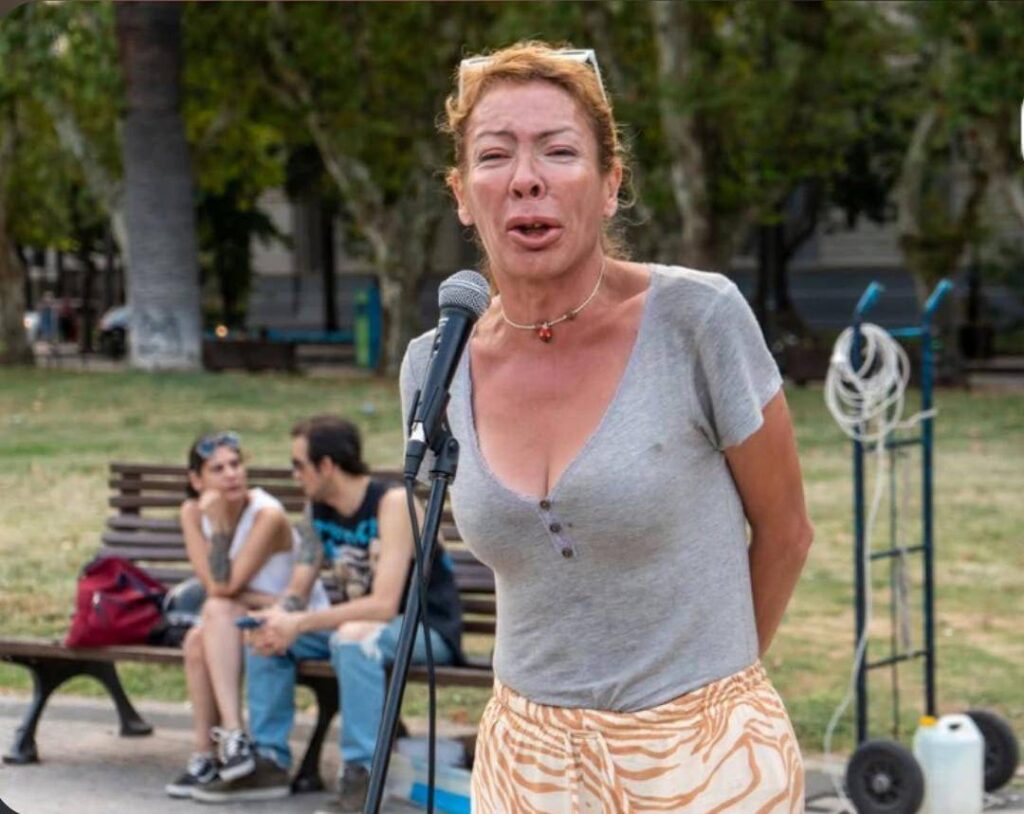
María Alejandra Navarro, a 48-year-old trans woman, met Jessica when she was 14 at a bus stop on her way to a nightclub in Villa María, Córdoba. They formed a group of four friends that remained close for over two decades. They didn't know any older trans women, so they were each other's role models. Together, they learned how to do their makeup, what clothes suited them best, and which places they liked to go dancing. Today, the group is down to two: Alejandra and Fanny. Paola passed away eight years ago from a chronic illness that couldn't be treated, and Jessica died last Thursday.
“Jessica was very attached to her mother. She didn’t get along well or badly with her siblings; they just tolerated each other. But she was very close to her mother, and her mother loved her very much. They lived together for a while, but because of her addictions, her siblings petitioned the courts to limit her contact with their mother,” Alejandra explains.
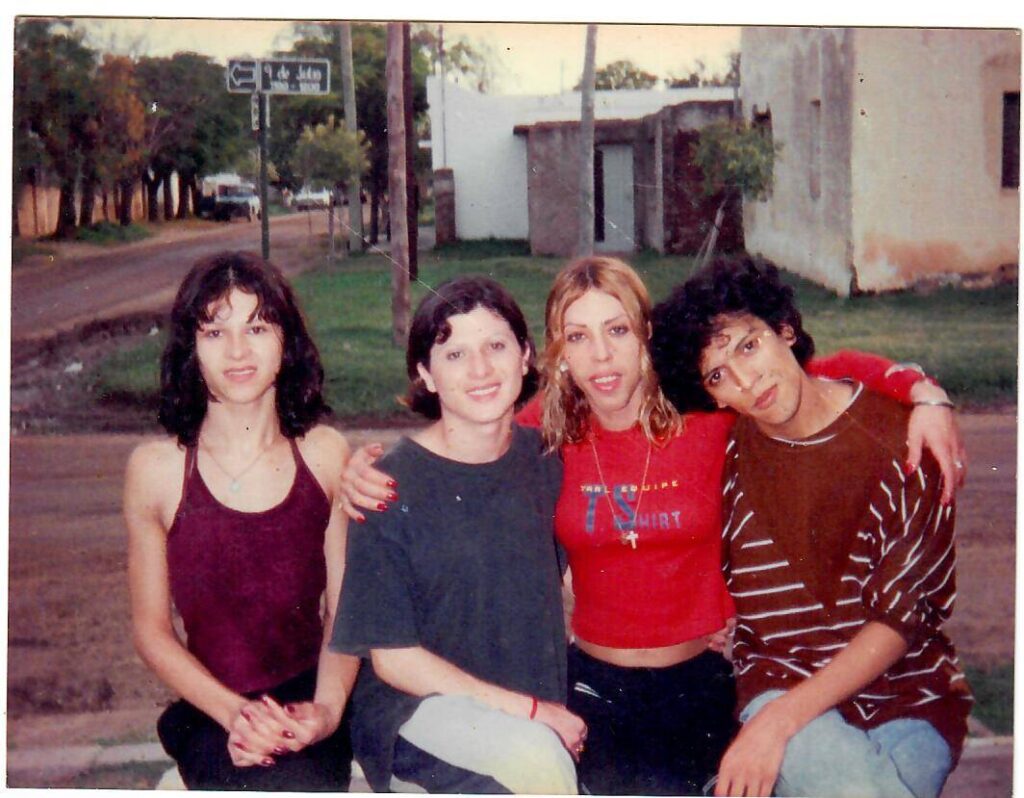
Jessica was homeless and had substance abuse problems. She hadn't been able to finish high school due to a traumatic experience she had at age 16, when a man held her captive for a month. From that moment on, Jessica began using alcohol and then drugs. “As friends, we tried to support her many times at home, but there were issues that overwhelmed us. It's precisely the State that should be present, addressing these situations. We hadn't heard from her for six months because she had stopped going to the Inclusive Center where she received therapy.”

For the right to live
Her friend remembers her as a very quiet, low-profile woman. “She was very loving, something she never lost even when she was struggling with addiction. She was still the same girl we knew. She was respectful, careful not to draw attention to herself so she wouldn't be challenged. She kept her head down. That's why we were so shocked by how her life ended. She wasn't the type of person to get into trouble or fights.”
Last Thursday, activists and their loved ones said goodbye to her. “Lighting these candles is our way of telling you that we haven't forgotten you, that your pain is ours, and that your memory will not fade. Today we say goodbye to our comrade, our friend, the trans woman whose right to live was taken from her,” shared on social media .
Justice for Gabriela and Jessica
The people interviewed for this article highlighted the need for public policies to address the marginalization experienced by the transvestite and trans community.
“ What we always emphasize is that more public policies are needed. There are many other women in worse situations than Gabi, who are at risk of death. We have achieved so much, but so much more is needed, and so many women are missing. We want to demand justice for the transphobic murder of Gabriela Banach, which pains us all ,” shares Claudia Flores.
“Family support is very important. If you are related to a member of the LGBTQ+ community, especially if they are trans, don't destroy them, give them space. And secondly, the State has to take responsibility for this situation once and for all,” shares Alejandra Navarro.
They also demanded that the investigation of both crimes be approached with a gender and diversity perspective.
“This isn’t homicide, it’s a transphobic hate crime. I think it’s important to use the correct term because words create meaning. The transphobic hate crime is related to the way Gabi was found, covered in cuts, beaten, her face completely disfigured. That’s why we’re talking about transphobic hate crimes,” Michelle Vargas Lobos emphasizes.
A request from the entire community
The organizing committee of the Villa Nueva and Villa María Pride March shared a message: “Jessica’s life was taken from her for being a trans woman. This was not an isolated incident. It was a hate crime, yet another expression of the structural violence, discrimination, and transphobia that trans people face daily in our country and our cities. Jessica had the right to live freely, with dignity, and in peace. She had plans, relationships, and a life that deserved to be respected.”
“We demand that the Justice system and the State, at all levels, investigate this case with a gender and diversity perspective,” the statement continues, “that those responsible be identified and punished, and that justice and full reparations be guaranteed for her family, friends, and community. We also demand urgent public policies that guarantee access to health, work, housing, and a life free from violence for trans and travesti people.”.
We are present
We are committed to journalism that delves into the territories and conducts thorough investigations, combined with new technologies and narrative formats. We want the protagonists, their stories, and their struggles to be present.
SUPPORT US

FOLLOW US
Related notes
We are present
This and other stories are not usually on the media agenda. Together we can bring them to light.