

Terricide and foreignization: what the project of inviolability of private property changes
What changes to the Land and Fire Management Law with the proposed Inviolability of Private Property Law that the Milei government is trying to pass? Why is a large march being called for in front of Congress on August 6th?.


Share

UPDATE (August 5th at 3:55 PM Argentina time) Following a meeting held today between senators from La Libertad Avanza and allied and dialogue-oriented parties, it was decided to postpone the debate on the chapter concerning the Rural Land Law. It was also decided that the Senate will address the remaining issues this Thursday, including the chapters on evictions, fire management, and expropriations.
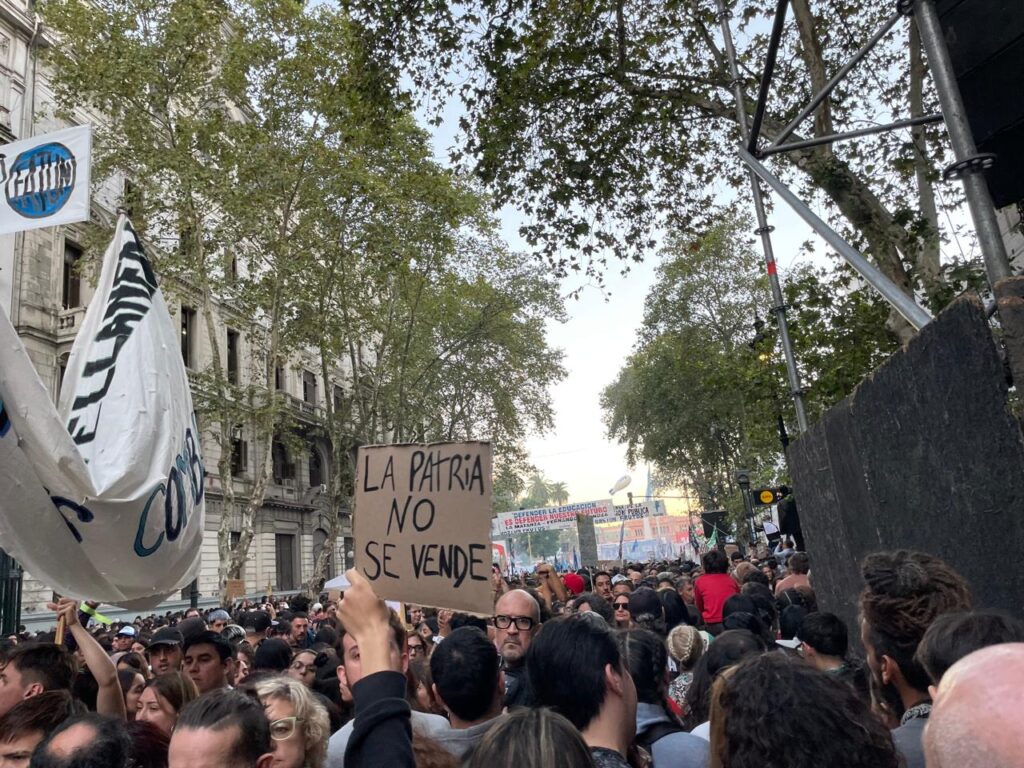
BUENOS AIRES, Argentina. What exactly does the proposed law on the inviolability of private property, promoted by Javier Milei's government, change? Why are organizations calling for protests to stop it, mobilizing in the streets and in front of the Argentine National Congress on August 6, when the Senate debates it? Firstly, because it amends and repeals various laws related to access to land and housing. Among the laws affected by the bill are the Rural Land Law ( 26.737), the Fire Management Law (26.815), the Expropriation Law (21.499), and the National Civil and Commercial Procedural Code . But its impact goes far beyond that: it severely affects the right to water, allows for greater foreign ownership of land, hinders the expropriation of public utility assets, and makes evictions easier. And in a geopolitical context where water, land and other common goods are increasingly coveted, due to the advancement of technologies such as artificial intelligence.
“What is being debated today is not just a law,” says Paula Alvarado, a lawyer for the Kolla people. “What is at stake is who decides about our territories, our water, our forests, our glaciers, our biodiversity, and the common resources that sustain life.”
Land Law
(As of the decision made on the afternoon of August 5th -see updated note- this amendment to the Land Law is suspended; the rest will be addressed by the Senate)
What the Law Says
Law 26.737 currently establishes that foreign nationals cannot own more than 15% of the total rural land in the country, in each province or municipality. It prohibits the acquisition of properties containing watercourses or bodies of water. And it stipulates that a single foreign national cannot own more than 30% of that permitted 15%. It also prohibits a foreign owner from possessing more than 1,000 hectares in core agricultural zones (areas of high agricultural productivity).
What changes if the government's bill is approved?
Originally, the government's proposed bill eliminated the 15% limit on land purchases by foreigners and allowed the acquisition of land containing lakes and rivers. It also relaxed restrictions in Border Security Zones.
However, during the Senate committee proceedings, modifications were introduced. The bill granted provinces the power to authorize, regulate, or reject the sale of land to foreigners within their jurisdictions.
Senator and president of the La Libertad Avanza bloc, Patricia Bullrich, announced this Tuesday at a press conference that the limit per province will not be eliminated, but will be extended from 15 to 25 percent.
Various civil society organizations warned that the project does not define a departmental boundary. “It’s a trap,” asserted Daniela Vilar, the Environment Minister of the Province of Buenos Aires. “The departmental boundary is what matters: that’s where water, lithium, glaciers, and productive land are concentrated. Without that boundary, it’s enough to control a few departments to transfer our strategic resources to foreign ownership without exceeding the 25% provincial limit.”
The project also opens the door for foreign states and public entities or companies to acquire Argentine land: states within a state. While the official text maintains the prohibition, it includes an exception. Thus, the Executive Branch can authorize such transactions if it deems them not to pose a risk to national security, defense, or sovereignty.
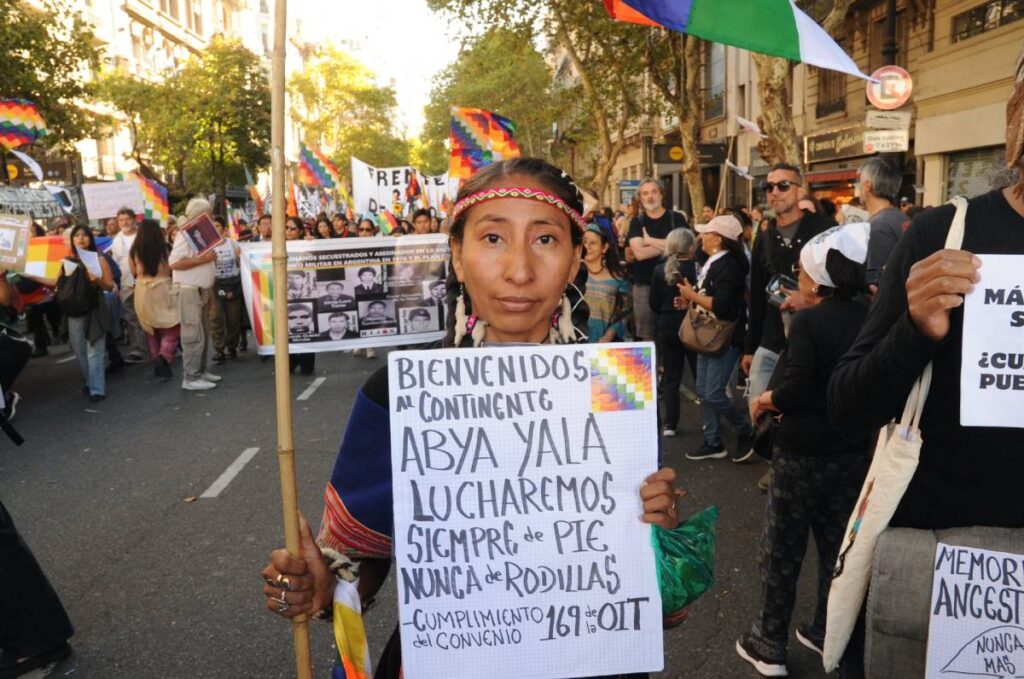
“We want living territories for ourselves and the future”
The Land Observatory, comprised of researchers from CONICET and the University of Buenos Aires, estimated that today almost 5% of Argentine territory belongs to foreign companies or states. This represents more than 13 million hectares, an area similar in size to England.
Along these lines, some departments exceed the 15% limit established by the Rural Land Law: 36 districts already surpass it. In Lácar (Neuquén), General Lamadrid (La Rioja), Molinos, and San Carlos (Salta), foreign ownership exceeds 50%. The United States leads in land ownership with 2.7 million hectares, followed by Italy and Spain.
Sol Basurto, a self-organized firefighter and resident of the Andean region, believes the proposed law is part of "a systemic extractive plan." She was one of the residents who mobilized to respond when the fires swept across their lands. Based on her experience, she described the situation to Presentes: "Water is already scarce in Patagonia; we've suffered years of drought and massive forest fires. We live alongside foreign landowners who privatize lakes and trails, plant massive pine plantations, and let them grow out of control."
“This modification of the law – he added – as well as the Glaciers Law, the Rural Lands Law, the Native Forests Law, the Fire Management Law, etc., are all modifications to continue cutting our rights, wanting to steal the joys we have left, the immense landscapes we have, the vital resources.”
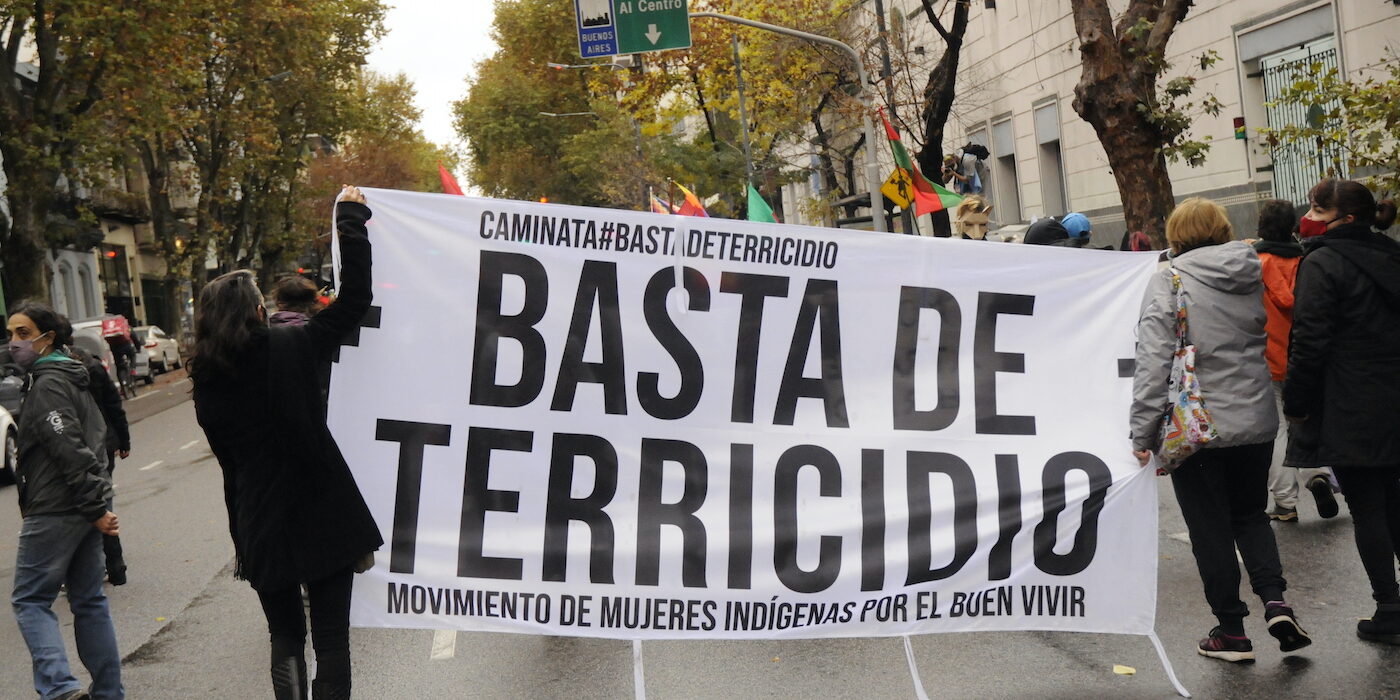
“ The foreign ownership and violation of territories has always existed. This State was born from an indigenous genocide. And now it's going after everyone ,” Irma Caupán, a member of the Movement of Indigenous Women and Diversities for Good Living , shared with Presentes .
In this sense, he warned about "the perversion of these colonizing states that advance with total impunity, installing a Terricide on our living territories, trying to decide on our glaciers, water, biodiversity, life."
“They can’t decide,” he added. “ We want living territories for ourselves and the future, to maintain reciprocity with nature. We cannot allow them to continue killing all life. We need to unite, start deciding, and reclaim the strength we have as peoples.”
“Defending the territories is defending Good Living”
Paula Alvarado Mamani, a lawyer representing the Kolla people, shared a legal contribution to the manifesto against the bill on her social media. “For Indigenous peoples, territory is not a commodity. It is memory, identity, spirituality, culture, and life. This is recognized by our National Constitution, ILO Convention 169, and the international body of law on the rights of Indigenous peoples,” she stated.
“Defending territories is not opposing development, he concluded. It is defending sovereignty, biodiversity, Sumaj Kawsay (Good Living), and the right of future generations to inherit a living territory”.
Fire management
What the Law Says
Article 22 bis of Law 26.815 on Fire Management prohibits for 60 years modifying the use or destination of areas of native forests, protected areas and wetlands affected by fires, whether intentional or accidental.
What would change if the government's bill is approved?
The original bill proposes repealing Article 22 bis and others. During the Senate debate, the modifications related to native forests were rejected. Therefore, the 60-year ban on changing the land use of native forests remains in place . However, changes were accepted for rural lands. Specifically, the 30-year period for agricultural areas , grasslands, pastures, scrublands, and urban-rural interface areas, which prevented changing the land use or selling land affected by fires, was eliminated

What changes in expropriations
The bill proposes restricting expropriations in cases of public utility. In this regard, it expands the administrative requirements that governments must meet before initiating an expropriation in urban, suburban, or rural areas. It also increases the cost of compensation by incorporating lost profits, setting its value before state intervention, and adjusting it for inflation plus a commercial interest rate.
What about evictions
The initiative aims to expedite eviction proceedings by enabling early evictions before a court ruling. It does so by amending the National Civil and Commercial Procedure Code.
In cases of non-payment of rent, the bill establishes the possibility of initiating eviction proceedings based on a complaint, without a hearing and right of appeal that would allow affected families to defend themselves. Initially, it stipulated a three-day period to notify the tenant before initiating legal action, which was later extended to ten days in committee.
How AI and data centers impact each other
The national government's argument for making these changes is that they will "attract more investment." However, there is a consensus among organizations that it represents a surrender of sovereignty and strategic common resources. This occurs within a geopolitical context where water is a precious commodity for powering data centers linked to artificial intelligence.
Near the Añelo region in northern Argentine Patagonia, the installation of mega data centers is being considered. In October 2025, the Argentine company Sur Energy and the US-based OpenAI signed a letter of intent outlining the possibility of installing a next-generation data center. The government of the province of Neuquén also presented a “microregion” project to attract this type of investment and create a data center corridor.
This bill aligns with U.S. interests. Argentina has joined the international initiative “Pax Silica,” spearheaded by the U.S. State Department. Its objective is to secure supply chains for strategic minerals and rare earth elements necessary for the development of key technologies in the age of artificial intelligence. Foreign Minister Pablo Quirno stated that with this accession, “Argentina consolidates its position as a reliable supplier of critical minerals and strategic resources needed for the technological development of artificial intelligence.”
It is projected that by 2030, global data centers powering artificial intelligence will consume 945 terawatt-hours of electricity. This is nearly three times the annual electricity consumption of Pakistan, Bangladesh, and Nigeria combined—countries with a combined population of over 650 million. This was the conclusion of the report “Environmental Cost of AI Energy Use: Carbon, Water, and Land Footprints,” by the United Nations University Institute for Water, Environment and Health (UNU-INWEH).
The water footprint associated with these data centers is estimated to be equivalent to the annual basic domestic water needs of the 1.3 billion people living in sub-Saharan Africa. Meanwhile, their land footprint (the area of land they will use) will exceed 14,500 square kilometers, roughly twice the size of the metropolitan area of Indonesia's capital, home to more than 32 million people.
We are present
We are committed to journalism that delves into the territories and conducts thorough investigations, combined with new technologies and narrative formats. We want the protagonists, their stories, and their struggles to be present.
SUPPORT US

FOLLOW US
Related notes


We are present
This and other stories are not usually on the media agenda. Together we can bring them to light.