

The Gender Identity Law is fully reinstated: the courts suspended Milei's decree against transgender adolescents
The Federal Court provisionally suspended Decree 62/2025, which prevented access to hormonal treatments for minors under 18 years of age contemplated in the Gender Identity Law.


Share

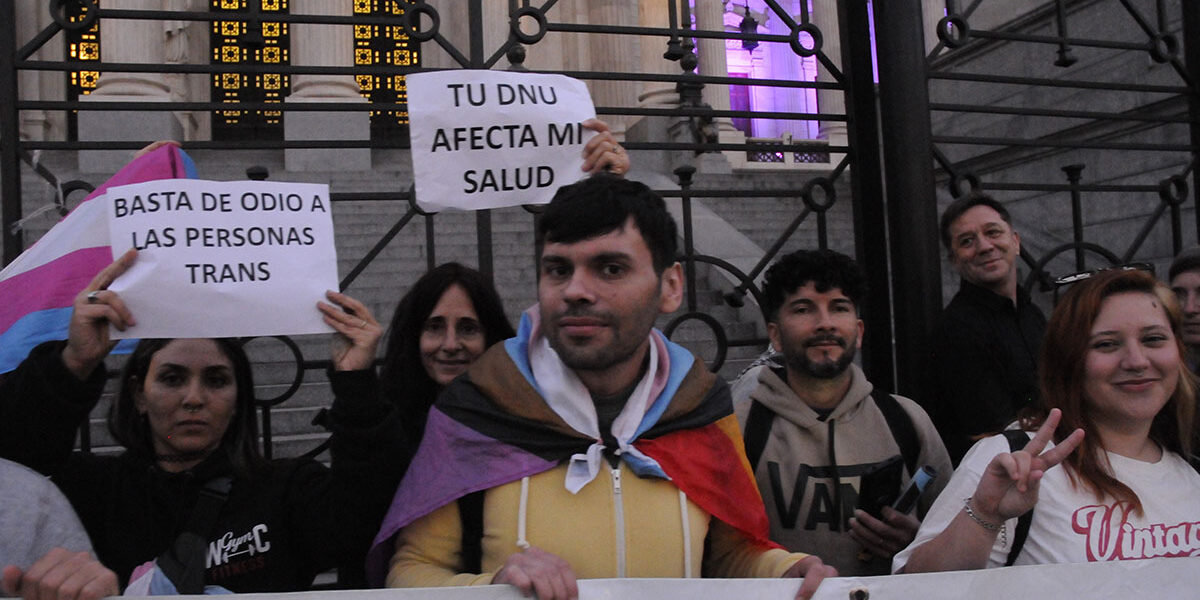
BUENOS AIRES, Argentina. The Fifth Chamber of the Federal Administrative Court suspended Decree of Necessity and Urgency (DNU) No. 62/2025 issued by the government of Javier Milei. With this decision, the Gender Identity Law is fully reinstated throughout the country, guaranteeing the continuity of hormone treatments for individuals under 18 years of age.
The court granted the injunction filed by the Argentine LGBT Federation, as part of a legal action seeking to declare the decree unconstitutional. The ruling has nationwide scope, thus protecting all minors in the country. Health insurance providers, private healthcare companies, and public hospitals must guarantee the continuity of and immediate access to treatment.
“This is great news. We are happy. An Emergency Decree cannot, under any circumstances, modify a national law approved by a large majority. The Gender Identity Law was approved almost unanimously,” María Rachid, president of FALGBT , told Presentes .
How the resolution was reached
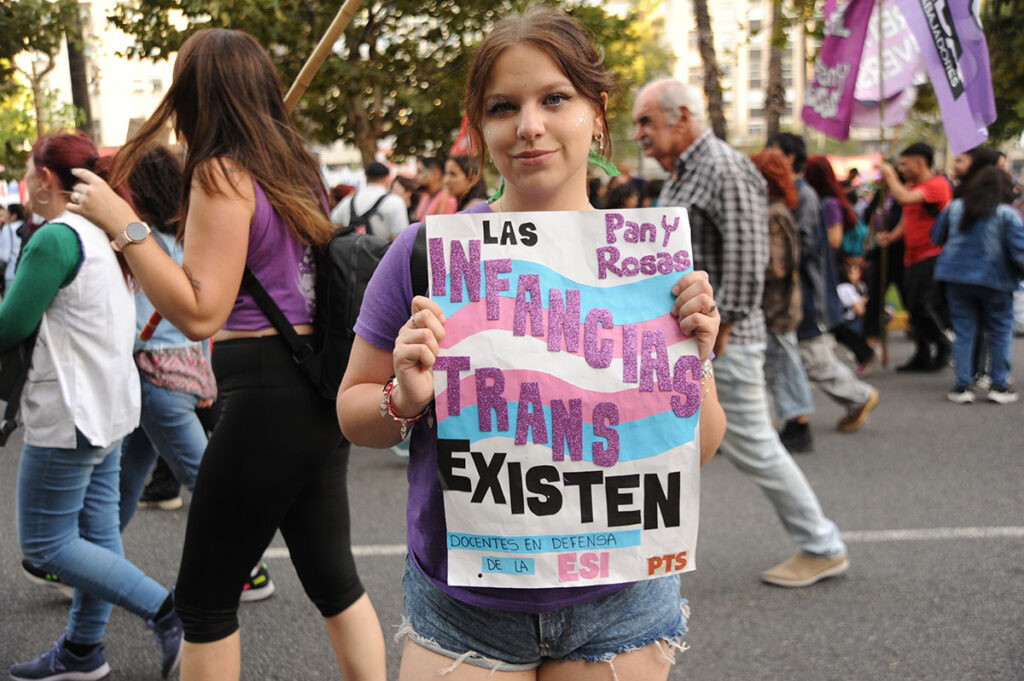
With Decree 62/2025, published in February 2025, the national government modified Article 11 of the Gender Identity Law (No. 26,743), which expresses the right to free personal development. It replaced it with a text that prohibits treatments for minors. “Persons under eighteen (18) years of age may not access the interventions and treatments referred to in this article,” the decree states.
The Argentine Federation of Lesbians, Gays, Bisexuals, and Transgender People (FALGBT), represented by its president, María Rachid, along with National Deputy Esteban Paulón, filed a declaratory action of unconstitutionality against the decree in Federal Court. This legal action is being handled by constitutional lawyer Andrés Gil Domínguez, lawyer Flavia Massenzio, and lawyer Martín Muñoz. It seeks a declaration of the decree's unconstitutionality and absolute and irremediable nullity. In this case, the Court granted an injunction suspending the decree.
“Although the final ruling is still pending, the legal arguments maintain that there were no grounds for bypassing Congress and amending the law,” attorney Gil Domínguez told Presentes . “The next step is for the judge of first instance (Macarena Marra) to issue the final ruling,” he added.
What the ruling says
In their ruling, Judges Guillermo Treacy and Pablo Gallegos Fedriani based their decision on three arguments. First, they considered that the Executive Branch did not sufficiently justify the need and urgency for publishing the decree. Nor did they explain why they decided to restrict a right—absolutely and permanently—that had been recognized by the National Congress.
Secondly, the decree violates the principle of "evolving capacity" and the best interests of the child, enshrined in Law No. 26,061 and the Convention on the Rights of the Child. The judges explain: "Indeed, the law already established a judicial procedure that provided for the intervention of judges, guardians ad litem, the child's lawyer, the Public Prosecutor's Office, and expert opinions before any irreversible medical procedure. This oversight system appeared to guarantee a case-by-case evaluation and ensure the protection of minors, respecting their evolving autonomy. Contrary to this, it should be reiterated, Decree No. 62/2025 eliminates this regulatory protection and replaces the individualized judicial assessment with an absolute general prohibition, which would prima facie the principle of evolving capacity."
Finally, the judges concluded that there is a greater risk to the population in rejecting the precautionary measure than in granting it. “If the precautionary measure were rejected, the represented group could be exposed to an absolute restriction of the right that was recognized by the legislature through a law of the National Congress,” they argued. Furthermore, “the entry into force of the Emergency Decree could negatively affect the right to health of minors who are currently undergoing treatment.”
In this way they granted the precautionary measure requested by the FALGBT and ordered the precautionary suspension of the DNU until there is a final judgment.
A limit to cruelty
“After so much struggle, so much uncertainty and setbacks, we can once again count on the backing of the law so that our children have access to the treatments that should never have been suspended,” Gabriela Mansilla, founder of the civil association Infancias Libres (Free Childhoods) , shared with Presentes . “We feel once again that the right to identity, to be who we are and to live our bodies and our lives in a way that makes us happy, is possible. We will not stop claiming or demanding what is rightfully ours as families,” said Mansilla, Luana ’s mother .
The Pride and Struggle Front celebrated the suspension of the decree. “This ruling is a show of support for our community and a resounding halt to cruelty. Today, the courts stopped the far right’s attempt to deprive us of comprehensive healthcare and erase our trans youth, also slamming the door in the face of hate organizations that sought to endorse this outrage,” said Valeria Pavan, president of the Argentine Homosexual Community (CHA).
The ban on these treatments “only had a profoundly negative impact on their free development,” Pavan explained. She is also the coordinator of the Comprehensive Support Program for Trans and Gender Identity Children and Adolescents at the CHA's Health Area. She explained: “In the past, the inability of trans people to access hormone therapy and surgical interventions led many to resort to liquid silicone injections in an attempt to achieve bodily changes. This practice caused serious health problems and contributed to a lower life expectancy for trans and gender-diverse people.”
A decree that generated anxiety
During the year and a half that the decree was in effect, “there were many complicated situations,” Mansilla explained. “ Those who had started treatment and had to suspend it went through moments of great anguish and frustration. Families were overwhelmed, unable to cope with everything that was coming as a result of this, which was also made public, with misguided justifications, introducing into the social debate things that don't happen, such as female genital mutilation in minors. Carrying that stigma and giving explanations is not only exhausting, but also generates sadness and helplessness.
“The Chamber is acting within the law. This is a very important achievement to reaffirm the course of our community in support of our trans identities, children and adolescents ,” said trans activist Marcela Tobaldi, founder of La Rosa Naranja, to Presentes .
“The ruling reaffirms the rule of law in the face of arbitrary and unconstitutional decrees. Now we demand that Congress assume its responsibility and immediately reject Decrees 61 and 62,” concluded Ricardo Vallarino, an activist with 100% Diversity and Rights.
We are present
We are committed to journalism that delves into the territories and conducts thorough investigations, combined with new technologies and narrative formats. We want the protagonists, their stories, and their struggles to be present.
SUPPORT US

FOLLOW US
Related notes
We are present
This and other stories are not usually on the media agenda. Together we can bring them to light.