

The first Living Archive of AfroLGBTIQ+ Memory is born in Argentina
The collective initiative seeks to recover and transmit the memories of Afro-descendants and their struggles in the LGBT movement.


Share

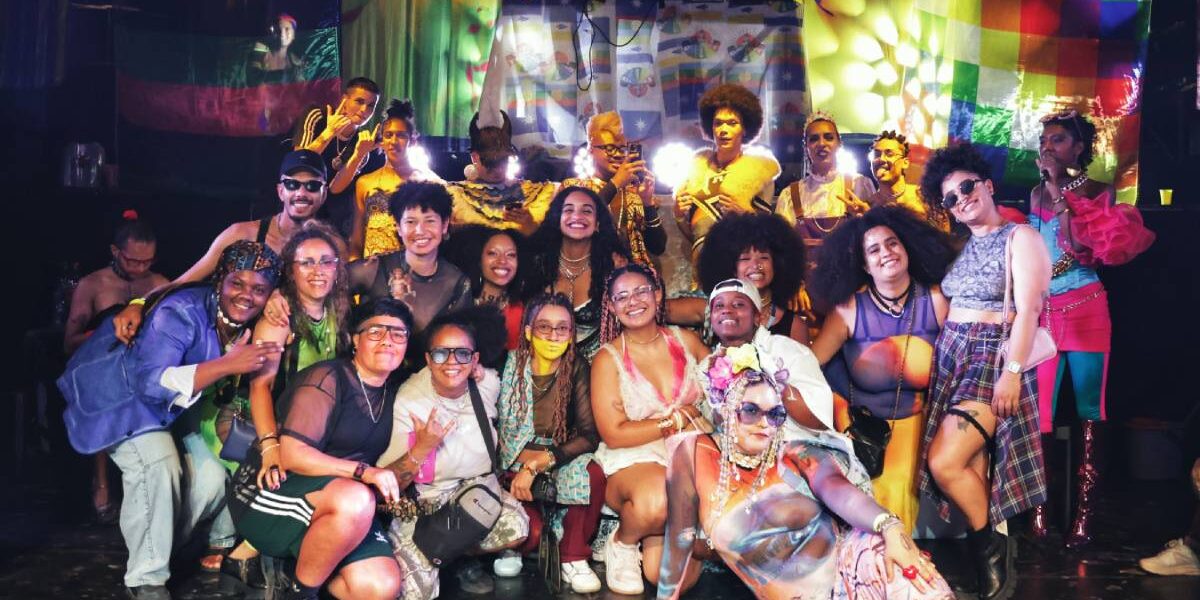
BUENOS AIRES, Argentina. Photographs, poems, illustrations, and autobiographical accounts form part of the universe that makes up the first Living Archive of AfroLGBTIQ+ Memory in Argentina. It is a collective initiative that gathers, preserves, and makes visible the stories, experiences, and works of Afro-descendant and queer people in Argentina.
“It doesn’t just seek to record what we already know about our history, but also to recover memories that have not yet been told. And thus contribute to ensuring that future generations don’t have to go through the same difficulties we went through. That they can see themselves represented, that they can identify with these stories or write new ones,” says BrendaSantana, a member of AfrosLGBTIQ+ and co-coordinator, along with Briggette Zuñiga, of the AfroLGBTIQ+ Living Archive project, which is supported by the Malunga Network.
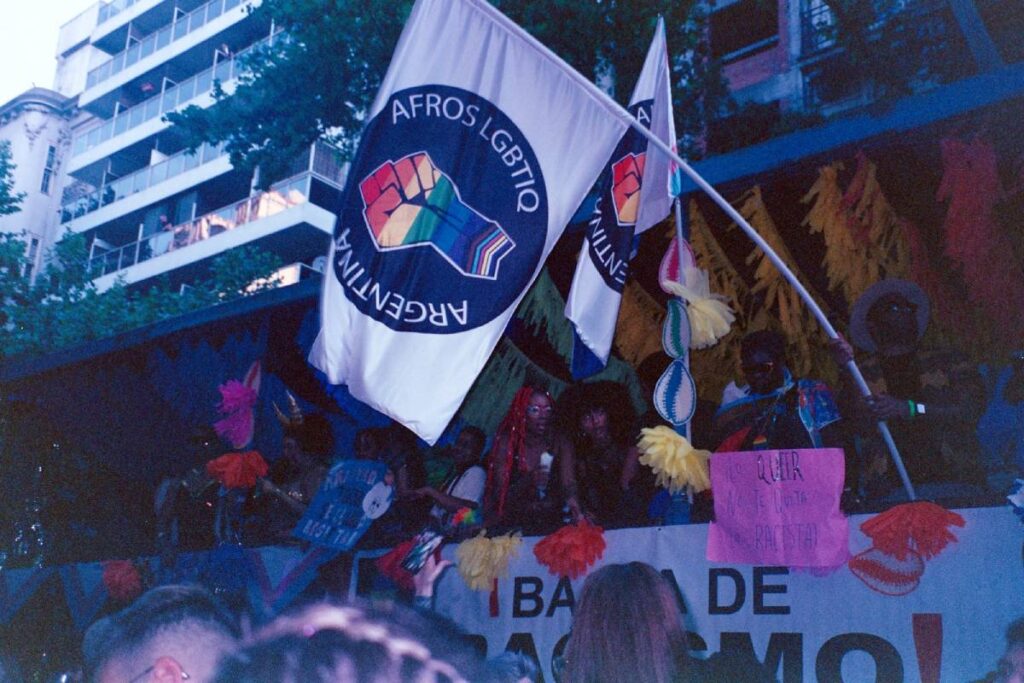
“This archive allows us to have a centralized space that connects the stories of many Afro-LGBT people who have been made invisible in the struggle or who are now playing a leading role in the promotion and protection of the rights of people not only LGBT, but also Afro-descendants,” adds Carlos Álvarez Nazareno, anti-racist and human rights activist, founder of the Xangô group and founding member of AfrosLGBTIQ+.
For this reason, it is a “living” archive. Influenced by other initiatives such as the Trans Memory Archive, the distinctive contribution of this project is to recover, in addition to historical archives, the memories and experiences of the people who are part of the movement today.
The challenge of building memory
From March to May of this year, a call for submissions was open for materials to be included in the archive. “We received family photographs, portraits, records of political and community activities, poems, illustrations, and autobiographical accounts. One of the things that struck me most was the number of people who chose to share self-portraits. I think that speaks to a need to become visible and to be part of a collective history without losing their own individuality,” says Santana.
The responses came from the Buenos Aires Metropolitan Area, Rosario, Córdoba, Mar del Plata, La Rioja and Jujuy, but also from participants in Colombia, Uruguay, Mexico and Germany.
Several people decided to participate in the call without submitting files. “In strictly archival terms, it might seem like an absence, but for me it was a very powerful presence,” she adds. “Completing the form, self-identifying, and saying ‘I also want to be part of this memory’ is a political decision in a country where Afro-descendant people have been systematically erased from official narratives.”.

AfrosLGBTIQ+
To understand the importance of this archive, sociologist Álvarez Nazareno goes back to the origins of the AfrosLGBTIQ+ collective. “It emerged to begin working, on the one hand, on the fight against racism within the LGBT movement. We saw that, unfortunately, our fellow members of the community engaged in racist, discriminatory, and stigmatizing practices. Furthermore, there was an invisibility surrounding our struggles and the contributions that Afro-LGBT people have made to the movement. It also aimed to work within the Afro community. While we have historically participated in the fight against racism, there were sexist, patriarchal, homophobic, lesbophobic, and transphobic practices.”
“And particularly in a context where there is a strong invisibility of Afro issues in Argentina,” she adds. “This whole idea that there are no Afro-Argentinians, that they all died in the independence struggles, with the yellow fiber. That there are no Black people in Argentina, that they are in Uruguay, in Brazil.”.
“There are no black people in Argentina”
Where does the myth of a white Argentina come from? Álvarez Nazareno traces it back to the construction of a state that looked to Europe. “Argentina presented itself as a white country, 'The France of America,' recognizing only the Spanish, European, and Italian presence. The Generation of '80, our main libertarians like Sarmiento, worked specifically to consolidate and solidify this project of whiteness and a European nation within the Argentine identity. This narrative played out throughout the 19th and 20th centuries.”
While academic research and archives exist that seek to highlight the presence of Afro-descendant or LGBTQ+ people in the country, “these stories have often been told separately,” Santana shares. That's why the Living Archive arises from the need to “recover the experiences of those who simultaneously inhabit these identities and contribute to building a collective memory where we don't have to choose between one part or another of who we are.”
Context
The project takes place against a backdrop of setbacks in human rights in Argentina. This country, along with the United States and Israel, was the only one to vote against the United Nations General Assembly's declaration in March of this year recognizing the transatlantic slave trade as the worst crime against humanity . This is compounded by the closure of the National Institute Against Discrimination, Xenophobia and Racism ( INADI), the Ministry of Women, Gender and Diversity , and the Directorate of Racial Equity Policies within the Secretariat of Human Rights.
“We are denouncing the lack of mechanisms and spaces for filing complaints against racism and discrimination. However, at the same time, we see how this antifascist and antiracist perspective is being forcefully reclaimed within social movements as a counter-hegemonic message to the national government,” asserts Álvarez Nazareno. In this context, the first and second Antifascist and Antiracist Pride Marches. “Antiracism has now begun to gain significant momentum in the struggle for equality and human rights, particularly in Argentina.”
Launch
Beyond the call for submissions, the project “AfroLGBTIQ+ Living Archive: Mapping Our Memories and Resistance in the Black and LGBTIQ+ Movement of Argentina” included a training cycle, in which the Dominican philosopher and researcher Yuderkys Espinosa Miñoso, and a traveling art performance. “It was an experience that reminded us that memory doesn’t live only in documents but also inhabits bodies, gestures, and shared experiences,” Santana emphasizes.
In addition to creating the archive, the project includes the distribution of a free, downloadable digital book. “It brings together some of the materials, reflections, and findings of the project, always respecting the permissions granted by those who participated,” explains Santana. The archive, however, will not be publicly accessible due to ethical and consent-related reasons.
Last Saturday, July 4th, the book launch took place at the Plaza Defensa Cultural Center, with free admission. The event included an exhibition, panels, poetry readings, and a screening of the video art piece CUIRLOMBO.
We are present
We are committed to journalism that delves into the territories and conducts thorough investigations, combined with new technologies and narrative formats. We want the protagonists, their stories, and their struggles to be present.
SUPPORT US

FOLLOW US
Related notes

We are present
This and other stories are not usually on the media agenda. Together we can bring them to light.