

Football and diversity: how the 2026 World Cup is being experienced
The 2026 World Cup takes place in a turbulent global context rife with inequality. How do teams open to diversity view it, and what do they expect from this championship?.
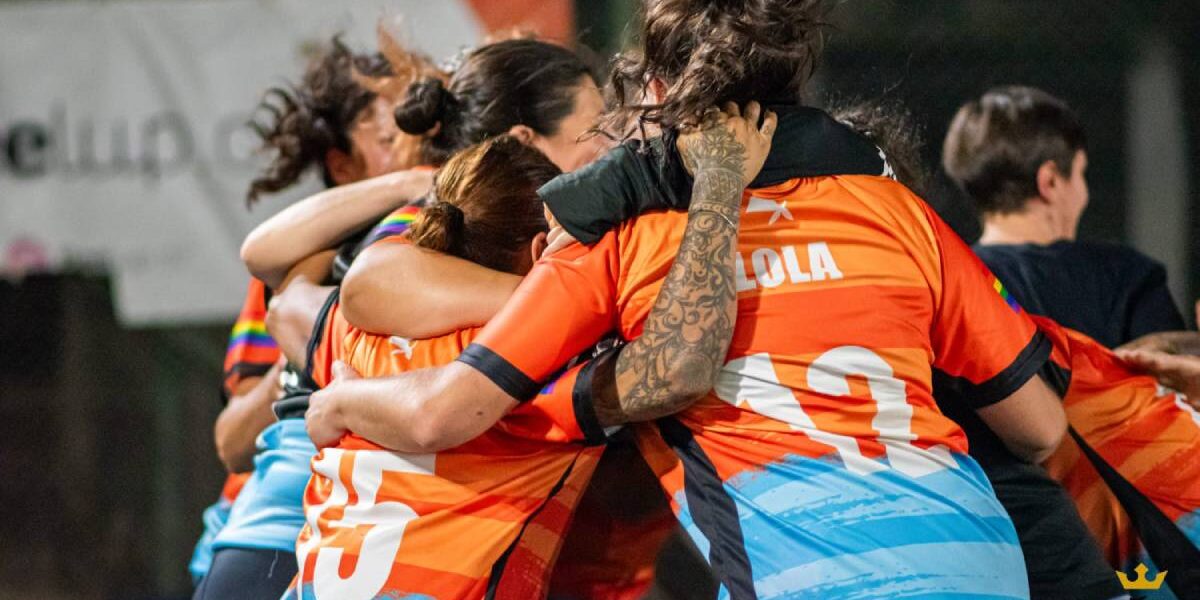


Share

BUENOS AIRES, Argentina. The 2026 Men's World Cup kicked off in Mexico with mothers searching for their missing children, teachers, and rural communities making their voices heard. Once again, the football tournament is fraught with mixed emotions, set against a backdrop of right-wing gains in so many countries and hardline immigration policies that exclude even the players. But football is resistance, celebration, and unity.
“Let’s look at the 1978 World Cup in our country (Argentina),” says Tamara Haber, president of Norita Fútbol Club. “The same international stage that the military dictatorship set up to legitimize itself became the screen that exposed its crimes to the world. It was the Mothers and Grandmothers (of Plaza de Mayo) who, with their enormous courage, used the presence of the foreign press to break the local media blackout.”
These days, social media has been flooded with images of mothers searching for their missing children and ordinary people in Mexico City who took advantage of the World Cup's visibility to demand answers. "The ball is coming home, but when will our missing loved ones be found?" they ask in a country with more than 134,000 missing persons, according to the National Registry of Missing and Unlocated Persons.
In Mexico, more than 10 women are murdered every day. The national team's jerseys with the slogan "Femicidal Mexico" serve as a reminder.
The World Cup landscape is also marked by the anti-immigration policies of the United States —another host country, along with Canada—and the ongoing conflict between the US, Iran, and Israel. In Argentina, where the jubilation of winning the 2022 World Cup again was palpable, the current situation is marked by austerity policies affecting universities, people with disabilities, and the Argentine people. Also contributing to the controversy is the photograph of the national team captain alongside Donald Trump.
In Presentes we interviewed different football teams open to diversity to find out how they are experiencing this World Cup and what their expectations are.
“It reconnects me with a passion that I enjoy in community”
Nai Mojica is a 40-year-old Venezuelan woman, a soccer fanatic and migrant, who lives in Mexico City. Since she was little, she has dreamed of seeing her country's national team participate in the World Cup, but she hasn't yet had the chance to witness it. Because of this, she's used to being a big fan of other teams. This time, she hopes that those "smaller" teams can reach stages they haven't reached before and, why not, that one of them wins the World Cup.
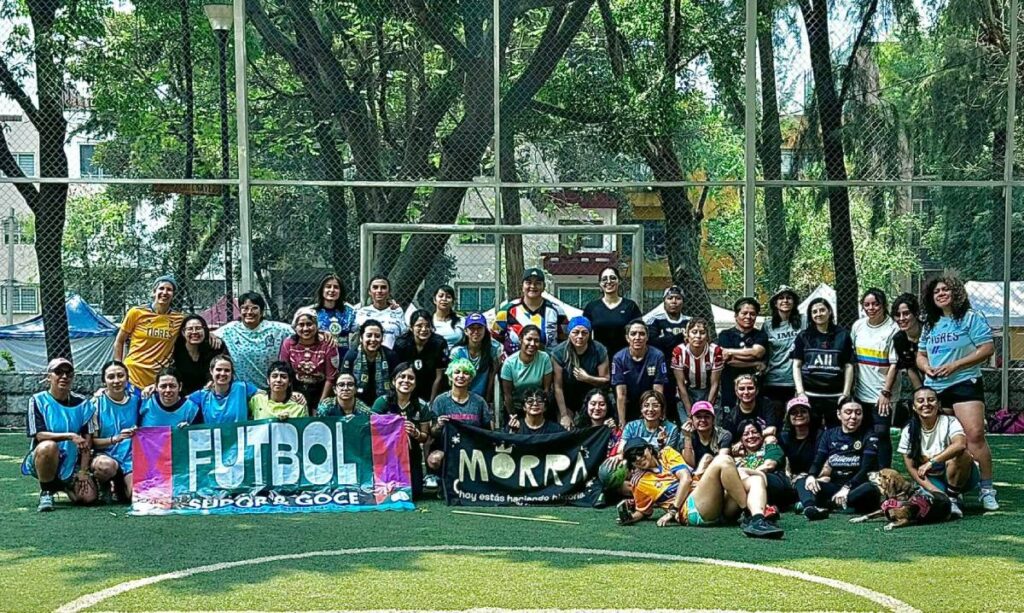
She plays defense and coordinates free soccer games for women and gender-diverse people on public fields on Saturdays. From there, a team called Fútbol, sudor y goce (Soccer, Sweat, and Joy) , which she participates in. “We want it to be a safe space for a diverse community and for soccer to be something fun, where we all protect each other and can be free on the field,” she says.
Experiencing the World Cup in one of its host cities filled her with excitement. “We really regret that attending the World Cup wasn't affordable. I dreamed of going, but the prices were absurd. Here in Mexico, people have wanted to take advantage of these global mobilizations to bring visibility to different struggles. But the governments back FIFA; they don't want to politicize the tournament and they make it invisible.”.
Although she considers this event “a good distraction,” she also wants to enjoy it. “It might not be the best thing, but with everything that’s happening politically, ecologically, with migration, and so many other things that overwhelm us, it’s not bad to escape a little. Sometimes I feel the contradiction and I feel guilty. But I also try to balance my struggles with this fun that takes me back to my childhood and reconnects me with a passion I enjoy with my community, with my friends.”
“I’m not very enthusiastic”
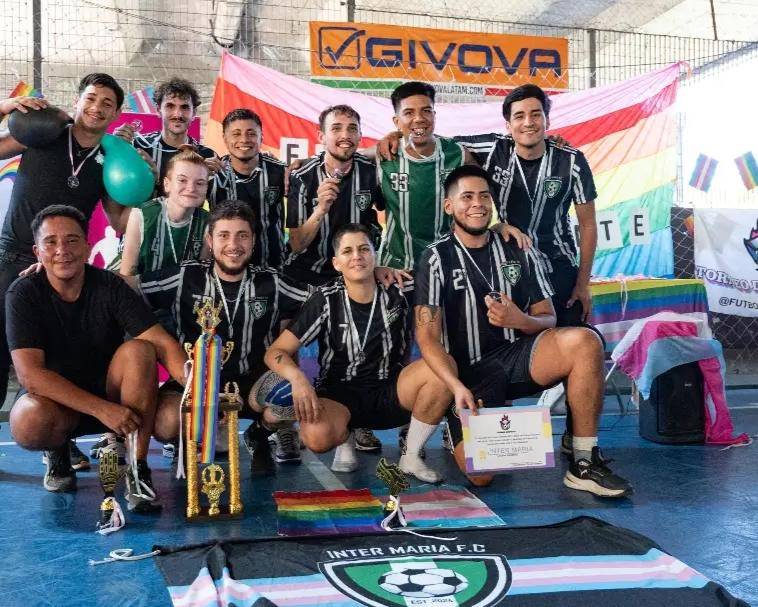
Emiliano posed the question to the WhatsApp group he shares with the members of the Inter María Fútbol Club, made up of trans men from the city and province of Buenos Aires (Argentina). Almost unanimously, they responded that this World Cup didn't excite them.
—Hey guys, I feel like you ruined the World Cup for me… I love it, but because of my personality, my limits and values, I can't watch it.
—It really annoys me that the players here are so soft when it comes to talking about the social context we're in. Not just in Argentina, but in the world in general.
—We live in a world that teaches us that to get somewhere, we must remain silent. There are certain players who have the clarity to speak out against a government, controversy, or war. Lamine Yamal, with the Palestinian flag, or Mbappé telling the world that the right wing "is cruel." But when they speak out like this, they start having problems at their clubs.
—The World Cup meant a lot to me back in the day, when there were idols and a genuine style of play. Now, with VAR stopping every play, the cooling-off times used to insert advertisements, the political controls against certain nationalities, and the overwhelming dominance of the United States, I feel incredibly disinterested and it puts me on high alert.
—I'm not very enthusiastic about the whole political situation, everything that's happened with the femicides. Even so, I really enjoy the World Cup because it's always a great opportunity to get together. It's a time to share and talk about football, even though politics is always present. I hope we stay alert and that, while we enjoy the football, we don't forget about this context.
—What moves and represents me is dissident football, women's football, neighborhood futsal, the dirt field. Banfield or Lanús at most, hahaha.
“It stirs up a lot of emotions”
For as long as he can remember, Jonás Matos has had a ball at his feet. The youngest of four brothers, he's 35 now, and World Cups have been important throughout his life. He was born a few years after the 1986 World Cup, in which Argentina emerged victorious, and he always held onto the dream of seeing his national team lift the World Cup. "The last World Cup was a real celebration, both for me and for many other people," he recalls.
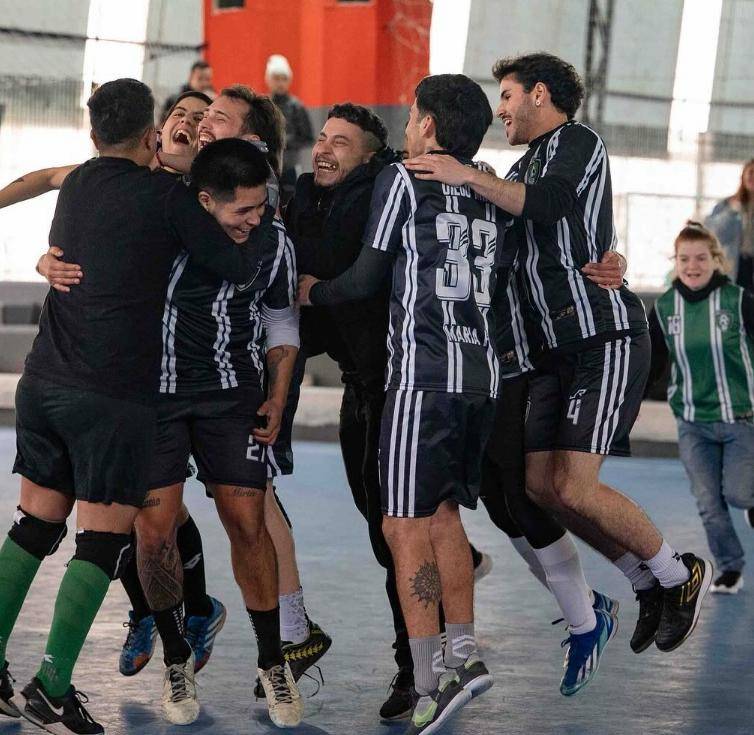
Currently, he/she trains and plays at Zorres, a civil association whose focus is to create spaces for participation, support and development of amateur sports for people from the transvestite, trans and non-binary community, although it is also open to the LGB community.
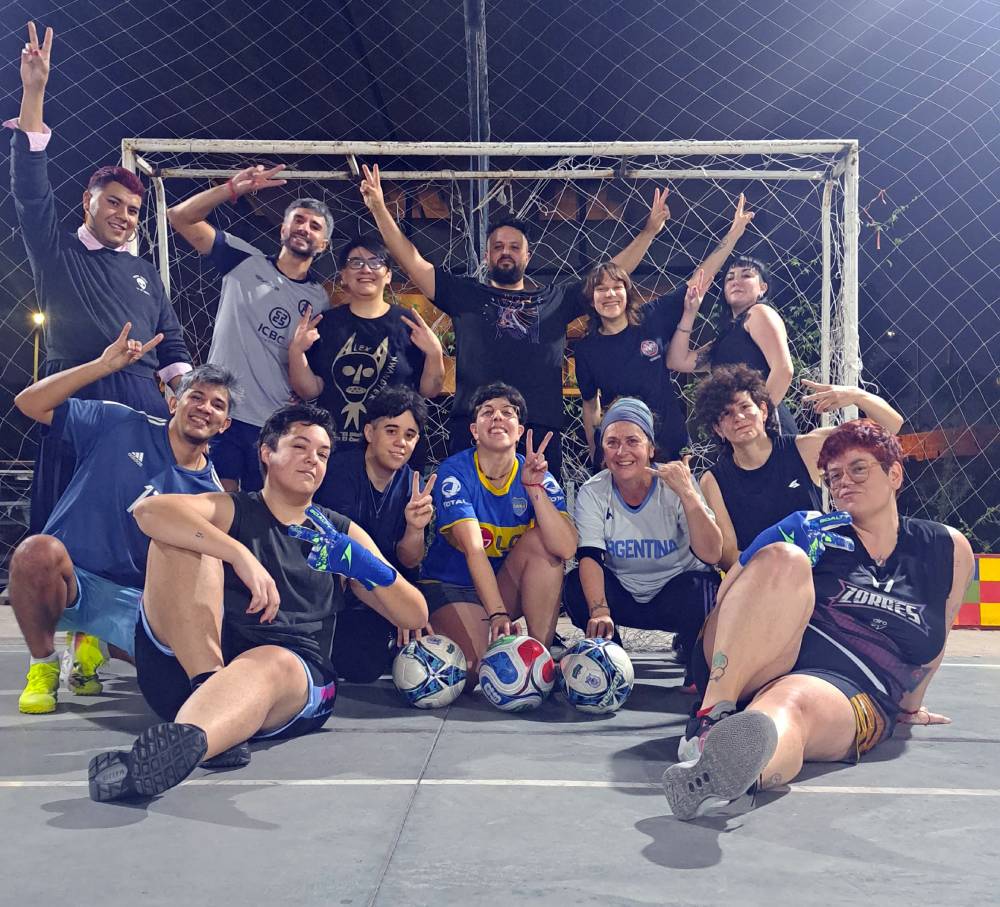
He's excited about the World Cup, although he believes that "politically and socially, the situation is the worst imaginable." He also acknowledges that it has become "more of an exclusive spectacle than something for general enjoyment." That's why he hopes to return to the collective feeling experienced in Argentina in 2022.
“The last World Cup left a wonderful experience, which was the unity of the people in celebrating what it means to win a World Cup. We saw beautiful and very unusual scenes of people who, despite being politically, socially or economically distant, came together through joy and happiness.”.
“Football is also the joy of the people”
Tamara Haber is one of the founders of Norita Fútbol Club and its current president. The name was chosen in honor of Norita Cortiñas, a Mother of Plaza de Mayo, who was also the club's honorary president. Founded in 2017, the club achieved legal status five years later and currently has over 50 members. Its members—women and gender-diverse individuals—train weekly in the Flores neighborhood of Buenos Aires.
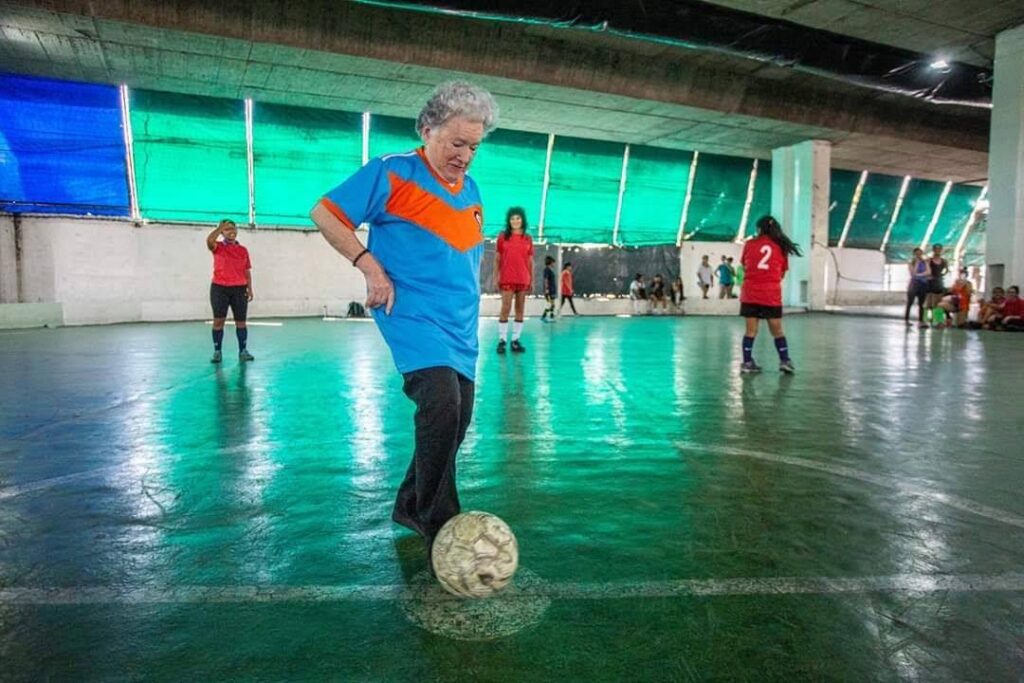
“From our position, our activism, and our daily struggles, we do not want to give up either football or the World Cup,” Haber emphasizes, aware that “football has historically been a space permeated by sexist and patriarchal logics” and that there is a multi-million dollar industry behind it.
But he acknowledges something else: “Football is also the joy of the people. In every match there is a collective dream. Behind every ball there is a boy or girl who dreams of seeing their idols on the pitch and then going out to play with their friends in the neighborhood field.”
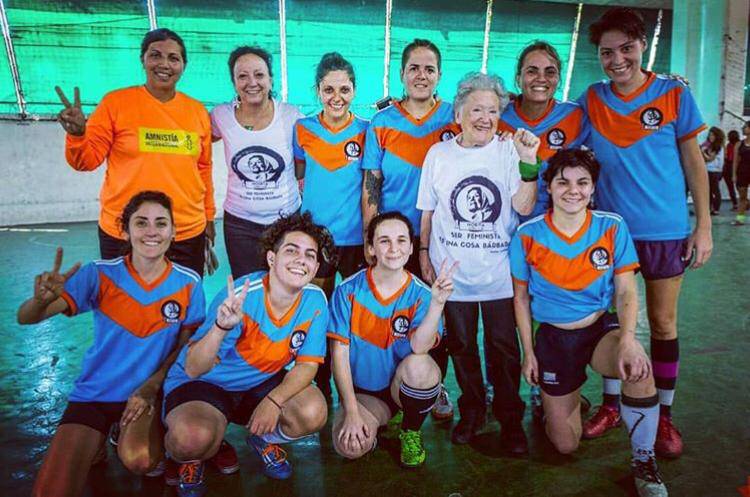
“We are nobody to challenge the game and the dreams of any kid. That's why we choose not to abandon our critical perspective. But we also won't give up on the joy. We won't surrender football. Because it's ours too. Because it's built by those who play, those who cheer, those who organize a tournament in a neighborhood, those who find in a field or in a match a space for meeting, for community, and for hope.”
We are present
We are committed to journalism that delves into the territories and conducts thorough investigations, combined with new technologies and narrative formats. We want the protagonists, their stories, and their struggles to be present.
SUPPORT US

FOLLOW US
Related notes
We are present
This and other stories are not usually on the media agenda. Together we can bring them to light.