

Not One Freedom Less: Urgent conversations about the rights of trans people
Activist Alba Rueda hosts a series of interviews with specialists in transgender rights. The urgency of a broad and diverse social response.


Share

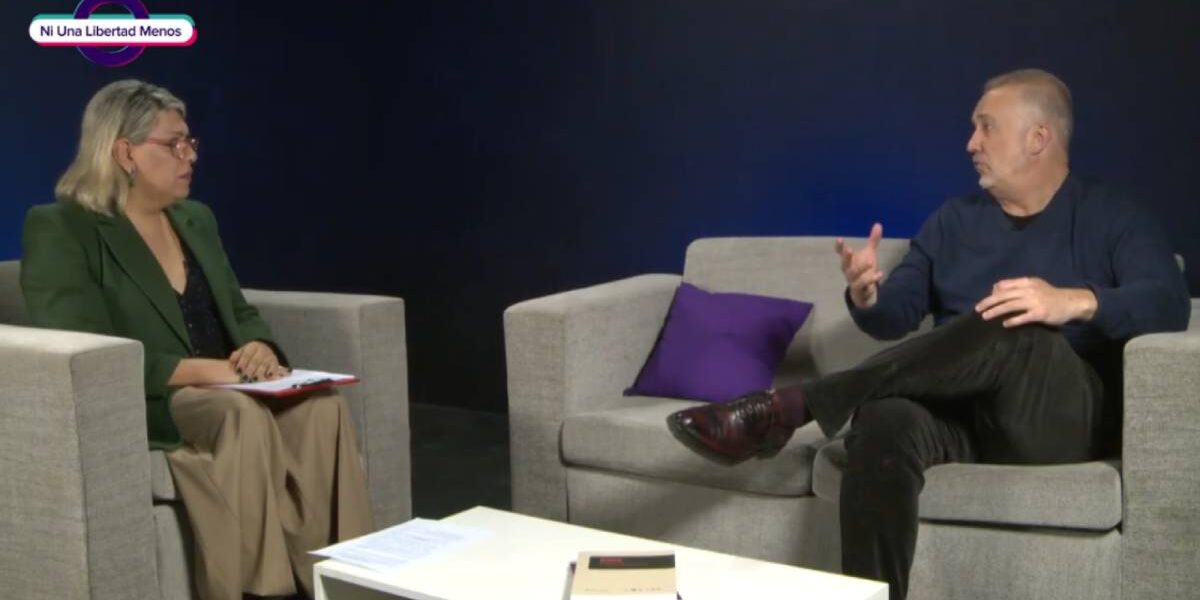
BUENOS AIRES, Argentina. The proliferation of hate speech, the rise of the right wing in the country, setbacks in the region, and the increase in hate attacks against the LGBT community were some of the many concerns that reached the Inter-University Network for Gender Equality and against Violence (RUGE) and gave rise to the interview series “Not One Freedom Less.” This audiovisual project features trans-feminist politician and social activist Alba Rueda in dialogue with specialists in the rights of trans and gender-diverse people.
“The interviews address urgent issues such as access to health, trans children and adolescents, decrees that seek to limit the Gender Identity Law, criticism of 'gender ideology' and transvestite trans trajectories in public universities,” the host of the series explained to Agencia Presentes .
These are four “urgent conversations.” One is about the health of trans children, with psychologist, professor, and researcher Candela Cabrera. Another is with Dr. Andrés Gil Domínguez, a constitutional lawyer, about the right to gender identity; another is with Juan Marco Vaggione, a sociologist, lawyer, and CONICET researcher, about critiques of gender ideology. There is also a conversation with Fidela Azarian, a trans-feminist Peronist activist and PhD in Political Science, about transvestite and transgender university experiences.
Defending rights in academia
At RUGE, feminists, public education activists, and academics come together in a space where they develop a type of documented and scientific knowledge. Concerned about this government's attacks on the trans community—especially on children's rights—they began to develop strategies to address issues related to the lives of trans people.
“Childhood was the first line of attack by Javier Milei’s government against the trans community. This initial attack generated a reaction from activists and members of the scientific community to dismantle these simplistic and erroneous discourses that curtail rights and lead Argentina towards a regressive position in terms of human rights,” says Alba Rueda.
“In light of all this, the idea arose that universities should assume the social role of speaking out with documented evidence in order to intervene regarding trans children, trans rights, anti-gender movements against sexual, educational and reproductive rights, and trans people's access to university,” Rueda adds.
Messages for society
One of the most complicated issues, the show's host acknowledges, concerns the social impact of these messages. “Within the context of the attack on the Gender Identity Law, there is both a pathologization and a marginalization of people under 18 and their rights. The stereotypes and messages being repeated are serious and grave, and they concern our entire society. It's not just about trans people: it describes how the government dehumanizes and deprives a population group (as it does so many others) of their rights. This is one of the foundations for understanding the debates that arise. The fact that the problem today is linked to the severity of the economic crisis does not diminish the attack on human rights,” she emphasizes.
In this regard, Alba Rueda, along with the members of RUGE, stated, “There are voices that urgently need to be heard, and these are the voices of the protagonists, the trans and non-binary voices, the voices of trans feminists, of those who have been mobilizing for some time in our country and belong to different social spaces. These are not isolated voices, but rather voices representing different kinds of affiliations. In this case, from the university, as a participant in democracy, it is necessary to intervene publicly to speak out against these attacks.”
From various groups affiliated with La Libertad Avanza, and with the president at the forefront, the Gender Identity Law is being attacked. “Today it is restricted and curtailed by government decrees. It is clear that the aim is to pathologize and criminalize trans people. Those institutions that work on comprehensive health issues should have an explicit and committed position. Especially the mental health sector,” she emphasizes.
“Far from protecting the mental health of children and adults, the attacks under the Gender Identity Law actually harm mental health, causing children to grow up under threat and stress, and generally leading everyone to grow up with the idea that governments can dehumanize people and strip them of their rights. This affects not only health, but all actors and groups that defend democracy against criminalization and repression that stifles expression and social mobilization. Therefore, we ask all of society to take a stand against this hate speech.”
Interviews from Not One Freedom Less
1 “What about the right to gender identity?”, interview with Dr. Andrés Gil Domínguez, constitutional lawyer;
2 “What happens to the health of trans children?”, interview with Candela Cabrera, psychologist, professor and researcher.
3 “What about the criticism of 'gender ideology'?, interview with Juan Marco Vaggione, Researcher at CONICET and professor at the National University of Córdoba.
4 “What happens to transvestite and trans people at university?”, interview with Fidela Azarian, transfeminist Peronist activist. PhD in Political Science.
All episodes can be viewed on the MundoU platform.
We are present
We are committed to journalism that delves into the territories and conducts thorough investigations, combined with new technologies and narrative formats. We want the protagonists, their stories, and their struggles to be present.
SUPPORT US

FOLLOW US
Related notes
We are present
This and other stories are not usually on the media agenda. Together we can bring them to light.