

Argentina celebrated its Trans Homeland Day in Plaza de Mayo
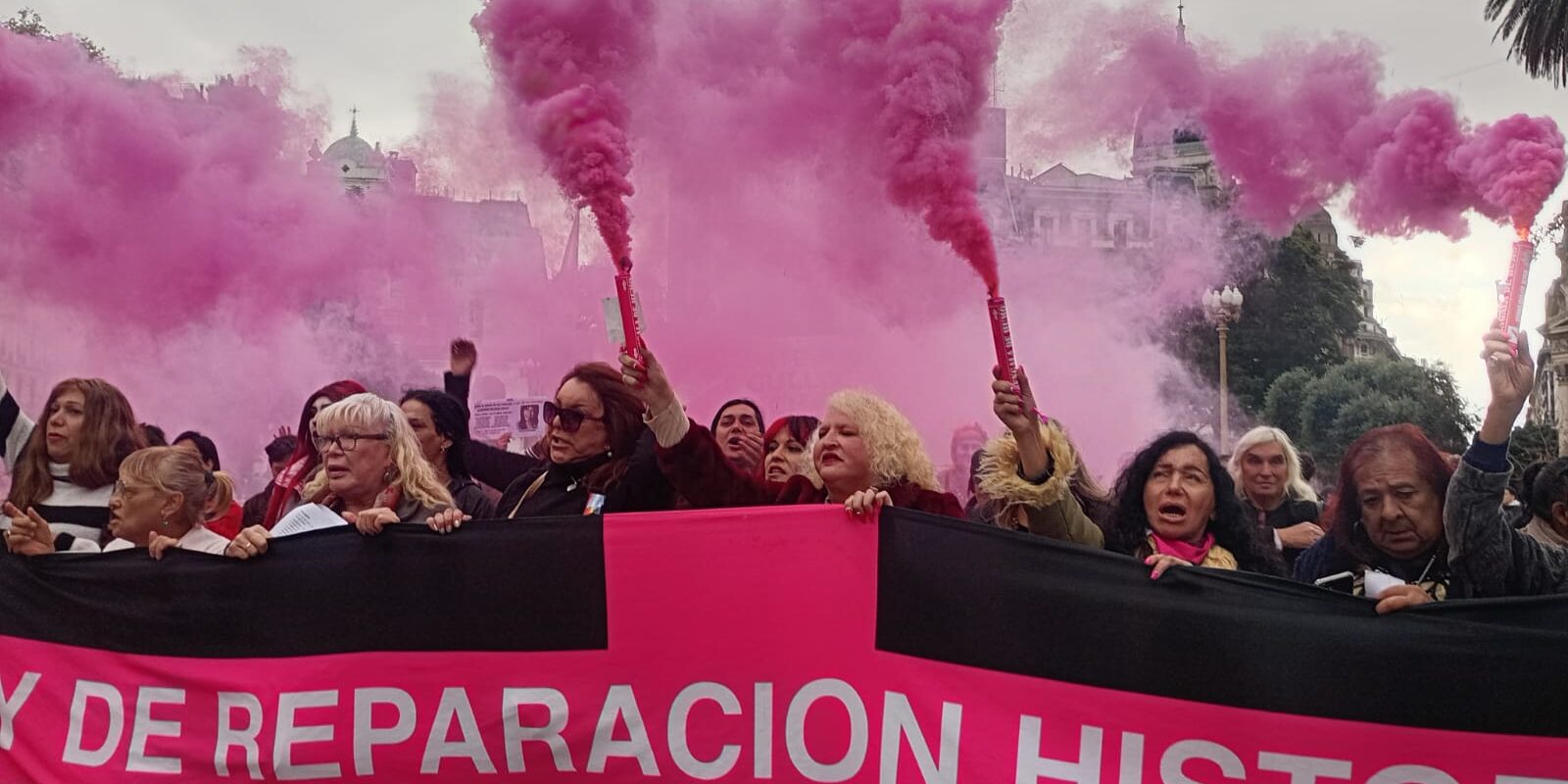
Trans Homeland Day brought together transvestite and trans activists in Plaza de Mayo with an urgent demand: the historical reparation that the State owes to older women, survivors of violence.


Share

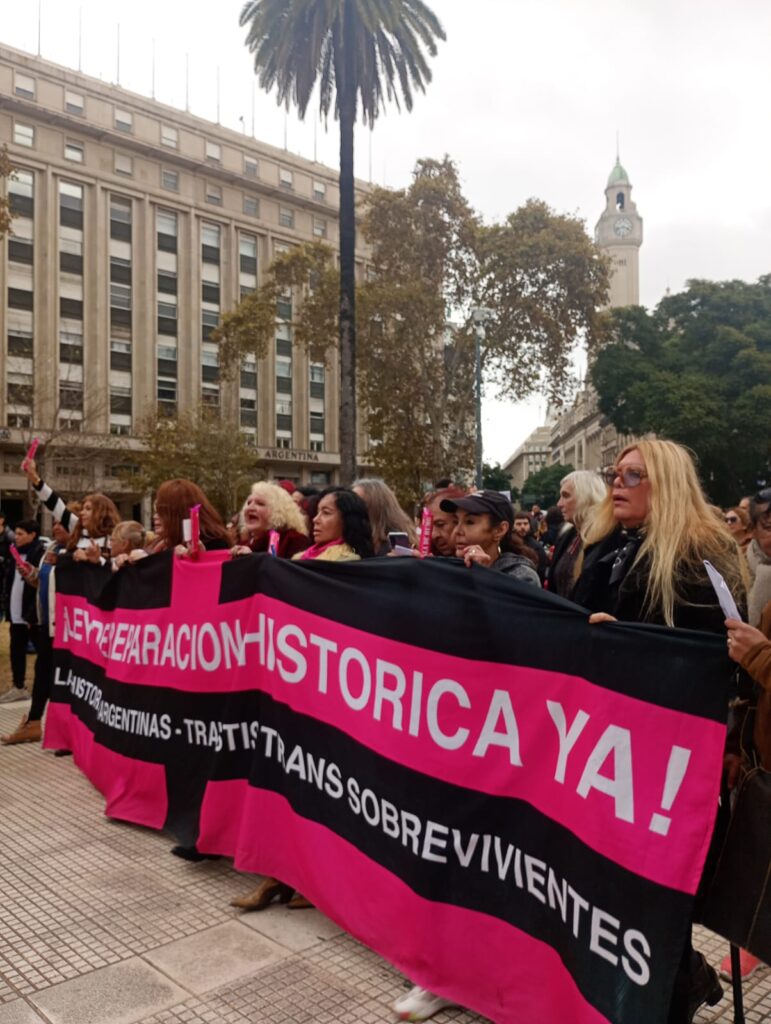
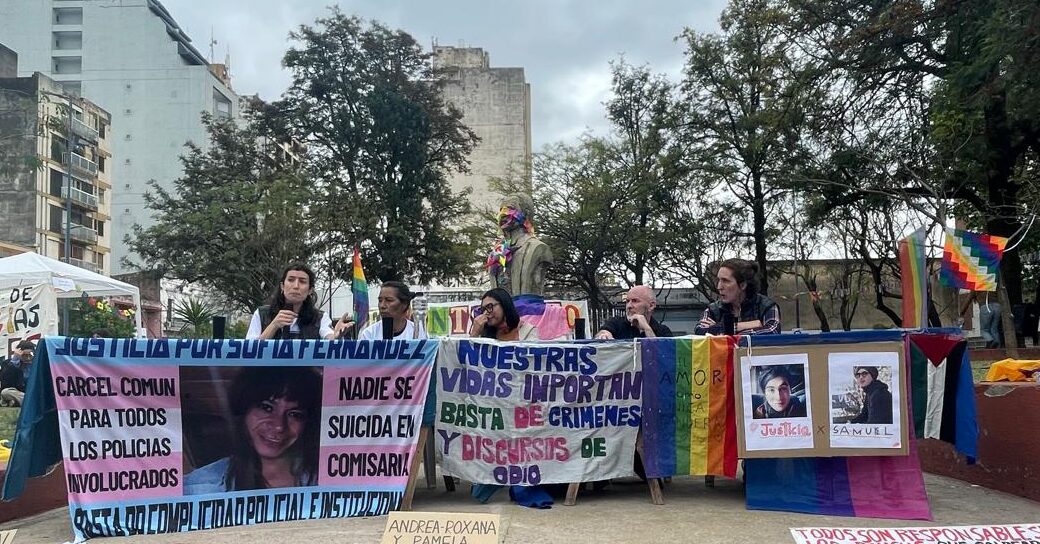
BUENOS AIRES, Argentina. On Sunday, May 24, transvestite and transgender people commemorated Trans Homeland Day in Argentina at Plaza de Mayo. Just meters from the Cabildo, an emblematic site in the struggles for independence, LGBTQ+ activists joined a day of action that began after 2 p.m. with a march around the Pyramid of May—a gesture that has been maintained since 1977 when the Mothers of Plaza de Mayo marched their first round to demand answers about their disappeared children.
Afterwards, the document agreed upon by the various trans and travesti groups was read aloud. It denounced, among other things, the increase in violence and hate crimes since Javier Milei took office. And it reiterated the demand for a Trans Reparations Law for older trans womenwho are survivors of institutional violence.
On stage, Fedra Dasso sang the Argentine national anthem. The gathering in Plaza de Mayo continued until nightfall with a communal meal, music, dance classes, shows in front of the Casa Rosada, and the cry of "Long live the trans motherland!".
Why a Trans Homeland Day
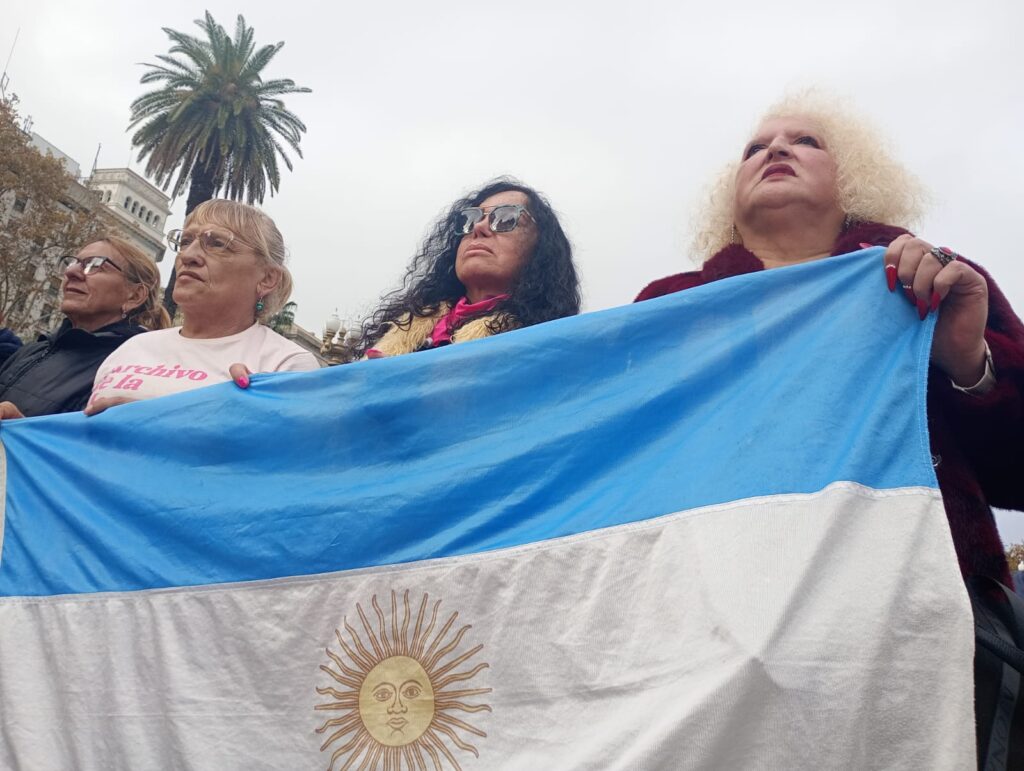
Trans Homeland Day emerged “after several years of marching as Las Históricas Argentinas (The Historical Argentinians), since society and governments have excluded trans women and men. Just as May 25th is the National Day of all Argentinians, May 24th is Trans Homeland Day. It belongs to all the trans women and men of Argentina, who are also patriots,” explained Patricia Alexandra Rivas of Las Históricas Argentinas. In previous years, this day, which has been commemorated since 2023, was marked by a Plurinational March for Historical Reparation to demand a dignified old age. But this time, the gathering took place entirely in Plaza de Mayo.
What is Historical Reparation?
Carolina Figueredo, from the Trans Memory Archive, told us that for her it is a very significant date. "Trans Homeland Day identifies us. We reclaim what was stolen from us for so many years: our rights. And what we have paid the State to stand on a street corner, because we were charged for parking. We are now demanding redress for that institutional abandonment," she told Presentes.
“When we say ‘Recognition is Repair,’ we are demanding that the State acknowledge all the violence it has perpetrated against our bodies and our lives. It has denied us access to all our rights,” explained Florencia Guimaraes of Furia Trava. She also recalled that the bill was first introduced by Lohana Berkins.
In Argentina, Santa Fe is, since 2023, the only province that passed a post-dictatorship reparation law and provides it monthly to transvestites and trans people who were victims of State Terrorism but also of arbitrary detentions and abuses in democracy, until May 2012.
Greta Schulte collaborated with the coverage.
We are present
We are committed to journalism that delves into the territories and conducts thorough investigations, combined with new technologies and narrative formats. We want the protagonists, their stories, and their struggles to be present.
SUPPORT US

FOLLOW US
Related notes

We are present
This and other stories are not usually on the media agenda. Together we can bring them to light.
1 Comment