

Soledad Cayunao: tried for defending water, she was acquitted and her case uncovered the plot of dispossession
Soledad Cayunao went to trial for defending the headwaters of the Chubut River. Despite being acquitted, she cannot return to Mapuche territory. During the trial, the businessman who accused her of land grabbing sparked a scandal by revealing how he acquired the land. What's next for this woman, her fight for water, and the plot behind the dispossession?.


Share

BUENOS AIRES, Argentina. On the same day, hours after the National Congress in Buenos Aires approved a controversial and widely opposed reform to the Glaciers Law following a session that ended in the early hours of the morning, Soledad Cayunao, a Mapuche activist, was celebrating her acquittal in a Bariloche court. It was April 9th, when Judge Marcelo Álvarez Melinger delivered his verdict in the trial brought against her by Hugo Alberto Barabucci, a polo player from Santa Fe, businessman, and intermediary for the Amaike trust. He accused her of trespassing and causing damage to what he claims is his property.
What he calls his property is a territory in the Chubut River valley. A strategic location in Argentine Patagonia: it is a plot of land 40 kilometers from El Bolsón and 65 kilometers from Bariloche (Río Negro), which Soledad accessed through El Maitén (Chubut province).
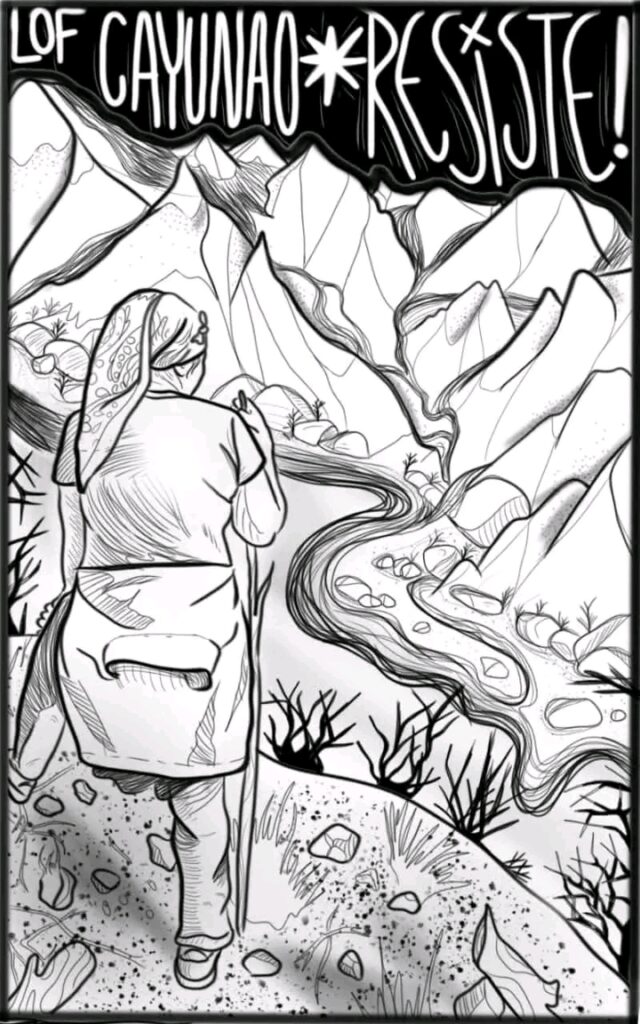
“I was born in Ñorquinco, 35 kilometers from El Maitén. The area that's now coming to light, and which I've been denouncing for years, is where those of us who adapt to the climate move during the summer months to graze our animals. But also to let the land rest. Our worldview and our way of life are tied to caring for the land. Being in the right places when we need to be,” he explains. That's why, for many years, every summer the Cayunao family and other Mapuche families climbed to the high peaks where the river originates. But lately, a wire fence and a series of “No Trespassing” signs have blocked their access.
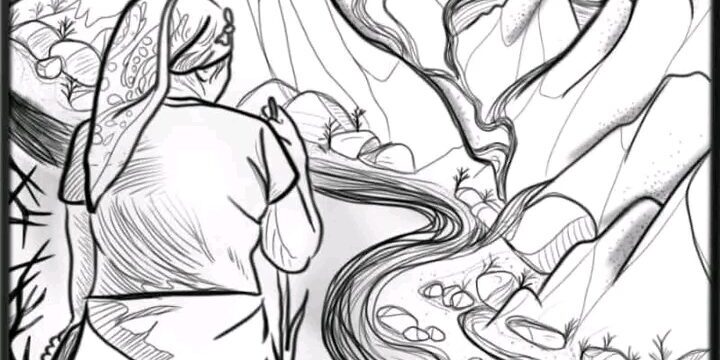
At first, Soledad tried to physically block the workers the company sent to fence off the land, as we reported in this article by Denali DeGraf, who traveled with her through the area. At 1,600 meters above sea level, in that ancestral summer pasture where there is no cell phone or internet signal, she and her family approached each worker to remind them that they could not encroach on their territory. The company's response was first harassment, then a series of threats, and finally this lawsuit. As a guardian of the headwaters of the Chubut River, Soledad recounts how she witnessed the company opening private access roads and building artificial lagoons.
Paradoxically, the trial not only proved Soledad's innocence, proving that there was no crime of usurpation, damage, or destruction, but the very man who brought her to trial publicly revealed to the court, with complete impunity, how he acquired these 20,000 hectares in 2017. It was with two million dollars donated by the government of the United Arab Emirates, where he lives for half the year.
The revelation became news and a scandal, as reported by the newspaper Tiempo Argentino in an article by Alejandro Paireno, because the property is located in a protected natural area, encroaches on a Mapuche community, and is part of a border security zone. The operation could involve, among other crimes, tax evasion and violations of the Rural Land Law, which dates back to 2022, limits foreign ownership, and which the government is attempting to repeal. For this reason, Soledad's lawyers, Martín Palumbo and Milton Díaz, requested an investigation.
In February, in an article for El Cohete a la Luna, journalist Susana Lara warned that both the headwaters and the upper reaches of the Alto Chubut River have a mining exploration permit "granted by the province of Río Negro to a company with Israeli capital": ten thousand hectares authorized for Tamar Mining to search for gold, silver, copper, and zinc, jeopardizing the waters of a river crucial for half the population of the province of Chubut. The same article states that another permit exists in the area for an area exploited by Amaike, the company that brought Soledad Cayunao to court.
“The dispossession is latent.”
Soledad Cayunao lives in a rural area in Chubut, near the riverbank, without electricity. “Let’s talk in a little while. Yesterday it was cloudy and the screen didn’t load,” she explains, because she depends on sunlight for many things.
-How does life go on after the trial?
I was acquitted of the charges brought against me for the crime of trespassing on our own territory. But this doesn't end here. It's a matter for the criminal courts. We are far from a civil resolution, as is proper for the territorial recognition of Indigenous Peoples. Especially with this government, although historically they haven't recognized our pre-existence and have taken us to court. I am free of the crime, but only as long as I can't enter or walk through the territories we have always inhabited. If anyone wants to visit the lagoon we are defending in the mountain peaks, when they start climbing the mountain range they will find fences and signs that say "private property, do not enter." The dispossession is ongoing. Places that communities or any citizen could previously use are now inaccessible. This isn't about me, but about 14,000 hectares. About people who are losing their land. About anyone who wants to go to the mountains and won't be able to. The judge says I'm innocent, but that doesn't really help us because they keep moving forward. We can no longer pass freely through there, neither my people, nor I, nor the average citizen.
-What is your connection to that territory?
"For our people, Lof means family. And that encompasses much more than just people. The sky, the stars, the water, the river. What you see when you wake up and what you live with. When I say, 'My Lof is at risk, it's getting sick,' I could be referring to a river that isn't flowing at its fullest because there's an artificial lagoon. The land is part of our life, of our family; that's why we are Mapuche, people of the land. Barabucci said in court that they built a laboratory for inseminating deer. I couldn't go up there this summer. Since the change of government, I haven't been able to go up at all. Also because I don't operate alone, but rather according to my worldview. If I went up, I risked being killed. Before, I would stop the fence, but with this government, and by agreement with the people who protect me, I stay put."
“They call it progress, but it’s environmental destruction.”
This summer, while Argentine Patagonia suffered drought in some places and devastating fires in others, Soledad did not go up to the summer pasture and remained silent, with the accusation weighing on her and her family.
“The trial should have taken place a year ago, but they strategically canceled it to silence me. Meanwhile, they continued fencing things off. Part of the territory has already been taken over. The pine plantations arrived 27 years ago, bringing the deer, and that's when the fencing started,” says Soledad.
“In the so-called 'Conquest of the Desert,' our people were driven from the best lands, the ones they use for food production. We are living through a second Desert Campaign. Now they come for the water. The high peaks, until recently, were of no use to them, but now they are highly sought after. Barabucci said, 'We made progress.' They call it progress, but it's environmental destruction. They bring deer,overgrazing, and drought. They argue that they have to keep fencing off the land because the deer have reproduced so much. They leave people without space. All the territories that have been taken from our people are devastated. This paradise is a territory that for generations has been in the hands of our people; it remains intact thanks to our knowledge and care for the land. We don't think only of ourselves, but of what is to come. The land knows us so well that it holds our medicine.”
-How is the defense of the water and the river progressing?
"Just like me, there are others in other parts of the world. We have never given up nor stopped being who we are. We will continue fighting for life, for our community, for our medicine. Foreigners can say 'private property,' but for us, it's our family. No court ruling will change that. A court ruling doesn't tell you where you're from."
-Did you continue to receive threats?
Four years ago, I received threats. Now they simply won't let us through; there are armed guards. It's difficult to live like this. The struggle is very unequal, especially when the Argentine state, instead of upholding laws and rights, disregards everything to serve capitalism. Although I live almost in isolation and have very limited internet access, I receive many messages from people who share information, and I know more than what's being reported. I know the fires are intentional. They burn your land; you can't return because they're preparing another form of dispossession. I'm seeing it. It's different when you're far away. Living within the territory, you experience it firsthand; you see what's happening with the water and the glaciers.
“It’s not climate change, it’s nature defending itself.”
-The reform to the Glaciers Law was approved on the same day you were acquitted.
Despite that, I was happy to see how people came out to speak out. There's a growing awareness of what needs to be addressed: water, food. All food comes from water. People spoke out, regardless of whether you're Indigenous or from a particular social class: we all drink water. People and life will prevail, but we need to be constantly vigilant. Unfortunately, it's always been this way, but I think we're now racing against time. The so-called climate change is very noticeable in these territories. It saddens us when animals begin to give birth and a snowfall occurs at times when it didn't used to snow, killing all the newborns. The earth is reacting to our neglect. It's not climate change; it's nature defending itself, defending the land from pollution. Defending the Glaciers Law is defending the source of the Chubut River, defending the rivers. It's all interconnected.
-You live in a remote, almost isolated place. Do you feel supported in the struggle?
–There was a time, a year ago, when I felt very alone. I saw that people weren't taking what was happening seriously. Mother Earth gives you opportunities every day. But lately, there's been more awareness, and that gives me more strength. I'm very grateful to those who supported me in different ways lately. They came up to my community. They helped me clear land for planting, fix up the house, or put up a fence. I'm grateful because I was able to travel to Bariloche for the trial thanks to their help. In the statement I made before the trial, I didn't want to call people together because everyone's economic situation is tough. However, many people came to support me. And I had the greatest support, which is from my territory, my community, the strength that resides within it. The Mapu. My guides. My sky. My medicine.
-What's your assessment of the trial?
The positive thing about the trial is that Barabucci said he had bought 14,000 hectares, and when I said it, people didn't believe me. Now it's all over the media saying he bought it with donations from the United Arab Emirates and didn't exchange anything for anything. It's good that it came from him. We need to investigate whether the purchase was legal. You can't just buy anything, something that already has an owner. What about rights? Is it just about money? Do you buy an inhabited house just because you have money that was donated to you? The acquittal was a relief because they were asking for three years in prison. But being Mapuche doesn't make you a criminal. I knew my truth. I'm not a squatter. I'm grateful to the people and my community who have been demanding this for years. We all have to join this fight, which is for life.
We are present
We are committed to journalism that delves into the territories and conducts thorough investigations, combined with new technologies and narrative formats. We want the protagonists, their stories, and their struggles to be present.
SUPPORT US

FOLLOW US
Related notes
We are present
This and other stories are not usually on the media agenda. Together we can bring them to light.