

Migration and HIV: challenges to overcome barriers
Economic and political setbacks hinder access to public health services for the HIV-positive migrant population. The response of activist groups.


Share

MEXICO CITY, Mexico. “In many countries, access to HIV prevention and treatment services for trans women is impossible due to their immigration status, and this widens the health gap . ” These are the words of Bianca Vidal, founder of the Latin American and Caribbean Network of Trans Women , speaking on the UNAIDS podcast “ Latin American Dialogues: Intersectionality in the HIV Response.” The network is an organization dedicated to defending the human rights of trans women, sex workers, and trans people in situations of human mobility and migration in Latin America and the Caribbean.
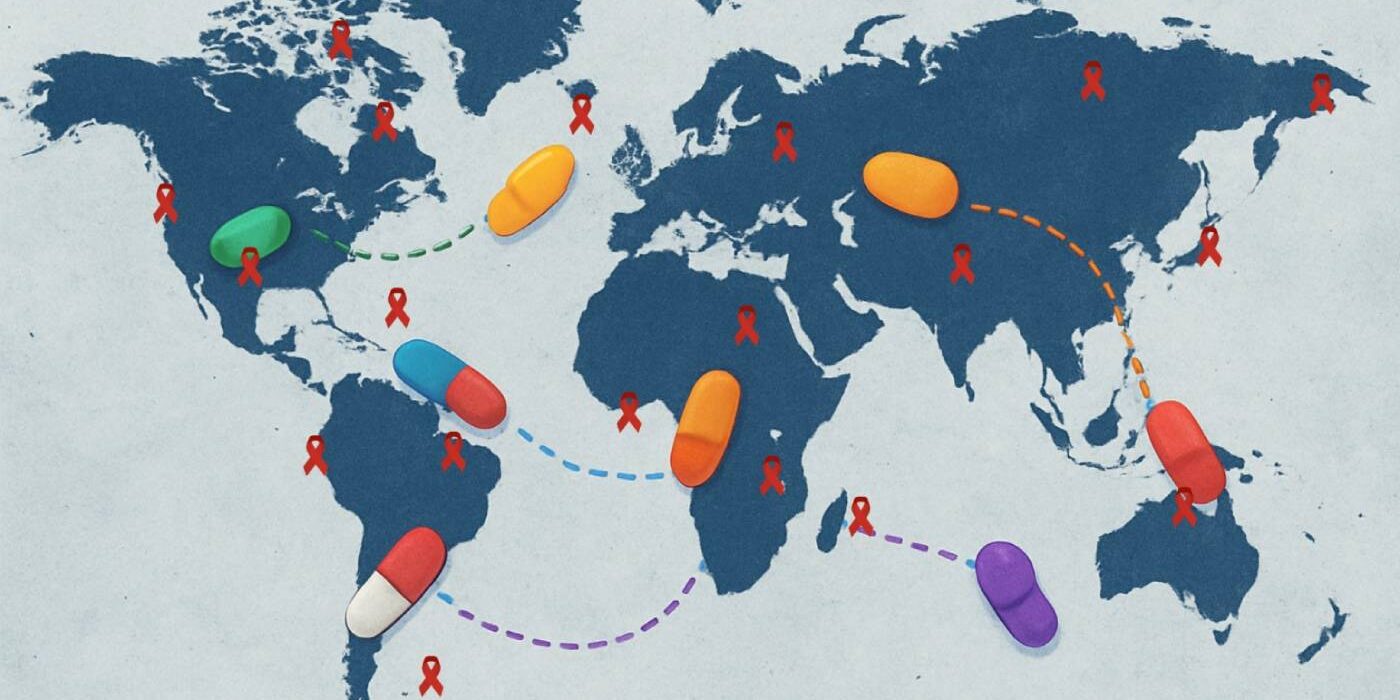
What Vidal says is a summary of the times. According to the UNAIDS program, it is estimated that between 30,000 and 40,000 people in transit in the region are living with HIV. The unprecedented social and economic crisis on the continent has generated the largest flow of refugees and migrants in history. In addition to their immigration status, they face high levels of stigma, xenophobia, and racism, and limited access to healthcare.
“We’ve had to receive colleagues who come with a diagnosis, a month of antiretroviral treatment, and when it ends, we practically have to force the health authorities to support us,” Vidal continues. “And what often happens is that because they don’t have identification, they can’t access treatment so easily. Sometimes adherence is lost because we’re talking about a month, a month and a half of waiting for treatment.”.
What's missing
Bureaucracy, especially the requirement of identity documents in the health systems of host countries, acts as a tool of exclusion that prevents access to antiretroviral therapies and viral suppression controls.
The activists consulted for this article agree: the impact of HIV on people on the move is often exacerbated by institutional mistreatment, abandonment by families, and lack of support during transit, weakening their health. But they warn, “the response to HIV is weak for the entire population. It is not exclusive to the migrant population.
Deaths from advanced infection continue to be recorded in the region, where health systems are already strained. Barriers to accessing comprehensive and sustainable care exist. There is a lack of prevention models and medication shortages. All of this contributes to the virus not being detected in time.
Setbacks in the region
Countries like Costa Rica and Argentina, which historically led the LGBT+ rights agenda, are showing signs of regression in public policy. In Costa Rica, the withdrawal of the OAS LGBT working group and the halting of sexuality protocols in schools demonstrate this setback. Despite the existence of protective laws, their lack of regulation and a climate of discrimination persist. For example,a gender identity law is still lacking, and the restrictions faced by people with HIV, despite existing laws, do not fully protect them.
In Argentina, the National Front Against HIV, Hepatitis, and Tuberculosis reported a 76% reduction in funding allocated to HIV, hepatitis, tuberculosis, and STIs. The national government transferred the responsibility for purchasing antiretroviral drugs to the provinces without providing the necessary resources or logistical support, leading to medication shortages.
“The Milei government has cut the health budget specifically for everything related to HIV prevention and treatment. There are zero prevention campaigns and zero treatment campaigns. And shortages have begun. Before, the national government provided the medication to the different districts; now, the provision has become the responsibility of each district. Sometimes, districts find that these medications weren't included in their budget allocations or that they lack the logistical capacity to purchase them; so they run out,” explains Mariano Ruiz, executive director of Human Rights and Diversity.
She adds: “The refugees we receive are mostly Russians or people from countries that were part of the Soviet bloc. The main reason they come to us is because they ran out of HIV medication. We help them by providing guidance before they arrive in the country because they are planning their departure from Russia, where life there is unsustainable. We ask them to find out their HIV status and to start treatment if they are positive. For these refugees, the biggest challenge in accessing healthcare is the language barrier,” she explains.
Barriersto access to health
The dismantling of public systems affects the migrant population. 27% of those seeking treatment arrive in an advanced stage of HIV . Furthermore, those in an irregular situation are 70% less likely to achieve viral suppression, according to UNAIDS data
In Mexico, the transition to the IMSS-Bienestar model (a program to provide free medical care to people without social security) has created administrative barriers that violate the right to life of both migrants and internally displaced persons. The requirement of the CURP (a national identification document) is the main obstacle to accessing medications at CAPASITS (Outpatient Centers for the Prevention and Care of AIDS and Sexually Transmitted Infections, which are free, specialized health units in Mexico).
Brigitte Baltazar Lujano, coordinator of the LGBTQ+ community program at the organization Al Otro Lado in Tijuana, points out the seriousness of these omissions.
“It’s not only the external migrant population that is suffering these devastating effects. The involuntary migrant community, internally displaced persons, are also affected. Recently, there have been many changes in how the government handles health issues. It is more difficult for internally displaced persons to access their HIV medication. For people from other countries, it is twice as difficult to access these medications. This represents a very serious lack of attention from our country in this sector. The right to access medication or any other type of medical care that any human being may have is being violated.”
PrEP is not guaranteed for migrant populations
Pre-exposure prophylaxis (PrEP) is a vital prevention tool for migrant populations. However, access to PrEP and emergency post-exposure prophylaxis (PEP) is limited by bureaucratic barriers and discrimination.
In Tijuana, access for migrants is practically nonexistent because the medication is strictly controlled by the Ambulatory Centers for the Prevention and Care of AIDS and Sexually Transmitted Infections (CAPASITS), and identification is required to obtain it, explains Brigitte Baltazar. This same requirement for identification exists in Costa Rica.
“If a migrant arrives after being sexually abused, the health system’s response is usually, ‘Wait three months, get tested, and if you test positive, then we’ll start antiretroviral medication.’ This adds to all the bureaucracy involved in starting treatment. In other words, there is no emergency PEP available for undocumented people, and that leaves them at absolute risk,” Brigitte explains.
In Argentina, the situation is similar for both asylum seekers and Argentinians seeking emergency medication. “The main obstacle for asylum seekers is the language barrier. Then there are all the same challenges faced by Argentinians: the lack of medication, and sometimes refusal from healthcare staff who are trying to conserve resources. It's left to the doctor's discretion whether they consider the person seeking it to have risky behaviors, even though, according to legislation, PrEP is a prevention strategy available only at the person's request,” explains Mariano Ruiz.
Lack of funding and anti-immigrant policies
The region is also facing cuts in international cooperation. The withdrawal of funding from USAID, the Global Fund, and the closure of UNAIDS offices have left civil society organizations working on HIV, migration, LGBT+ rights, and other issues in a precarious situation.
“I find it so irresponsible and also very perverse that these cuts are eliminating programs when we know they did produce results and did save lives. This continues to be alarming and worrying,” says Dennis Castillo, executive director of the Institute on LGBT Migration and Refugees for Central America (IRCA Casabierta), an organization based in San José, Costa Rica.
Adding to the financial hardship are anti-immigrant rhetoric and policies. Mario Campos explains thatmigrants living with HIV in the United States fear deportation when seeking healthcare, and that is reason enough not to seek medical attention.
In everyday life, the stigma also manifests itself in the mistreatment by administrative and security staff in hospitals, even before they receive care. “From the moment migrants arrive at the hospital, it’s the security guard who asks which department they’re going to or their medical condition. People already feel uncomfortable and vulnerable. Once, someone told me that the guard said, ‘That’s why you have to be careful, that’s why you shouldn’t be having reckless sex.’ Thestigma and discrimination that migrants suffer is serious, but if you add living with HIV, it’s extremely serious,” says Brigitte Baltazar from Tijuana.
The community response in Mexico, Costa Rica, Argentina and the United States
Faced with the abandonment by States, grassroots organizations and independent activists have assumed the responsibility of guaranteeing services that governments omit, such as prevention campaigns, screening tests and the supply of medication.
In Mexico, the organization Al Otro Lado combats the exclusion caused by the CURP requirement by providing legal support and a physical presence in hospitals to ensure that migrants and internally displaced persons living with HIV can access services and are not discriminated against. They also manage online registrations, provide transportation, and have established partnerships with the AHF Healthcare Foundation to obtain emergency doses of medication when the government denies them.
“The Mexican State must provide what is rightfully theirs, which is access to healthcare for all people. It is a historical debt that the government owes to the migrant population to receive them and provide them with the services they are legally entitled to,” Brigitte Baltazar reiterates.
In Costa Rica, IRCA Casabierta offers a comprehensive approach that includes legal and psychological assistance, a food bank, and a computer lab for the digital regularization of migrants. Faced with cuts in international funding, the organization manages state resources to purchase preventative supplies that the health system does not provide to uninsured individuals. Dennis Castillo, executive director of IRCA Casabierta, denounces the Costa Rican government for abandoning prevention efforts, delegating this task to civil society.
In Argentina, the organization Human Rights and Diversity runs an integration center for LGBTQ+ refugees, most of whom come from Russia, Belarus, and Georgia. Due to a lack of government support to overcome administrative and language barriers, they use "social interpreters"—former beneficiaries who speak the language—to accompany patients to their medical appointments.
Activist Mario Campos connects people on the move with free clinics in Mexico, the United States, Canada, and Spain. His work focuses on combating the knowledge gap caused by the lack of comprehensive sex education, especially among migrants from Central American countries, primarily Guatemala, El Salvador, and Honduras. Mario believes that misinformation and the lack of comprehensive sex education are critical barriers that increase the vulnerability of people living with HIV.
This project is supported by the IAS (International AIDS Society) through Community Project Grants, as part of the preparations
for the AIDS Conference 2026.
We are present
We are committed to journalism that delves into the territories and conducts thorough investigations, combined with new technologies and narrative formats. We want the protagonists, their stories, and their struggles to be present.
SUPPORT US

FOLLOW US
Related notes
We are present
This and other stories are not usually on the media agenda. Together we can bring them to light.