

The Court dismissed the appeal in the Diana Sacayán transvesticide case: what does this imply?
In October 2020, the National Court of Cassation dismissed the hate crime aggravating circumstance in the transfemicide of Diana Sacayán. The Prosecutor's Office asked the Supreme Court to uphold this aggravating circumstance; the Court chose not to rule on the matter.


Share

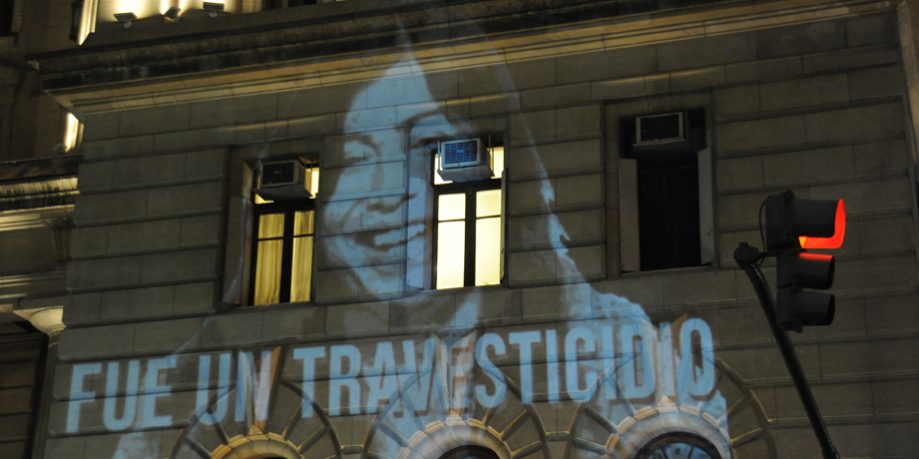
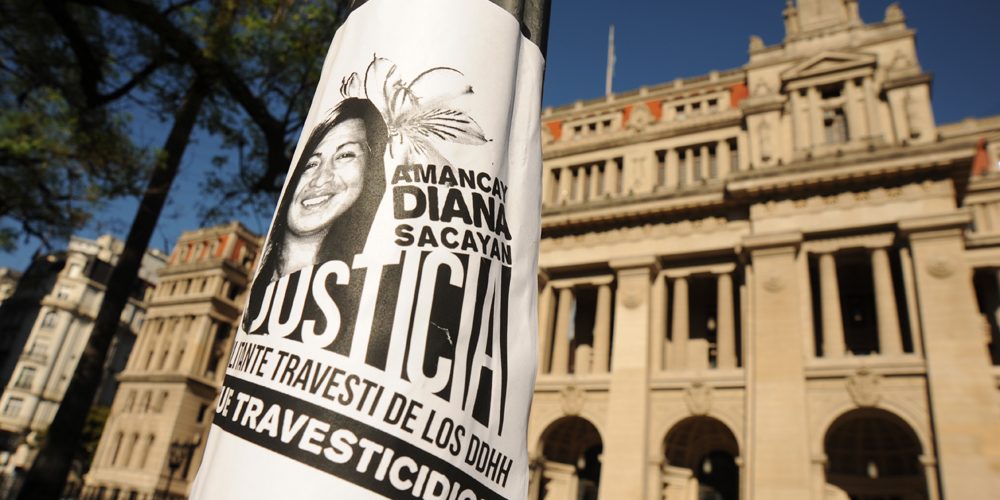
Argentina's Supreme Court yesterday dismissed an appeal stemming from the trial for the murder of Diana Sacayán, a trans activist and human rights defender. The appeal had been filed by the prosecution (which took place in 2018) and was led by Ariel Yapur and the UFEM (Specialized Prosecutor's Unit for Violence against Women and Diverse Gender Communities), headed by Mariela Labozetta. The appeal sought to uphold the classification of the crime as a transphobic murder, a legal term used for the first time in that investigation and a landmark case for local courts and international organizations.
On the same day that the Senate decided to reject the judges proposed by Javier Milei's government to join the Court, one of them, Manuel García-Mansilla, (who had already taken office) signed this decision that chooses not to strengthen a framework of protection and recognition of hate crimes, which was indeed enshrined by the Justice in the first instance, but was not the only one.
Why it was a historic trial and sentence
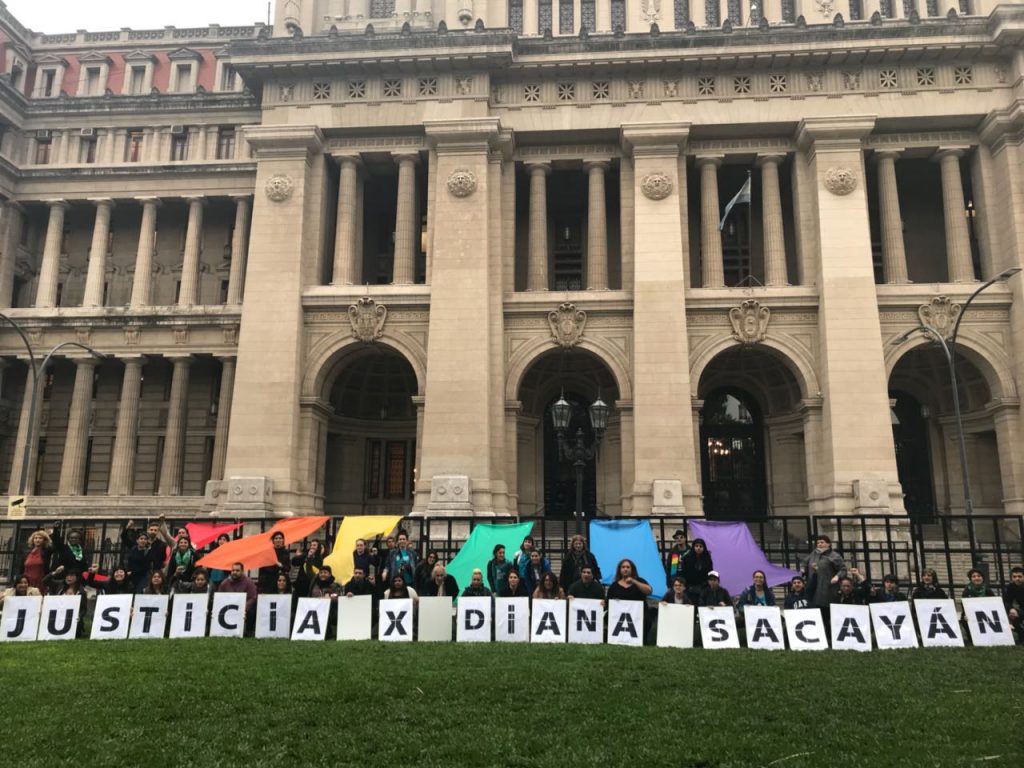
In June 2018, the Oral Criminal Court No. 4 of the City of Buenos Aires (comprised of Judges Adolfo Calvete, Julio Báez, and Ivana Bloch) sentenced David Marino, the only defendant at the time, to life imprisonment as a “co-perpetrator of the crime of aggravated homicide motivated by hatred of gender identity and by the presence of gender-based violence.” This was the first time the category of transvesticide was included in a court ruling. This was made possible through a collaborative process between the justice system and civil society, which, through the Justice for Diana Sacayán Roundtable—comprised of trans-feminist activists and LGBT organizations—promoted the decision to name the crime in its specific context. In addition to being an aggravated homicide due to the presence of gender-based violence, the specific provision regarding hate crimes was applied.
In that trial, for the first time, many of Diana's friends and fellow activists stood before the court as victims, not as defendants. From Mexico came the muxe activist Amaranta Lopez Regalado as an expert witness—proposed by Luciana Sanchez's legal team on behalf of Diana Say Sacayán's brother—tasked with recounting how transvestite and trans people live and die in Latin America due to the structural violence they endure.
The ruling recognized the trans community as one of the most severely affected by structural violence and among the most criminalized in Latin America. Among the achievements of the work of human rights and LGBTQ+ organizations, united in the Commission for Justice for Diana Sacayán, the 400-page ruling included historic commitments.
As expected, the defendant appealed the ruling. In October 2020, the response from Chamber 1 of the National Court of Cassation in Criminal and Correctional Matters confirmed the complete lack of a gender perspective in the justice system: it dismissed the aggravating circumstance of hate crime. The argument—from judges Jorge Luis Rimondi (presiding), Patricia M. Llerena, and Gustavo A. Bruzzone—was that there was no evidence to prove the hate crime. This was despite the fact that evidence emerged throughout the investigation that did indeed demonstrate such a crime, consistent with what organizations like the Inter-American Commission on Human Rights (IACHR) consider elements that constitute bias-motivated violence.
What did Argentina's highest court decide?
The Court resolved the appeal under Article 280 of the Criminal Procedure Code, a mechanism that allows it to avoid addressing the merits of the case. In other words, it did not consider the prosecution's argument that Diana's murder should be classified as a hate crime based on her gender identity, arguing that international human rights treaties were at stake.
Regardless of the Court's decision, the sentence for the transphobic murder of Diana Sacayán was used in various national and international proceedings. Sources consulted by Presentes emphasized that the conviction (only for femicide) was upheld. And that the important thing is that the sentence for transphobic murder was handed down. The case was addressed specifically from a gender perspective, it was referred to as a transphobic murder, and reparations were ordered.
Lorenzetti issued a dissenting opinion in the Court's dismissal, stating that it did not constitute an opinion on the matter. He also did not express an opinion on the matter previously, when it was his turn to rule as Attorney General.
From a strictly technical standpoint, the process remains in effect, even though the Court hasn't addressed it. Nor has it rejected it, ignored it, or intervened in it. Which, in this context, is quite a statement of principles.
“The dismissal doesn’t surprise me. I associate it with a directive from this judge, García Mansilla, in line with Milei’s agenda regarding the rights of transvestite and trans people. And with the neo-fascist and transphobic advance by Donald Trump and other governments,” says transvestite activist Florencia Guimaraes, president of Casa de Diana y Lohana.
Guimaraes was part of the Justice for Diana commission and works in the judicial system. “It doesn't surprise me that some sectors of the justice system continue to discriminate against us, pathologize us, or deny us the right we have collectively built to name our crimes. Behind the term 'transvesticide' lies the memory of Lohana Berkins, who explained to us at the Women's Gatherings the need to give it a name. The violence against us never ends, not even in death. In the judicial system, I witness resistance to the Micaela Law, so I know they'll be even less interested in the murder of a trans woman.”
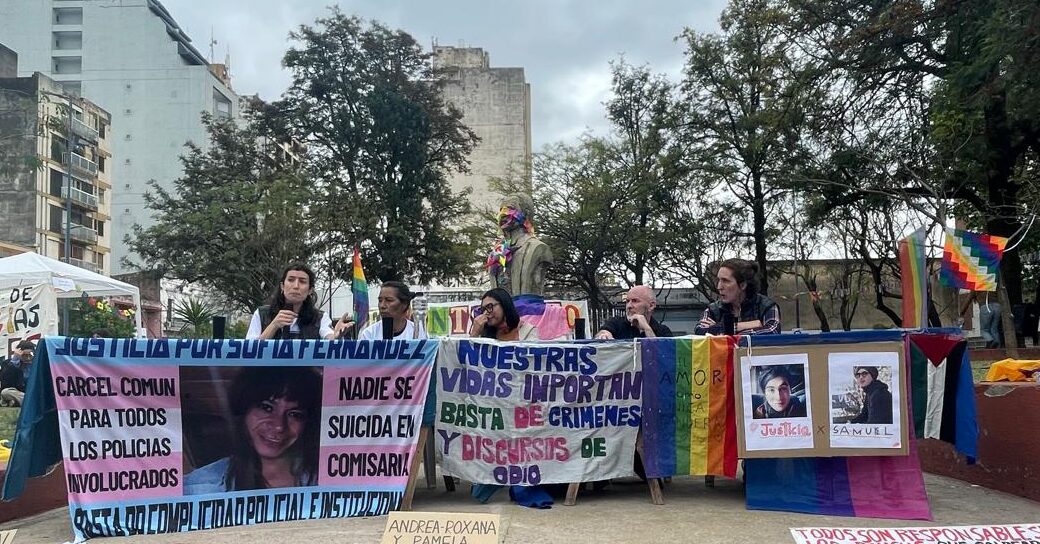
Guimaraes says the news reminded her of the long road traveled since the murder of Diana, a trans woman, in October 2015. “There is nothing innocent about this. We have been experiencing an international backlash against the rights of trans and gender-diverse people. These are messages laden with symbolism in a society that denies our existence and reinforces the stigma. Look at what happened to Sofía Fernández (murdered in a police station). It seems that trans and gender-diverse people are not considered worthy of a justice system that protects us.”
Diana's brother, Say Sacayan, along with trans activists Marlene Wayar and Alma Fernández, will petition international organizations to uphold the classification of the crime. Fernández confirmed this to this publication.
The organization 100% Diversity and Rights condemned the decision of the Supreme Court of Justice of the Nation, "which upheld a lower court ruling that erases the hate crime element in the murder of our colleague Diana Sacayán." They noted that the appeal had been awaiting a decision for five years. "The ruling not only denies justice, but also comes at an alarming time of regression in the rights of the trans community, with institutionalized hate speech and policies that eliminate historical protections and recognition.".
“It is unacceptable that, five years after the appeal, and amidst state harassment of trans people, the Supreme Court has upheld a ruling that denies the structural nature of this crime. The Court must rise to the challenge of the struggles that led to the recognition of transphobic murder as a legal concept,” stated Ricardo Vallarino, president of 100% Diversity and Rights. “The Supreme Court signed this ruling on the same day that the Senate rejected Judge García-Mansilla’s nomination. A ruling without legitimacy, signed by someone without constitutional appointment, that denies a historical truth: Diana was killed for being trans. The elimination of the aggravating circumstance of hate based on gender identity in the Diana Sacayán case is not just a legal problem: it is a political act of invisibility and revictimization that violates international human rights standards.”
We are present
We are committed to journalism that delves into the territories and conducts thorough investigations, combined with new technologies and narrative formats. We want the protagonists, their stories, and their struggles to be present.
SUPPORT US

FOLLOW US
Related notes
We are present
This and other stories are not usually on the media agenda. Together we can bring them to light.