

The Wichí people have their first interpreters for legal proceedings
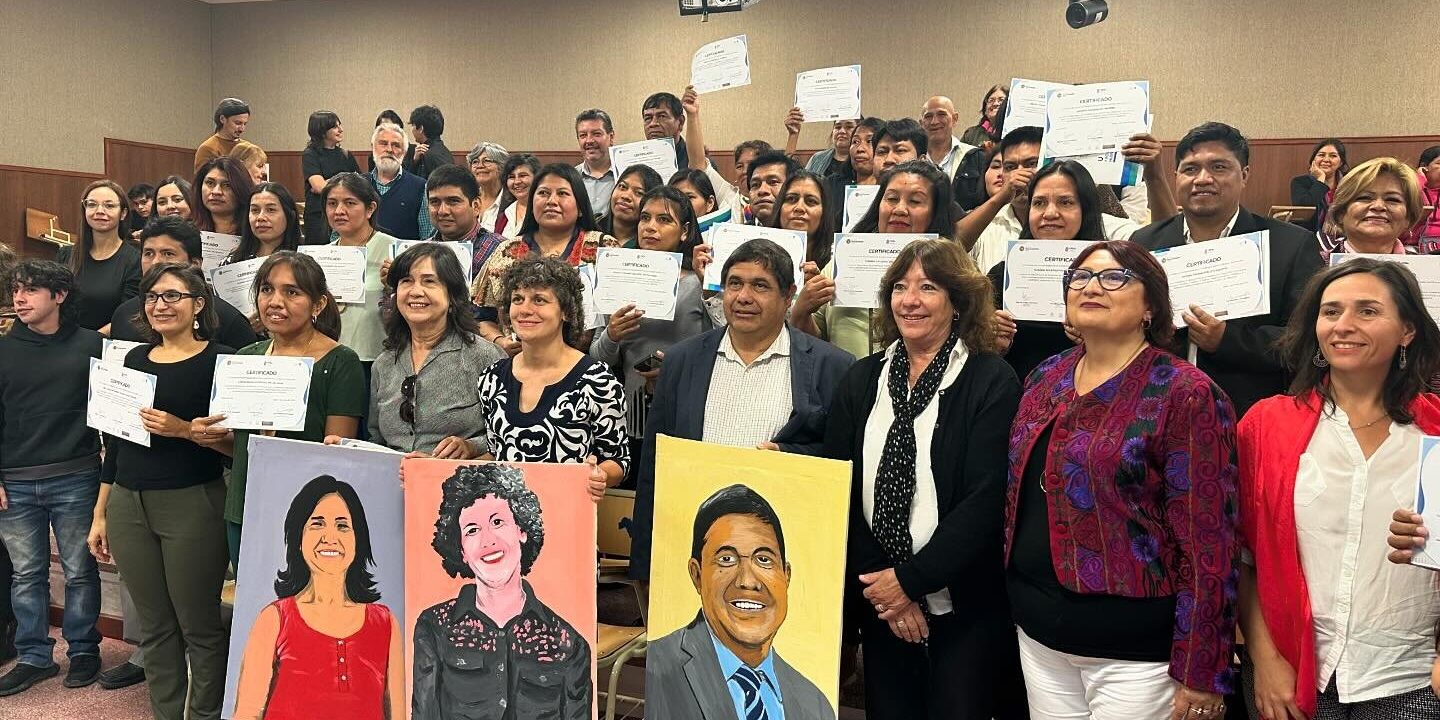
Twenty-six people graduated from the first diploma program in intercultural Wichí-Spanish interpretation and translation for access to justice, from the National University of Salta.


Share

SALTA, Argentina. Lack of access to justice is one of the major obstacles faced by Indigenous communities in Argentina. This is exacerbated by language barriers. To help combat this deficiency, a diploma program in Wichí-Spanish translation and interpretation was created in Salta and has been operating since 2021. On May 7, certificates were awarded to the 26 graduates. They are members of communities in Santa Victoria Este, General Ballivián, Embarcación, Morillo (Coronel Juan Solá), and Tartagal.
The Diploma in Intercultural Wichí-Spanish Interpretation and Translation for Access to Justice is offered at the Faculty of Humanities of the National University of Salta. It is the first program of its kind in the country. Graduates will be able to complete unpaid internships in judicial training facilities thanks to an agreement with the Provincial Court.
The certificate presentation ceremony was attended by the Rector of the National University of Salta (UNSa), Daniel Hoyos, and the President of the Supreme Court of Justice of Salta, Teresa Ovejero, as well as the Attorney General of the province, Pedro García Castiella.
“Translation and interpretation are very commonplace for us. If the Judiciary calls us, it will only be a little more challenging. People are constantly asking us for help,” Carina Gutiérrez, one of the graduates, tells Presentes. She is from the Misión Chaqueña community, located in the San Martín department.
A transaction at a bank, downloading an application on a cell phone, talking to a doctor in a hospital.
“Those procedures that seem very small are already part of our practice, as both translator and interpreter. The diploma helps us a lot because when I present myself to an institution, I no longer say: look, I want to know this. Instead, I say: I'm here because I'm an interpreter or because I'm a translator. With that confidence, the other party cooperates,” adds Carina, who is also a professor of Political Science and a teacher of Wichí.
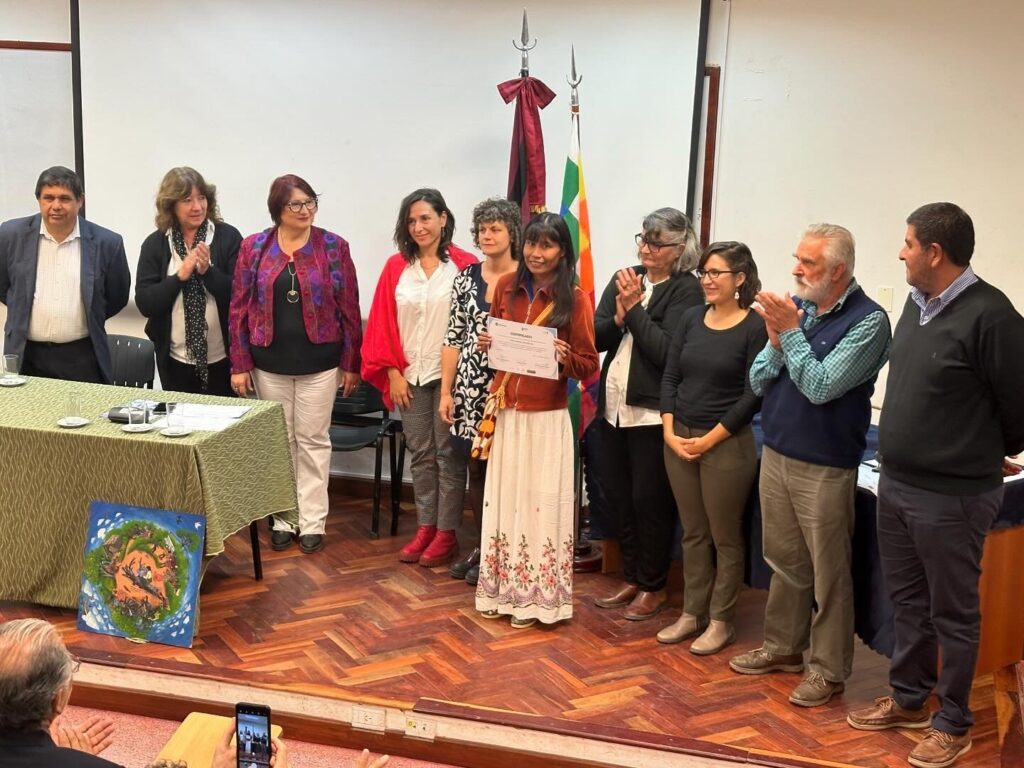
The diploma
According to its organizers, the Diploma program “provides linguistic, cultural, and legal training so that its students can work as Wichí-Spanish translators and interpreters in legal proceedings.” The project arose from a need expressed by the Wichi Lämthes Council (Wichi Language Council).
A collaborative effort was undertaken between the Wichí Lämthes Council, the Institute of Research in Social Sciences and Humanities-Conicet and the Faculty of Humanities, with the support of the organizations Tepeyac and Asociana, which have been working with the communities for some time.
The diploma program involved a process in which the instructors had to adapt to the timelines of the Indigenous worldview, as well as to the shortcomings of public services in the areas where these communities reside. The course was offered in a blended format, combining in-person and online learning, always taking into account limitations in access, such as internet connectivity.
“It was a very interesting experience because the students performed very well academically and in meeting the attendance and assignment requirements. This contrasts with the reality of the education system where access for members of the Wichí people is limited,” Cecilia Jezieniecki, the diploma program coordinator, told Presentes.
"The classes were very fruitful because at the same time the teachers learned from us, they learned what we are like as a people," adds Carina.
Translating and interpreting worlds
Dora Fernández, from the Wichí community of Lote 75 in Embarcación, spoke about the additional difficulties they face as residents far from major urban centers. Dora graduated as a special education teacher specializing in Indigenous education (MEMA) and now works as a bilingual teaching assistant. For 25 years, she has been part of the Wichí Lämhtes Council, which works on Wichí grammar.
In her conversation with Presentes, Dora highlighted the difficulty of “understanding both languages, Wichí and Spanish,” and both cultures, but she considered the diploma program useful for facilitating access to justice, especially for women in Wichí communities. “We have very, very little access to legal services. And we suffer from gender-based violence, abuse, mistreatment, malnutrition, in addition to the struggle for land and water.”.
In his memory, several cases emerge of people who had to face the Western judicial system without anyone helping them understand their situation, people who did not know Spanish or spoke it little who faced processes without translators.
“There were cases of people being arrested without the intervention of an interpreter,” even though it is known that “we cannot master the second language well, which would be Spanish,” Dora adds.
Terms and technicalities
Additional complications arise when trying to make the judicial process accessible to Wichí speakers. On the one hand, there are legal technical terms that lack equivalent words in Wichí, so these must be created. On the other hand, Wichí has dialectal forms that vary depending on the region. In Salta alone, nine distinct ways of speaking Wichí are known. These complexities emerged even in the first classes of this diploma program.
Regarding technical terms, the verb "to steal" doesn't exist in Wichí, for example. This word speaks volumes about the two worldviews that are being explored in the diploma program. There is no term to describe the act of violently taking what belongs to others because in the Wichí community there is no private property, no separate ownership; everything belongs to everyone.
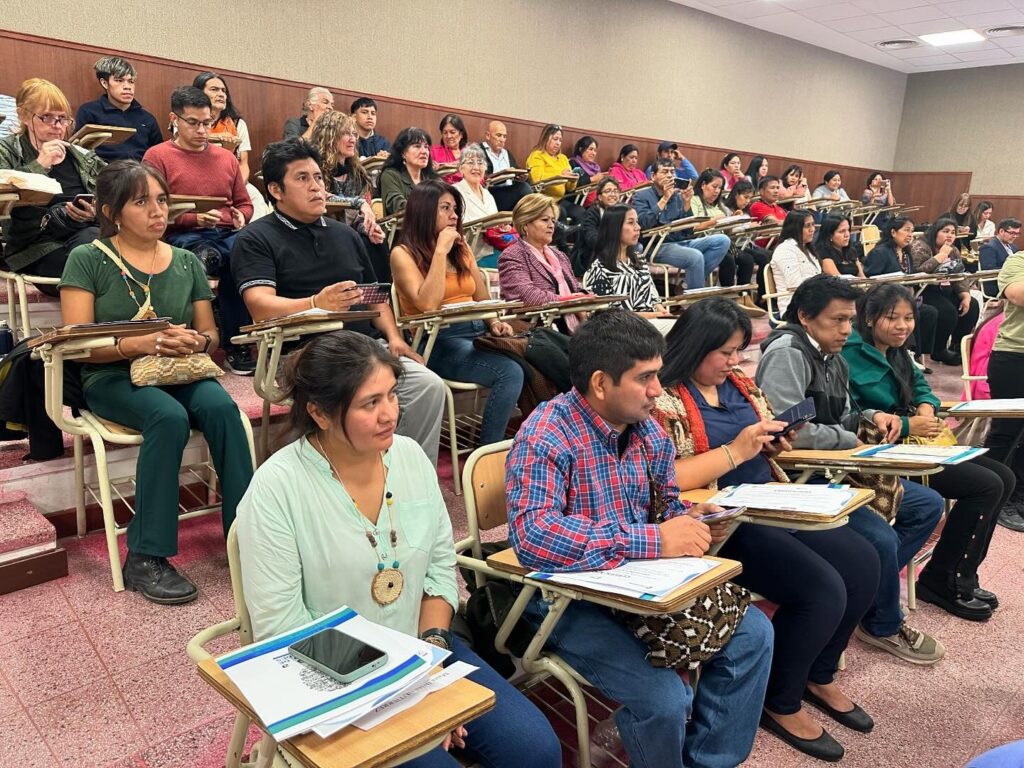
Knowledge for mediation
Jacobo Argamonte, a bilingual teaching assistant, completed the diploma program and lives comfortably in the north. He is part of Fiscal Community 51, within the jurisdiction of the municipality of Rivadavia.
Contacting him for this article was a practical demonstration of the difficulties in accessing basic services, such as a telephone. He had to travel 30 kilometers from his community to get a good signal. He did the same for the online classes of his diploma program.
“Here in Rivadavia, there were many cases that could have been avoided with the intervention of translators and interpreters who could have helped clarify them. One could have helped to try to mediate between those who understand Wichí and those who don't,” he told Presentes.
For Jacobo, the diploma implies state support for intervening in court cases. “Now you have the backing to say, ‘I’m an interpreter, I’ve prepared myself, and now I can be here,’ because the state, the judiciary, and the university endorse us; it’s very important.”.
“Before, there was no justice for the Wichí people; it was more like if they saw you, they hunted you down. Today that has changed a little. Not long ago, we finally have laws that, thank God, allow us to defend ourselves. And today's youth are preparing themselves, studying, and trying to navigate this other culture, which has nothing to do with ours,” says Jacobo.
The Diploma in Intercultural Wichí-Spanish Interpretation and Translation for Access to Justice was awarded as the winning project of the “Ing. Marcelo Nívoli Recognition for Technological Linkage” of the National Council of Scientific and Technical Research, within the framework of the axis “Justice and Human Rights”.
We are present
We are committed to journalism that delves into the territories and conducts thorough investigations, combined with new technologies and narrative formats. We want the protagonists, their stories, and their struggles to be present.
SUPPORT US

FOLLOW US
Related notes
We are present
This and other stories are not usually on the media agenda. Together we can bring them to light.