

Trans memory: Zoe López García, the protector of trans women
Colleagues and friends of Zoe López García, president of the Hotel Gondolín, tell how she became a role model for the transvestite and trans community and rescue her legacy.


Share

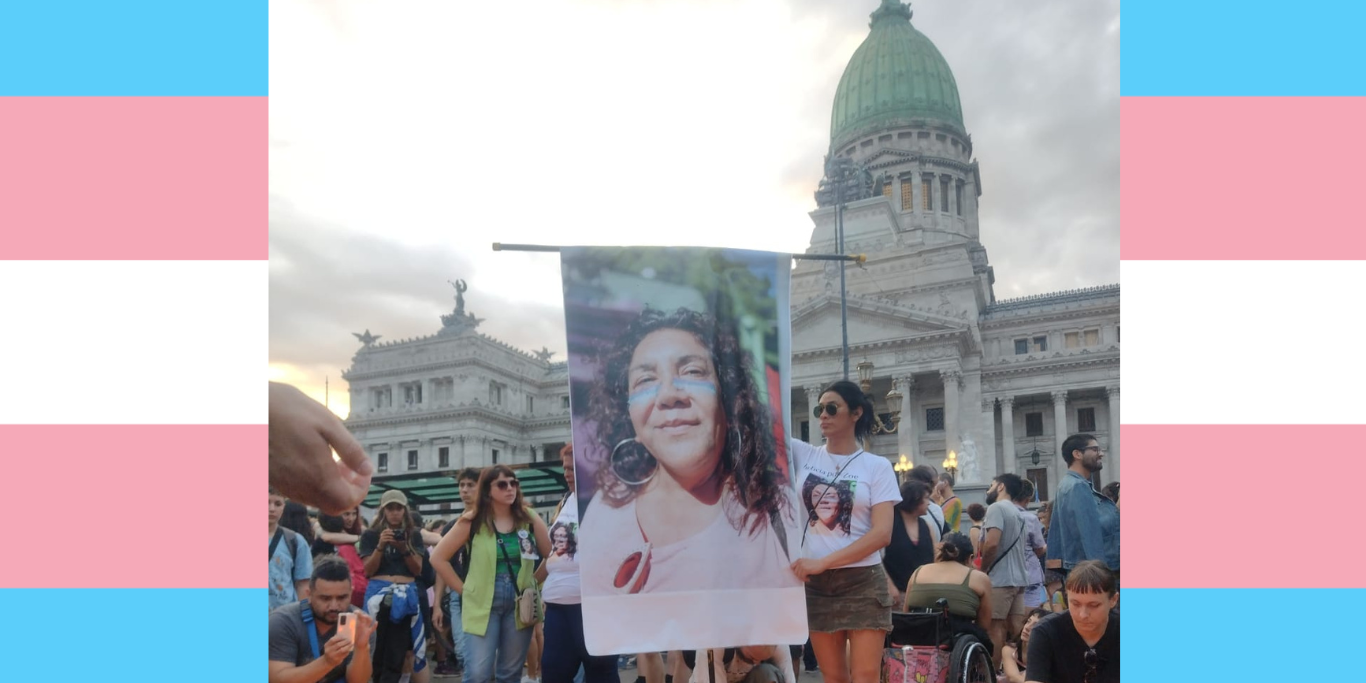
BUENOS AIRES, Argentina. “They killed Zoe,” the women at the Hotel Gondolín were told on Saturday, November 11, 2023. The news was delivered by two employees of the Casa Rosada, Zoe's coworkers, whom the police had contacted to inform them that the 46-year-old trans woman had been murdered by her partner.
A month has passed since that day, and it still seems like a nightmare for Zoe López García's friends and colleagues. She was the president of the Hotel Gondolín, a role model for dozens of transvestites and transgender people who passed through its doors, as well as for those who lived there. "Aunt Zoe" sheltered them, offered warmth to newcomers, and explained to each of them, one by one, the rules they had to follow during their stay in that space: a home for all.
Zoe was murdered on Saturday, November 11, in a hotel located in the Balvanera neighborhood of Buenos Aires. Her partner, Fabián Villegas, stabbed her, inflicting a fatal wound. He himself reported the crime.
“Zoe is still alive”
There's an almost unbearable silence in Gondolin. Days after Zoe's murder, sadness hangs heavy in the air. After lunch, the girls light the candles on the altar in the common room. There, Zoe's picture hangs, surrounded by loving messages of farewell.
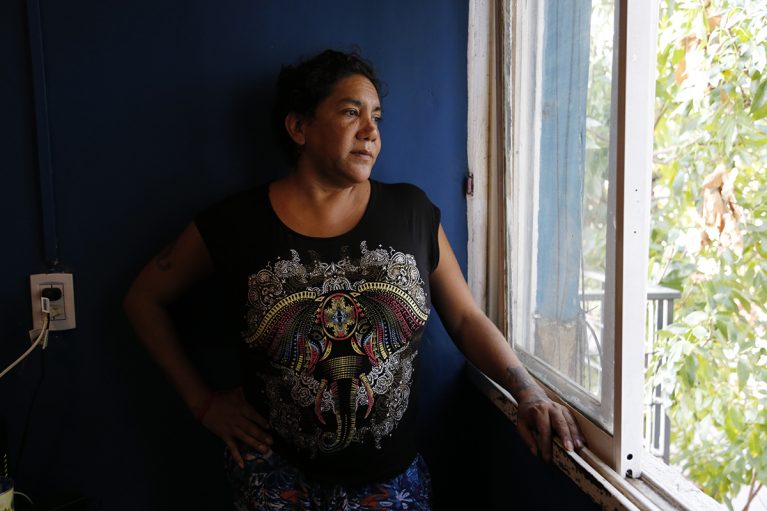
“I still can’t speak of her in the past tense. For me, she’s still alive,” Michelle Farías tells Agencia Presentes. She’s one of the girls who lives at the hotel and has known Zoe since childhood. They were neighbors in the Castañares neighborhood of Salta. “I used to argue with her. I’d tell her she was fat, and she’d reply, ‘Oh, you wear a shirt, but you’d like to wear a skirt,’” she recalls, laughing. “Over time, we ended up becoming friends. She’d give me tips,” she remembers.
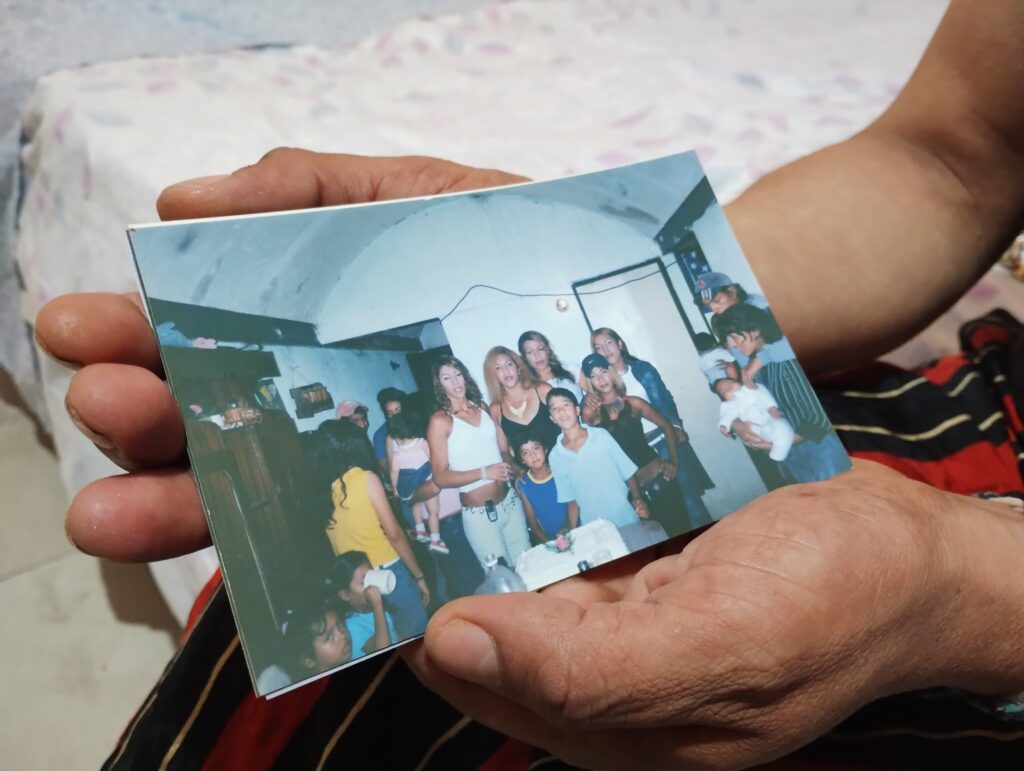
We would arrive and the butterflies of the neighborhood would appear.
Zoe only came back to Salta for visits, and every time she did, Michelle says, it was a party. “She’d arrive and all the ‘butterflies’ from the neighborhood would show up. I used to tell her she was going to recruit us (laughs). It was a total revolution. We were all hiding; it was really hard to come out of the closet back then, but you’d see her and she’d inspire you. Sometimes I’d walk around looking all over the street, so no one would look at me. But then she’d come along and I didn’t care about anything. I’d go this way and that. It’s crazy because I thought I was the only one in the neighborhood and suddenly I was surrounded by twenty other ‘butterflies’ right next to me.”
The first thing Michelle Farías thinks of when she talks about Zoe is her capacity for giving to others and her intolerance of injustice. “She was always a very fun, spontaneous, genuine person. She always had that attitude, that very generous way of giving. And since she decided to take on this role (the presidency of the hotel), she continued helping,” she says, in the same room at the Gondolín where Zoe lived, one of the first rooms in the building.
A mischievous little girl, a survivor
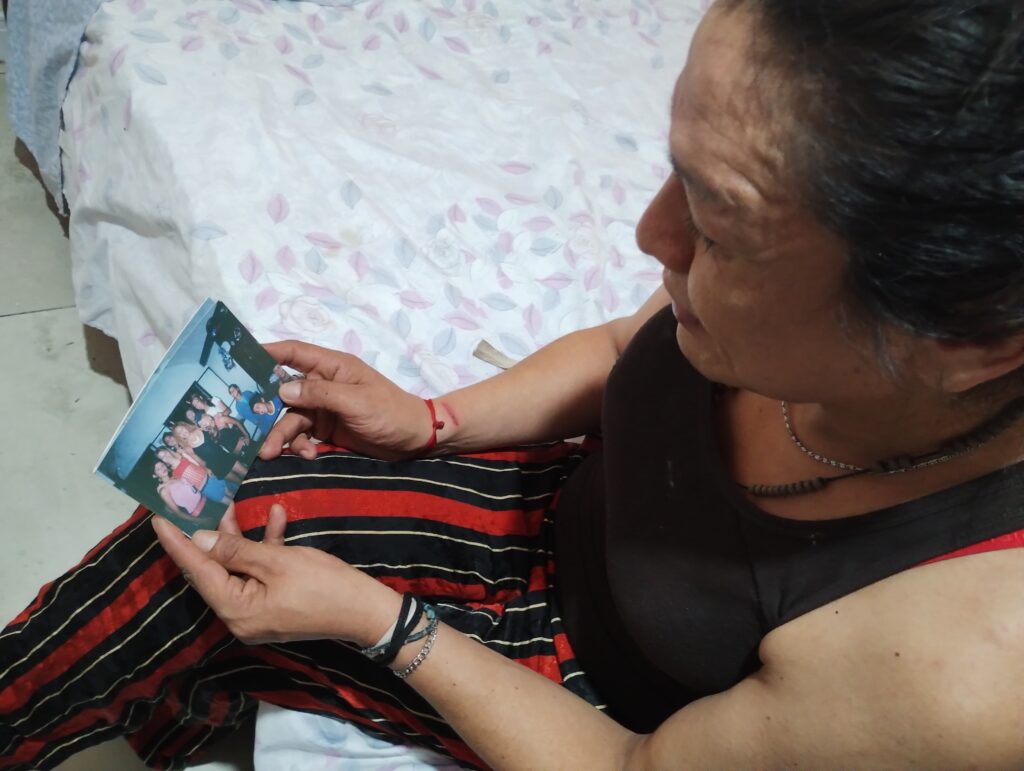
Marlene Wayar also met Zoe as a teenager. “When I arrived at the Hotel Honduras (Honduras and Medrano) she was already part of the group of girls from Salta and northern Peru. We met there. As a young girl, she had a great sense of humor and a candor, but that didn't make her fragile,” she recalls in an interview with Presentes.
“Zoe had to defend herself from bad things very early on. She was one of the girls, the most streetwise; the one who could fend for herself, be mischievous. But she always came back to the common table. To being all in a room with music, talking, singing, having fun.”
During those years, Zoe contracted severe tuberculosis, and Marlene cared for her. This forged a strong and loving bond between the two. “We shared a lot, and she was very grateful. She didn't hold a grudge against the family, but that maternal figure wasn't present, so we became very close,” Marlene explains.
“Zoe was very unique among the girls. Being so young and living on the streets, she had many of the mannerisms and habits of street kids; they form a kind of pack, they take refuge and protect that pack. That feeling was very strong for her and sometimes it worked against her. She had a very complicated relationship for a long time. But she always protected him during those first moments of absolute vulnerability, she was understanding of him, she forgave him. She knew he was in a lot of trouble with the rest of us who didn't like him. But she always believed he would change,” Marlene reflects.
A place for everyone and a legacy
Her work at the Hotel Gondolín made Zoe a very important figure in the trans and travesti community. “There aren’t many institutions that have the weight and value of this place. She was very well-known for her work. But she also constantly told us to study, that 'knowledge and understanding take up no space.' She told us to try to leave the streets to protect our bodies, our lives,” Michelle recalls.
Today, most of the girls living at Gondolín have formal, registered jobs or are studying. They must meet certain requirements to remain there, related to their self-care and opportunities for personal development. Thanks to their organization and persistence, the hotel became a civil association a week ago.
Zoe López García had been working in the Casa Rosada cafeteria since July 2021, thanks to the law establishing quotas for trans and travesti employment. The Casa Rosada paid tribute to her on social media after learning of her murder.
“Zoe never liked injustice. When she started working at the Casa Rosada, she would say, ‘It’s crazy, because now I go to work and the police open the door for me to go in, when before they would lock me in a cell.’ So many abuses were triggers, not only for her, but for every one of the young activists who are no longer with us. She would say she couldn’t believe that at 45 she had a legitimate job. She never stopped fighting. And that’s what she left us in this legacy: struggle and perseverance. But without getting angry, always remaining calm, composed, and with a clear mind.”
The Gondolin as a family
Marlene, like Zoe, moved from Honduras to Gondolín. “There Zoe found a group of sisters. Cristal, the girl from Salta, and the girl from Jujuy, each with her own little group of girls. And it was Zoe who encouraged everyone to cook together, to make different things. It was more about celebrations. And Cristal was the one who took more responsibility for those who were going through a difficult time, or were sick, staying in her room. All of that solidified that idea of a big family, of community.”
Cristal, Zoe and Marisa, Marlene explains, are the guiding threads of the hotel.
“It’s a place that’s very dynamic due to the migratory nature of our community, which is constantly moving back and forth. The aim is to provide support so you can settle down during your most vulnerable times, build a foundation of economic security, and move towards independence, knowing you can always return. And to make room for others,” Marlene explains. She adds that Zoe was a fervent admirer of Nadia Echazú, the trans activist from Córdoba.
The worst day
The day she was killed, Zoe had planned to go to the Mocha Fest—organized by the Mocha Celis Popular High School—to participate in the book fair and sell coffee at the Gondolín stand. She had arranged to meet Michelle at 1 p.m. An hour earlier, she contacted her, and Zoe replied that she was finishing lunch and heading over.
In the afternoon, a walk through the neighborhood was planned. She was to receive an award there for her work with the hotel. She never arrived. Michelle says they started calling her cell phone repeatedly; they found it strange that she hadn't shown up. Finally, that night, they received the terrible news.
“It got so crowded here. We had to ask them to leave. We were processing what had just happened. We were all devastated and we had to take care of each other.”
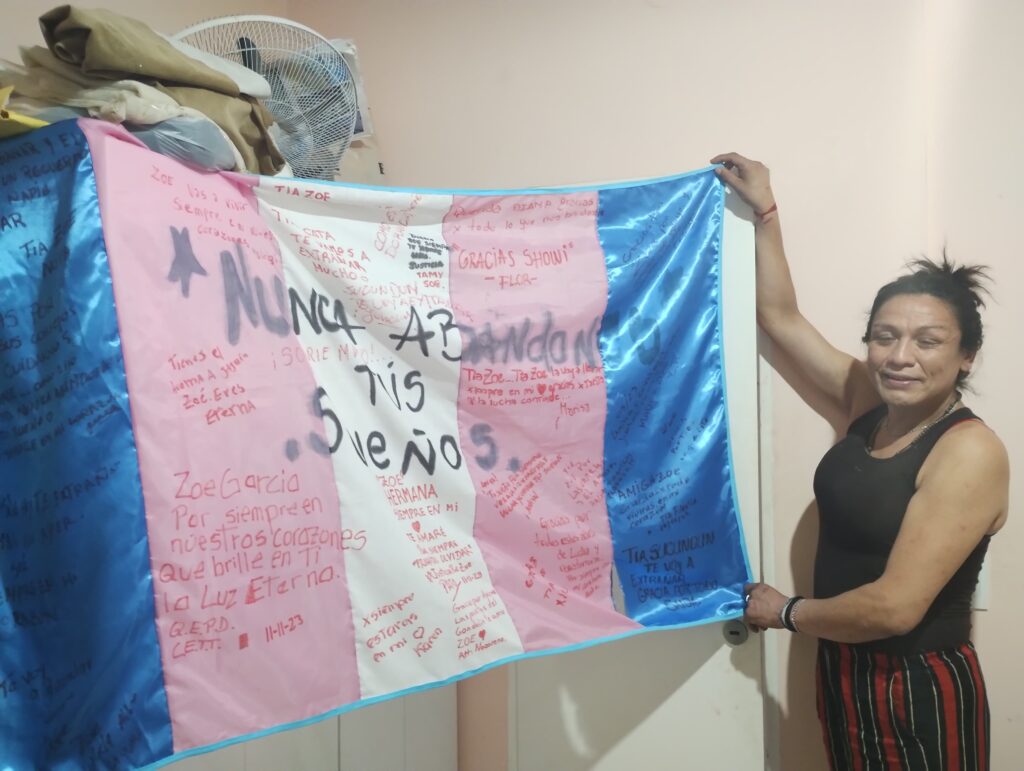
Marlene was returning from Córdoba when she was notified of Zoe's murder. She got off the bus and went to Gondolín. Beyond the sadness, she also remembers feeling a great sense of helplessness in the face of an ending that she had somehow feared.
“When I arrived at the hotel at that time, all the comments were about his partner and how none of them really liked him; they distrusted him. They had been repairing the Gondolin those days. His partner had taken advantage of the situation to separate her from the group and be alone with her. Marisa kept insisting that she return to the Gondolin, that she not leave, but Zoe couldn't find the strength to go back,” Marlene says.
“When I hear those comments, I start to see, like something out of a textbook, the cycle of violence that feminism has talked about so much. And many of the people were trans women, their daughters, Marisa, who were witnessing this. But also people from outside who have these tools. It's incredibly frustrating not to have intervened in time once again, with the opportunity to speak to our loved ones and tell them, 'You're in a harmful relationship, a toxic one, one that doesn't add anything positive, you're dragging a stone,'” she laments.
The violence that never ends
Fabián Villegas was immediately arrested. He was the one who called 911 to report that he had fatally wounded Zoe, his partner of many years. That afternoon, while already in custody, he wrote three posts on his Facebook page, saying goodbye to Zoe but also blaming her for his own death.
“It was like a bitterly foretold ending, so my question is why don’t we have the time or the trust to talk about these things? Why don’t we have the tools to protect ourselves from this and to build a much stronger alliance that can break that historical alliance of romantic love, and the idea that you shouldn’t interfere in other people’s problems?”
For Marlene, Zoe's murder was a huge shock.
“It feels like it will never end. I had a feeling of helplessness, sadness, but also of loneliness and a weariness that's been imposed on us. The last time we spent a lot of time together, we were in a situation that Zoe really enjoyed. It was less than a year ago when we celebrated Thanksgiving because my boyfriend, who's American, was there. We had an excuse, so we made dinner, and Zoe was there. She loved that—making a barbecue, empanadas, pasta, just getting together. Now I kept asking myself why I don't have, or don't choose to have, more time for those things. How long has it been since we've seen each other calmly, with time, with quality time?”
Zoe in the collective memory
“I’ll always love talking about Zoe,” Michelle says, smiling, but with a deep sadness. “I hope people know, above all, that she was always a wonderful person, kind and compassionate. Thanks to her, this place is alive, and we’re alive here. At her farewell, I said ‘see you soon,’ and nothing more. I didn’t say goodbye. I know that, on some plane, at some point, our paths will cross again, we’ll meet again, we’ll be reborn. I don’t know. But I’ll love having someone like Zoe in my life again.”
Among all that can be said about Zoe, Marlene also highlights her essence of community building. “It’s important as a community to give meaning to all the roles we can occupy throughout our lives and at different times in our lives. Because otherwise, it’s a pain that leads us to emptiness, and the possibility of learning from going through that pain is the only positive thing we have,” Marlene expresses.
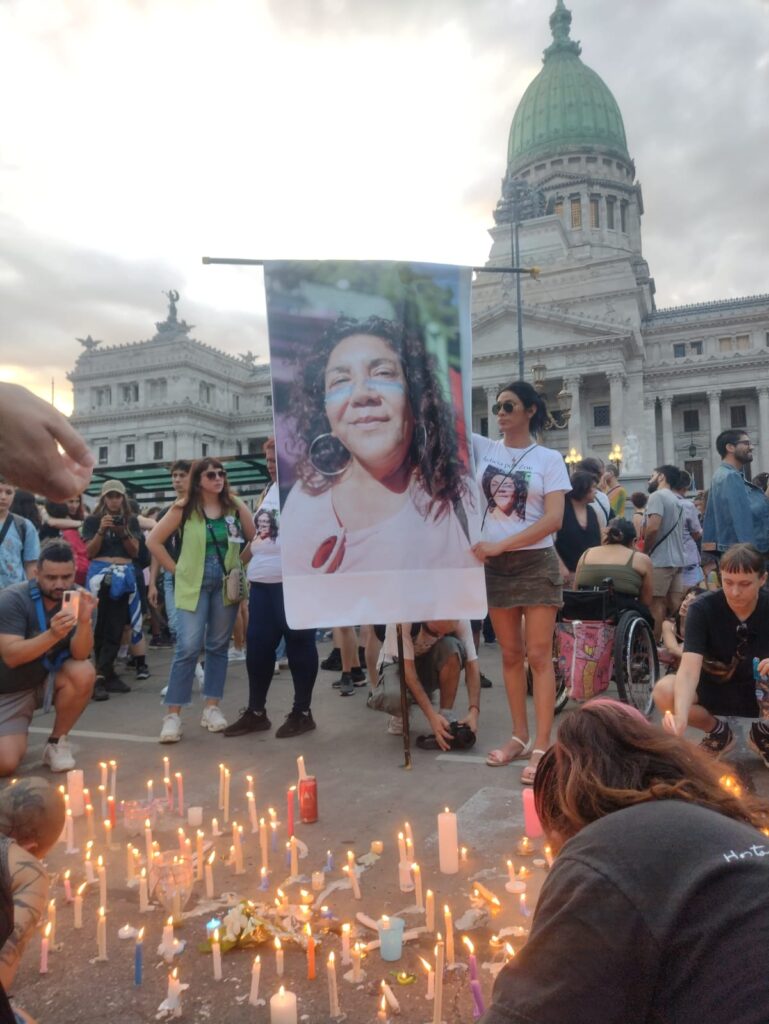
“It’s clear to think of her in terms of organizing everything materially. Going shopping with a list of everything needed to make empanadas and having those tasks divided up: chopping, boiling, assembling the empanadas, and setting the table. I think Zoe is like a table set for all of us to sit and enjoy. Preserving the memory of each of our friends, who come and go, impacting our lives in a unique way. I believe that unique impact should be treasured and stored in a collective memory.”
We are present
We are committed to journalism that delves into the territories and conducts thorough investigations, combined with new technologies and narrative formats. We want the protagonists, their stories, and their struggles to be present.
SUPPORT US

FOLLOW US
Related notes
We are present
This and other stories are not usually on the media agenda. Together we can bring them to light.