

Peasant women from Misiones reclaimed the lands of a forestry company to produce their own food
After a hard-fought struggle, independent producers in Piray have consolidated their pesticide-free production. They guarantee jobs and food sovereignty.


Share

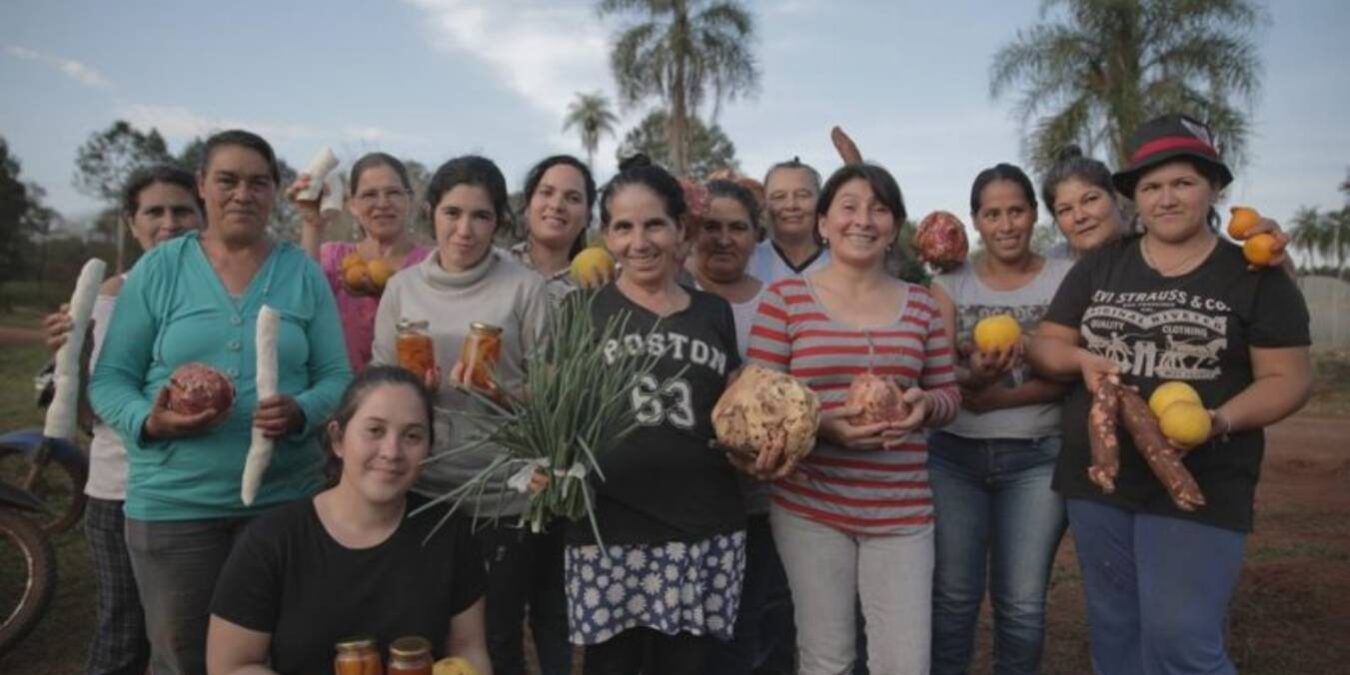
MISIONES, Argentina. On the former Route 12 in Piray, Misiones Province, Argentina, live approximately 100 families belonging to the PIP (Independent Producers of Piray) organization. There, where they have been fighting for over 20 years, women played a central role in expropriating land to produce food. They also succeeded in pushing back the transnational forestry company Arauco, which previously stood just 70 meters away, by 300 meters.
The organization is located in the province of Misiones. In the area, 70% of the land is reportedly owned by Alto Paraná Arauco (APSA), the largest forestry company in Argentina and one of the largest in Latin America. It belongs to the Chilean group Celulosa Arauco y Constitución SA. The women of PIP organized and rose up against this powerful transnational corporation, and today their struggle for land is a success story.
A place to dream
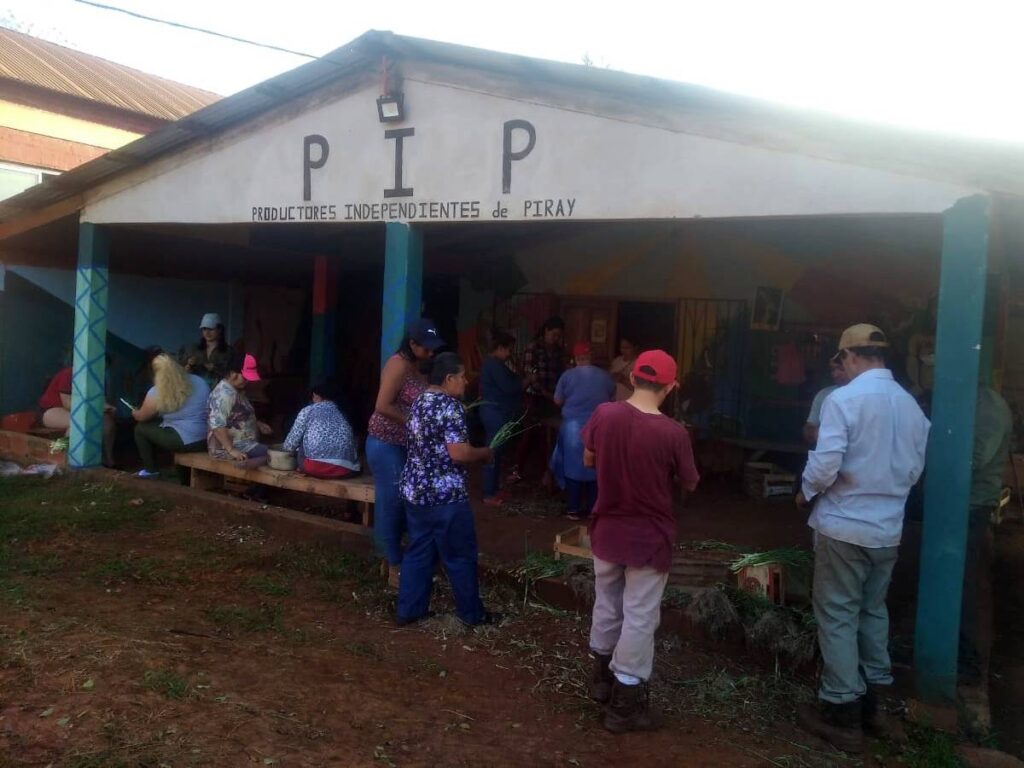
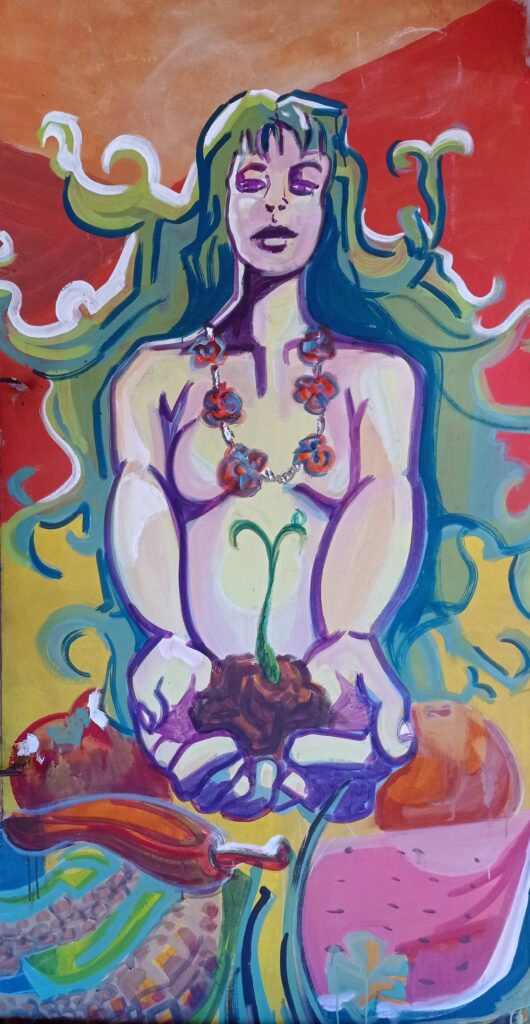
The Independent Small Producers of Piray have their own premises where they receive visitors and hold meetings. The first image that greets you is that of a sunny winter day. A beautiful pink lapacho tree in bloom overflows with beauty and steals all the attention. Next to it, a painted mural depicts a woman giving birth to a seed in a rural landscape that has pushed back the monoculture of pine plantations.
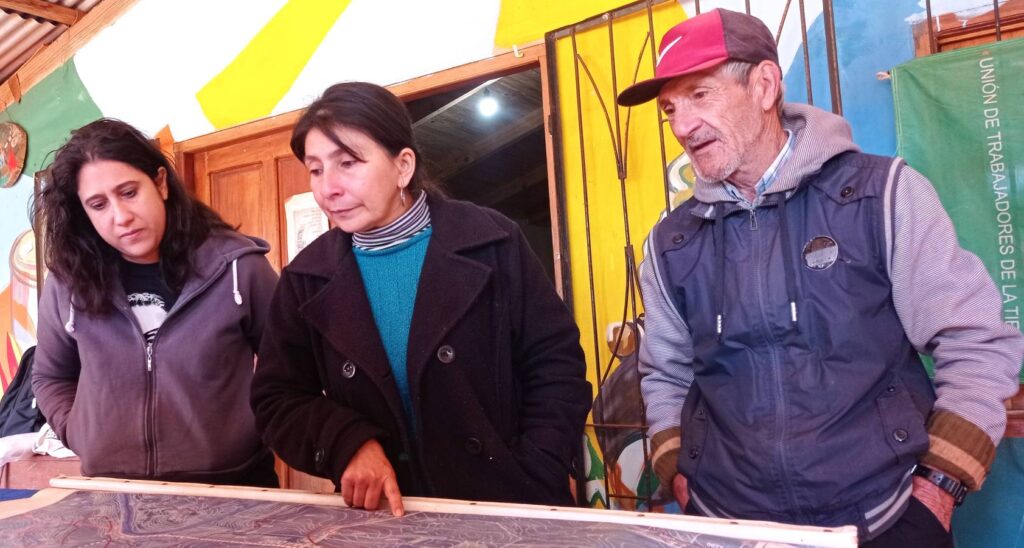
Although the PIP is a mixed-gender organization, women played a central role in the fight to force the transnational forestry company to withdraw and expropriate their lands. Miriam Samudio, one of the PIP's leaders, is a mother and a long-time activist in the community. With a calm voice, yet imbued with the strength of her years of struggle, she tells us the story of her community. Also present are her companions: Cristina Vallejos, her daughter Mariela Zacarias, Silvia Acosta, Belén, and Vilma.
Single women, women producers
Miriam recounts that just 70 meters from their homes was the pine monoculture plantation of the transnational forestry company Arauco. It not only cornered the community but also posed a significant health risk to families due to the spraying of agrochemicals. Faced with this situation and the impossibility of producing food or even finding work, she remembers how her partners, parents, siblings, and working-age children had to migrate to Corrientes, Delta, and Buenos Aires just to put food on the table. In this harsh context, the women were left to care for their families alone—a situation that is constantly repeated due to the advance of the extractive model.
“In 2002, we women, the mothers, were left with the issue of health, which was our biggest concern. We started meeting in the first aid room at the CAPS (Primary Health Care Centers), at school meetings, and that's how our organization began,” Miriam explains.
They say they never gave up on their efforts. Around 49 women were convinced that the only way to remain on their land and achieve a dignified life was to force Arauco to withdraw. “For that, we sold sweets, lottery tickets, and organized dances to raise funds for the campaign. We still have 117 hectares to recover,” says Cristina, who, laughing, adds that the dances were also so they could dance.
The law that returned the lands
In 2017, they gained access to land through an expropriation law. The Chamber of Deputies voted unanimously, and after much lobbying, accompanied by the Union of Land Workers (UTT), this grassroots organization managed to prevail against a powerful transnational corporation, thus legally securing a piece of land to produce food.
“We are an organization of small producers from Puerto Piray. For more than 20 years we had been fighting against agrochemicals and the seas of pine trees that surrounded us. More than 300 families were affected, most of us are women, and that's how this fight began,” recalls Miriam with emotion, shedding a few tears every time she remembers the history of her organization.
“Today we are a civil association, a cooperative. After many years of demonstrations, negotiation tables, road blockades, public denunciations, and various events, we achieved a provincial law for purchase or expropriation that was unanimously approved in the Chamber of Deputies. In 2017, they handed over to us the first stage of 116 hectares that legally belong to us,” he states.
Paying tribute in memory of a colleague
The women couldn't help but remember Eduarda Recalde, whom they describe as a great comrade. She was the first vice president of the PIP in 2007. Cristina, Miriam, and Silvia recount that during the legal recognition process, they had to sign the PIP's official record book, and Eduarda offered to do it. It meant traveling to Posadas, the capital of Misiones, taking advantage of the fact that she had a relative living there who could host her while she completed the paperwork.
“Without knowing how to write, or even read much, Eduarda took on that responsibility with all her courage and the conviction to challenge herself. The judge didn't want to accept the book because a note was missing, but Eduarda didn't back down. She asked what it should say, requested a sheet of paper and a pen, and tried to express herself as a legal entity. She wrote her name, explaining that she is the vice president and that she needed to sign the books. She handed in the note and returned with the task completed. That's an example for us,” says Miriam, while the others nod in agreement, laughing and crying.
Eduarda began to experience health problems. She became fatigued, short of breath, and had difficulty breathing. She was diagnosed with a lung infection resulting from advanced cancer. She died shortly afterward, without witnessing the expropriation of the land for which she had fought so hard. To honor her memory and exemplary struggle and resistance, the first phase of the 166 hectares of reclaimed land bears the name Eduarda Recalde.
Gaining a piece of land to produce: the dream of farming families
The transnational forestry company Arauco still occupies large tracts of land in the Province of Misiones. The women leaders of PIP have shown that nothing is impossible. Today, they report that many women from the community have joined the organization. Their daughters, sons, relatives, and partners are also joining.
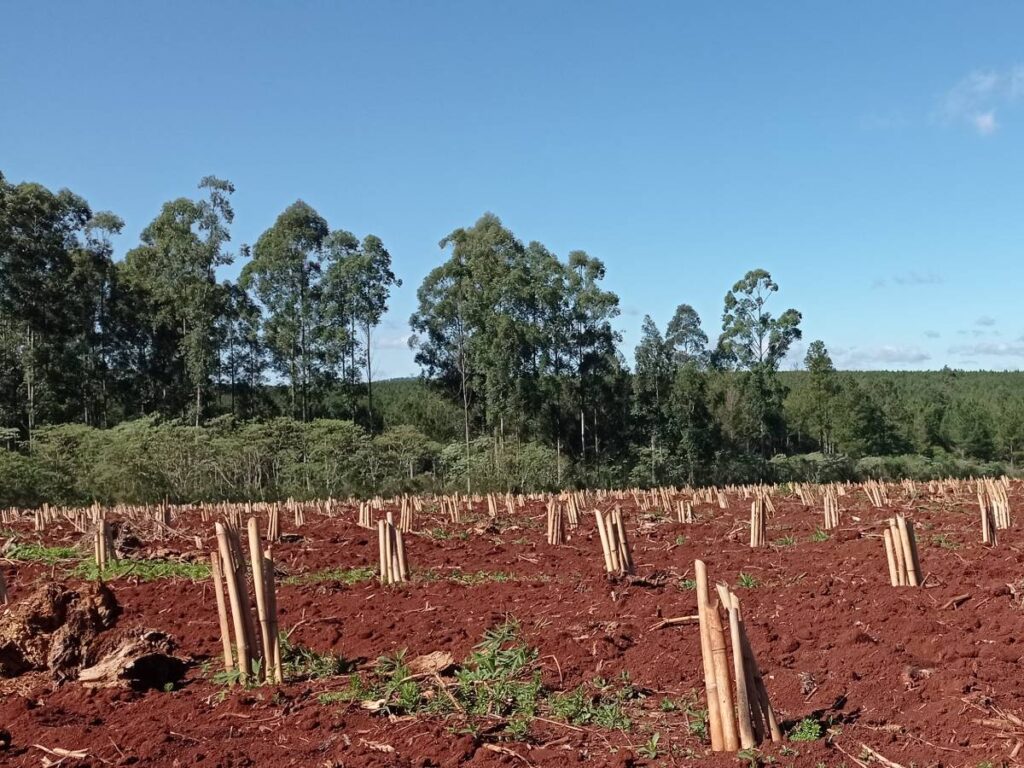
With the 116 hectares under cultivation, the pine trees have moved forward, creating a powerful image within the community: the advancement of the Puerto Piray community over the Arauco company. The first thing the residents noticed was the recovery of the landscape, the light—elements previously unimaginable. “Today, the participation of men and women is more equal. In decision-making, we women are the majority, carrying forward the commitment to improve our quality of life,” Miriam emphasizes.
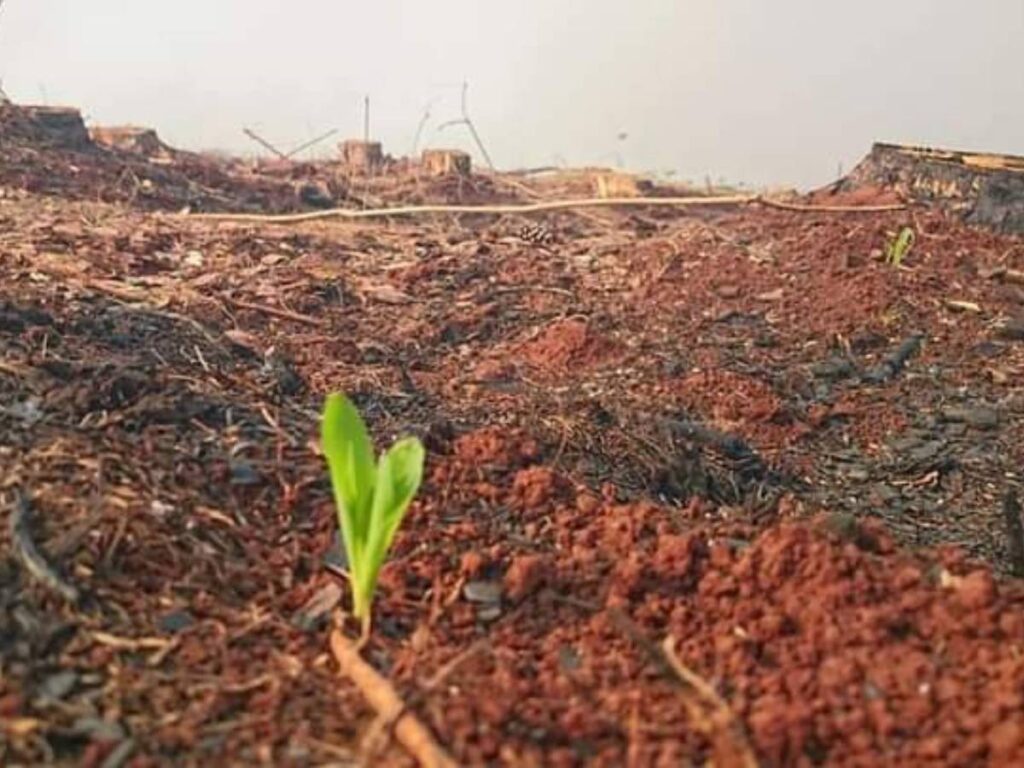
The families began the process of reclaiming the land for production; the area's red soil is very fertile. It wasn't long before they were able to plant and harvest cassava, squash, peanuts, and vegetables. They opted for an agroecological production method to guarantee healthy food and also as a clear stance against production using agrochemicals, which harms people's lives and biodiversity.
They've grown so much that today they not only produce for their own consumption, but also for sale, at a fair and affordable price for other families in the area. They offer their produce at farmers' markets, vegetable markets, and cassava markets, as they call these exchanges. They transport their produce to the town of Puerto Piray by tractor or truck, assembling food bags, which are sold without a set price. At the local markets where they also participate, they offer their produce at a fair and affordable price for families. This is one of the defining characteristics of agroecological production.
A future in their own land
Another concern for the community was creating opportunities to ensure that young people, who were forced to leave their community in search of access to secondary school or employment, would stay. “With a month-long road blockade, we managed to open a secondary school specializing in Economics and Management. We succeeded in keeping young people in the community,” says Mariela Zacarias, watching her daughter, who was playing nearby.
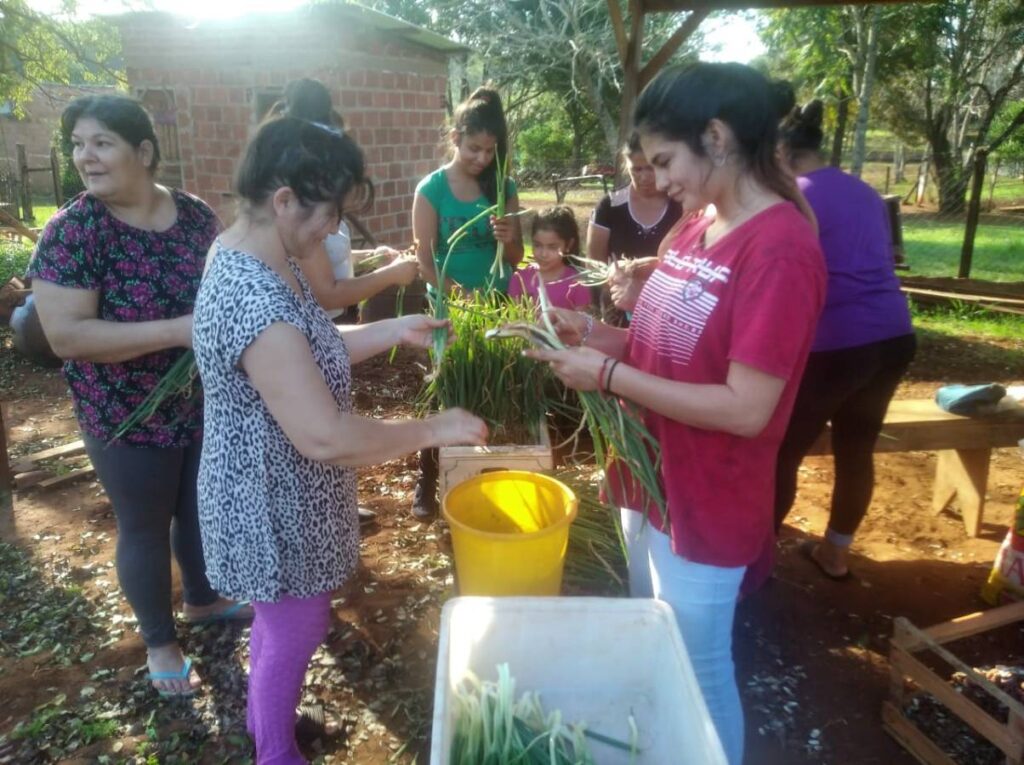
For them, it's clear they still have to fight to obtain the hectares of land they are legally entitled to, which are part of the next stages. Their new productive project is yerba mate cultivation. The goal is to be able to harvest in about four or five years and thus generate jobs, primarily for young people. At the same time, the women also produce vegetables in a nursery, where they grow seedlings of lettuce, beets, cucumbers, radishes, parsley, chard, and medicinal plants.
“As a woman, it’s a huge achievement to have this opportunity to still be alive. When we started fighting, my father would say, ‘I hope he lets me see it,’ and in 2017, when they handed over the first phase, he saw the pine trees being cut down, how the Arauco company’s machine was taking them away, leaving those plots with many branches, but free of the pine plantations. And I felt that too, the joy. As an organization, we said that we were flooded with revolutionary joy, and seeing those pine trees starting to move away from our homes, for us, it means hope. It means life, being able to produce and work the land. To decide what seeds, what food to plant in that piece of land. To be able to harvest and provide for my family and my community as well. For me, it embodies Mother Earth who gives us life,” Miriam concludes.
We are present
We are committed to journalism that delves into the territories and conducts thorough investigations, combined with new technologies and narrative formats. We want the protagonists, their stories, and their struggles to be present.
SUPPORT US

FOLLOW US
Related notes
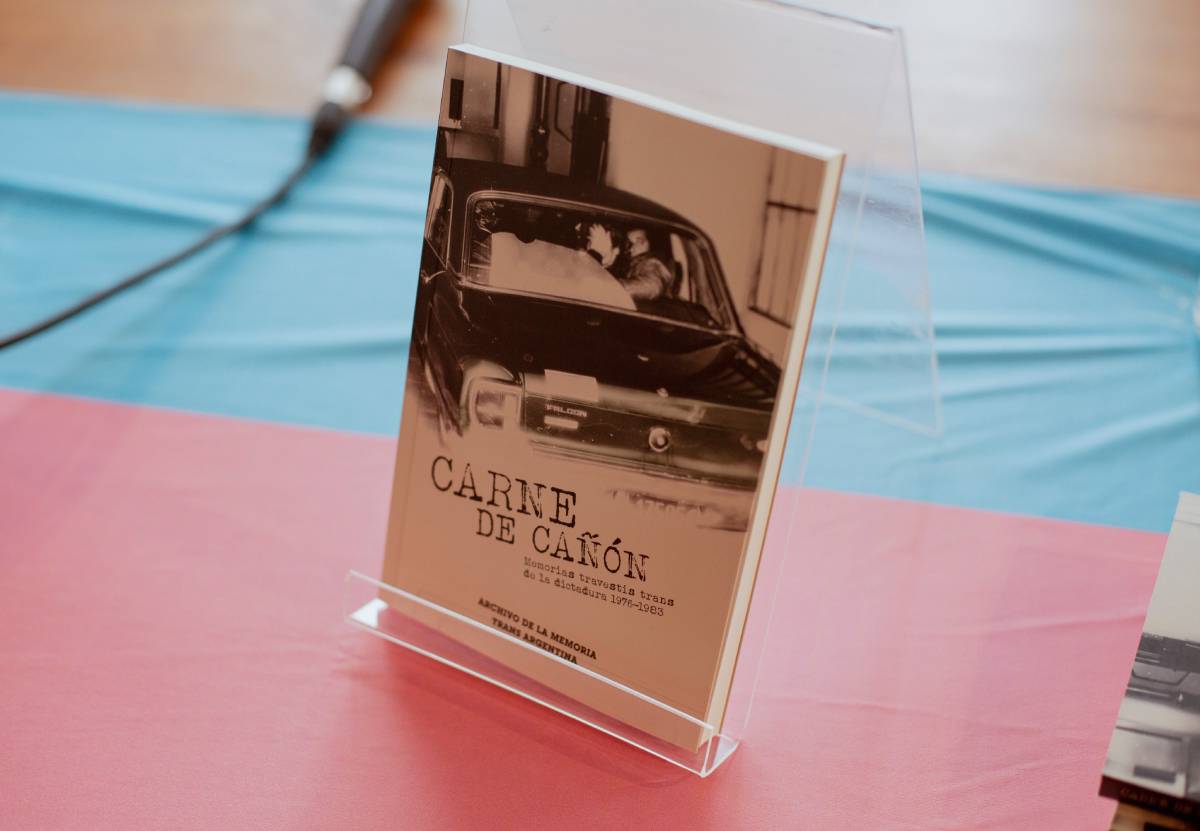
Cannon fodder: the book that recovers silenced stories of transvestites and trans people during the civic-military dictatorship
Lechedevirgen: “Undoing art means restoring its ritual and collective dimension”

Why the trial for the murder of Eldin and Milton could be historic for Guatemala's LGBT community
We are present
This and other stories are not usually on the media agenda. Together we can bring them to light.
1 Comment