

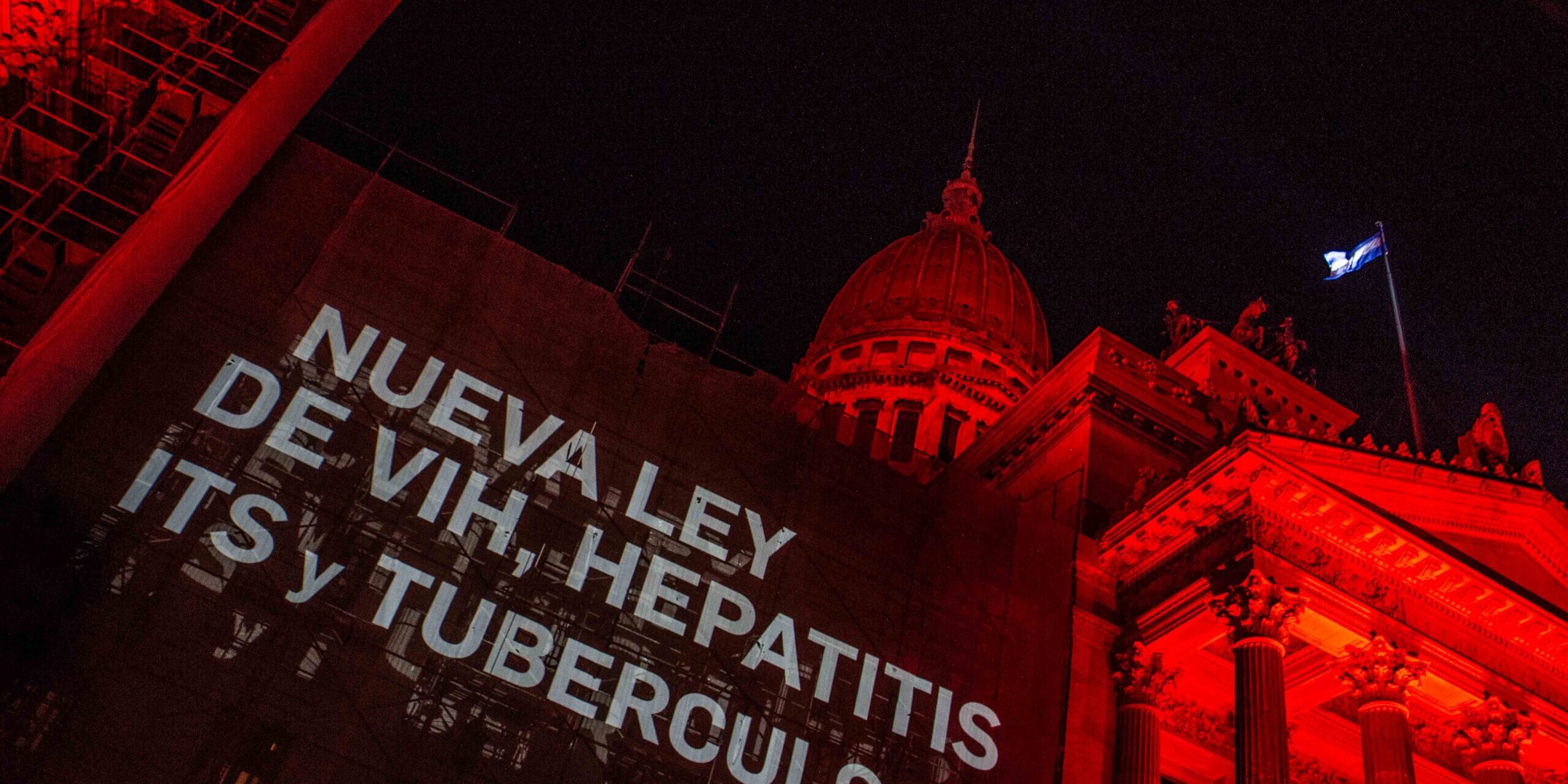
The comprehensive law on HIV, tuberculosis and hepatitis has received half approval in the Argentine Congress.
After having lost parliamentary status four times, the deputies voted in favor of the bill.


Share

BUENOS AIRES, Argentina. The Argentine Chamber of Deputies gave preliminary approval to the bill on HIV, viral hepatitis, tuberculosis, and sexually transmitted infections with 241 votes in favor, 8 against, and no abstentions. With this result, the bill, which had previously failed to pass four times, now goes to the Senate for consideration in the coming weeks.
The bill seeks to update the National AIDS Law No. 23,798, in effect since 1990, which views HIV from a biomedical perspective. The initiative, presented by Carolina Gaillard (Frente de Todos), a representative for the province of Entre Ríos, proposes a comprehensive approach from a public health standpoint, providing support and information to dismantle prejudice and discrimination.
“This law is not my own work; it was authored by the civil associations present here today, and by all the patients suffering from HIV in our country. It is a law that was developed by these organizations and updates Law 23.798, which was important but is now 30 years old,” said Representative Gaillard today during her address in the chamber.
"Pre-employment medical examinations should be banned"
“Pre-employment medical exams in this area should be prohibited,” stated Romina del Pla, a member of parliament for the province of Buenos Aires from the Workers' Party/Left Front – Unity coalition. She added: “The idea of making them optional is inappropriate because the relationship between job applicant and employer is asymmetrical.”
Furthermore, regarding the special retirement system proposed in the bill, he stated: “All protective measures must be designed with those who are most vulnerable in mind, those who are most at risk. Someone who has one of these infections but has been able to complete their working life without disruption is not going to request a special retirement system. The problem lies precisely with those who are not in this situation, and that is why a special retirement system is necessary, which, as we have already said, represents a hard-won achievement.”
Myriam Bregman, a member of the Buenos Aires City Legislature (PTS/FIT-Unidad), stated that “the privileges of judges, judicial officials, presidents, and vice presidents are one thing, and what this regime establishes is another.” “They are completely unrelated. The special regimes—not privileged ones—that we must defend are those that address special situations and for which workers have fought all these years,” she pointed out.
"Thirteen people are still dying every day from HIV."
“Thirteen people a day and 1,400 people a year are still dying from HIV in our country,” explained Representative Gaillard, adding that “140,000 people are currently living with the virus in our country, and there are 4,500 new infections per year.”
“It doesn’t represent a significant expenditure for the State, if that’s what some are worried about. It implies a present State that guarantees access to treatments, that ensures it is present to inform women when they are going to give birth, and that doesn’t influence whether it’s a cesarean section because of the woman’s serological status; it implies guaranteeing access to breast milk to prevent vertical transmission of the virus,” she concluded.
Maximiliano Ferraro, a representative for the city of Buenos Aires from the Civic Coalition, used the concept of "the ethics of otherness" in his address to the Chamber. He explained it as "thinking of the other as other, that the face and pain of the other should challenge us. We are similar, we are equal, we are different, but we will always be, or we are, in relation to the other."
Furthermore, he emphasized that it is "a law that, being so important, has been manipulated for many years, losing its parliamentary status four times. Different governments, legislative blocs, and different presidents of the chamber have come and gone."
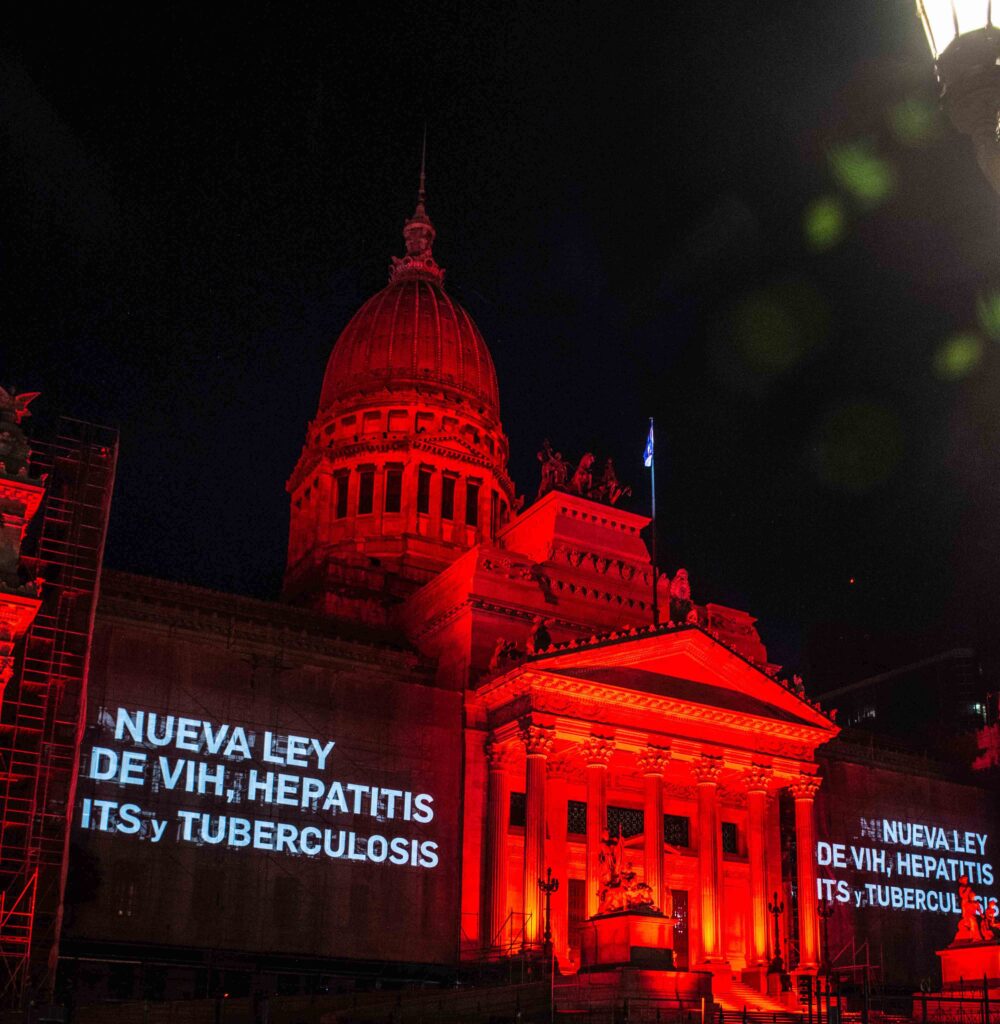
The key points of the project
The project establishes, among other points, the creation of a National Observatory on Stigma and Discrimination, in order to make visible, document and eradicate violations of the rights of the affected people.
Furthermore, it proposes that testing for these viruses should be voluntary, free, confidential, and universal.
At the same time, it promotes the creation of a special, exceptional retirement scheme for those living with HIV and hepatitis B or C. It also proposes a non-contributory, lifetime pension for those in situations of social vulnerability.
Thus, those who can prove at least ten years since the diagnosis of the disease and twenty years of pension contributions can apply for retirement from the age of 50.
The project also promotes training, research, the dissemination of mass campaigns, and the establishment of a National Commission on HIV, Viral Hepatitis, other STIs, and Tuberculosis. This commission will be composed of representatives from various ministries and sectors, including government agencies, scientific societies, and civil society organizations.
We are present
We are committed to journalism that delves into the territories and conducts thorough investigations, combined with new technologies and narrative formats. We want the protagonists, their stories, and their struggles to be present.
SUPPORT US

FOLLOW US
Related notes

We are present
This and other stories are not usually on the media agenda. Together we can bring them to light.