

Two trans activists murdered in Mexico: their communities demand justice amid violence
Both were well-known and loved in their communities. Catalina Santos, 23, was hunted down and killed in the municipality of Atizapán (State of Mexico). Two weeks later, on September 5, Devanny Cardiel was murdered in León, a city in Guanajuato, a state in central Mexico.


Share

In the early morning hours of August 21, 23-year-old Catalina Santos was chased down and murdered in the municipality of Atizapán (State of Mexico). Two weeks later, on September 5, Devanny Cardiel, who would have turned 40 yesterday, was murdered in León, a city in Guanajuato, a state in central Mexico.
Both women were well-known activists for defending the rights of transgender people in their communities. In both cases, the corresponding prosecutor's offices have not specified whether they are investigating with a gender perspective or applying the National Protocol for Action for Personnel of Law Enforcement Agencies in cases involving Sexual Orientation or Gender Identity. Meanwhile, activists are demanding an end to impunity.
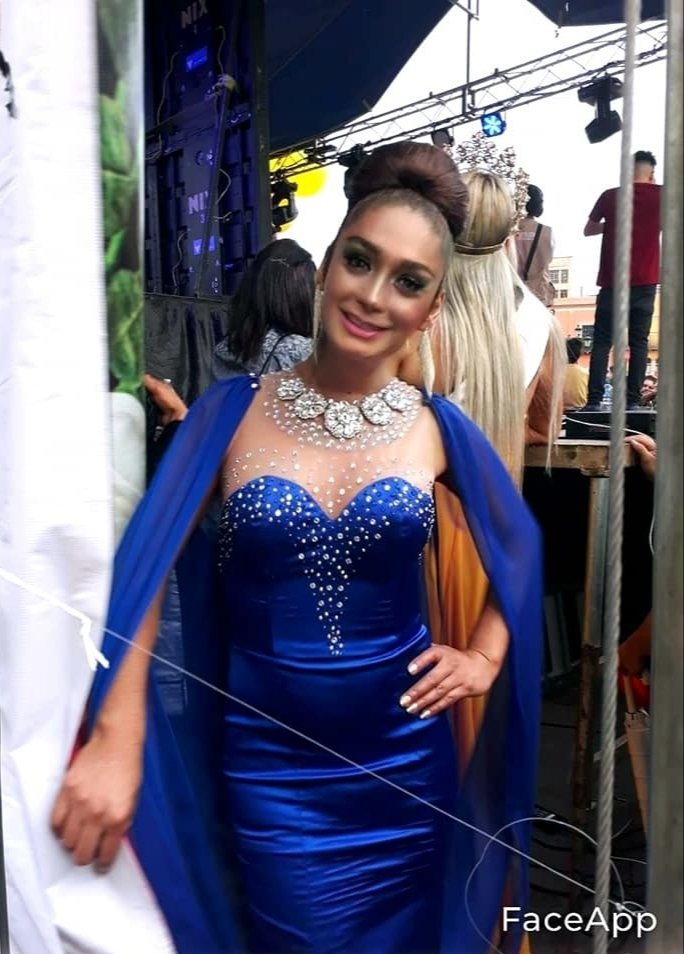
Nobody helped Catalina
Catalina Santos was chased for several minutes before being brutally murdered in the Tepalcapa neighborhood, municipality of Atizapán, State of Mexico, as reported by several local media outlets.
Activist Manuel Rivera reported from the scene and denounced that after more than two hours since the murder, neither police nor members of the local Prosecutor's Office were present, despite the reports made to 911 (emergency number).
That night, Rivera reported live and commented, “It’s sad to see the body of a trans woman lying in the street. Today, the trans community of Atizapán loses one of its members. The violence against women, men, and the LGBT+ community in our municipality is deplorable, and it’s deplorable that a member of the trans community has been murdered.”
Catalina's body lay in the rain for more than six hours without receiving any assistance. According to Rivera, only one patrol car arrived at the scene and cordoned off the area, and it wasn't until after 6:00 a.m. that members of the Attorney General's Office arrived.

“It’s outrageous, how is it possible that a person ends up like that, how can the authorities not act immediately… we condemn this act as a hate crime,” he said in an interview with a local media outlet.
Presentes contacted the State of Mexico Prosecutor's Office to inquire about emergency reports and whether they are investigating with a gender perspective. The response was: “We have no information regarding reports of the incident, but members of the Prosecutor's Office did arrive at the scene. An investigation has been opened.” They did not provide further details.
According to the National Observatory of hate crimes against LGBT people, 5 trans women have been murdered so far in 2021 in the State of Mexico, two of them in Atizapán.
The call for justice in the periphery
“Catalina, we demand justice for you, because you did not remain silent, because you fought for us,” shouted a member of Ágora (an organization of young people from the State of Mexico dedicated to the prevention of gender violence) outside the Municipal Palace of Atizapán, on September 4, during a demonstration that sought to decentralize the protest against transphobic violence.
That day, fewer than ten people were demonstrating in the esplanade of the Palace, because protesting in the city is not the same as protesting in the outskirts. In Atizapán and other municipalities in the State of Mexico, feminist protests have been repressed by the police. “Despite the fact that feminist activists have been tortured, persecuted, and abused here, we think it’s important to take to the streets because Catalina’s murder isn’t being talked about enough,” a member of Ágora told Presentes.
“We are fed up, distressed, and angry about the violence in the streets against trans people living in Atizapán and other municipalities in the State of Mexico. The periphery resists. Catalina’s murder is not an isolated case; it is a symptom of an intolerant, hateful, intransigent, and impunity-ridden system. We demand justice for all the trans women murdered in the State of Mexico…their voices will continue to be heard!” they declared.
The Marabunta Brigade , an organization that accompanies and provides support during protests, was present during the demonstration

Devanny's murder "was not a settling of scores, it is a hate crime"
Around eight o'clock on the night of September 5, 39-year-old Devanny Cardiel was murdered inside her beauty salon, which was also part of her home, located in the city of León, Guanajuato, a state in the center of the country.
“Neighbors heard gunshots, called paramedics, and confirmed that she had gunshot wounds to the chest, and that's how they took her from us. They took from us a caring, friendly, cheerful, and resilient woman,” a friend who had known Devanny for ten years, and who prefers to remain anonymous for safety reasons, told Presentes.
Devanny was originally from Silao, a city near León. Her friend says she had to leave home at 16 because of the violence and rejection she received from her family for being trans.
Guanajuato has historically been one of Mexico's most conservative states. Furthermore, fuel theft; territorial disputes between drug cartels; the current security strategy of maintaining a heavy military and National Guard presence in the streets; the denial and impunity surrounding serious human rights violations such as enforced disappearances and the forensic crisis ; and the escalating femicide violence have transformed it into one of the most violent states in the last five years
In this context, Devanny's murder has been described by several local media outlets as a "settling of scores" and linked to drug trafficking. Activists and friends deny the press version and emphasize that it was a hate crime, demanding that the Prosecutor's Office investigate it as such.
“We knew Devanny; she was a social activist. Her murder wasn't a settling of scores; it was a hate crime that is affecting the entire community, a community that is not safe and doesn't feel safe, neither from the authorities nor from the context of violence,” an activist from the Pride León, who prefers to remain anonymous for security reasons, told Presentes.

“In Guanajuato it is difficult to raise your voice”
Furthermore, the Catholic religion has held significant influence in the state's society and legislature. Currently, Guanajuato lacks laws or reforms guaranteeing the right to identity for transgender people, marriage equality, or prohibiting gender-affirming sexual orientation and gender identity (GASI) conversion therapy.
There are also no official figures on lethal violence against LGBT+ people. In this regard, Pride León has recorded at least 18 hate crimes against LGBT+ people from 2015 to the present. Furthermore, the Visible (a citizen reporting tool for attacks against sexual minorities) has recorded at least 54 attacks from 2017 to the present, ranging from insults to sexual violence. Of these, 12 have been against trans women.
The context of violence, the influence of the Catholic Church, and the denial of rights to LGBT+ people in Guanajuato also limit the forms of protest and the demand for a life free from violence. And for now, the call for justice for Devanny's murder remains cautious.
“As a community, we are still holding back from speaking out, firstly for the family, because we will respect the legal process they choose. And secondly, because speaking out in Guanajuato is difficult; demanding justice here is different. We can’t be so radical in such a violent context; for safety reasons, we prefer to be prudent and not make a fuss… for now,” Devanny’s friend explained to Presentes.
We are present
We are committed to journalism that delves into the territories and conducts thorough investigations, combined with new technologies and narrative formats. We want the protagonists, their stories, and their struggles to be present.
SUPPORT US

FOLLOW US
Related notes
Cannon fodder: the book that recovers silenced stories of transvestites and trans people during the civic-military dictatorship
Lechedevirgen: “Undoing art means restoring its ritual and collective dimension”
Why the trial for the murder of Eldin and Milton could be historic for Guatemala's LGBT community
We are present
This and other stories are not usually on the media agenda. Together we can bring them to light.