

El Salvador: lack of attention, online attacks, and discrimination against trans people
Amid the coronavirus emergency, the trans population denounces human rights violations in health and attacks on social media.

Share

By Paula Rosales, from San Salvador
Amid the Covid-19 pandemic, LGBT+ organizations are demanding that the Salvadoran State guarantee the health and rights of LGBT+ people, especially trans people, due to the lack of assistance and reports of discrimination and attacks on social media.
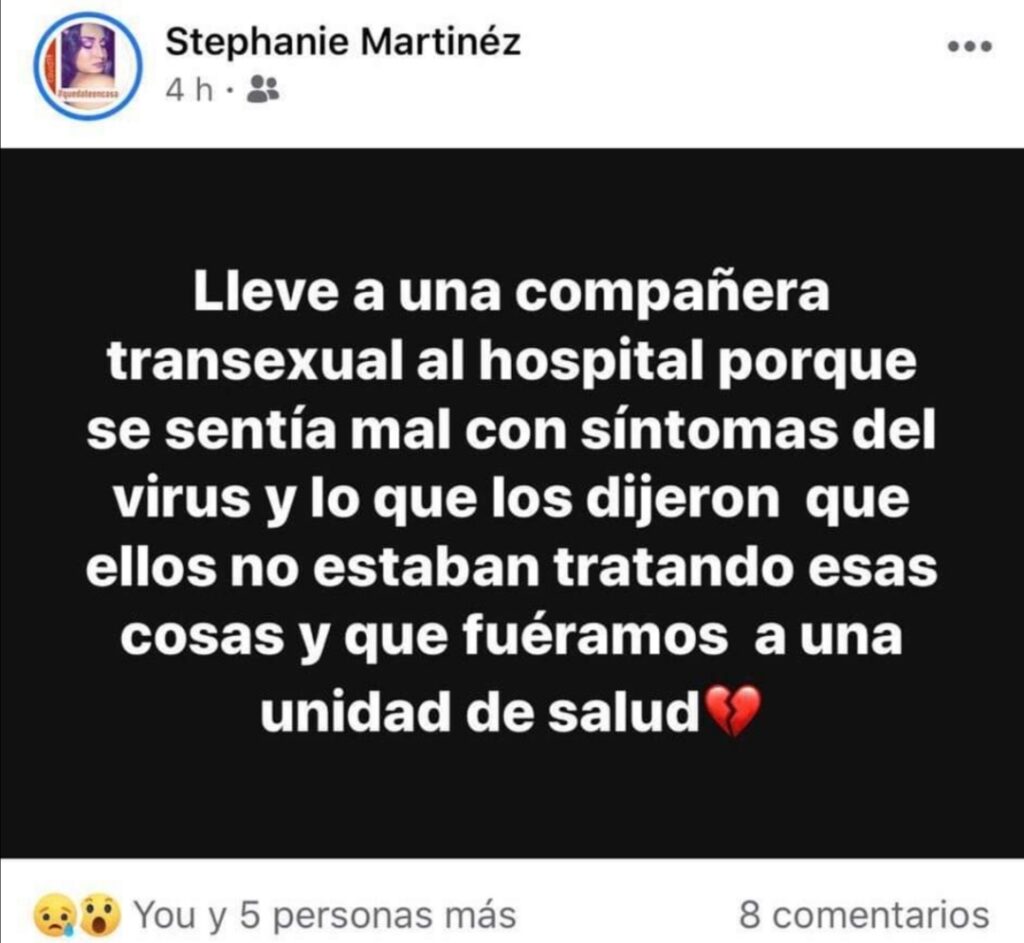
Karla C., a 16-year-old transgender teenager, had a fever, cough, and sore throat, and asked a friend to take her to a public hospital in the department of San Miguel, east of the capital (El Salvador). Because of her symptoms, she feared she was carrying the coronavirus, which has caused more than 58,000 deaths worldwide. But Karla reported that she was not treated.
“She told the doctor she felt really bad. The doctor told us they weren’t treating those kinds of cases there and that we should go home. A nurse who was there said some really nasty things to us,” recalled Stephanie Martínez, a friend who accompanied her on the errands.
READ ALSO: How Covid-19 affects LGBT+ people in the region: data and assistance
After the doctors and nurses on duty refused to treat her at that hospital* in the department of San Miguel, the teenager and her friend went to a health unit. There she was seen, doctors ruled out that her symptoms were related to the coronavirus, and she was given treatment for a throat infection.
Presentes contacted the Ministry of Health regarding Karla's case, but no response was received by the time of publication.
Despite being a teenager, Karla C. survives as a sex worker on the streets of San Miguel. From her meager earnings, she must pay rent for the room where she lives. Since Congress, at the request of the executive branch, approved a state of emergency that suspends constitutional guarantees of freedom of movement and imposes a mandatory home quarantine ordered by Salvadoran President Nayib Bukele, Karla has no income to support herself. She manages thanks to the support of neighbors who give her food.
If income for subsistence
Although President Bukele announced on the evening of Friday, March 27, the distribution of $300 for food to 1.5 million Salvadoran households, Karla is unable to access it. The government will have to disburse $450 million to fulfill the distribution of the economic benefit, which has overwhelmed the subsidy registration centers and generated discontent among thousands of people who did not receive it.
Stephanie Martínez, a sex worker and Karla's colleague, says she didn't receive the benefit. She doesn't know how she'll survive during this pandemic. “No one in my family has received any benefits, neither I nor any of my trans friends. We can't go out to work because most of us are sex workers and we can't go out on the street. The government doesn't give us any help or support. Here in El Salvador, even our president is very discriminatory,” Stephanie told this publication.
“As a result of the current situation in our country due to COVID-19, there has been, in some cases, a lack of protection for the most vulnerable populations, including the LGBTIQ+ population, due to the lack of concrete measures or assistance and protection programs by the State specifically for the trans population,” the ombudsman, José Apolonio Tobar, explained in a statement.
Transphobia on social media
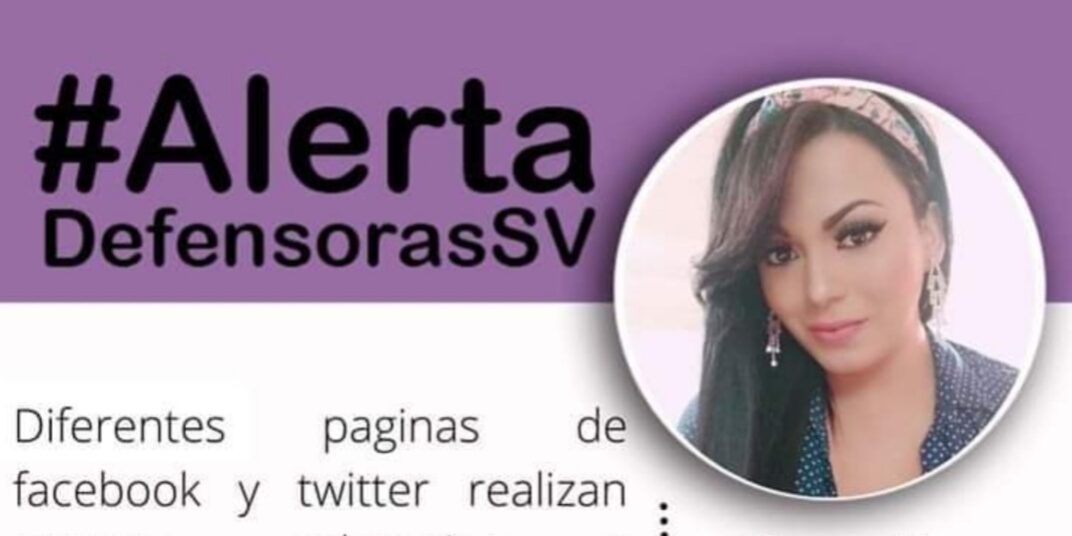
An image of human rights defender Camila Portillo holding her National Identity Document (DUI) in her right hand was published on Facebook pages suggesting that she did not receive the $300 bonus announced by the government because she is a transvestite.
“I have endured slander and defamation, based on a photo of me from 2014, when I was not allowed to vote. Now they have used it in several news stories saying that I could not access the $300 for the DUI and, of course, they have done so in a way that mocks trans people,” Camila Portillo told Presentes.

The government has been repeatedly accused by human rights organizations of instigating online attacks against those it considers its opponents.
“There are a lot of people commenting really nasty things. I stopped reading them for my mental health, because there are some pretty harsh comments that can affect us psychologically because we enter a state of psychosis where we think everyone wants to hurt us,” Camila said.
The attacks against Camila began after she questioned the handling of the health crisis, which has left the Central American country with 56 active cases and three deaths. Many people's comments on social media are aimed at defaming and ridiculing the trans population.
They demand that the State guarantee the safety of transgender people.
“The Salvadoran Network of Women Human Rights Defenders condemns these transphobic attacks and expresses deep concern for the women human rights defenders who are being targeted for their work in defense of the measures adopted by the Salvadoran government in response to COVID-19. We demand that the Salvadoran state guarantee the comprehensive safety of defender Camila Portillo and transgender people, recognizing the exposure and vulnerability they face due to the lack of legal recognition of their gender identity,” they stated in a press release.
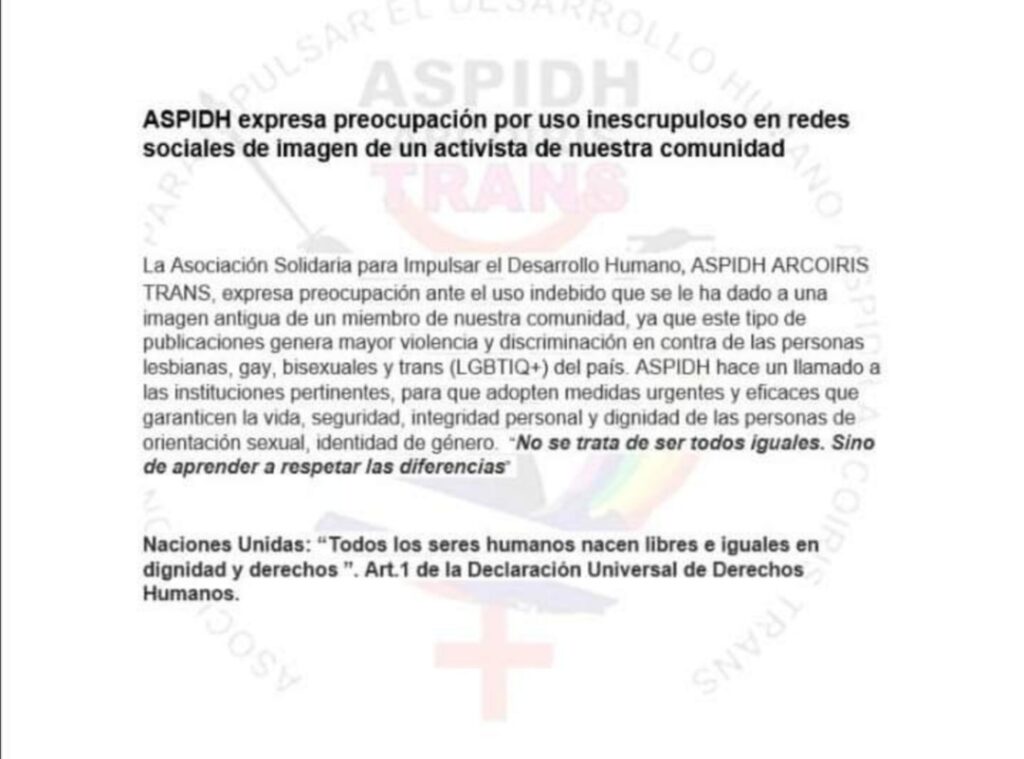
“I am afraid that the attacks will continue, that more than cyberattacks they will become physical attacks once this situation is over, and not only because of the dissemination of the photograph, but also because I belong to the groups that are constantly denouncing the human rights violations that are being carried out with these repressive measures that the government has taken,” Portillo lamented.
The Salvadoran Congress has been studying a proposed gender identity law since 2018. It has yet to make any progress.
*Editor's note: The name of the hospital is being withheld to protect the safety of those who suffered discrimination.
All our content is freely accessible. To continue producing inclusive journalism, we need your help. You can contribute here.
We are present
We are committed to journalism that delves into the territories and conducts thorough investigations, combined with new technologies and narrative formats. We want the protagonists, their stories, and their struggles to be present.
SUPPORT US

FOLLOW US
Related notes
We are present
This and other stories are not usually on the media agenda. Together we can bring them to light.