

Paola Buenrostro: "It was femicide," said the Justice system, setting a precedent for trans women
After a decade of struggle, the trans community achieved the reclassification of Paola Buenrostro's murder. The perpetrator has already been arrested. "Today our dignity has been restored," said Kenya Cuevas, who led the fight for justice.


Share

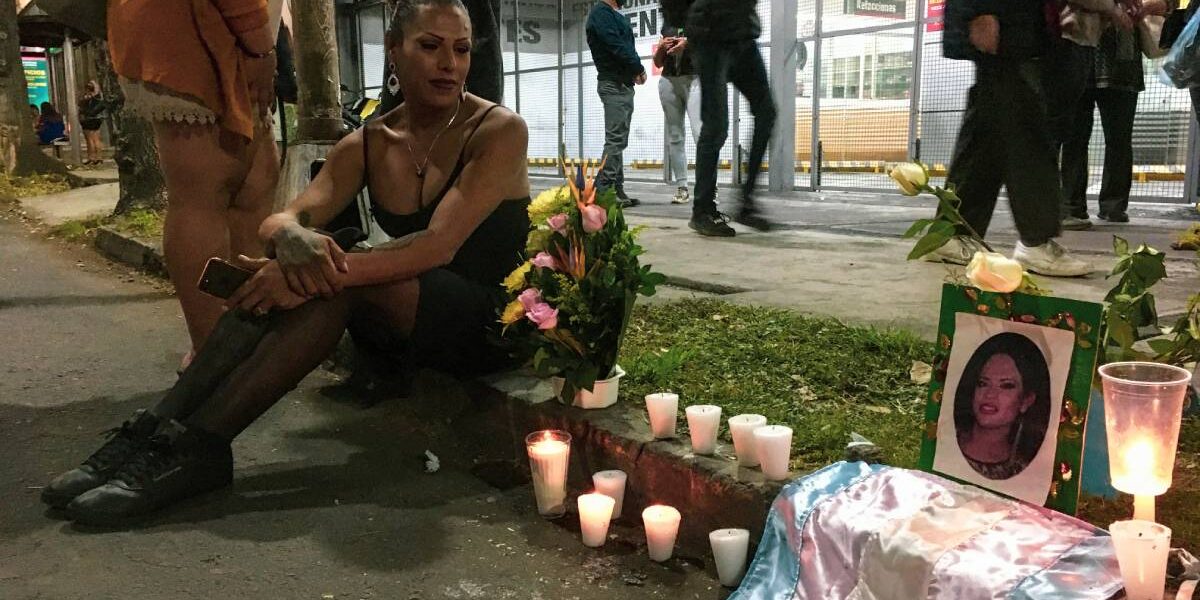
MEXICO CITY, Mexico. Nearly a decade after the transphobic murder of Paola Buenrostro, a sex worker killed in Mexico City on September 30, 2016, the alleged perpetrator has been arrested. Following the initial hearing, a judge formally charged him with femicide.
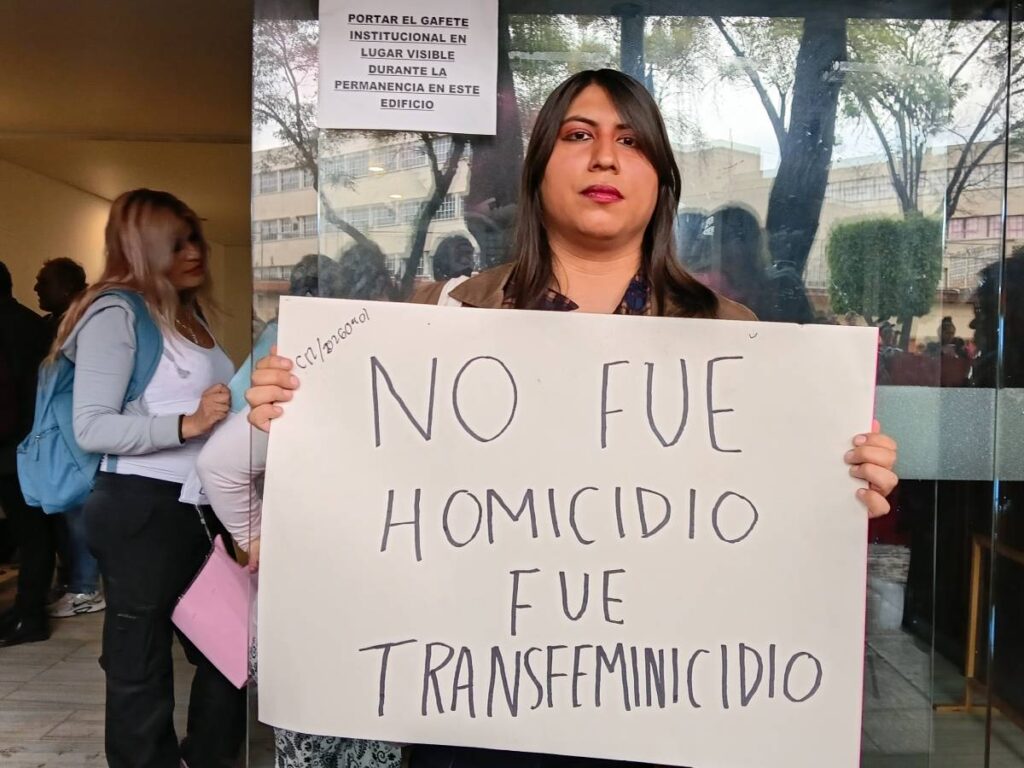
That connection came after protests over omissions and shortcomings by an agent of the Public Prosecutor's Office of the Femicide Prosecutor's Office who presented the case in the first session of the initial hearing as "qualified homicide" and not as femicide.
Furthermore, he denied the gender identity of Paola Buenrostro and Kenya Cuevas, Paola's friend and an indirect victim who has fought for justice for a decade. He also misgendered other sex workers who witnessed the crime. And when reading the case, he referred to sex work as "sex service" and "sex workers.
The change in classification from aggravated homicide to femicide during this initial stage was the result of a strategy between Kenya Cuevas, her legal counsel, and the Femicide Prosecutor's Office.
“Today they restored our dignity. For me, it’s a relief for my soul. It was something I had been seeking since September 30, 2016. It was many years of waiting for Paola’s life and identity to be recognized,” Kenya Cuevas said as she left the hearing.
Listen to the victims
According to the victims' legal team, the key difference was the technical and methodological preparation demonstrated by the public prosecutor during the second court hearing. The Femicide Prosecutor's Office assigned the case to an agent with prior experience in transfemicides in the State of Mexico.
“It’s no longer just about training; the Prosecutor’s Office has an obligation to sit down and listen to the victims and their perspective, and to study the case file. We know that the Prosecutor’s Offices are limited, but the bare minimum is to listen, to fight for the victims’ arguments because they lived through it. To build a dignified process. That has to be the standard from now on because it’s what we’ve been working on for ten years. Today we saw that when the Prosecutor’s Offices work with the victim support team, which is their job, they do it well and they restore our dignity ,” commented lawyer Amaranta Valgañon, a member of Kenya Cuevas’s legal team, in an interview with Presentes
During the hearing, the Public Prosecutor argued and technically argued the gender-based reasons and the systematic violations faced by transgender sex workers.
What happened to Paola Buenrostro?
Paola was 25 years old and a trans woman who migrated from the state of Chiapas to Mexico City due to violence and family exclusion, where she worked as a sex worker. Her friends in the city became her family. Kenya Cuevas, her best friend, remembers her as “an explosive woman but also very kind.”
On the night of September 30, 2016, Paola got into a gray car with Arturo 'N', a former soldier who was then working as a private security guard. That night, Arturo 'N' arrived at Puente de Alvarado, a well-known trans sex work hotspot in the city. He began negotiating a service, and at least three of the women refused because he didn't meet their quota. Paola agreed.
After getting into the car, they drove a few meters and Paola called for help, shouting her friend Kenya's name. Kenya ran toward the car. As she approached, three gunshots were heard. When Kenya reached the vehicle, she saw Arturo 'N' push Paola, who was dying, against the passenger window.
Kenya Cuevas began recording with her cell phone. Arturo 'N' had the gun in his hand. He pointed it at Kenya, and the gun jammed. Other sex workers surrounded the car to prevent him from escaping. Police arrived, and Arturo 'N' was arrested.
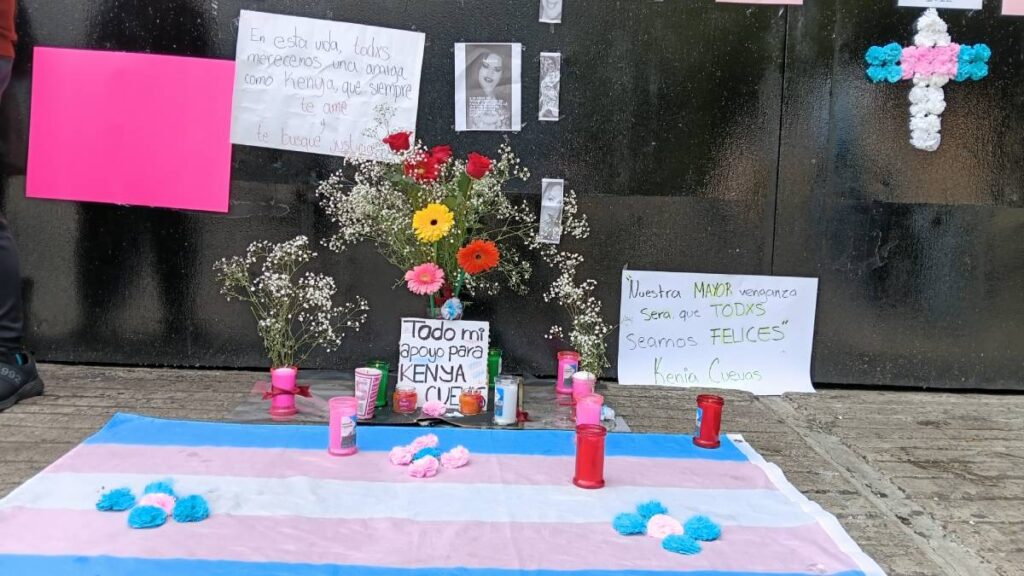
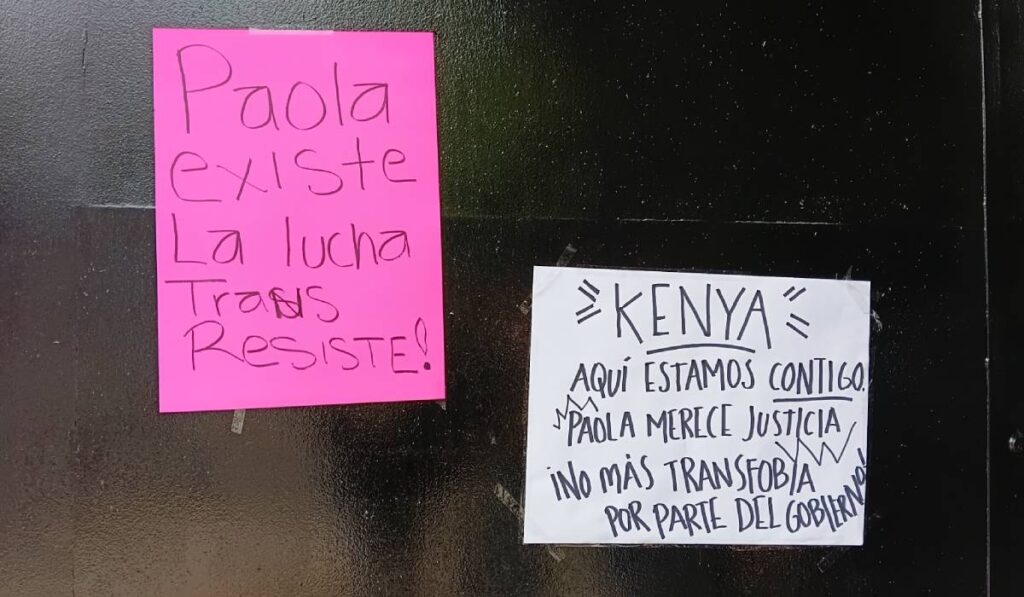
This was followed by a cycle of omissions and revictimization. In 2016, the Mexico City Attorney General's Office failed to recognize Paola as a woman and misgendered her.It also failed to consider Kenya Cuevas as Paola's extended family or as an indirect victim.
Forty-eight hours after the arrest of the aggressor, under the argument of a negative result in the sodium rhodizonate test, residues that impregnate the skin and clothing of the shooter or those who are very close, a judge released Arturo 'N'.
Almost ten years later, on August 31, 2026, Arturo 'N' was arrested, as a result of an arrest warrant issued on October 19, 2016.
Arturo 'N', linked to the process for the femicide of Paola Buenrostro
In the second session of the initial hearing, on September 4, 2026, a judge formally charged him with femicide. She also recognized the gender identity of Paola Buenrostro and Kenya Cuevas as indirect victims and as part of her extended family.
“Mr. Arturo, you are being prosecuted for the crime of femicide for taking the life of PB who identified as a woman,” said the judge who prosecuted Arturo 'N', the aggressor of Paola Buenrostro.
The second session of the hearing began at 8:42 am on September 4, 2026.
Arturo 'N's' defense attorney argued, based on the defendant's testimony from September 30, 2016, that there had been a struggle. He stated: “The victim, now deceased, was trying to take the weapon from him. Furthermore, two expert reports determined that no gunpowder or barium was found on his hands, so there is no evidence that he fired the weapon.”.
The prosecution's counter-argument was based on evidence from ballistic reports, injury reports, the mechanics of the events, and interviews with witnesses, including other sex workers such as Kenya Cuevas.The lead-barium test, also negative, on Paola's hands was included.
The changing narrative about transfemicides
In legal proceedings for transfemicide in Latin America, one of the recurring alibis used by the defense attorneys for the perpetrators is to appeal to a narrative of surprise. This line of argument maintains that the accused solicits sexual services unaware of the victim's gender identity and that, upon realizing that she was a trans woman, he reacts violently under a supposed state of shock.
However, during the second session of the initial hearing, the Prosecutor's Office for Femicides and its legal counsel successfully discredited this account through a technical interpretation of the testimonial and expert evidence regarding the events of that night. This analysis took into account the victim's gender identity, the intersecting circumstances of her experience, the relationship of trust inherent in the context of sex work, and the vulnerable position of transgender sex workers in relation to their aggressors.
“The important thing about this hearing is not only that it was reclassified as femicide. But that today prejudice emerged as an element of the intersectionality that trans women experience and the violence they face. It wasn't some guy who was surprised. It was a guy who knew, who intended to kill a trans woman,” commented lawyer Valgañon in an interview with Presentes
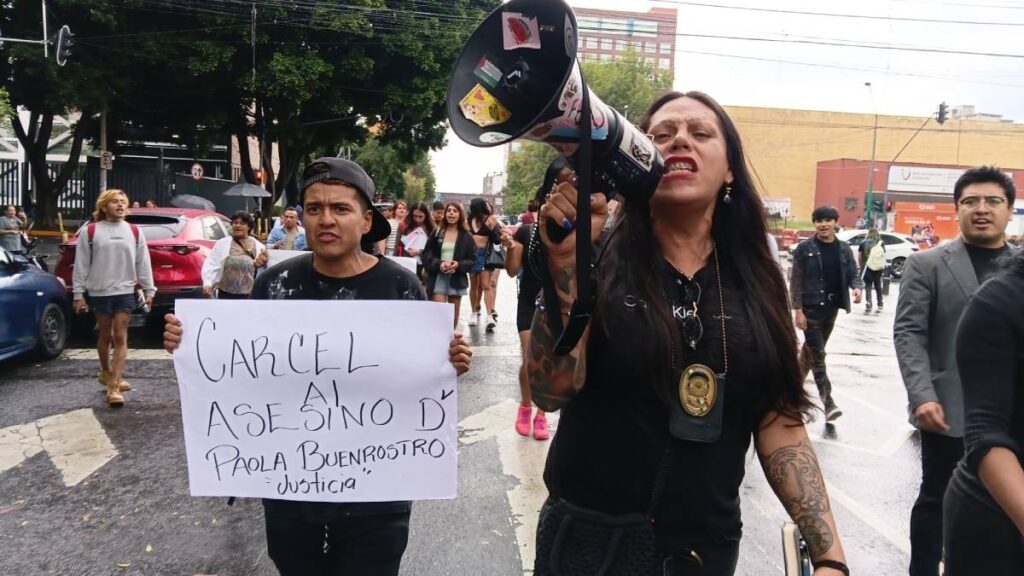
She added: “The argument of a relationship of trust is key because no sex worker gets into a car with a stranger expecting to be killed. It would be counterintuitive.”
“When Paola screams, ‘Kenya, Kenya,’ she is in a victim position at all times, afraid of her aggressor. So, far from the social narrative being constructed that trans women are violent, aggressive, and part of a kind of effervescent movement, the truth is that when these women find themselves in that context, there is a relationship of trust, and in the physical confrontation, they are completely defenseless. Today, with all of this, we are beginning to build a much more complex narrative, as we also did with Natalia Lane and in the case of Vicky Hernández, in which we participated alongside our colleagues from Cattrachas,” the lawyer explained to Presentes.
Reasons for prejudice and sex work as an aggravating factor in employment relationships
Kenya Cuevas' legal counsel reinforced what the Prosecutor's Office for Femicides had said and presented under their arguments that there were reasons of prejudice in the actions of Arturo 'N' against the life of Paola Buenrostro.
“The accused knew where he was going and who worked there. It’s a known sex work spot for trans women. His modus operandi was to humiliate and punish. Furthermore, there was a relationship of trust that allowed PB to carry out her work. The accused willfully abused that trust (…). For these reasons, this legal representation and the institution request that the crime be reclassified as femicide,” said Kenya Cuevas’s legal advisor during the hearing.
After hearing from both sides, the judge approved the reclassification. In her decision, she stated that Paola Buenrostro was a woman. She emphasized the value of Kenya Cuevas's testimony and the evidence presented. She also considered the existence of an employment relationship due to Paola's sex work as an aggravating factor.
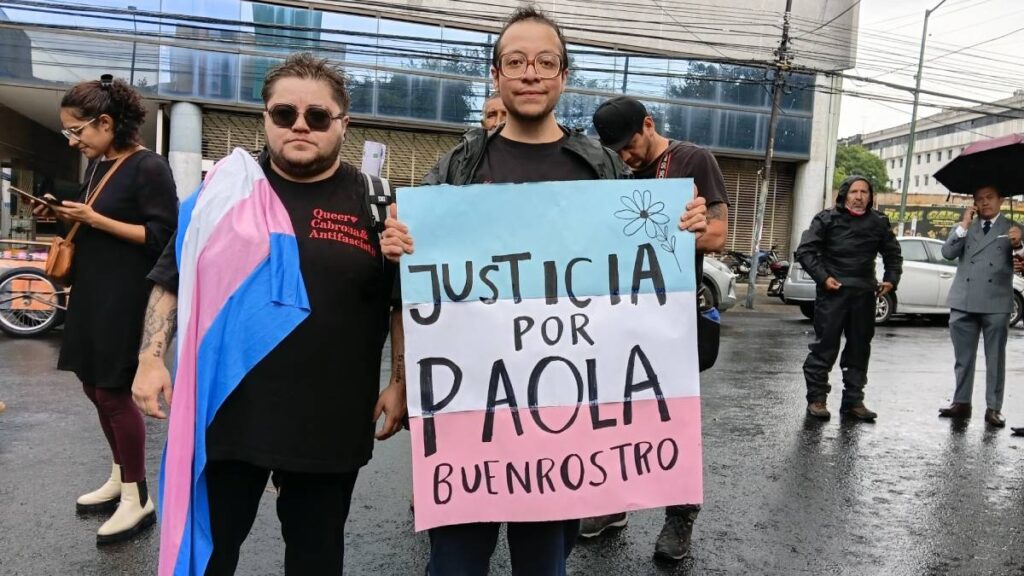
In her speech, the judge read a fragment of the unconstitutionality action 129/2022 that was resolved by the Supreme Court of Justice of the Nation in which it is recognized that the violent deaths of trans women must be considered within the crime of femicide.
He also mentioned the landmark case of the Inter-American Commission on Human Rights, “Vicky Hernandez vs Honduras”, which reaffirms the applicability of the Belem Do Pará Convention against violence based on prejudices based on sexual orientation, gender identity or expression.
The hearing ended at 9:45 a.m. At the end, in her only statement, Kenya Cuevas told the judge, “Thank you for recognizing my sister.” The judge replied, “Not only her, but also you, Kenya, for being an indirect victim.”
The judge also warned and demanded that the Prosecutor's Office for Femicides "strengthen protection." "Human rights must be respected and the context of this sector analyzed," she concluded.
We are present
We are committed to journalism that delves into the territories and conducts thorough investigations, combined with new technologies and narrative formats. We want the protagonists, their stories, and their struggles to be present.
SUPPORT US

FOLLOW US
Related notes
We are present
This and other stories are not usually on the media agenda. Together we can bring them to light.
1 comment