

Justice for Caí: a 33-year-old trans woman was beaten to death in Misiones, and marches were held to demand that the crime not go unpunished
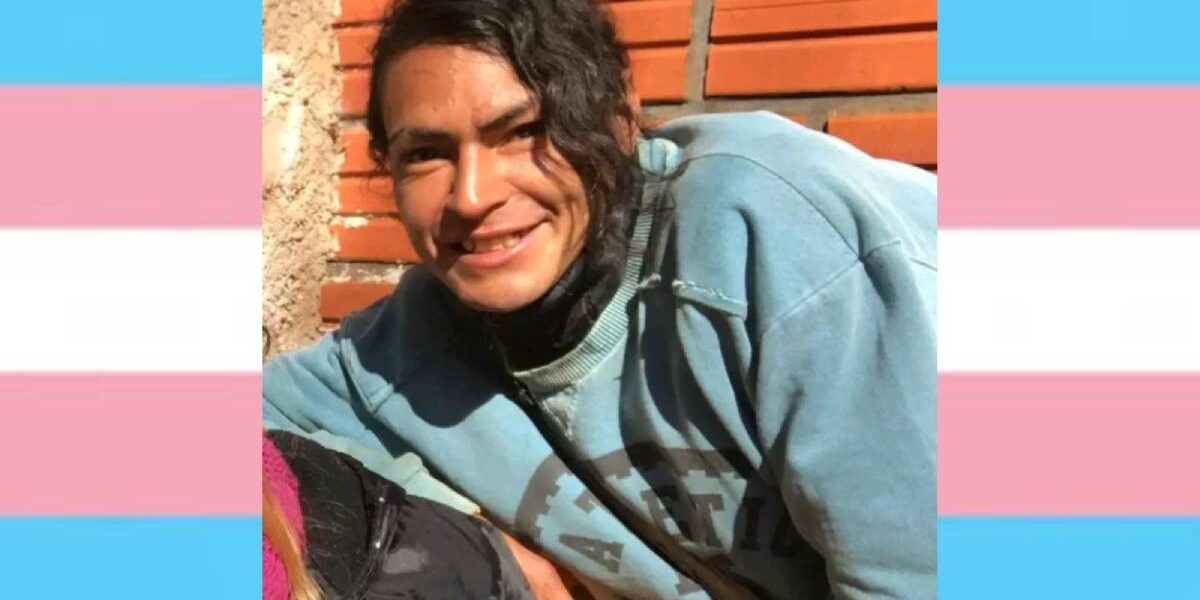
Claudia Gabriela Gómez, known as Caí, was a 33-year-old trans woman. She was found unconscious after suffering a fatal blow. Her life reflects the chain of structural violence suffered by trans people.


Share

BUENOS AIRES, Argentina. On April 8, Claudia Gabriela Gómez, known as “Caí,” a 33-year-old trans woman who lived in Puerto Iguazú, Misiones province, died. Caí had been hospitalized at the SAMIC hospital since April 2, when two neighbors found her unconscious on the street, on a path in El Eucaliptal Municipal Park, on Libertad Avenue. She had signs of blows that the autopsy confirmed as a traumatic brain injury, the result of a blow that fractured the base of her skull.
In a dialogue with Agencia Presentes, Nazarena Fleitas, a representative in Misiones of the Association of Transvestites, Transsexuals and Transgender People of Argentina (ATTTA), recounted that Caí arrived from Paraguay to Posadas when he was a teenager, and that since 2022 he has settled in Puerto Iguazú.
The murder of Caí, for Darío Rojas, director of Diversity and Gender in Puerto Iguazú, shows a “very painful social setback,” he told Presentes.
So far, three people have been arrested in connection with the crime: two adults and a minor. They were apprehended after collecting witness statements and conducting searches in the area where the victim was found.
According to information provided to Presentes by the police investigation, the attack "allegedly occurred in a context related to an attempt to steal items from the victim, a line of inquiry that continues to be analyzed within the framework of the investigation."
The case is being investigated as aggravated homicide motivated by hatred of gender identity: a transfemicide. It is being handled by the Court of Instruction No. 3.
Sexiles: from Paraguay to Misiones
Claudia Gabriela Gómez was born in Encarnación, Paraguay. According to Nazarena Fleitas, she arrived in Posadas at the age of 11, when she ran away from her family home after her mother's death. Nazarena recounts that they met when Caí was working at a bakery in the San Lorenzo neighborhood, which belonged to some distant relatives.
Caí's story illustrates the vulnerabilities faced by trans people, from precarious work to sex work and substance abuse within that context. For Nazarena, this is a consequence of family expulsion and the lack of state protection that began in Paraguay. “She came to Misiones seeking something better, like most of the trans women who come to our country, looking for the support that their own country denies them. Her story is that of a trans migrant woman marked by structural violence that began long before her death.”
From Posadas, Caí went to live in Puerto Iguazú in 2022. He settled in a small house in Fortín Mbororé, on the grounds of the Mbya Guaraní community. His life, Fleites points out, was lived in extremely precarious conditions.
She recalls the many attempts to help Caí overcome her addiction. “Not having a family to help or support her makes everything much more difficult,” she laments.
In recent days, Fleitas tried to contact Caí's biological family. With some information, they learned that she has a brother in Paraguay and two in Argentina. They managed to contact one of them, who provided legal information but declined further contact. This lack of information, Nazarena says, led to a series of problems before Caí's death: "The fact that our partner was a migrant without any documents made it very difficult to access assistance at the time.".
“This fact demands a deeper look because these are not isolated cases. Stories like Caí’s begin with inequality, with a lack of real access to rights, in their own countries that don’t arrive in time, and in societies that expel them.”.
For both Rojas and Fleitas, the context of the crime is also linked to problematic drug use. In recent years, the border region of Misiones has suffered from the spread of "pedra," a drug similar to paco. Both recount that Caí had already been assaulted while under the influence of drugs.
Fleitas contacted the chief of the Mbya Guarani community after it was reported that the suspects were members of that community. The chief expressed his concern about problematic substance use in the area. “In the Mbya Guarani community, there are several trans and LGBT women. Many of them use drugs, although not as problematically. I think it’s vital to start talking about this and provide training on the subject,” he told Presentes.
A social setback
“Who didn’t love Caí?” Darío Rojas tells Presentes . “We had a beautiful relationship; she was a very good girl, very dear to me,” he adds. He laments not having been able to help her overcome her addiction. “It makes me feel so helpless because we tried so many times; it didn’t have to end like this,” he adds. “This crime is a catalyst for us to strengthen ourselves as an LGBT community. We are living through very difficult times in this country with the violence.”
For Rojas, who is also an LGBT tourism ambassador in Puerto Iguazú, this incident demonstrates how much more work needs to be done in these areas, to reach out to these communities, and to focus more on drug and violence prevention. “Our society isn't like this. Argentina used to be at the forefront of inclusion, and this represents a major setback.”.
The farewell to Cai
After Caí's family refused to travel to Misiones to arrange her funeral, the Diversity Department of Puerto Iguazú, through Rojas, took charge of the arrangements and organization. "No one deserves that treatment, that's why we wanted a proper funeral, a dignified burial as she deserves.".
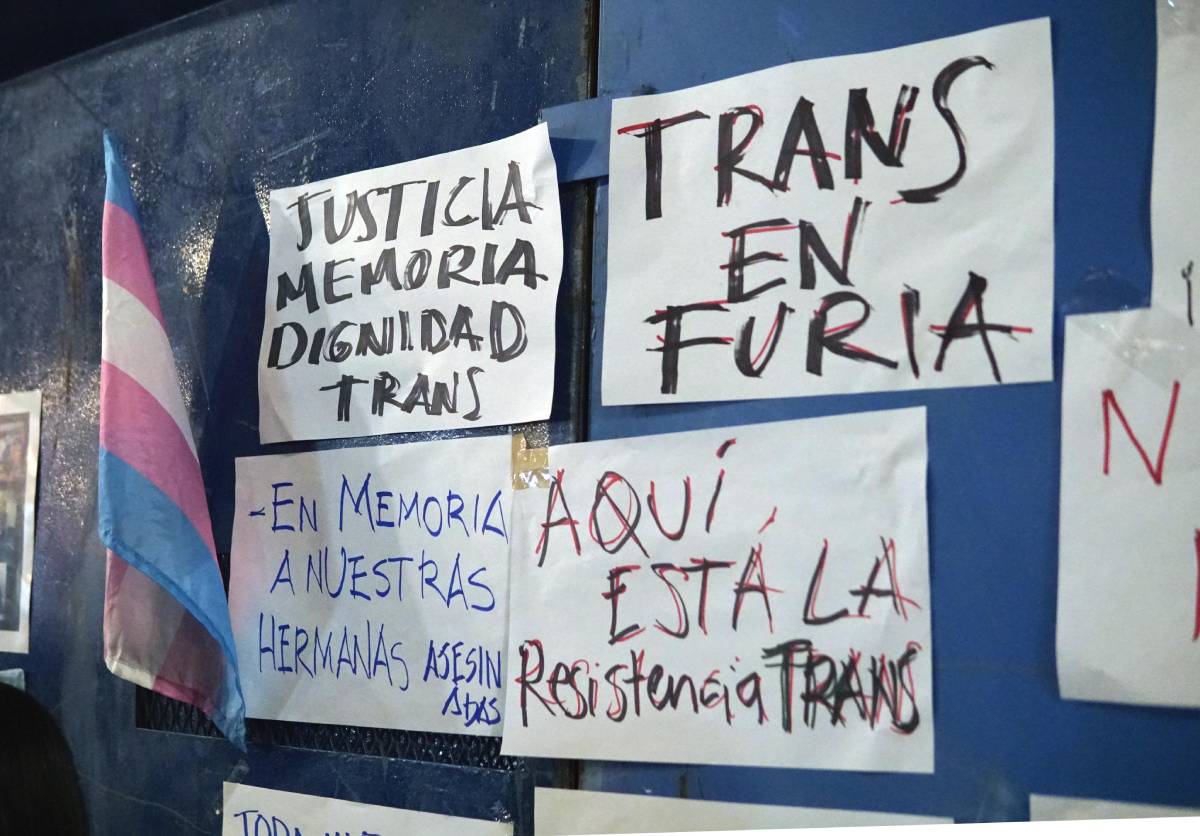
“Once again, hatred, violence, and indifference have taken the life of a fellow trans woman. Once again, a trans identity has been silenced. We cannot normalize this; we cannot look the other way. Every hate crime hurts, pierces us, and reminds us that we still have a long way to go to live in a society with true equality. We demand a serious, swift investigation with a gender and diversity perspective. We demand that this act not go unpunished. We demand justice for Caí,” said ATTTA on Saturday the 11th, during the funeral. That same afternoon, LGBT organizations held a demonstration in San Martín Square in Puerto Iguazú to demand justice for her.
We are present
We are committed to journalism that delves into the territories and conducts thorough investigations, combined with new technologies and narrative formats. We want the protagonists, their stories, and their struggles to be present.
SUPPORT US

FOLLOW US
Related notes
We are present
This and other stories are not usually on the media agenda. Together we can bring them to light.