

Paraguay: For the first time, sex workers marched as a union recognized by the State
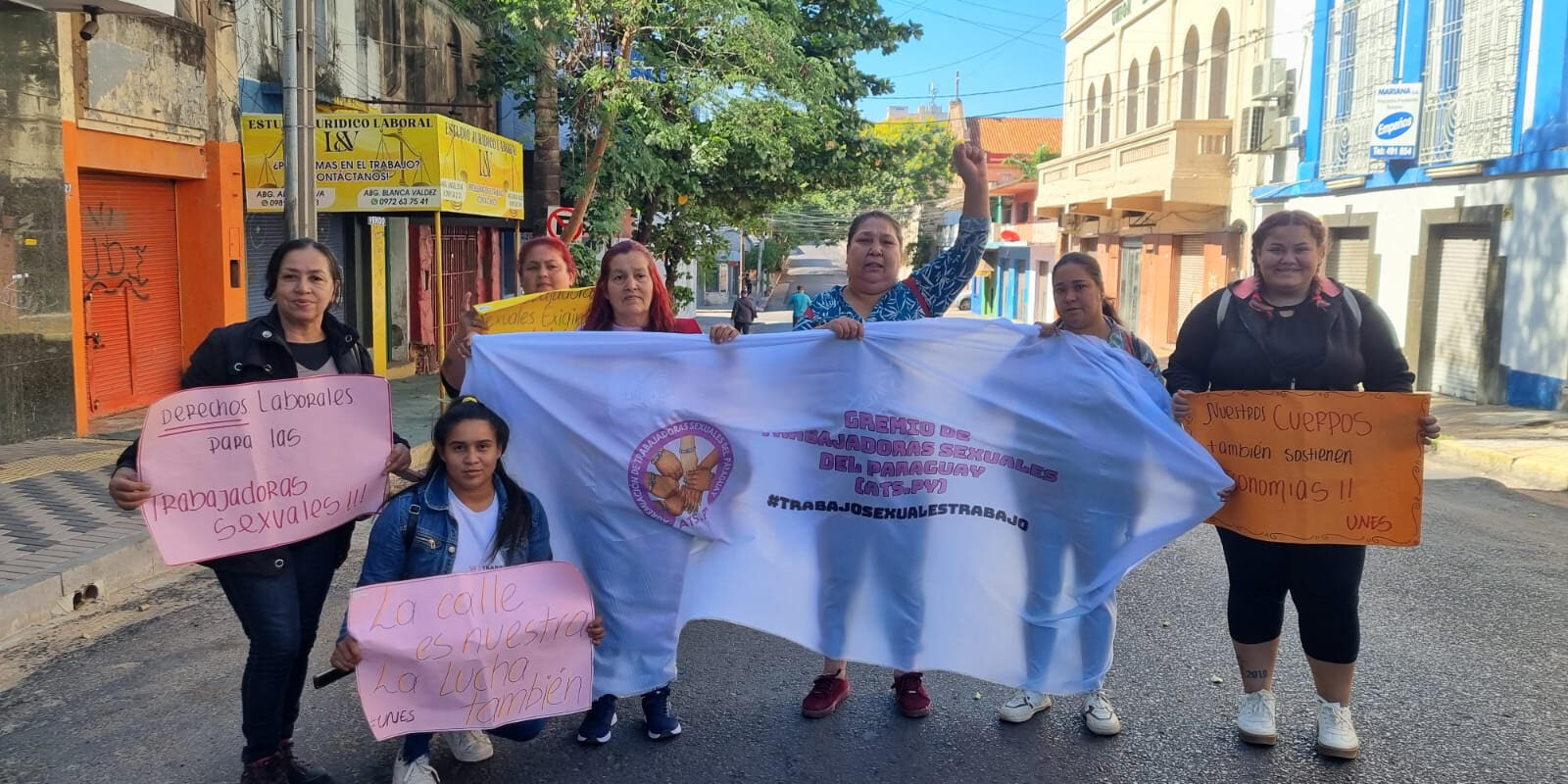
Paraguay's first national organization of sex workers marched on May 1st as a union. A history of collective struggle for labor rights, dignity, and autonomy.


Share

Lucy Esquivel was 23 years old the first time she set foot in Plaza Uruguaya, in downtown Asunción. She had walked from Avenida Colón, without money for the bus fare. In the plaza, a woman selling tereré explained to her what the women who "goed down" on the street did. "They sell their bodies," she said. "Oh, really?" Lucy asked. The next day, she was already standing on the corner by the train tracks.
“It was my own decision; no one took me, no one told me. I simply had many needs. I was already a mother,” she says. Thirty years later, Lucy not only remains steadfast, but she is also the executive secretary of RedTraSex (Network of Women Sex Workers of Latin America and the Caribbean).
Mónica Aquino arrived in Asunción from Carapeguá at the age of 16, fleeing a violent reality. She didn't speak Spanish, nor did she know the city. She traveled back and forth by bus on Brasil Street. "What are you doing here?" a hot dog vendor in the plaza asked her. "I don't know, I have nowhere to go." The vendor invited her for a barbecue and welcomed her into her home, where she lived for years. Her nickname was Petiza.
“Nobody told me to ‘go prostitute myself.’ I made it on my own; I worked in Plaza Uruguaya for many years,” she recalls. During that time, she fell into a problematic drug habit. “Lucy brought me her clothes, her food, and locked me up in a hotel for a month so I could detox. She saved my life,” she remembers. Currently, Mónica Aquino is president of UNES and marched for the first time alongside her fellow sex workers as part of a union recognized by the Ministry of Labor.
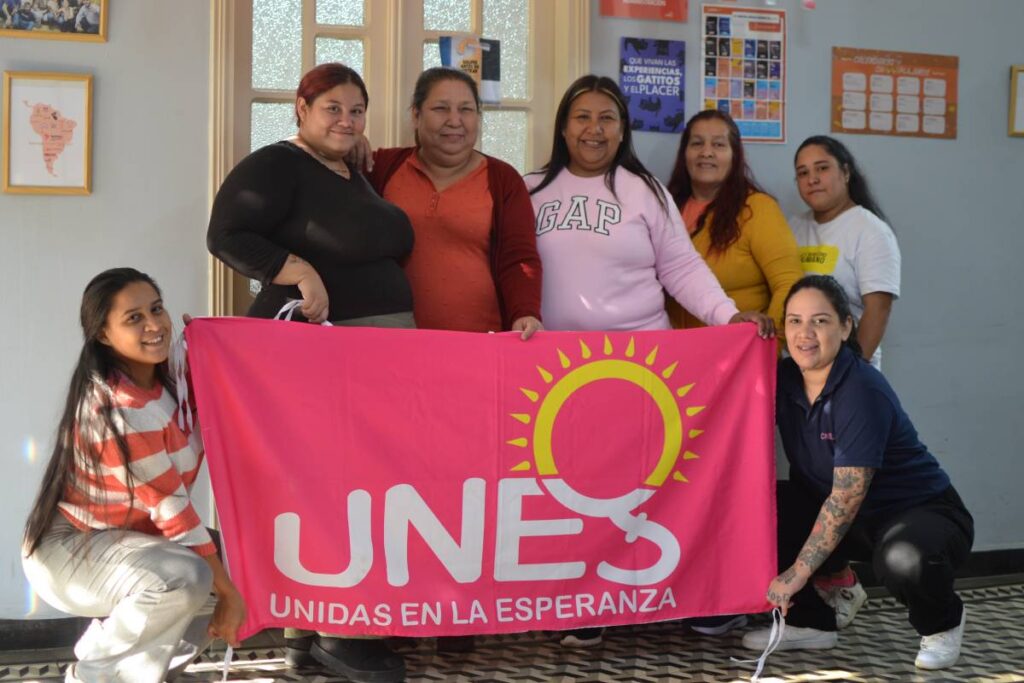
The story of UNES is one of resistance, community, and organization in the face of criminalization and stigma. It is also a love letter between two friends who worked together to one day have their own office.
“We were already forming a community without knowing it”
In the early 2000s, when the police could still arrest sex workers simply for carrying condoms in their purses, Lucy Esquivel and Mónica Aquino were already dreaming of their own organization. “People from a church-affiliated organization would visit us, talking about rights, prevention, and workshops. But for us, the workshop was just about mechanics,” Lucy recalls with a laugh. “We went because they gave out snacks. But little by little, we started to listen.”.
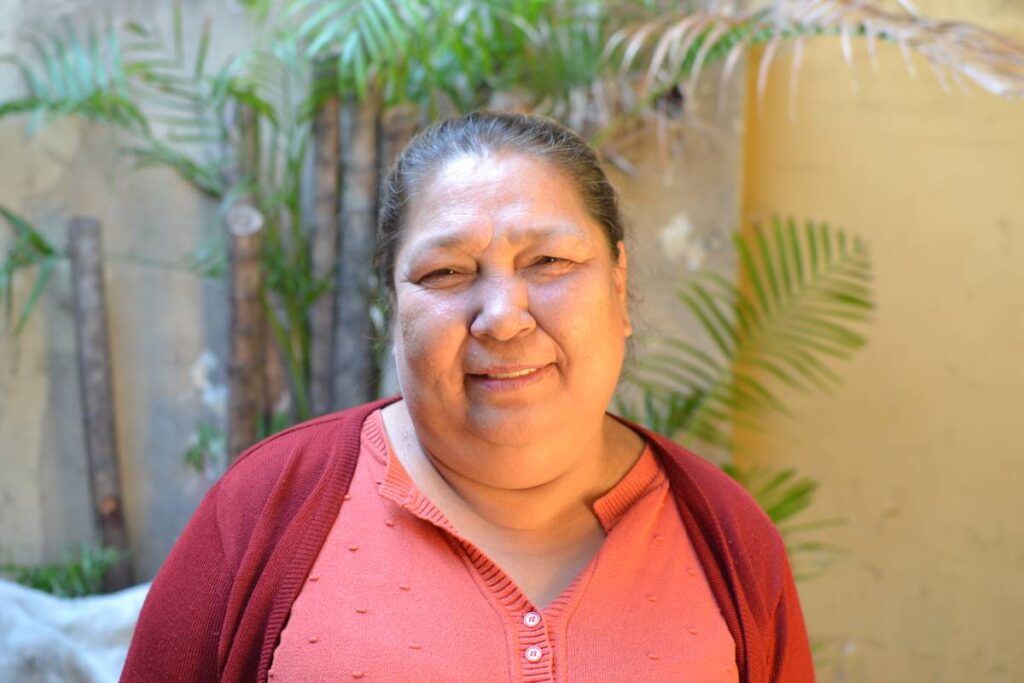
Those visits planted a seed in Lucy. “I used to tell Mónica: one day we’re going to have our own organization,” she says. What was once just camaraderie became a political practice. “We were already building community before we even knew what community was,” Lucy reflects. They supported sex workers with HIV, organized wakes for those who died young, and secured funding for rent, food, or even a coffin. “We even managed to get a friend with cancer a wedding in a white dress. It was her dream.”
The sun in the lives of sex workers
In 2004, they founded Unidas en la Esperanza (UNES), an organization of sex workers based in Asunción. The founding assembly didn't have a clear date. They recount, laughing, that the recording secretary, nicknamed Zuni Lolela, wrote that the first assembly took place "in the month of October," so to this day they celebrate all of October as their anniversary month.
But that same day, Lucy was unanimously elected president. The name “United in Hope” arose from the collective desire to be a beacon of hope in the lives of sex workers. To illuminate a life without repression, without prison, without HIV. A life with rights.
The organization was sustained through hard work. It began to expand into neighborhoods and departments. They did grassroots work in bars, saunas, and on the street. They went area by area distributing condoms, information, and emotional support. In 2009, they opened their first office. In 2015, they succeeded in changing a municipal ordinance that allowed sex workers to rent premises and work independently.
It also allowed many to organize themselves into groups of two or three to share spaces or the possibility of doing sex work virtually. “We’re not all on the street anymore. That’s also thanks to organizing,” Lucy says. They worked to raise awareness among police officers and inspectors. “These days, if one of our colleagues is stopped, we show them the ordinance right in their faces. ‘You can’t ask me for anything, this is what the law says,’” Mónica emphasizes.
Today UNES has 450 members in nine departments and is the only national organization of sex workers.
The police are the pimps
Being a sex worker in Paraguay has historically been synonymous with persecution. During the dictatorship of Alfredo Stroessner (1954-1989), Mónica recounts being arrested and abused on several occasions. “They would take us to a nursing home in Capiatá. If you wanted to leave the police station, you had to sleep with a policeman or they would rape you. That's where I lost my three-month-old son,” she says.
“Many of my colleagues lost their babies,” Lucy adds. “Others had their heads shaved, they lost their memories. Some had children with police officers—the same ones who arrested them.” Today, the repression has changed form. It’s no longer raids, but bribes. “The police are still the pimps,” Lucy says. “They demand money from my colleagues to let them work, especially in the areas around the bus terminal, in Cuatro Mojones,” where four cities meet: Asunción, Lambaré, Villa Elisa, and Fernando de la Mora. “If they don’t pay, they create a barrier in front of the establishment and scare away the clients,” she explains.
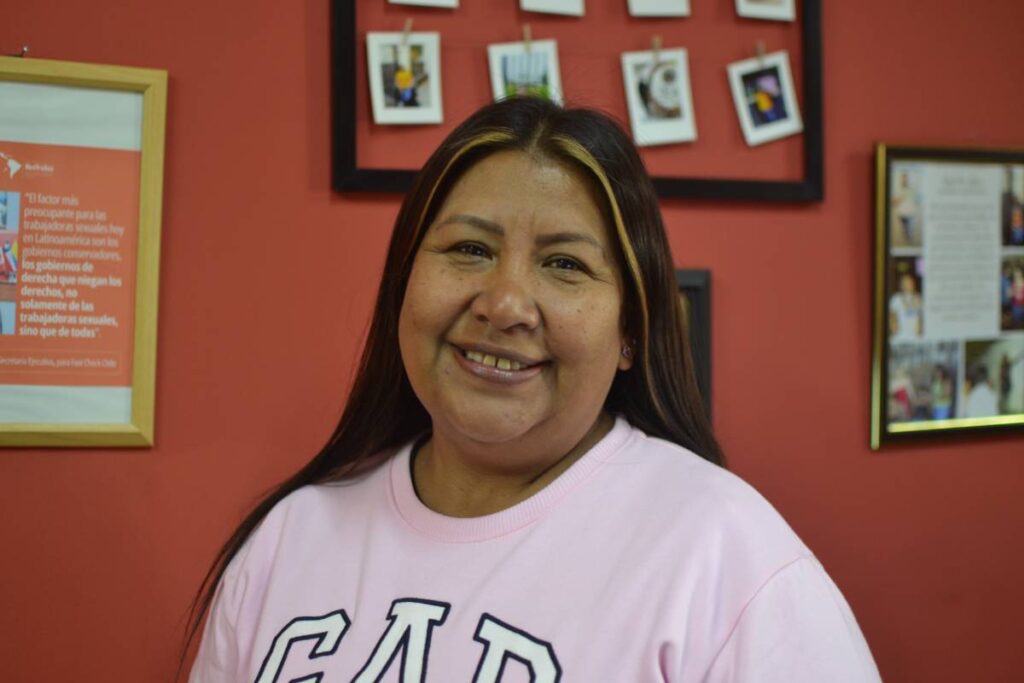
The abuse isn't limited to Asunción. According to leader Mónica Aquino, the cities where sex workers face the most discrimination are Encarnación and Ciudad del Este. “In Encarnación, they don't even welcome us. In Itapúa, there are hardly any sex workers left; they've all migrated (because they aren't allowed to work independently). In Ciudad del Este, a neighbor threw hot water on one of my colleagues. We had to intervene so she could move,” she says.
Transforming pain into organization
On November 21, 2024, after three years of struggle, the Ministry of Labor recognized UNES as a union. With this recognition, they can now contribute to social security and apply for retirement benefits. Some members are already registered with the Single Taxpayer Registry and issue invoices for personal services.
The Paraguayan Association of Sex Workers (UNES) is affiliated with the Confederation of the Working Class (CCT), with whom they have worked since 2018. They explained that they did not form a union because they work independently. “Informality is not a choice: it is a condition imposed by the State and by societal prejudices,” reads a UNES post on their social media for Labor Day.
Like other workers such as recyclers or delivery drivers, sex workers earn a living without contracts, social security, or the basic rights afforded to all workers. Even so, their recognition as a union is a significant milestone in the defense of their labor rights and a major step toward improving their working conditions.
For years they have been fighting for a legal framework to regulate sex work, a national law that recognizes sex work as work and guarantees their rights.
“This May 1st we march as a union”
“Our bodies also sustain economies,” read the sign held by Paty Rodas, the youngest member of UNES, at the May Day march. Along with her companions, she marched at 9 a.m. from the same place where many of them began. They left Plaza Uruguaya and headed toward the Ministry of Labor. “We don’t sell our bodies. I spent 17 years on a street corner. If I sold my body, I wouldn’t have a face, eyes, or anything. We sell a service. And any service that is paid for is work,” says Lucy.
“We want sex work to be recognized as work. Because it’s not regulated, we can’t file a complaint, access decent housing, or get a loan,” Mónica emphasized. That’s why they are working on a bill that provides real protection, especially for younger women, trans women, and Indigenous women, who face double or triple discrimination.
On May 1st, they marched for all those who didn't live to see this day. For those who died of HIV without care. For those who died in childbirth. For those who were murdered without any investigation. They also march for economic justice. “We don't want to be rescued. We want to be recognized,” Lucy says firmly.
“We always dreamed of this. We always wanted to march on May 1st with our colleagues, as the union of working women that we are,” says Mónica. This year, for the first time, they made it happen.
We are present
We are committed to journalism that delves into the territories and conducts thorough investigations, combined with new technologies and narrative formats. We want the protagonists, their stories, and their struggles to be present.
SUPPORT US

FOLLOW US
Related notes

We are present
This and other stories are not usually on the media agenda. Together we can bring them to light.