

Celebration and remembrance: Mocha Celis High School celebrated its annual festival and paid tribute to Zoe López
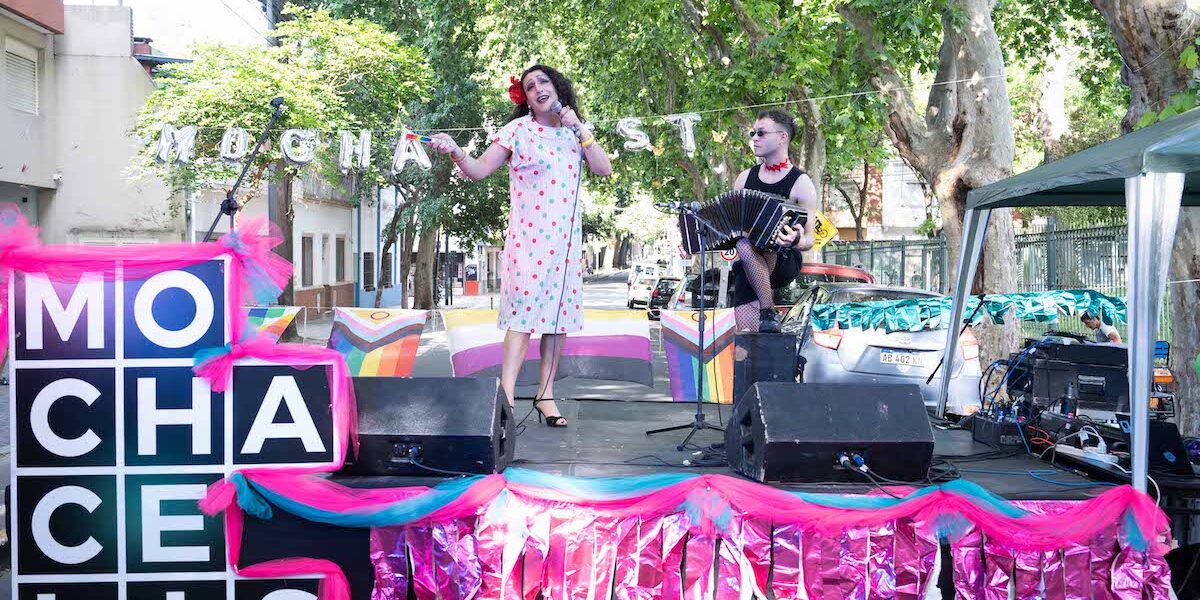
The Mocha Celis trans high school celebrated its 13th anniversary with its annual Mocha Fest, a tribute to Zoe. The event took place outdoors, with free admission, music, performances, and a fair.


Share

Queen of the jungle,
When the lionesses are unleashed, no one will be safe.
They cannot cope with the fact that it exists,
Change the course of history like Joan of Arc.
The lyrics of Puerto Rican trans rapper Villano Antillano resonate loudly in the Buenos Aires neighborhood of Balvanera, near the small soccer field in Plaza Velasco Ibarra. Amateur soccer players, young and old, and curious onlookers hang from the fence, eager to know what all the fuss is about: music, metallic light blue and pink pennants strung across the street from tree to tree, and paper wreaths of daisies. The afternoon of Saturday, November 16th, is scorching hot under the sun.
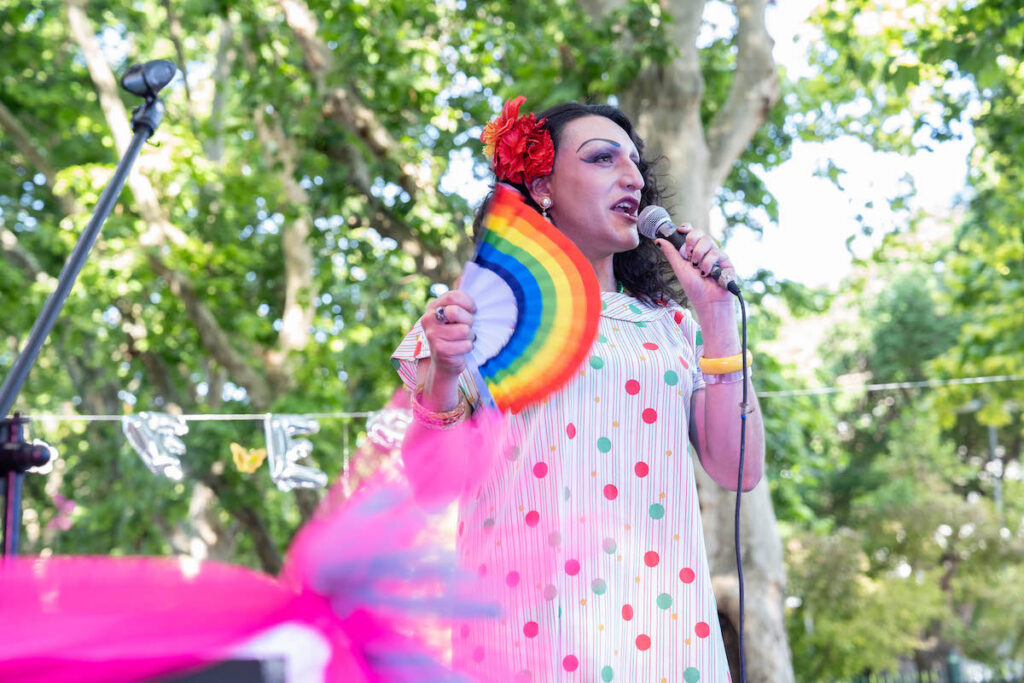
Can any transvestites in the back hear me?
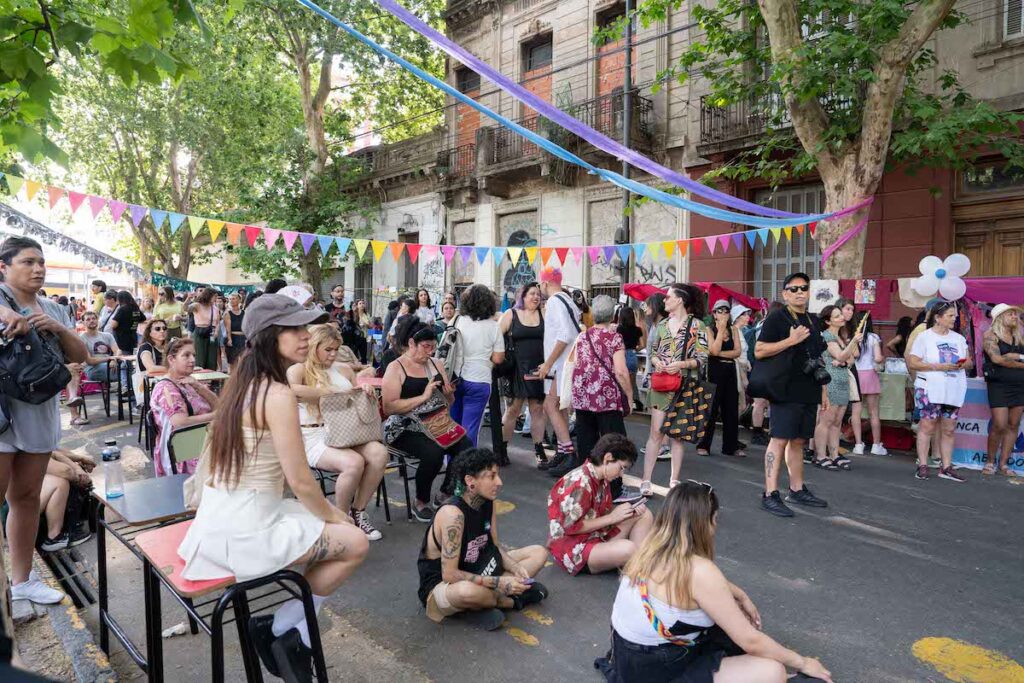
The shouts in response are immediate. Mocha Fest, the Mocha Celis Trans and Non-Binary Popular High School (TTNB), has begun, and people are constantly entering from Mexico and Jujuy streets. The street is blocked by a row of blue, red, and green school benches. Live music, shows, and a fair will be the highlights of the day.
Second home
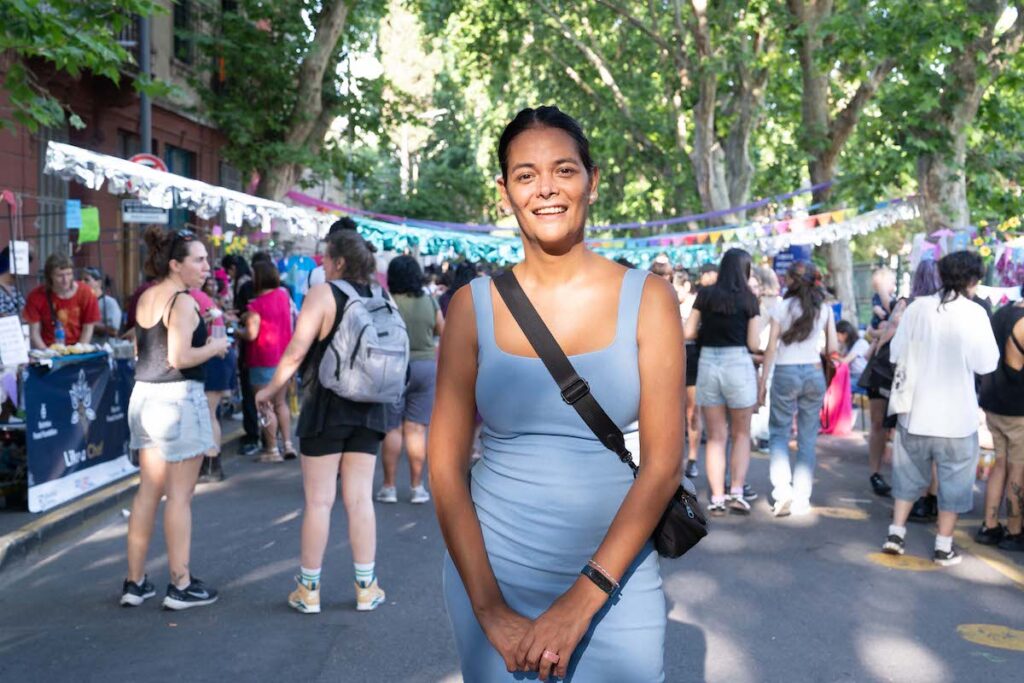
"It's three thousand pesos, affordable," Julieta says as she adds a little mayonnaise and lemon to a generous chicken sandwich for a man browsing the food and entrepreneurship fair. Stretching along the entire length of the bike path in Mexico City, there are about thirty stalls where students from Mocha Celis and fellow students from other organizations showcase their business projects. The man with the sandwich thanks her, and Julieta gladly responds as she starts slicing bread. Julieta Noel is 38 years old and a student at Mocha Celis, a high school that has been operating for thirteen years and was the first transgender high school in the world. It's an essential reference point that has spurred the creation of similar programs in more than 15 provinces of Argentina, and in countries throughout Latin America and the Caribbean.
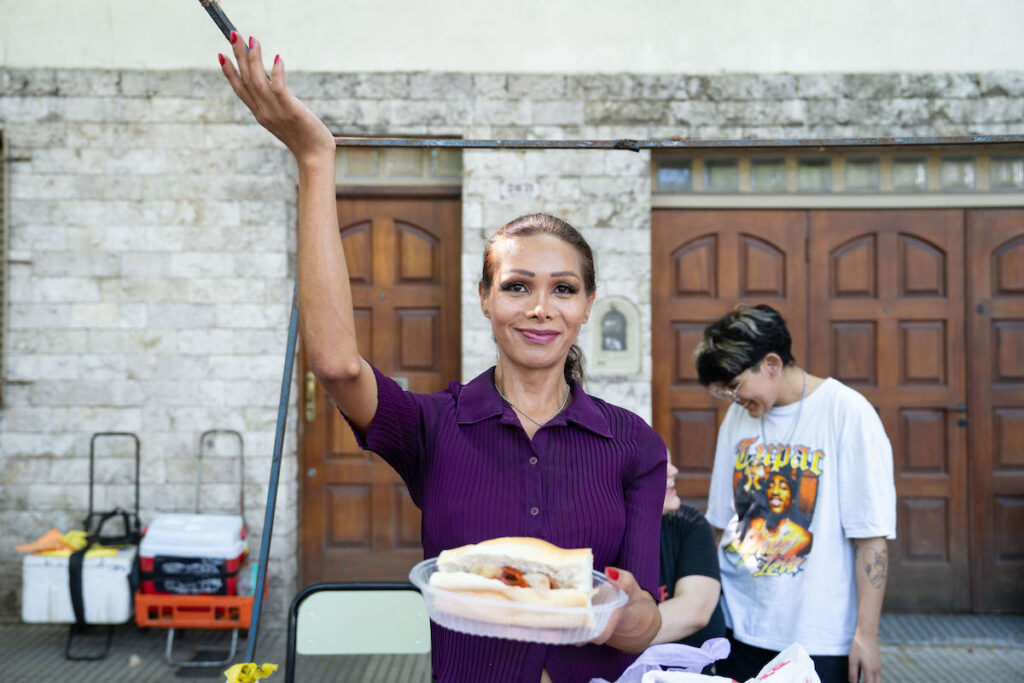
“At Mocha Celis, I found a second home, a very comfortable place where you can socialize and be yourself, where they're not focused on the judgmental stares that come from heterosexuality. We have our own codes, our own slang, and it's much more pleasant. At the school I was at, I couldn't let loose like I do here.” Julieta came from Peru and arrived at the Popular High School through a friend she met when she was homeless. “When I started to recover, they told me how I could enroll and continue my studies. I traveled to Peru, brought my certificates, enrolled, and now here I am.” In Peru, she had completed up to the second year of high school. “I couldn't study; I couldn't retain the material. And now I can study, I understand it, and I can concentrate.” Julieta says that Mocha is a very important space: “It provides tools to evolve as a person, and because you can experience that solidarity and support from others who understand what you're going through. Everyone is welcome.”
Tribute to Zoe
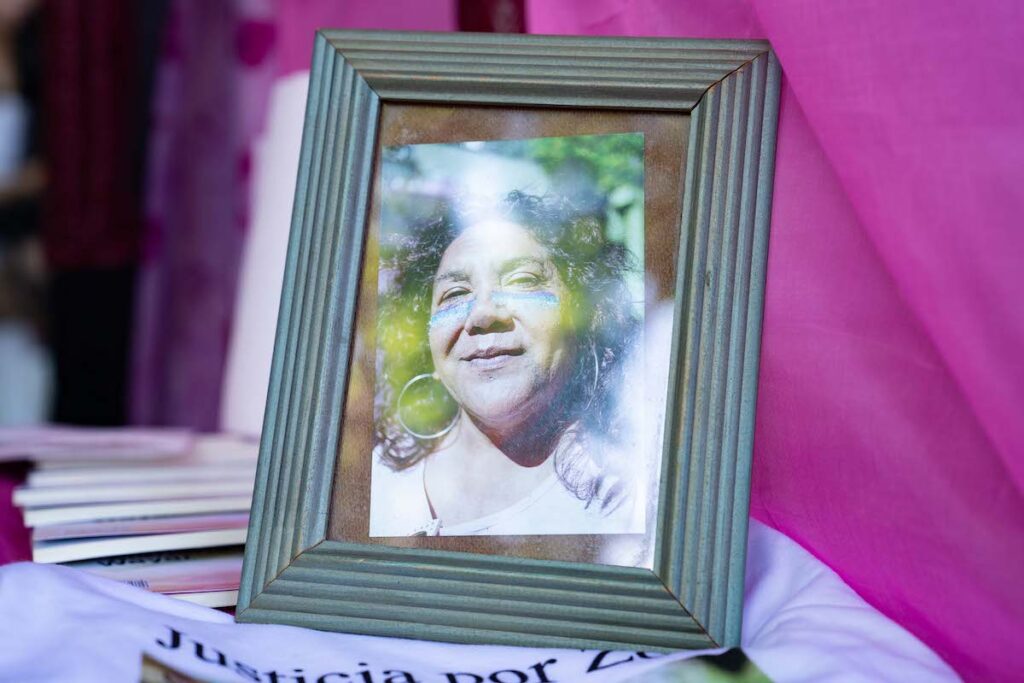
A few stalls away, near the stage, a girl in a denim skirt and a white ruffled t-shirt delicately combs her hair while chatting loudly to someone in the distance. It's the Gondolín stall, the cooperative hotel, reclaimed, self-managed, and inhabited by trans women. On the stall's table is a framed photo of Diana Zoe López García , a leader in the trans community, president of the Hotel Gondolín, and a victim of transphobic violence when she was murdered a year ago by her partner, Norberto Villegas.
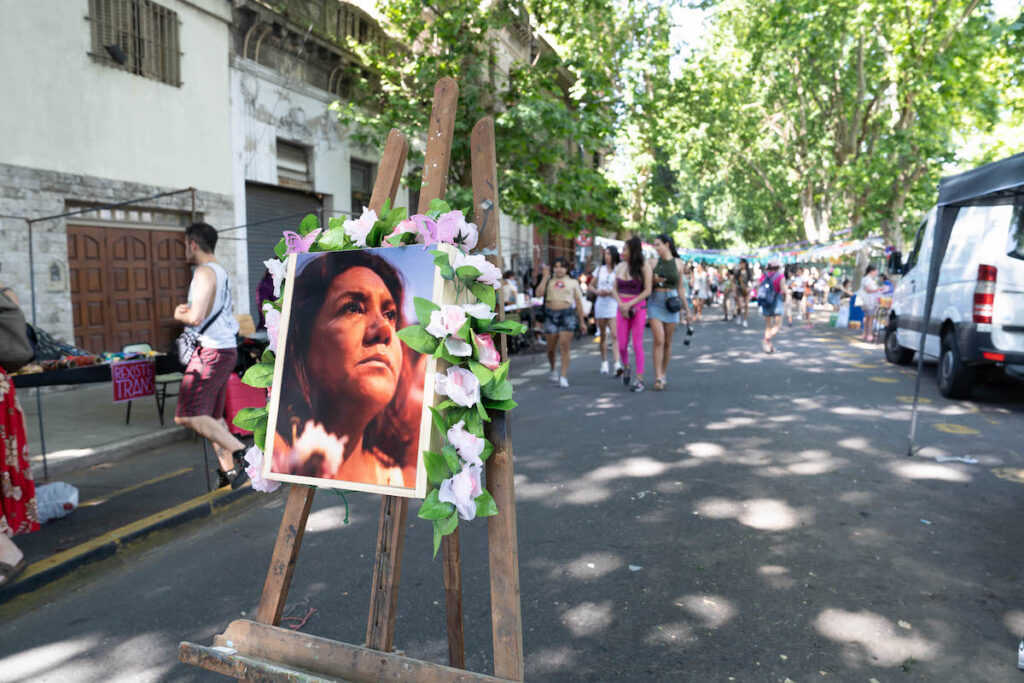
Justice for Zoe is the slogan of this year's Mocha Fest. Last year, everyone was waiting for her at this same festival, but Zoe never arrived. Her photo can also be seen at the entrance on the corner of Mexico and Jujuy streets, on a wooden stand next to a table covered with a blue tablecloth adorned with paper flowers and butterflies surrounding three photos of other women who died this year. It's an altar where anyone can approach and leave written messages that will be burned at the end of the day.
"Age, gender, and color don't matter."
“El Gondolín is my home,” says Viviana, and continues: “I live at El Gondolín because of Diana Zoe López García. For me, she transcended our friendship and became family, and I still can't process her death. I've known her since I was practically a child; I'll be 60 next year.” Viviana was also able to finish her secondary studies at Mocha Celis and is now a nurse. “Mocha is an inclusive place for anyone who wants to study, regardless of age, gender, race, or anything else. If you have the desire to study, to enrich yourself, you can not only finish high school, but also take courses in cooking, computer skills, and I'm currently taking an English course. So it's great to come to Mocha and check things out. If you want to get ahead, there are many wonderful things to learn at Mocha Celis.”
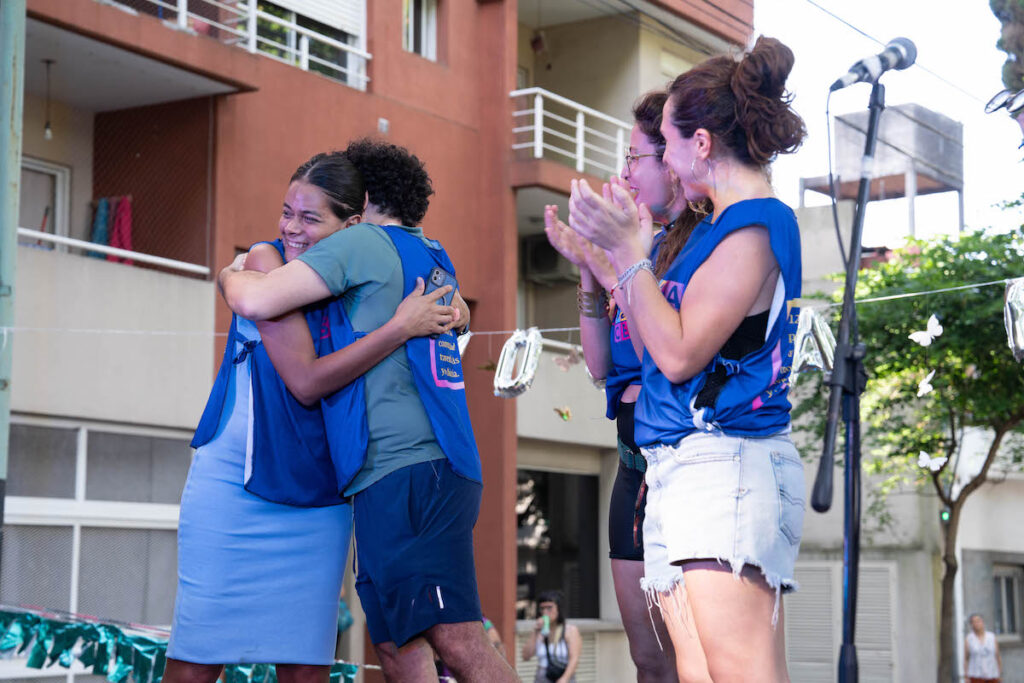
"Patito, are you there?" The question comes from the stage where Tita from San Telmo and Diana, a graduate and another student from Mocha, are livening up the day. They're looking for Pato, Zoe's sister, who comes up escorted by three classmates from Gondo.
“You were a victim of transphobic murder, and I will demand justice until my dying day, just as I promised you. I always wanted, and still want, to fulfill those dreams we shared and talked about so many times. Today, we've created La Casa de Zoe, a socio-cultural space for the entire LGBTQ+ community, keeping your essence alive in every corner of this space, today, tomorrow, and always. Everyone here remembers you, sister. All I can say is that we will continue demanding justice. It was transphobic murder; justice for Zoe.”
The perforations
Collective mourning and celebration alternate throughout the day like a familiar back-and-forth.
"Please get ready, theater students, the performance is about to begin!" Tita and Lariana called out on stage, after Viviana Gonzalez read a poem dedicated to Norma Nahuelcura, mother of Tehuel de la Torre, who was present at the Mocha Fest.
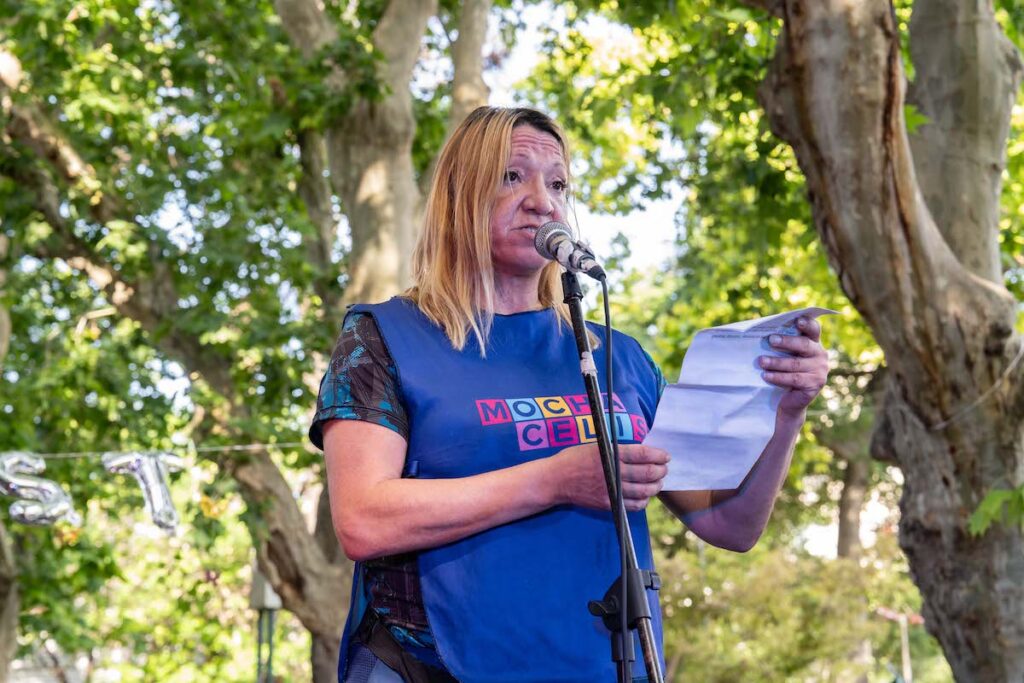
At Julieta Noel's sandwich stand is Vanesa Strauch, an actress, improviser, and co-host of the radio program Furia Bebé. She explains that she teaches theater to students of all grades at the Popular High School. "I wanted to offer something I had learned and could pass on," she says, adding, "But La Mocha isn't just a high school; it's a place of support, a place where we can discuss health issues, psychological issues, issues of love, issues of companionship. You have to think about all of that to understand the importance of La Mocha, and that's why we're all here today."
The cooperative
Across from Julieta's stall, on the sidewalk by the small soccer field, there's a small extension of the market. There you'll find Mocha Textil, a high school cooperative where students, like Emma and Merlu, a graduate and another student, are committed to dignified, collective, and creative work.
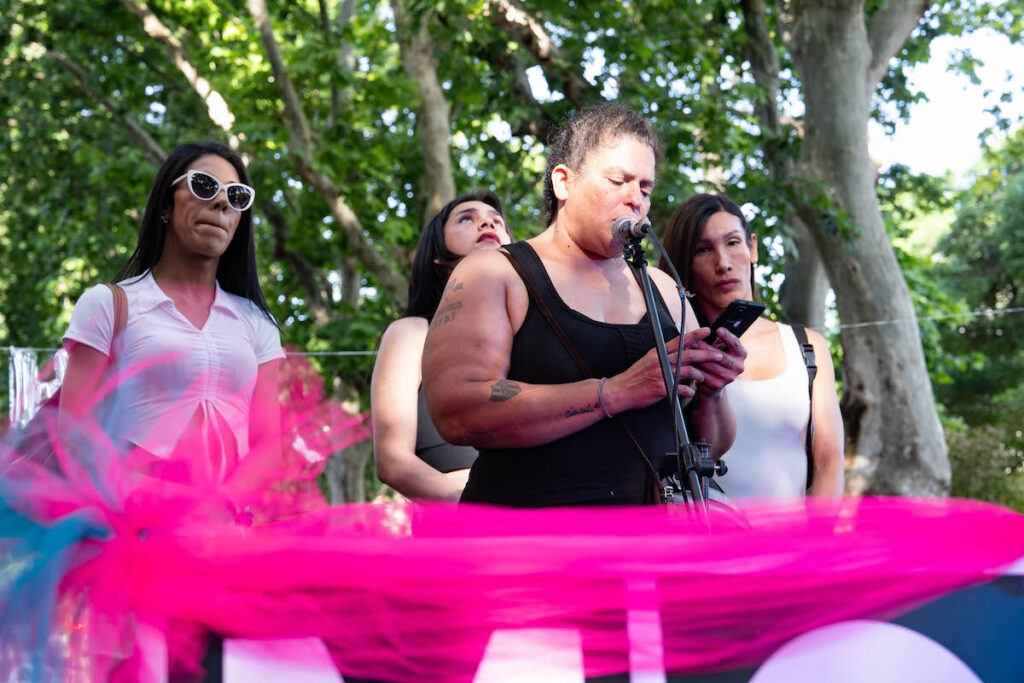
“This cooperative is an offshoot of the textile classes where third-year graduates work. It started as part of a vocational sublimation workshop held at the school. We've done orders for companies like Electrolux and Prisma,” they explain.
“I still have a few subjects to finish, but I don’t plan on stopping school because I think it’s a wonderful place,” says Merlu, adding, “In my opinion, it’s the right way to teach: by having fun, learning by having fun.” Emma says these spaces are necessary to be able to express oneself freely. “It’s very difficult, especially now, to be who you really want to be publicly and have a space from which you can build upon who you are.” Merlu adds, “Besides, it’s a place open to the community. You don’t have to be a transvestite, trans, or non-binary person. Anyone can come—straight, bisexual, we’re not interested in that. We’re interested in you coming, approaching us, and enjoying this wonderful place.”
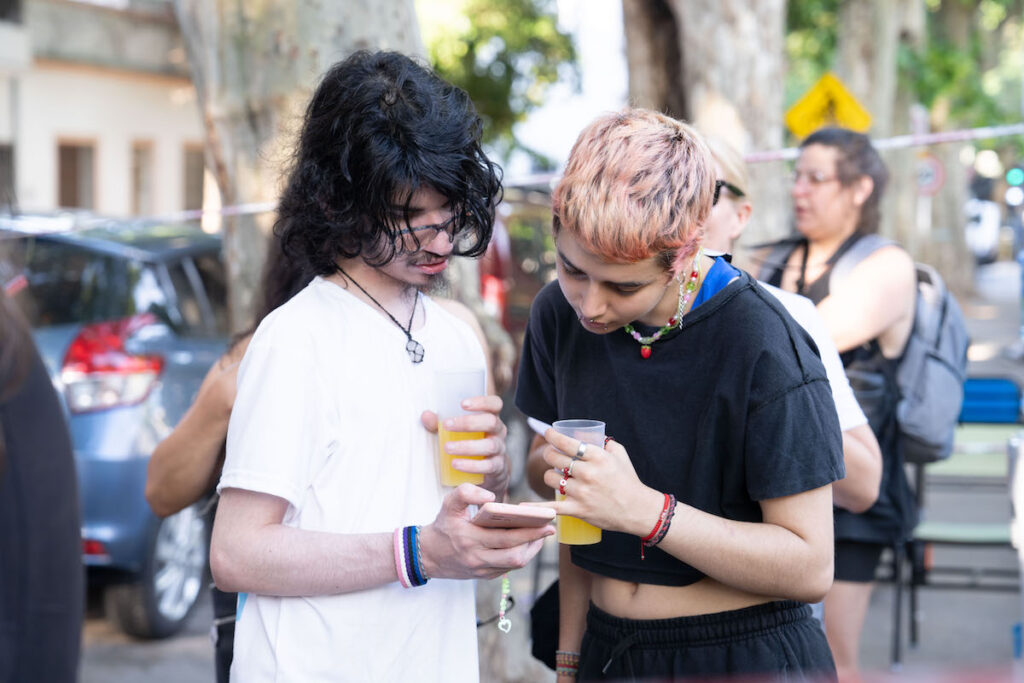
Open to all communities
The Mocha Celis High School is non-exclusive and therefore there are students and teachers from other communities or groups such as Afro-descendant people, indigenous people, people with disabilities, migrants and single mothers.
"Out with Milei!!" The chant comes, once again, from the stage. "Out!" responds the crowd, now filling much of the street, some standing, others sitting on the ground or on school benches, eating fruit salad, puddings, and drinking mate or something cool. A group of teachers has just come down, all wearing Mocha Celis vests. Among them, adorned in a light blue dress, is Virginia Silveira, a high school graduate, teacher, and the newly elected President of the Mocha Celis Civil Association.
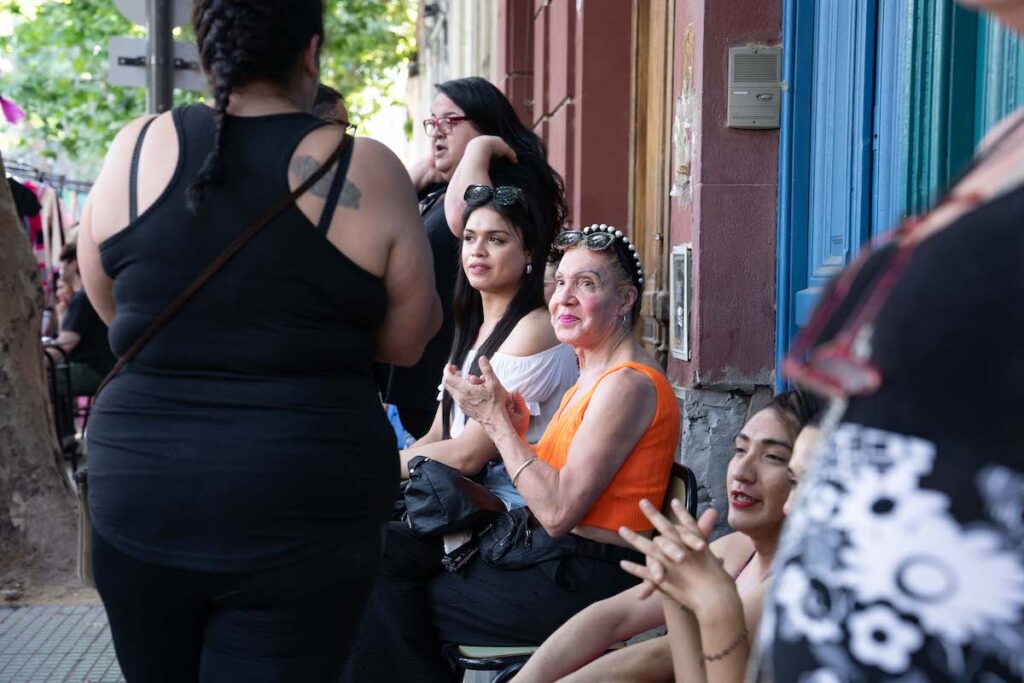
Virginia recounts how difficult it was for her to study elsewhere. “And when I found La Mocha, I found my place of belonging, where I learned about my rights, and I think that's what's important: knowing your rights and learning to demand that they be respected.” Virginia also highlights the school's teaching paradigm: “In all schools, there's this idea that there's a supreme being who possesses all knowledge. At La Mocha, we work with the knowledge that each person brings with them.” The current political situation is also addressed by Virginia: “We have many people who, due to the political context, are experiencing situations that shouldn't be happening. More than 40 people are homeless; people can't afford the bus fare to come to school—it's either the bus fare or food—so we're dealing with these issues. Our duty and our struggle is to continue providing support and sustaining the realities of our fellow students.”
The streetlights begin to fade, and the stage will welcome the bands so the party can get going and the celebration can continue. And from the stage come the words, almost like a mantra:
Here we are, we exist, and we resist. With love, with rebellion, and with our madness.
We are present
We are committed to journalism that delves into the territories and conducts thorough investigations, combined with new technologies and narrative formats. We want the protagonists, their stories, and their struggles to be present.
SUPPORT US

FOLLOW US
Related notes


We are present
This and other stories are not usually on the media agenda. Together we can bring them to light.
1 Comment