

“The Bonaparte is our hope”: why this hospital is a school in mental health and diversity
Laura Bonaparte Hospital facilitates access to mental health care for hundreds of vulnerable people. The importance of working with LGBT individuals and women from a human rights perspective.


Share

BUENOS AIRES, Argentina. “Thanks to Bonaparte I have a job,” “Thanks to Bonaparte I have connections,” “Thanks to Bonaparte I’m alive,” “We sex workers get treatment at Bonaparte,” “I’m afraid for my mental health,” “We patients resist,” “Bonaparte is our hope.”
The phrases account for the 9,000 telephone consultations, the 7,000 interventions per emergency room and the 18,200 consultations so far this year provided by the Laura Bonaparte Hospital, located at Combate de los Pozos 2133 (Parque Patricios).

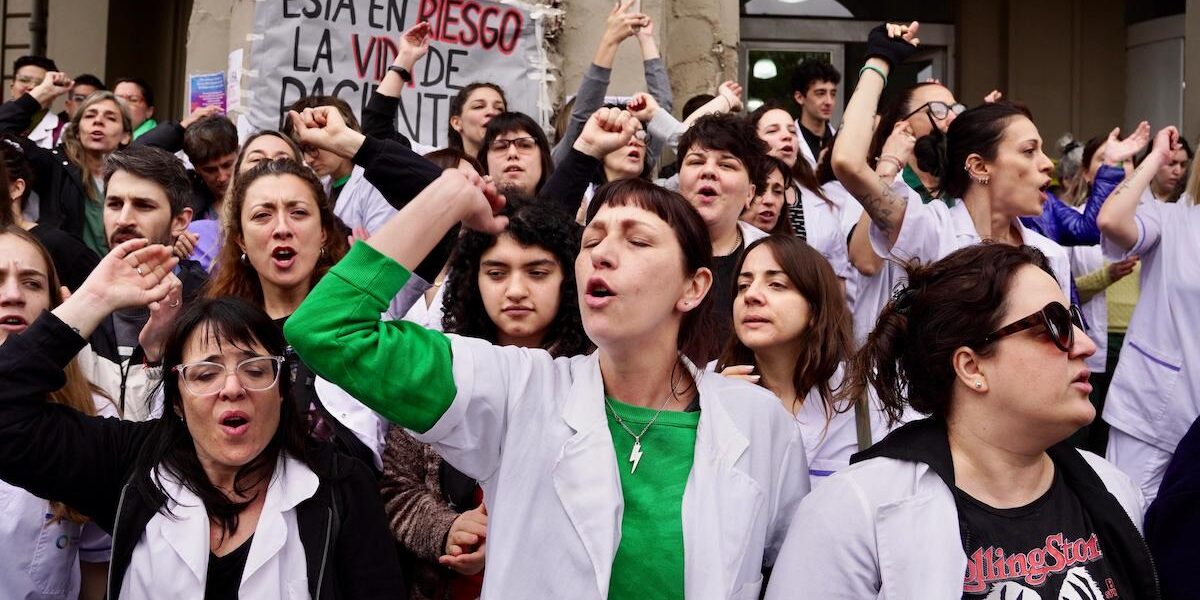
Handwritten, some in color and others more elaborate, the messages reveal both the love and despair of the patients at the institution, which faced a threat of closure last week. They also highlight the importance of providing comprehensive mental health care, delivered responsibly and with a human rights perspective.
Mental health forgotten
The Laura Bonaparte Hospital was fundamental in the deinstitutionalization process under the Mental Health Law. Its work with sexual minorities, framed within the Gender Identity Law, is also crucial.

“People always complain, but the truth is I was never mistreated here. I always received top-notch care,” L, a woman currently receiving psychiatric treatment, told Agencia Presentes
She travels once a week from the Almagro neighborhood for her appointment. She explains that she now comes for psychiatric consultations, but that she used to come more frequently because she received support in other areas of the hospital.
Diversities
The Comprehensive Health Department is a vital space for LGBTQ+ individuals and women. Established four years ago, it guarantees comprehensive care and support for gender-affirming treatments. “This support isn't limited to hormone therapy. People from the LGBTQ+ community also come for regular health checkups. The hospital is open to the community,” Cecilia Karagueuzian, head of the Internal Medicine Service at the Comprehensive Health Department, explained to Presentes
With the creation of the department, services were expanded, general practitioners were added, and the staff grew. Services also included sexual health, women's health, hormone therapy support, voluntary termination of pregnancy, and pain management.
“That allowed access for many more people,” says Karagueuzian. “It also allowed the service to be opened up to the community. Anyone who lives nearby or simply wants to come for a checkup can make an appointment with the general practitioners here at the hospital. There’s a pool of approximately 2,000 to 3,000 people who only receive care from us at this service,” the doctor adds.
Journalist Marta Dillon recalled on the social network X that the care provided at the Bonaparte hospital was key to supporting Sofía, the lesbian woman who survived the triple lesbicide attack in a Barracas hotel.

A place where you're treated well
Celina Esteban joined Bonaparte Hospital in 2023 as an on-call nurse. She says she was immediately accepted by her colleagues and patients. As a trans woman, she was hired under Law 27.636, the trans and travesti employment quota law. This year, she was one of the employees who had been dismissed but was successfully reinstated.
“This job means so much to me. I love caring for others, helping them. As a patient, I experienced a lot of mistreatment, or that dismissive, dismissive kind of care. I always wanted to dedicate myself to this, to treat people the way I would have liked to be treated,” she tells Presentes.
The nurse trained at the Cecilia Grierson school and later earned her degree at the National University of Buenos Aires. She says that many trans patients come to the clinic, “it’s excellent because there are many spaces for them.”
Celina emphasizes the importance of community outreach. “We are a 24-hour hospital that addresses all kinds of needs and maintains constant contact with the community. There is an interdisciplinary, community-based approach where our colleagues go into the neighborhood and are present with the community,” she explains.
Support for victims of gender violence
Workers from the 144 hotline have joined the defense of the Laura Bonaparte Hospital. They say the institution is a vital support center for women and gender-diverse individuals who, in addition to structural violence, are now suffering from the dismantling of the national government's gender policies.
The hospital has walk-in support services for victims of gender-based violence. This includes situations of abuse where the post-exposure prophylaxis protocol for sexually transmitted infections is activated, and in that context, it is coordinated with the comprehensive care service. “For us, this was already a major issue, and in these contexts of increased violence and rights violations, the need for interdisciplinary interventions is growing,” says Karagueuzian.
“The services offered to the community demonstrate that this is an institution that not only addresses the mental health of the population, but also their general health needs. The people who live in this institution have tangible health conditions. In that sense, this specific general and family medicine service becomes even more relevant and important.”
In community
The role of social organizations is fundamental to Bonaparte's patients' access to healthcare. “We couldn't function without the intervention of these organizations. We have a very demanding and intensive job working with the community through the Territorial Outreach Service, which was cut back by this government. Even so, we continue going to neighborhoods with health posts because we believe that healthcare must go to the people,” says Noelia Tuliano, a general practitioner and member of the comprehensive healthcare team.
Karagueuzian adds, “Many people come here through word of mouth. We provide strong support, especially with organizations that work on diversity issues. For the LGBTIQ+ community, accessibility in general is a problem, which is why we insist on the need for pluralistic, open spaces with qualified and trained staff to address the specific problems of this population.”
Tuliano adds that “it’s important to go where people live, see their living conditions, what kind of work they do, and what their basic needs are.” “We know that mental health isn’t just about the psyche and the brain; it’s influenced by a multitude of socioeconomic factors,” the doctor emphasizes. “You can help many people by actively listening, providing support, giving them medication… But if those people are homeless, living in extreme poverty, what kind of brain and psyche can endure that? It’s crucial to work on the ground, to get close to people and see their circumstances in order to offer services and adapt to what their lives truly are.”

An attempted closure that was stopped by organization
Following significant defunding, which impacted, for example, the local pharmacy, the government led by Javier Milei announced the "definitive closure" of the Laura Bonaparte Hospital on October 4th. Popular support, primarily from local residents, and widespread public condemnation were decisive in reversing this drastic measure.
In the final hours of Tuesday, and after a meeting with the National Ministry of Health, the internal commission of the hospital workers announced that there had been progress towards a preliminary agreement that includes the normalization of the functioning of all hospital services, continuity of all contracts and "creation of a joint working group with the authorities to discuss the terms of the proposed restructuring."
We are present
We are committed to journalism that delves into the territories and conducts thorough investigations, combined with new technologies and narrative formats. We want the protagonists, their stories, and their struggles to be present.
SUPPORT US

FOLLOW US
Related notes
We are present
This and other stories are not usually on the media agenda. Together we can bring them to light.