

Mexico 2023: Community responses, disinformation, and unremitting violence
Activism played a prominent role in Mexico this year. Violence persisted, but there were some advances in human rights.


Share

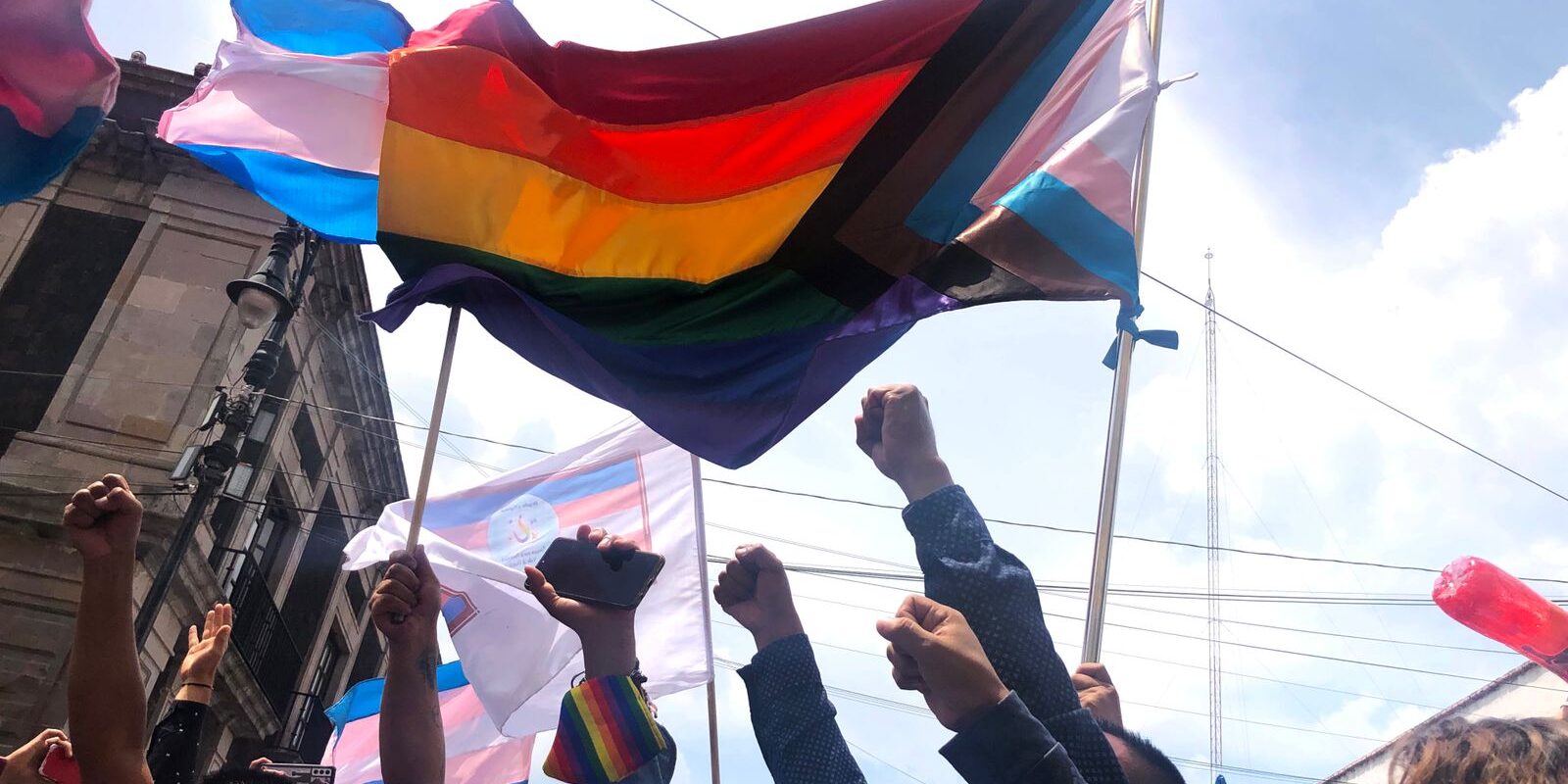
MEXICO CITY, Mexico. In 2023, Mexico saw significant activism in response to the disappearance of LGBT people, the fight for access to abortion and its decriminalization, and the creation of the first mausoleum for transgender women. Despite these efforts, violence and hate crimes persisted. The assassination of Ociel Baena, the first non-binary person to hold public office in the country, sparked massive protests and a wave of hate speech in digital spaces and the media.
In addition, members of Congress and anti-rights individuals spread misinformation about transgender people, inclusive language, and comprehensive sex education content in the new basic education textbooks.
Identification documents for non-binary people
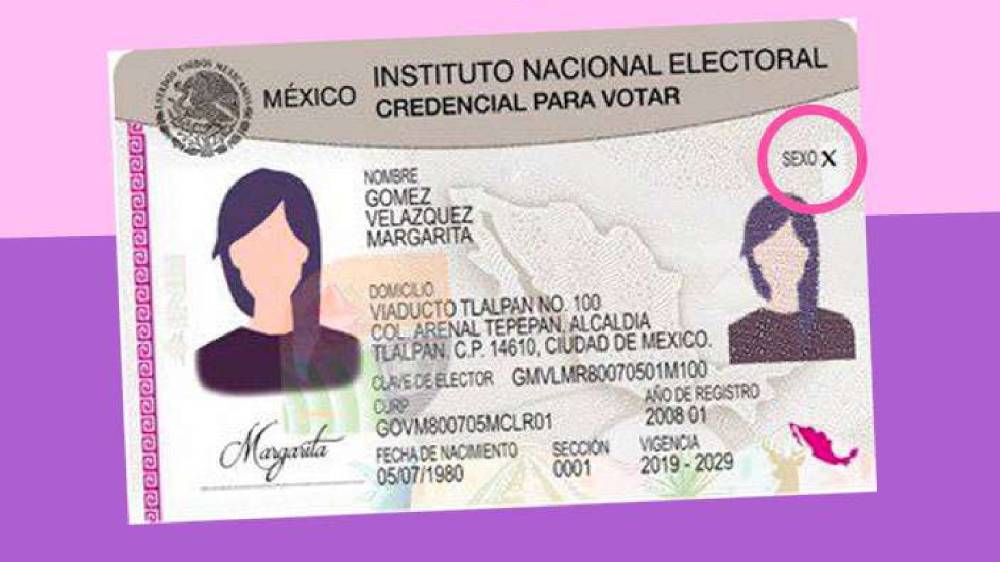
This year some institutions recognized the identity of non-binary people in identification documents such as the passport issued by the Ministry of Foreign Affairs, and the voter ID card issued by the National Electoral Institute.
Furthermore, the reform to the Civil Code of the state of Hidalgo, recognizing non-binary identity, only came into effect . This state is the only one in Mexico that, through its local Congress, reformed the recognition of the right to identity for non-binary people. In other states, this right has been achieved through legal appeals. Such was the case of Judge Ociel Baena, who had a birth certificate, CURP (Unique Population Registry Code), voter ID, and passport with her gender identity recognized.
Likewise, in Tabasco, Citlalli became the first non-binary minor to have their gender identity recognized .
Despite these individual advances that have occurred thanks to legal resources such as the injunction, Presentes published a note in which it identified that non-binary people seeking recognition of their identity face various obstacles ranging from lack of training and ignorance of staff in institutions to delays in obtaining their identification documents.
Abortion: a victory for activism and legal resources
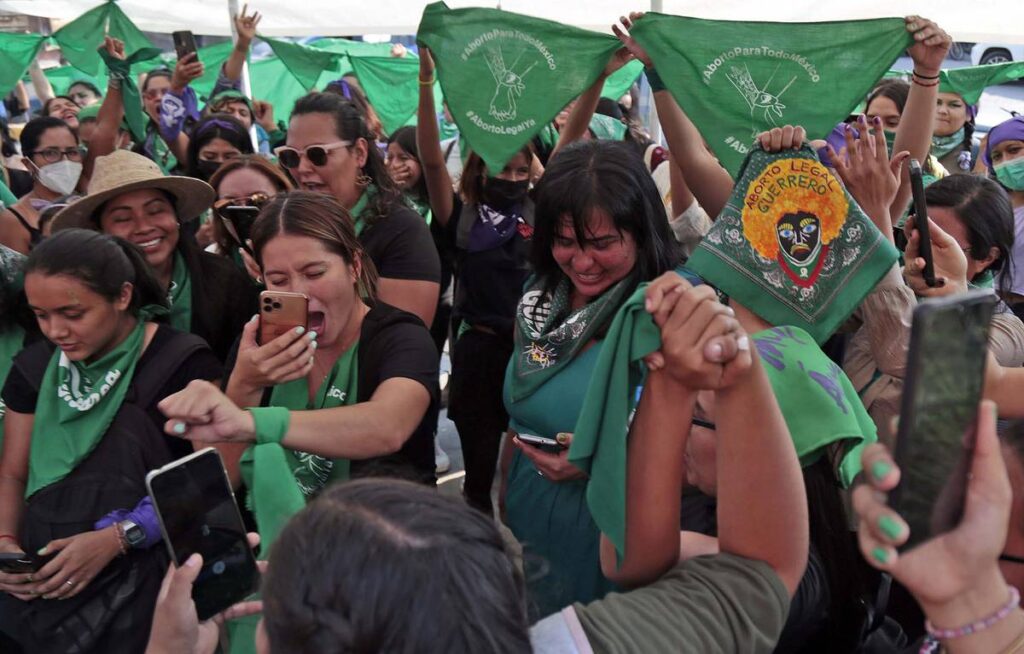
This year, the Supreme Court of Justice of the Nation (SCJN) ruled that it is unconstitutional to criminalize women and pregnant people who choose to terminate their pregnancies, as well as the medical personnel who provide this service. The decision includes removing abortion from the Federal Penal Code and requiring all judicial personnel to comply with this ruling.
The unanimous decision came after a strategic lawsuit filed by the organization Information Group on Reproduction Choice ( GIRE ).
Following the Supreme Court's decision, the Congress of the Union (the federal congress) must remove abortion from the list of crimes in the Federal Penal Code. However, local and federal congresses still need to reform their laws to decriminalize abortion.
So far, only 12 of Mexico's 32 states have decriminalized abortion .
Misinformation about comprehensive sexuality education and trans people
This year Presentes and Verificado México began an alliance to present reports on gender misinformation in the country.
In the pre-election period in Mexico, waves of disinformation and hate speech, especially against transgender people, increased. This was the case when we explained why the existence of “gender ideology,” as claimed by Eduardo Verástegui, an actor seeking an independent presidential candidacy with a religious and anti-rights political agenda, is false.
This same individual belongs to an organization that also spreads misinformation about abortion ; and along with other right-wing congresswomen such as Lilly Tellez, Teresa Castell and America Rangel, they maintained a wave of misinformation throughout the year about trans people and their rights, as well as comprehensive sex education in relation to the false argument that a 'gender ideology' is being imposed in school books .
Another argument these Mexican political figures used was to equate the gender affirmation processes of transgender people with efforts to correct and repress sexual orientation and gender identity, falsely known as “conversion therapies,” which are considered torture according to the United Nations. In this article, we explain why this is false .
Furthermore, mainstream media fostered revictimizing approaches by labeling the murder of Judge Ociel Baena and his partner, Dorian Herrera, a “crime of passion.” Here we explain why this narrative spreads misinformation and hinders access to justice.
Ociel Baena: negligent prosecutor's office and massive protests over the double hate crime
On November 13, , a magistrate of the Electoral Judicial Power of Aguascalientes, and Dorian Herrera, his partner, were found dead
To date, the Aguascalientes prosecutor's office has not provided any updates on the investigation. In the first weeks after the incident, the prosecutor maintained a narrative that revictimized the couple, and without presenting any evidence, asserted that it was a "personal matter." This was despite knowing that Ociel was receiving constant threats for being LGBTQ+ and for denouncing the murder of Ulises Nava, an activist from Guerrero.
Based on these omissions, activists in Mexico are demanding that the Attorney General's Office (FGR) take over the case. A month after the incident, there has been no progress from the Aguascalientes prosecutor's office.
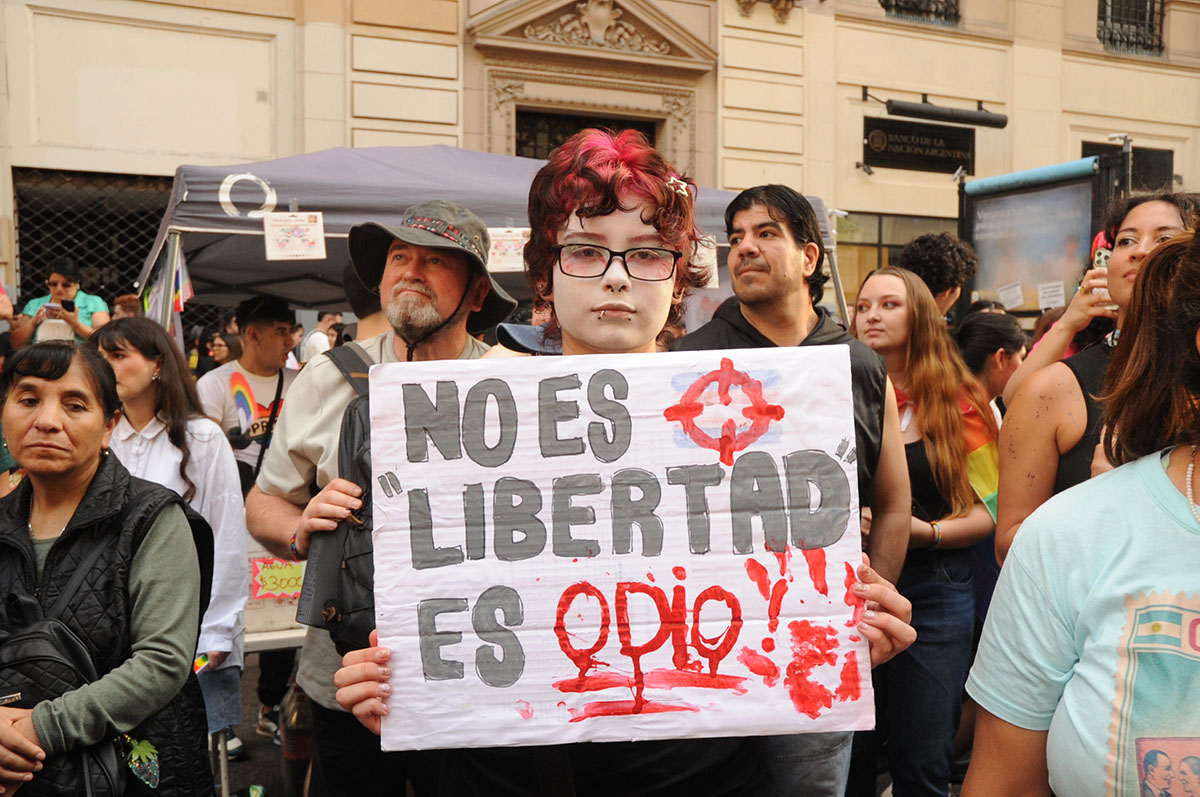
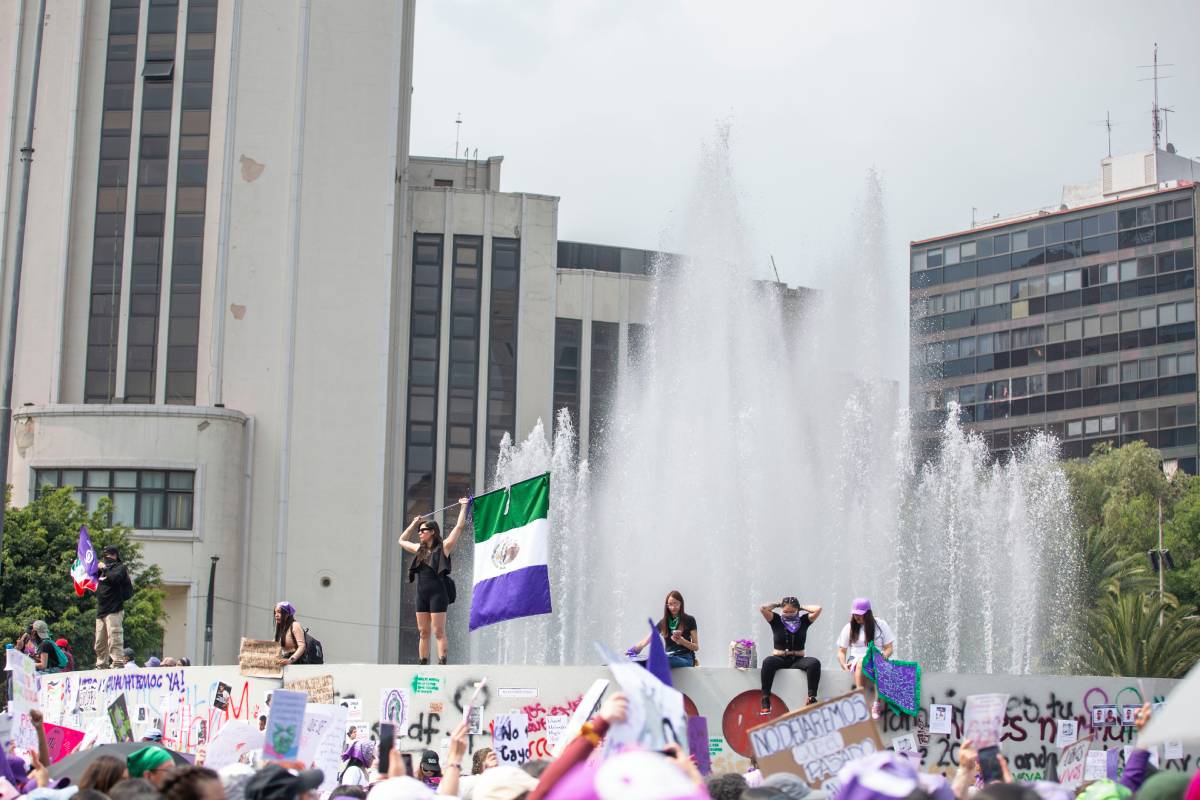
Baena was probably the most well-known non-binary person in Mexico. This led to activists and LGBT people in all 32 states demanding justice and protesting how the media erased their gender identity, misgendered them, and maintained the prosecution's version of events as a "crime of passion."
During the mass demonstrations, one slogan was constant: "crime of passion, national lie."
Hate attacks at the hands of security forces
This year there were recurring reports of incidents where security forces such as private police, traffic police and immigration agents abused their power and discriminated against LGBT people, from Yucatán to Monterrey.
On March 22, Daphne A., known as Muñeca , and Andreu O., LGBT activists, were charged with weapons possession, disobedience, and assault while demonstrating in solidarity with the Mayan community of Siltipech . The illegal arrest was carried out by plainclothes officers of the Yucatán State Investigative Police. They were released three days later.
That same month, at the Cancún airport, Bea Is, a human rights defender for intersex people from Peru, was held incommunicado and detained by immigration authorities for twelve hours . Bea reported that she was also a victim of racial and sexual discrimination.
In September, Laura Glover, the manager of the Trans and Fugas project, was removed from the restrooms and discriminated against by police officers at the National Film Archive in Mexico City. The publicity surrounding this incident sparked a wave of hatred toward trans people, in which anti-rights politicians also participated. On social media, the dominant narrative was transphobia, which contributed to the portrayal of trans women as “dangerous.”
In Oaxaca, a gay couple and a lesbian couple in Monterrey were illegally detained and beaten by tourism and traffic police , respectively. In the Oaxaca case, a complaint was filed with the Attorney General's internal affairs department. However, there have been no results from that investigation to determine whether the officers will face any consequences for their discriminatory actions.
Furthermore, the report “Analysis of the protection of LGBTTTI+ people in the Municipal Ordinances of the State of Mexico 2022” , prepared by the Mexican organization Fuera del Clóset , determined that 116 municipalities, out of a total of 125, criminalize LGBT+ people under figures such as “offenses against morality and good customs ” within the Municipal Ordinances, which are the bodies that give powers of authority to public security.
Trans women, the biggest victims of hate crimes
Transgender women continue to be the primary victims of hate crimes. Most of the victims were in vulnerable situations, engaged in sex work, or lived in contexts where widespread violence had intensified.
Letra S, an organization that has been documenting hate crimes in Mexico for more than a decade , presented its 2022 report. It states that 87 LGBT people were murdered because of their sexual orientation or gender identity and expression; 48 of these people were trans women.
As of October 2023, Letra S recorded at least 50 violent deaths against LGBT+ people.
Denisse Cabaly , a 29-year-old sex worker, was beaten to death in the market area of Veracruz City. In the same state, just days later, Paris Beristain was shot and killed while working at her business on the outskirts of Acayucan.
In Mexico City: Dani Millan, 35, owned a beauty salon and was beaten to death. The prosecutor's office stated that the case is being investigated under the femicide protocol, but so far no one has been formally charged in connection with the crime.
Two months later, in April, 41-year-old Mónica Belmont Natalia González was murdered in a hotel in the south of Mexico City; her attacker attempted to bribe the police to let him go.
Actions for memory
This year, two projects were launched to collect the memories of trans people in Mexico. One is the Trans Memory Archive Mexico , focused on trans women, and the other, which for now operates in the digital environment, is the Transmasculine Memory Archive MX .
In addition, activist Kenya Cuevas inaugurated the Mausoleum for Trans People . Located on the outskirts of Mexico City, this is a space to recover the memory and dignify the deaths of trans women whose bodies are not claimed by their biological relatives but are claimed by their chosen families so that their remains do not end up in a mass grave.
Fear of protesting in a context of widespread violence and organized crime
In May, a transgender woman from Veracruz, whose identity was not released, was murdered in a bar. Her attackers, who identified themselves as hitmen from a local criminal group, broadcast the attack live.
Five out of every ten transgender women in Mexico are murdered with firearms, according to a report published by the organization Intersecta. This occurs within a context of widespread and escalating violence, while the militarized security strategy of the war on drugs continues.
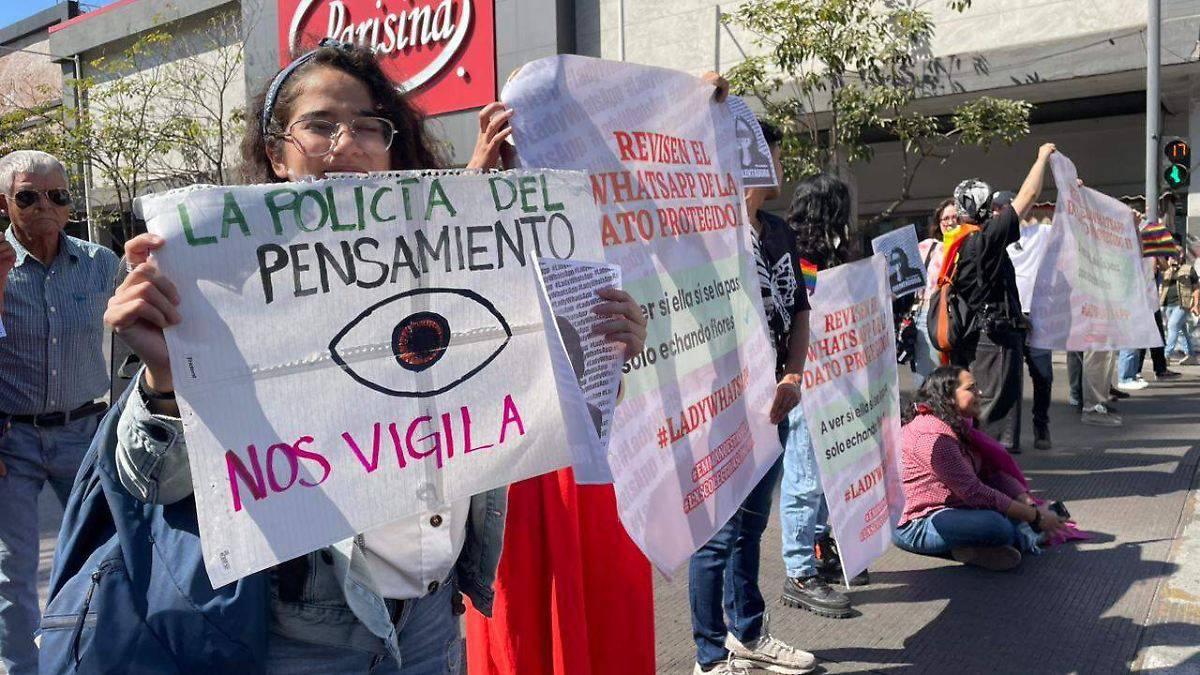
In this context, activists find their right to protest or speak out about these hate crimes impeded, out of fear.
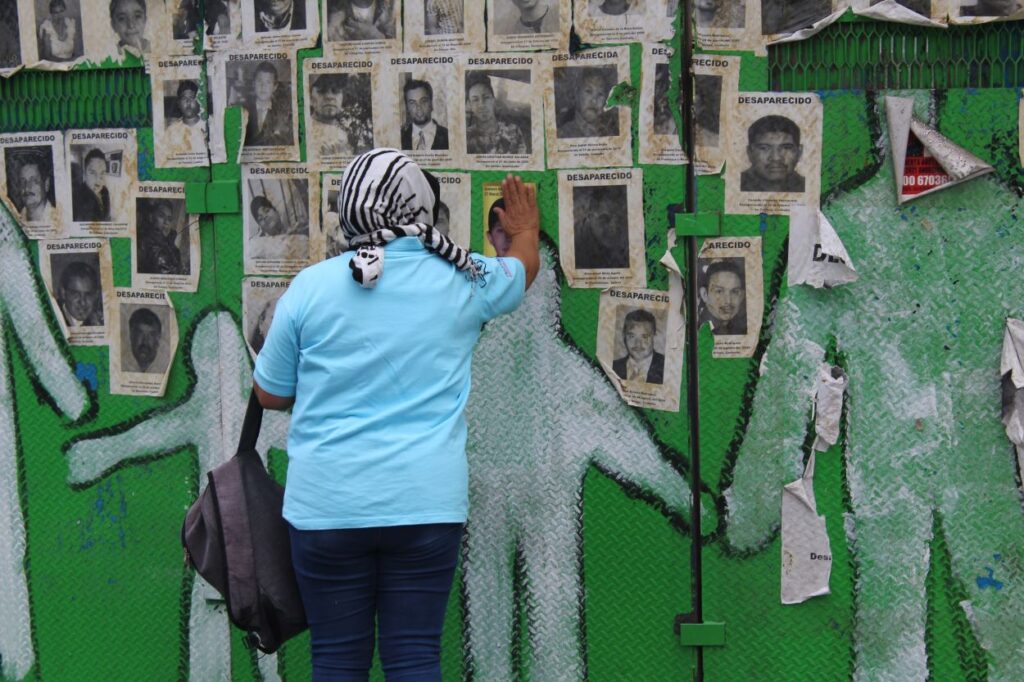
Another crime closely linked to widespread violence is the disappearance of LGBT+ people. This was documented this year by the Arcoíris Foundation and the National Observatory of Hate Crimes in the report " The Disappearance of LGBTI+ People in Mexico: A Guide for Registration and Monitoring ," a methodological document that analyzes the general context of the disappearance of LGBTI+ people in the country, as well as its registration and documentation.
Missing LGBT people: we don't know who or how many are missing
According to the report on the situation of the disappearance of trans people in Mexico and the violence exercised against them , prepared by the human rights organization, IDHEAS, "the disappearance of trans people occurs in a context of structural violence and involves not only gender violence but also violence due to prejudice."
In this article, we explain, based on research conducted by IDHEAS and the records of the Center for Support of Trans Identities (CAIT), how and why LGBT people disappear in Mexico .
These are the contexts of family violence and the community environment, the process of human mobility, sex work, and environments with dynamics of control and violence of groups linked to drug trafficking where activists have detected that LGBT people are victims of forced disappearance or disappearance committed by individuals.
As happened with Moisés and Brian , LGBT activists from Guerrero who disappeared along with other people. Or with Michel Castro , a 32-year-old gay and deaf man who disappeared in Jalisco. Moisés, Brian, and Michel were found dead.
Human rights activists and organizations denounce the lack of implementation of protocols regarding justice and disappearances, which has led to underreporting. This occurs because the Mexican state omits data such as the sexual orientation and gender identity of victims of enforced disappearance. It also fails to conduct contextual analysis that would contribute to the search for missing persons.
Progress and pending issues
- This December, the bill to repeal Article 159 of the Mexico City Penal Code, which contains the crime of "endangering public health" and reinforces the stigma surrounding HIV, was approved. It still needs to be voted on for the reform to become law. In Mexico, this crime exists in all 32 states and is also included in the federal penal code.
- Querétaro, Sinaloa, and Quintana Roo have reformed their penal codes to prohibit fraudulent "conversion therapies." Sixteen states have now enacted this type of reform.
- Transgender minors can access their right to identity through administrative channels in Jalisco, without an age limit; in Oaxaca and Mexico City, this is possible from the age of 12. Ten of the country's 32 states have yet to guarantee this right to transgender adults through administrative channels.
We are present
We are committed to journalism that delves into the territories and conducts thorough investigations, combined with new technologies and narrative formats. We want the protagonists, their stories, and their struggles to be present.
SUPPORT US

FOLLOW US
Related notes
We are present
This and other stories are not usually on the media agenda. Together we can bring them to light.