

Argentina 2023: Diary of a bad year for equality and LGBT rights
2023 ends with uncertainty in Argentina. A review of a year with little good news for sexual diversity and equality, and a resounding advance of the far right challenging the rights agenda.


Share

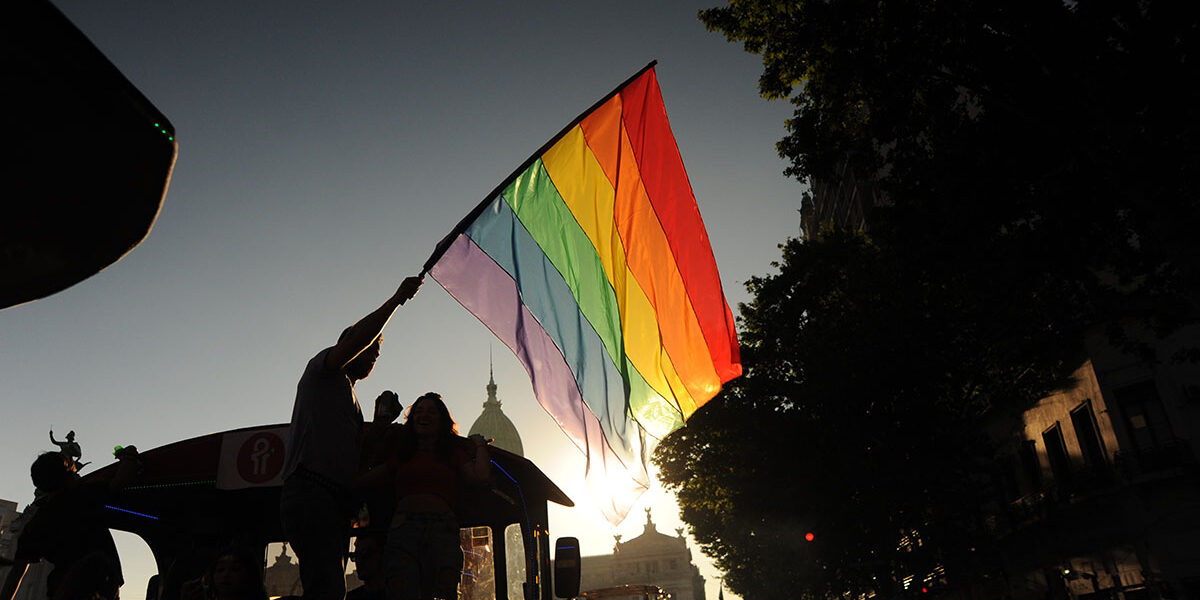
BUENOS AIRES, Argentina . The year 2023 in Argentina was marked by a long election campaign in which the far right advanced until reaching the presidency. On December 10, the day Argentina celebrated 40 years of democracy, Javier Milei, of the La Libertad Avanza party, assumed the presidency, and Victoria Villarruel, a denier of state terrorism who made statements attacking the right to abortion . During the campaign, there were many offensive statements made by members of his party against the LGBTQ + community and the equality agenda. Milei has already stated that he considers social justice "an aberration."
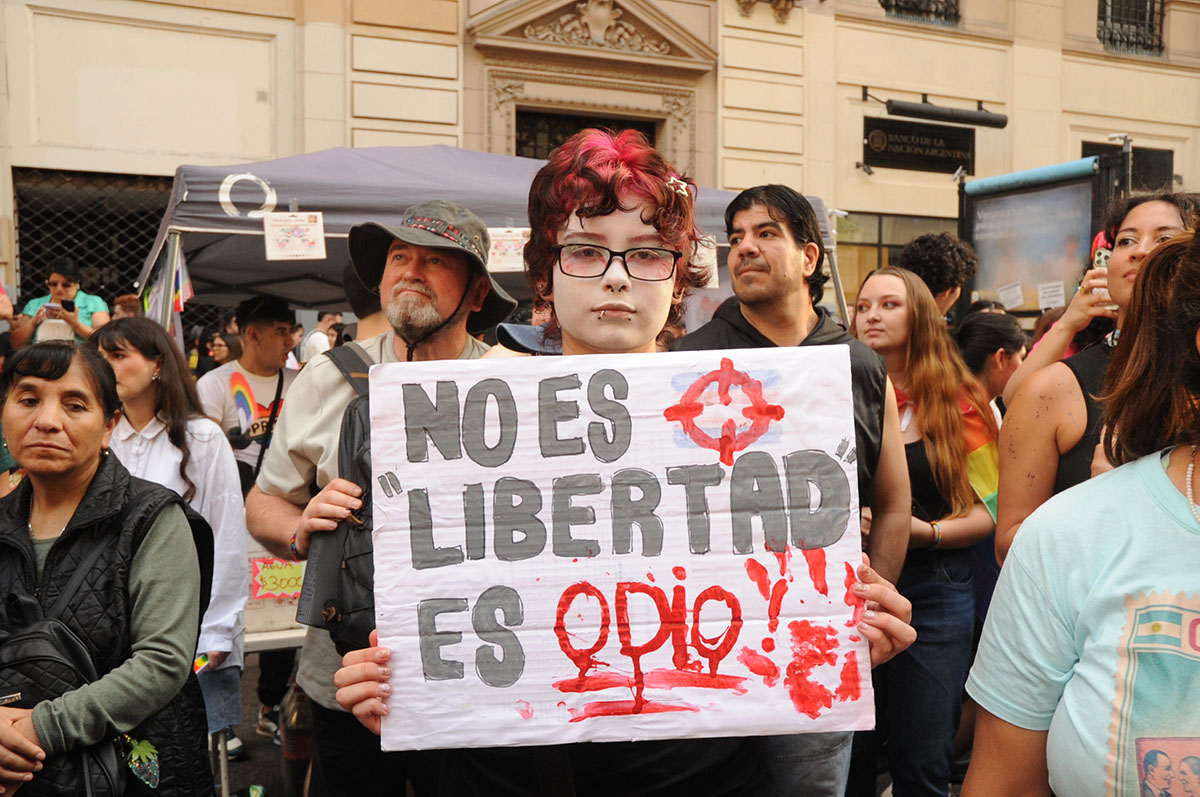
Hate speech sought to take hold, challenging hard-won rights and common sense. This and other issues, against the backdrop of the dire economic situation, fostered a climate of intolerance, the most fertile ground for violence. Just days after the presidential inauguration, international organizations warned of escalating street violence
At Presentes, we documented it in our daily news coverage. The climate of 2023 was recorded on our social media, where the words reached a level of virulence we hadn't seen in other years.
Transgender employment quota: at risk
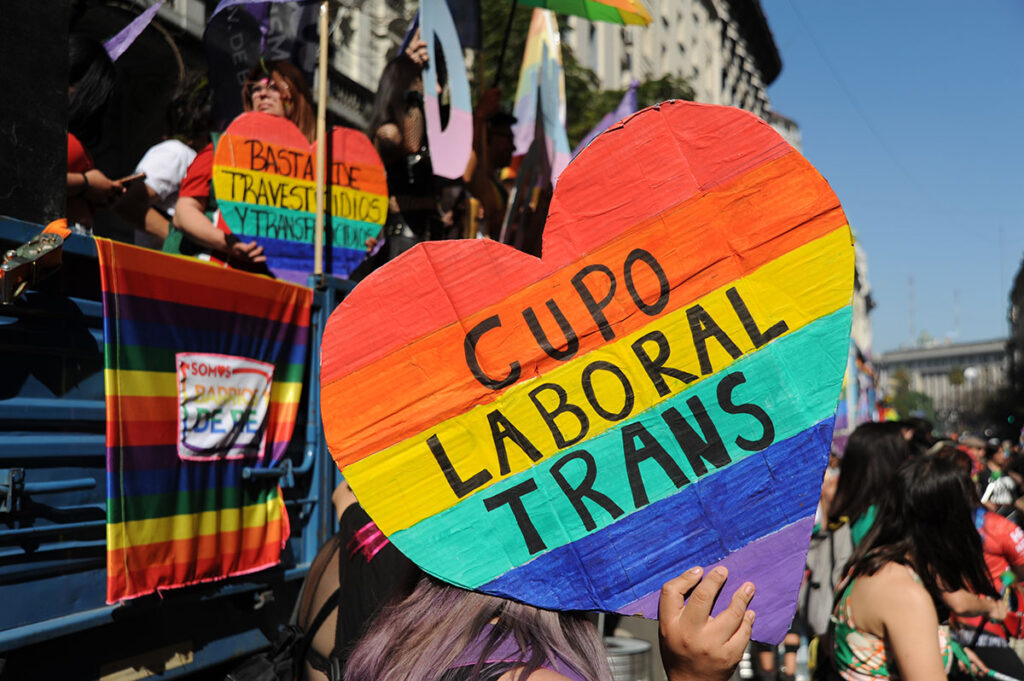
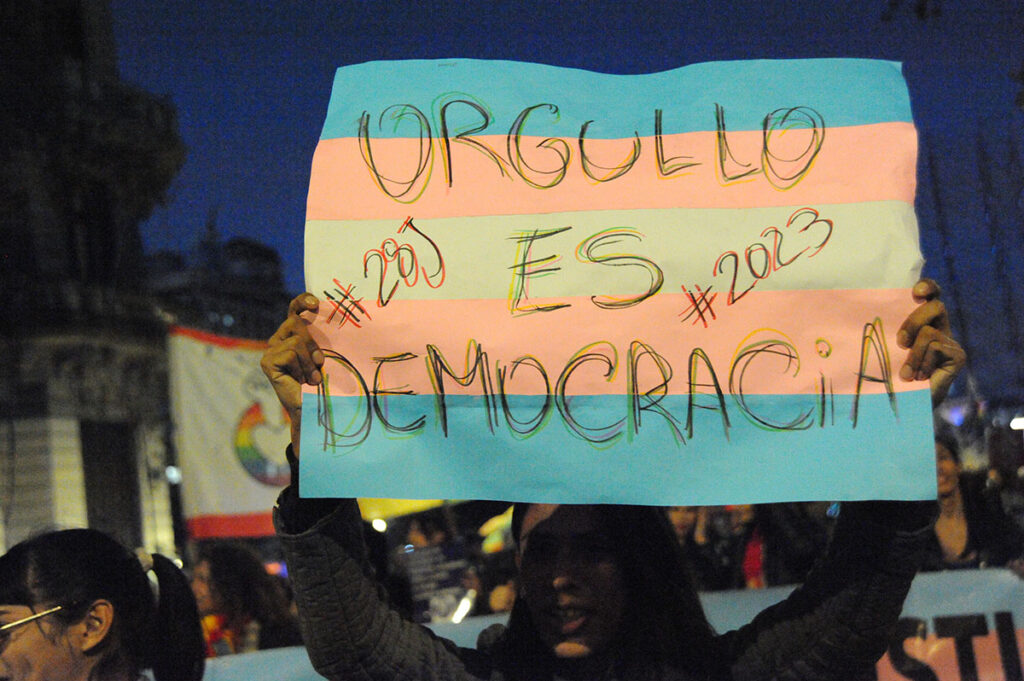
Approximately 955 people have found employment in the national public sector thanks to the Diana Sacayán – Lohana Berkins Law, which promotes access to formal employment for transgender, transsexual, and gender-diverse individuals (TTT) . Since its enactment in 2021 , the employment rate of this group in the public sector has increased by over 900%. However, a large percentage fear for their job security.
The new Minister of Economy, Luis Caputo—who also held various positions during Mauricio Macri's presidency—announced drastic economic measures. Among them is the non-renewal of contracts for those with less than a year of service in the public sector. This could directly affect those who entered the workforce thanks to the Transgender Employment Quota Law, as 40% of them were hired in 2023. However, the situation remains unresolved at the time of writing, with no official announcements.
Uncertainty in the Ministry of Gender, Women and Diversity
Adding to the climate of uncertainty is one of Milei's campaign promises: to eliminate the Ministry of Gender, Women, and Diversity. Throughout the year, much misinformation circulated regarding its budget , which was one of the ministries with very low resource allocations .
The new government has already formalized its elimination (the number of ministries was reduced from 18 to 9) along with the creation of the Ministry of Human Capital. Today, the Télam news agency reported that it will become a sub-secretariat within the Ministry of Human Capital. It will report to Sandra Pettovello, the minister of that ministry.
But it's still uncertain what will happen to the agency's functions and its staff. According to INDEC data, there were 1,263 employees in July 2023. Most of them fear losing their jobs.
Argentina lost its LGBT ambassador
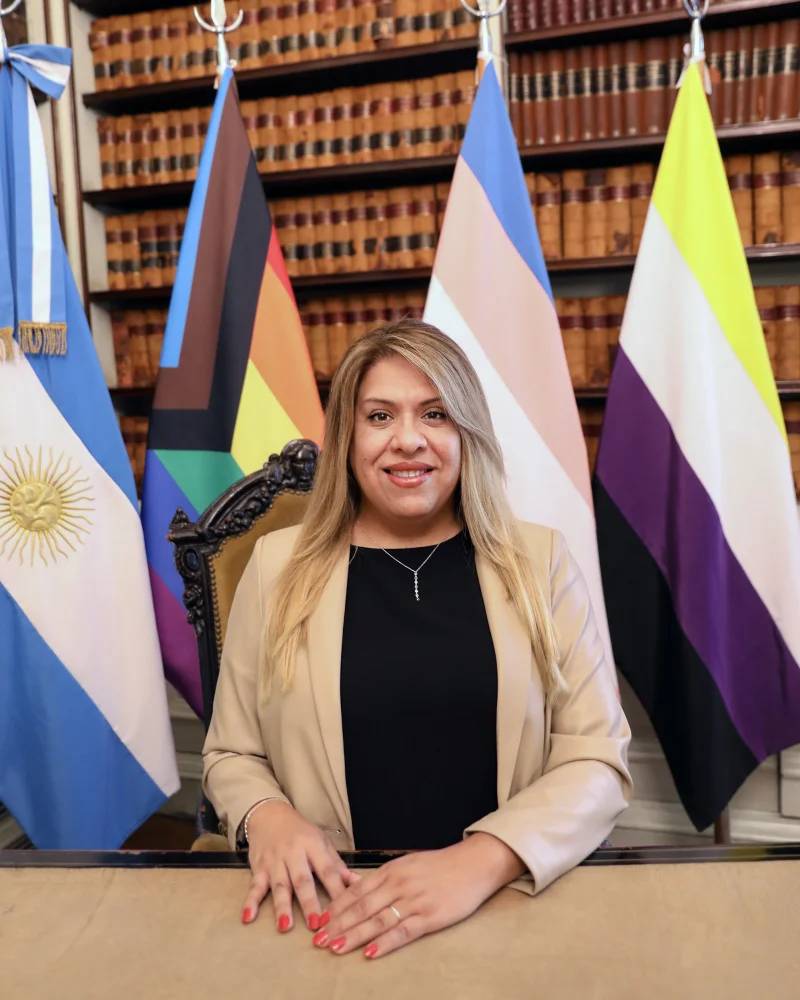
Argentina has lost its Special Representative on Sexual Orientation and Gender Identity at the Argentine Foreign Ministry, a role previously held by Alba Rueda. This is a position currently held by only six countries worldwide: the United States, Italy, Great Britain, France, and New Zealand.
In 2023, the United States recognized the work of the trans activist with the Women of Courage Award for her human rights work, the same award that Marita Verón received in 2007 for her fight against human trafficking. In 2022, Time magazine included Alba Rueda on its list of the 100 emerging leaders of the future . And in 2021, the BBC named her one of the 100 most influential people in the world .
With the national state reduction plan promoted by President Milei, the special representation was not ratified, so Rueda resigned.
Furthermore, the Ministry of Foreign Affairs came to be led by Diana Mondino, who in the days leading up to the runoff election made statements comparing same-sex marriage to having lice : "then don't complain if there is someone who doesn't like it."
Good news from 2023
When reflecting on the year, Alba Rueda stated, “In 2023, we were able to work on defending LGBTIQ+ rights with a voice from the Global South, both at the United Nations and the OAS.” Locally, she mentioned the growth of the Pride march nationwide, even in towns and cities outside the capital, as a significant achievement.
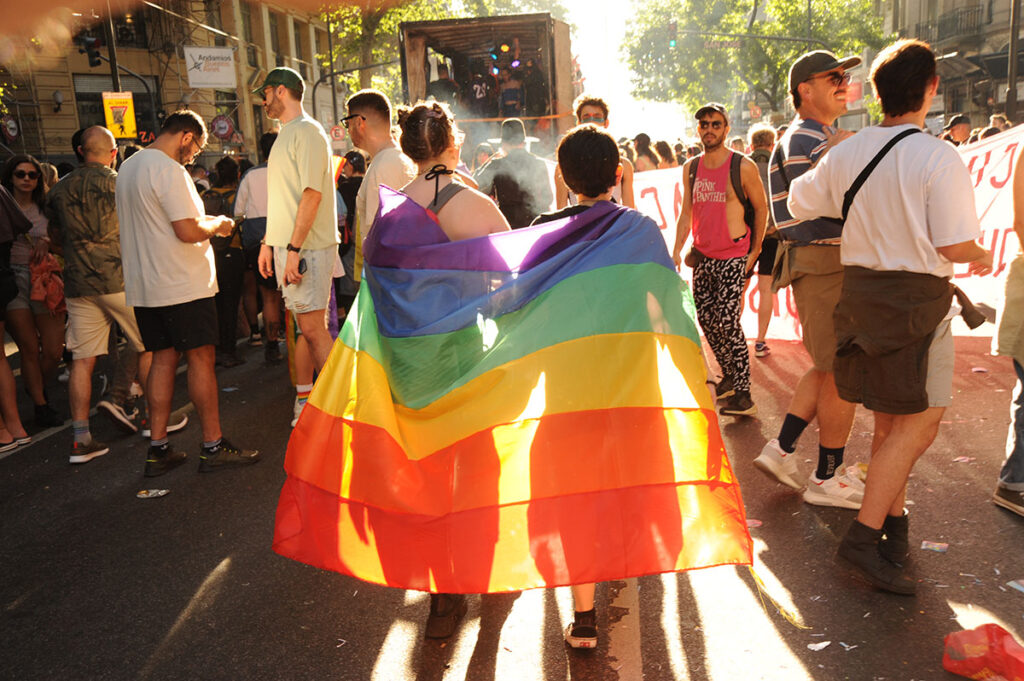
“I greatly value the continued progress made with the trans quota; the quota numbers are significant; the trials surrounding the victims of transvestite and trans people who were victims of the last dictatorship regarding the Banfield Well and the Quilmes Well; and the strength and consolidation of social organizations,” Rueda said.
One good thing: Post-Dictatorship Reparations for Trans and Transvestites in Santa Fe
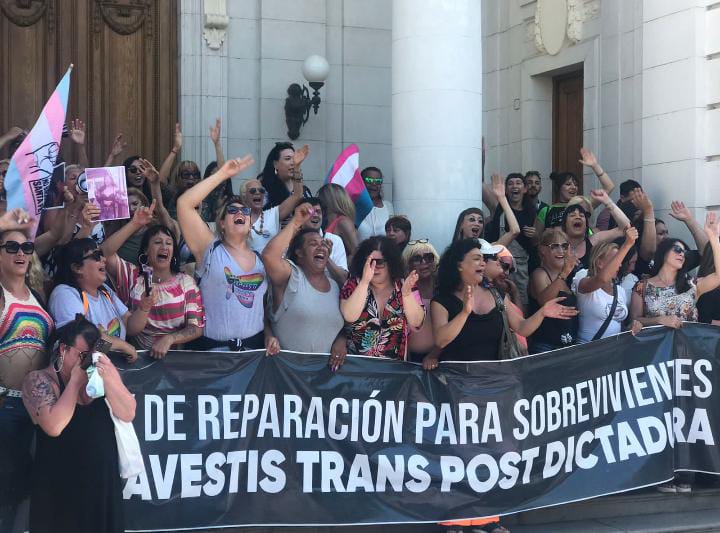
This year, Santa Fe was the scene of good news: the Post-Dictatorship Reparation Law for Trans and Transvestite People . This means that there will be a pension for those who suffered detentions between 1983 and 2012. A total of 147 people will benefit throughout the province.
One bad thing: no national redress.
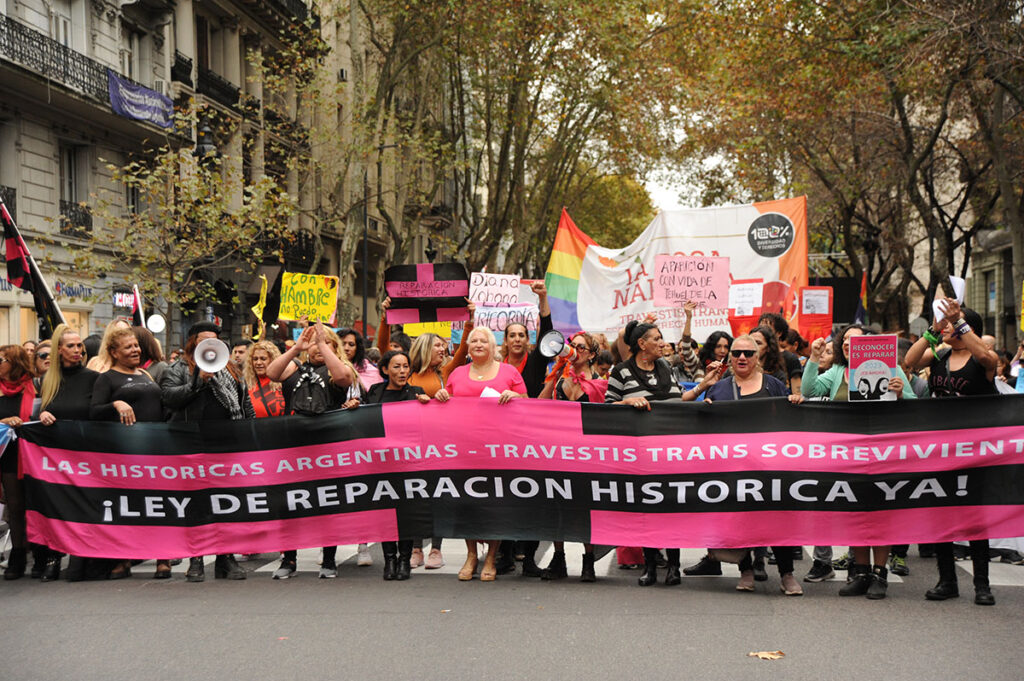
However, the nationwide demand from survivors for legislation that would provide a monthly reparations pension to trans and travesti people over 40 who have been victims of institutional violence based on their gender identity was unsuccessful. In May, this demand spurred the first Plurinational March for Historical Reparations , which drew trans and travesti people from across the country. The enactment of a national trans historical reparations law, a persistent demand throughout 2023, remains an outstanding debt.
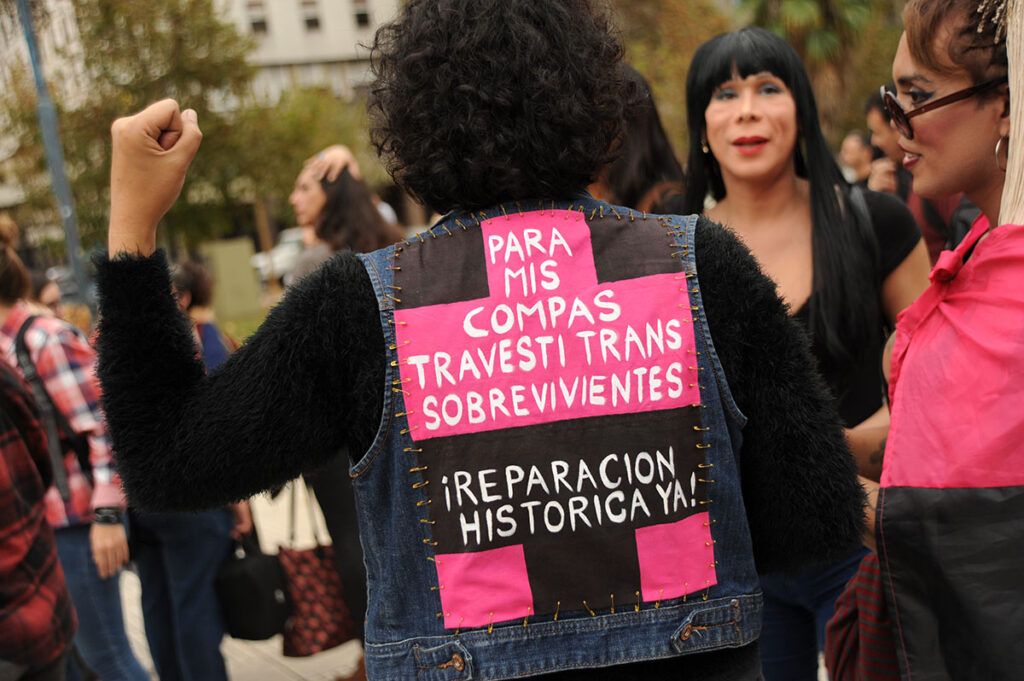
LGBT+ political and participation achievements
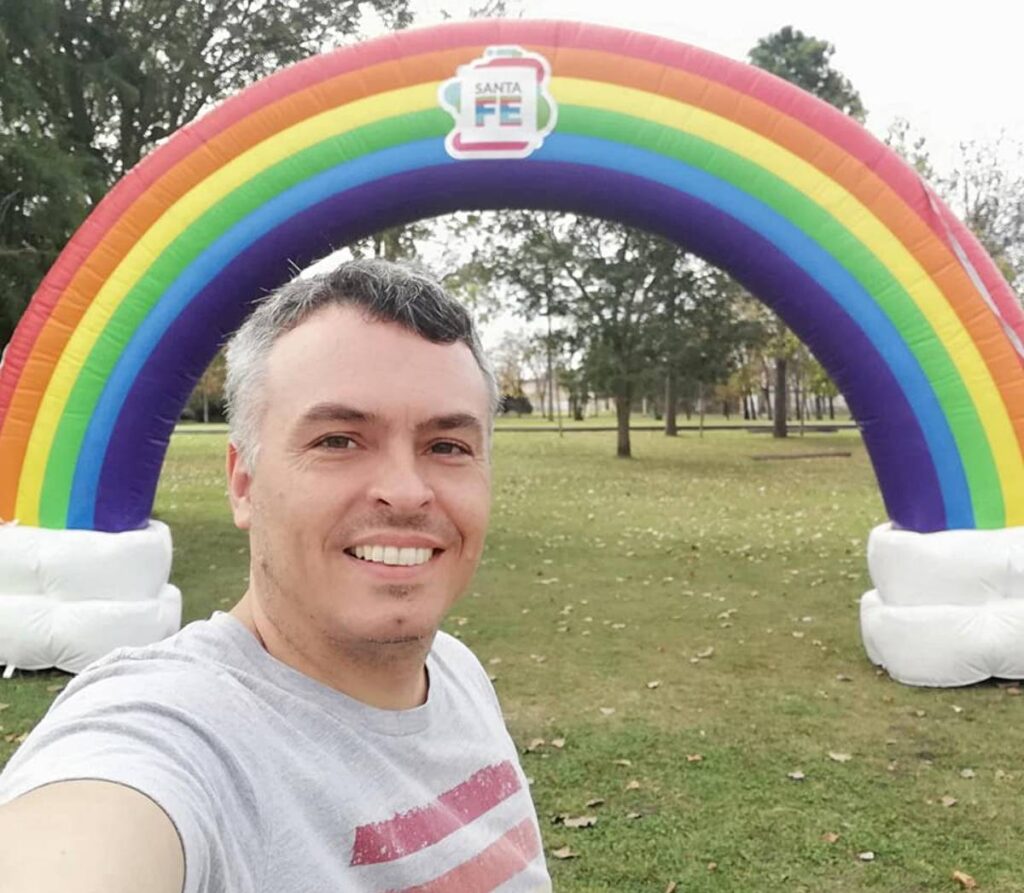
LGBT activist Esteban Paulón was elected national deputy for the province of Santa Fe by the Hacemos por Nuestro País party.
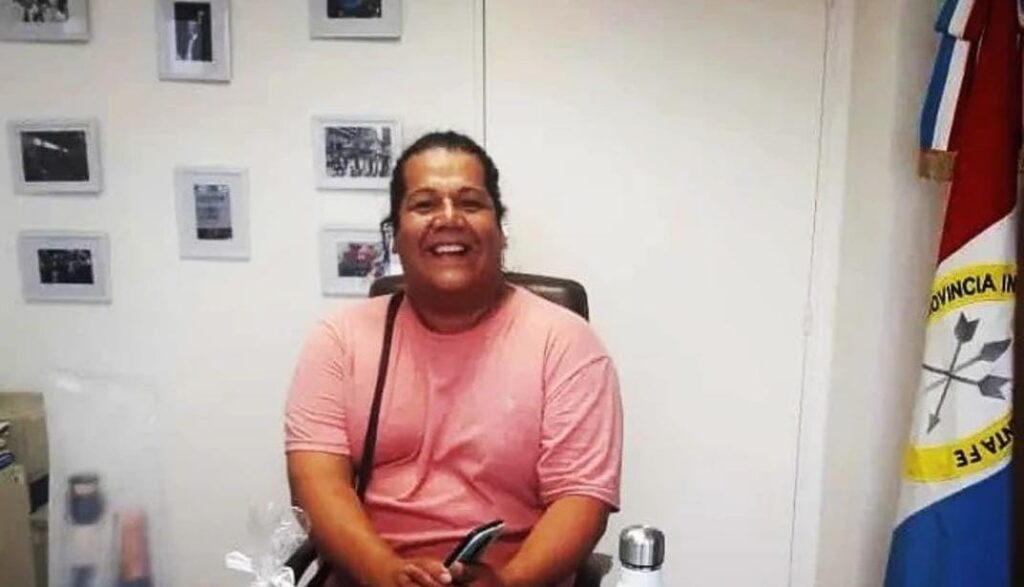
Activist Zaira Aranda also became the first transgender councilwoman in the province . She holds a seat on the Romang City Council in Santa Fe.
In Entre Ríos, teacher Manuela González became the 's first transgender councilwoman . She has held a seat on the Gualeguaychú City Council since August.
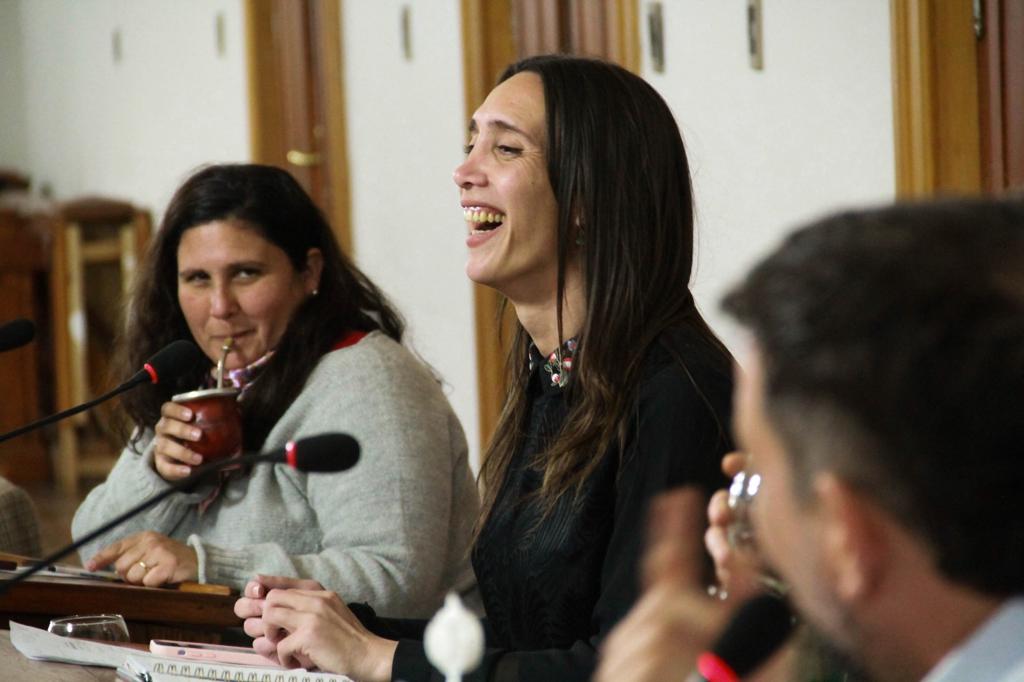
On the other hand, in the field of education, Carla Valeria Rivero became the first transgender school principal . After 28 years of professional experience, Carla fulfilled her dream at School No. 79 “República del Paraguay” in Tiro Suizo, in the southern part of Rosario (Santa Fe province).
Cultural productions that pave the way
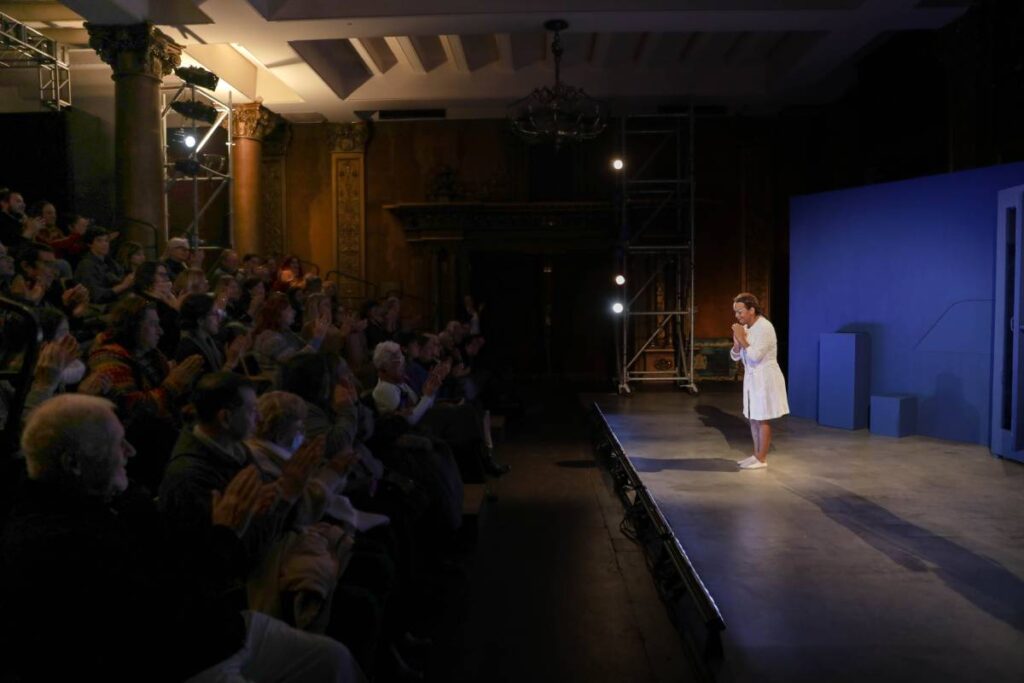
Photo: Ailén Garelli.
The life stories of transvestites and trans people at the Hotel Gondolín reached the Teatro Nacional Cervantes. The play "The Hotel Is a Body: Transvestite/Trans Stories" was based on the experiences of three trans women who lived at the Gondolín.
This year saw the premiere of the documentary *Yo soy Alma* (I Am Alma) , a portrait of Alma Cativa Sánchez, a trans woman, writer, actress, and singer, who was born in a small town in the province of Córdoba. The film offers a glimpse into her life through archival footage, including her time in the police force, two marriages, and four children.
Another documentary production this year, ' Íntimas ' (Intimate), directed by Manuela Orellano, explores the stories and connections of transvestites and transgender people in the greater Buenos Aires area. In the documentary's trailer, Juliana Carrizo recounts how the postman delivered her first national identity document (DNI) after the Gender Identity Law in Argentina in 2012.
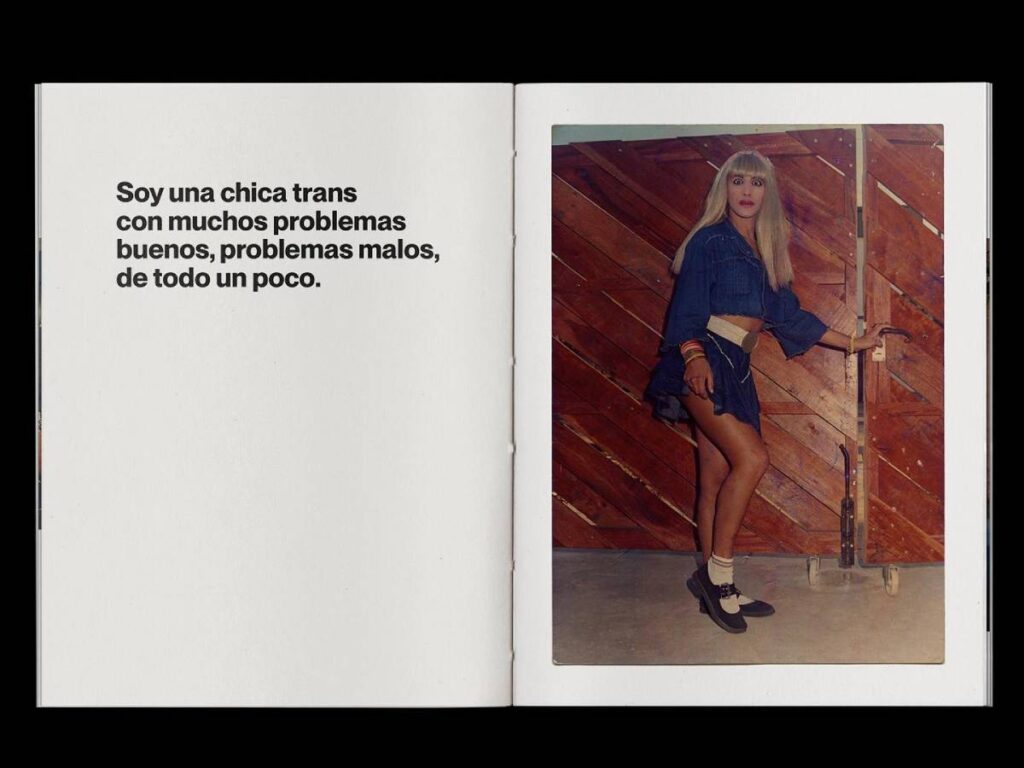
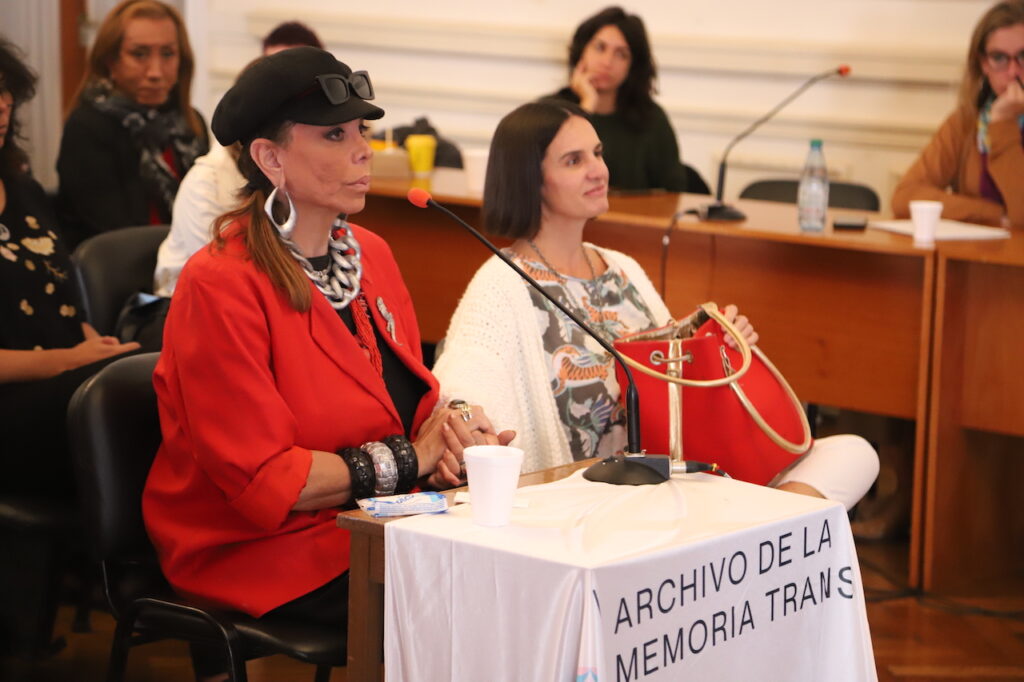
The Trans Memory Archive published its third book, Our Codes, . It represents a new contribution to the symbolic and historical construction of trans memory.
Marches, censuses and records
First non-binary march in Latin America
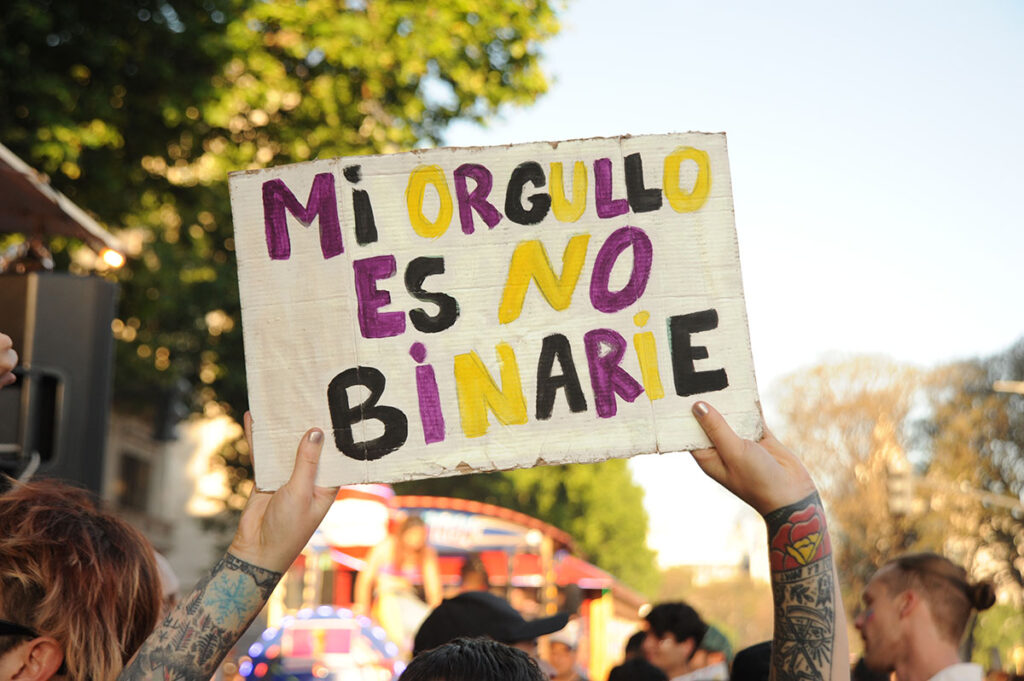
For the first time in Latin American history, marches were held under the black, white, purple, and yellow flag of non-binary people. The first two Non-Binary Marches in the region's history took place in Buenos Aires and Mexico City, coinciding with the International Day of Non-Binary Visibility, commemorated on July 14.
Census: How LGBT+ people live
Also for the first time, a census surveyed how LGBT+ people live in the country. The anonymous survey was conducted by 40 professionals from various Argentine universities and aimed to create the First National Survey of Living Conditions of Sexual and Gender Diversity.
More rights for transgender teenagers in Buenos Aires
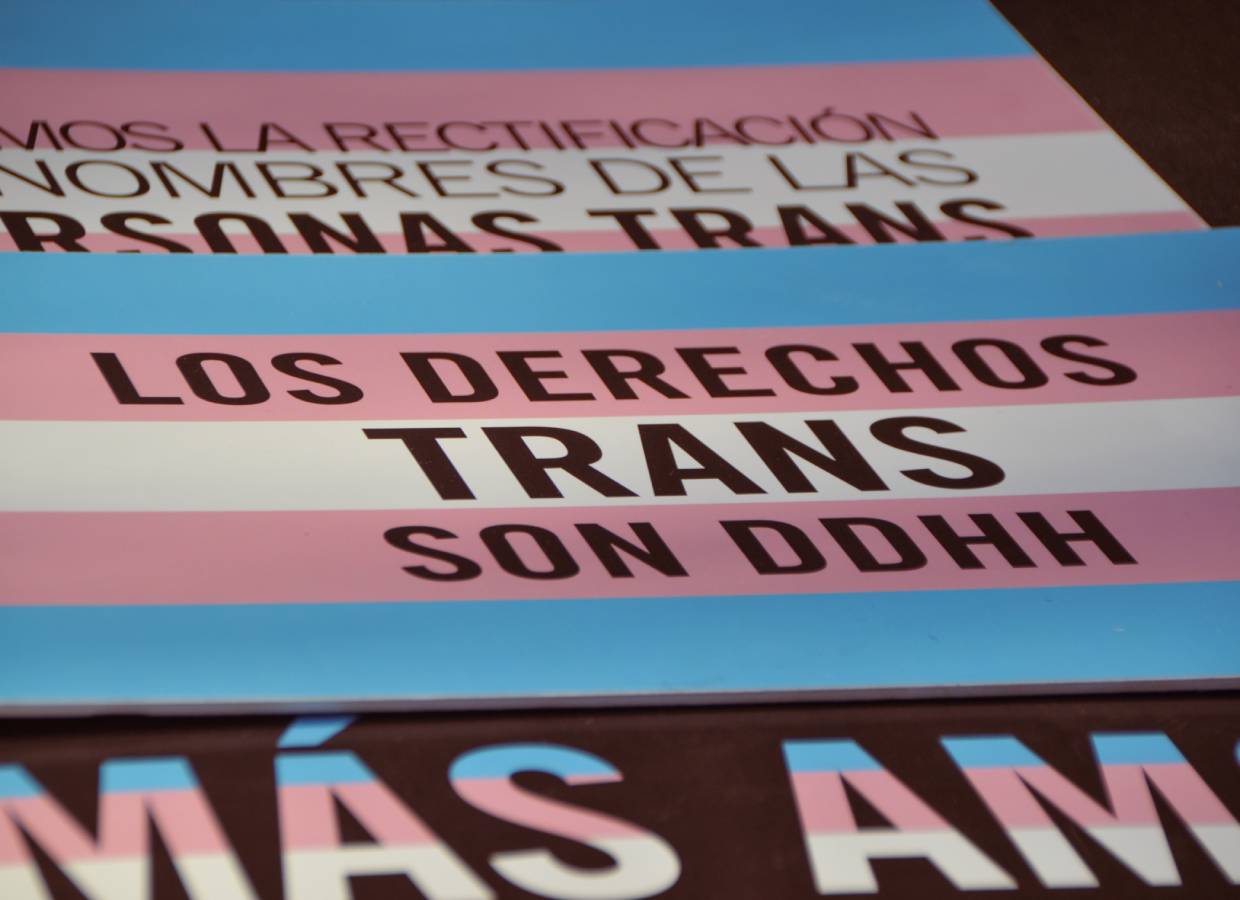
In the City of Buenos Aires, starting this year, transgender teenagers can change their national identity document (DNI) from the age of 16 without assistance . The City's Civil Registry implemented a series of changes, based on requests from organizations, to facilitate access to the legal gender change process.
The Pride march, historic
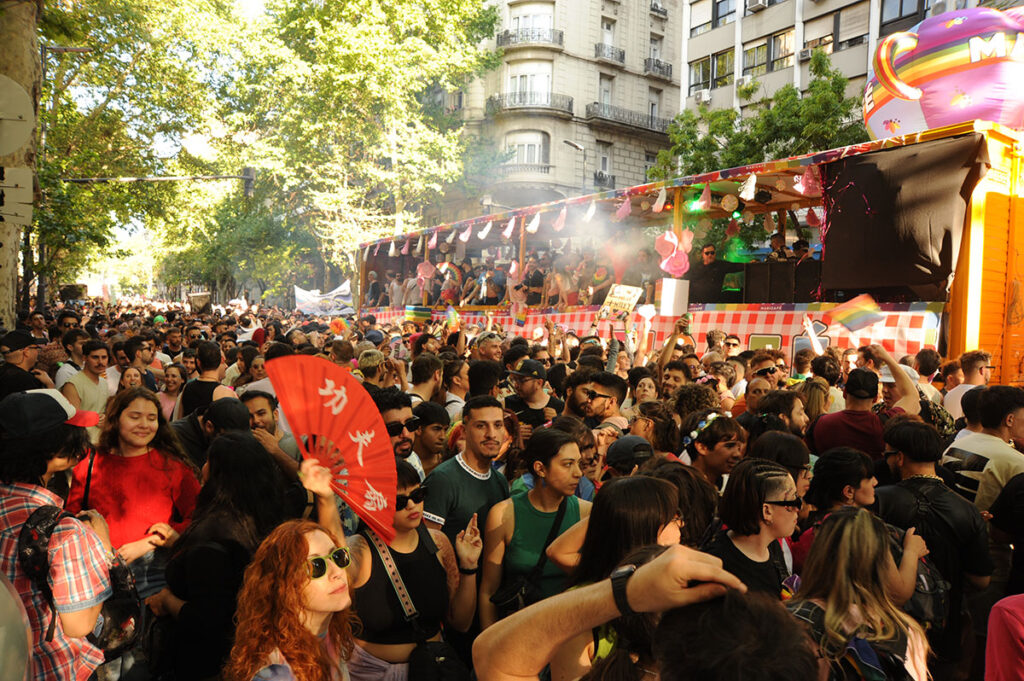
Pride marches took place across the country. The one in Buenos Aires saw a record-breaking turnout: more than a million people in the streets.
Justice for LGBT people: positive and negative rulings
The Judiciary has had both positive and negative rulings in 2023.
For the first time in history, a trial for crimes against humanity focused on the testimony of five trans women and transvestites who were victims of the dictatorship at the Pozo de Banfield detention center . A transvestite expert witness, activist Marlene Wayar, also participated.
On day 101 of the trial for crimes perpetrated in the brigades of the southern suburbs of Buenos Aires, known as the Brigadas case, Carla Fabiana Gutiérrez, Paola Leonor Alagastino, Julieta Alejandra González, Analia Velázquez and Marcela Viegas Pedro gave their testimony before the TOF 1 of La Plata.
Where is Tehuel?
On the other hand, March 11 marked two years since the night Tehuel De la Torre, a young trans man, went to a job interview in Alejandro Korn, Buenos Aires province, and disappeared . The investigation continues with two people in custody: Luis Alberto Ramos, his alleged employer, and Oscar Alfredo Montes, a friend of Ramos's.
A few months after the anniversary, Criminal Court No. 2 of La Plata moved up the trial date to July 2024 for the crime of aggravated homicide motivated by hatred of gender identity against Tehuel. His whereabouts, what happened to him, and the location of his remains are still unknown.
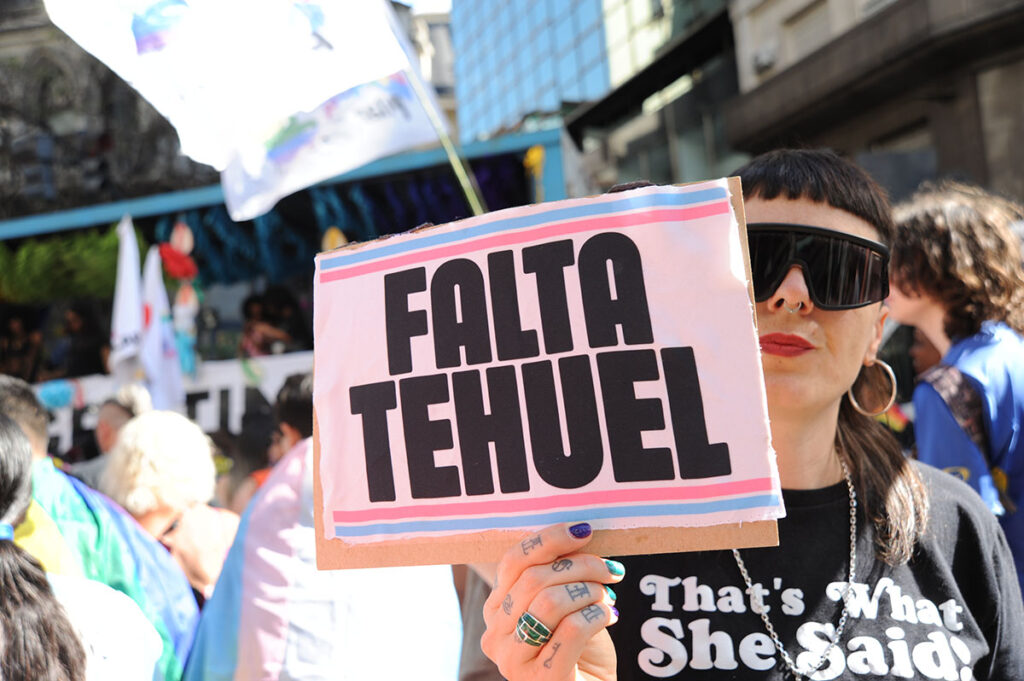
Pierina Nochetti is an artist, municipal worker, and LGBT rights activist in Necochea. A year ago, the persecution she had been subtly observing at work took concrete form when she charged for participating in the painting of a mural with the message “Where is Tehuel?” The activist was charged with “damage to public property.” The prosecutor's office offered her a deal: apologize and remove the Tehuel mural.
No justice for Maxim
In the first transphobic hate crime trial in Traslasierra, Córdoba, justice was not served. Ten years ago, Maxim Tabari, a young trans woman, suffered an attempted transfemicide. She was left with lifelong consequences. She fought for ten years to obtain justice. This year, the accused was acquitted but convicted of minor injuries to a police officer. The sentence sparked outrage among the victim and the LGBTQ+ and human rights activists who supported her.
Conviction rulings
In two cases of murder of LGBT people there were convictions, although belated.
- Five years after the murder of Adriana Cuqui Bonetto , the femicide perpetrator - with whom the victim had a long-standing relationship - was sentenced to life imprisonment .
- In La Plata, Criminal Court No. 1 issued a landmark ruling sentencing Leonardo Danilo Ariza Mendoza to 10 years in prison for attempted murder aggravated by hatred based on gender identity. “We wanted a ruling that considered this legal concept because we are killed because of our gender identity,” trans activist Claudia Vásquez Haro, a survivor of the attempted murder, told Presentes.
Supreme Court ruling upholds Church's position on trans identity
This year, the country's highest court rejected the request of trans activist Alba Rueda to rectify her gender identity on her baptismal and confirmation records issued by the Archdiocese of Salta. In statements to Presentes, Rueda said she will initiate legal action within the international human rights system. "I deeply condemn the Supreme Court's ruling this year that denies my right to identity within Catholic institutions," Alba told Presentes.
Hate crimes
The Hate Crime Map, compiled by this media outlet since 2019, indicates that this year there were at least 16 acts of violence against LGBT+ people in Argentina. At least five were murders: Zoe López García, Lautaro Castillo Retamales, Liliana “La Chaqueña”, Sofía Fernández, and Sofía Agustina Bravo.
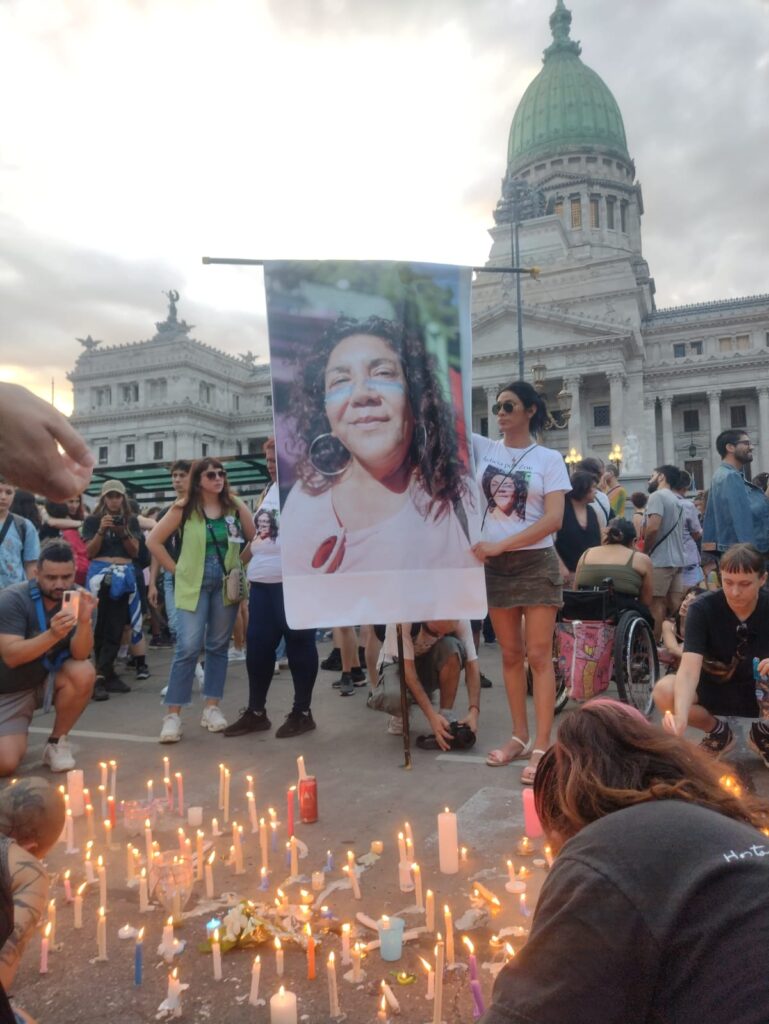
One of the most shocking cases was that of activist Diana Zoe López García , murdered by her partner in November, who stabbed her in a hotel room in the Balvanera neighborhood. Zoe was 47 years old and the president of Hotel Gondolín , a shelter and social organization for transgender and transvestite people.
In September, Lautaro Castillo Retamales was murdered by two men who contacted him through Grindr . Following his murder in late September in Florencio Varela, a group of friends and a lawyer joined together to request that the homicide be investigated as a hate crime.
Liliana “La Chaqueña” Varoni was also the victim of a hate crime on July 3rd while working as a sex worker on the highway in Almirante Brown. She would have turned 65 on July 9th. The courts arrested Maximiliano Martín Leito, 39, accused of her murder.
In Salta, in February, a young trans woman was stabbed was charged with attempted murder; she spent several weeks hospitalized in critical condition.
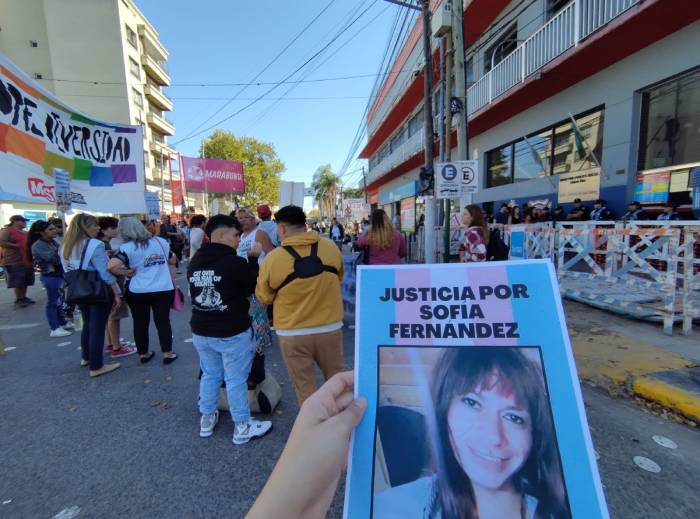
Sofía Fernández, a trans woman, died in a police station in the province of Buenos Aires. She was 39 years old and wanted to be a nurse. What happened has not yet been determined, and the demand for justice remains open.
Sofía Bravo, a old activist with the La Carlota Diversity Roundtable, was missing for a week in January. She was scheduled to travel to Marcos Juárez at midday to visit her mother, on the same bus her friend Lorena was taking to Villa María. They had already bought their tickets, but Sofía never arrived at the bus terminal. The search began on Tuesday the 10th. On the afternoon of Saturday the 14th, a hitchhiker on Provincial Route 4 noticed a foul odor and alerted the police. There, in a grassy area very near the roundabout at the entrance to La Carlota, was Sofía Bravo's body.
Violence in the street and in bowling alleys
The Ministry of Women, Gender and Diversity presented the first report prepared by the Integrated System of Cases of Violence due to Gender (SICVG), which compiles information from 2013 to December 2022. The report states that they assisted 669,339 people in situations of violence in the country, of which more than 18,000 belong to the LGBTI community.
The data from the annual hate crime report of the FALGBT (Argentine LGBT Federation) has not yet been published.
According to a report by Revista Crisis, of the 33 attacks recorded in the weeks leading up to and following the runoff election, “the only ones that escalated to physical violence were against bodies perceived as deviant. Trans girls and boys, transvestites, lesbians, non-binary people, and gay men were attacked in public for their non-normative gender expression.” The report was produced by the Registry of Attacks by the Radicalized Argentine Right (RADAR), a digital platform created to track the rise of far-right violence.
In San Juan, Naira Castillo, a 32-year-old trans woman and drag artist from the Casa de la Cultura, was hospitalized with burns covering 40% of her body, along with her partner, Federico Navarro. On the evening of Thursday, August 10, a delivery person on a bicycle left what appeared to be a "gift" at their home in San Juan. The package exploded in their hands.
Violence was also seen in nightclubs: a police officer threatened people with his weapon at an LGBT nightclub in Jujuy, hurling homophobic slurs. Babylon is a well-known nightclub that specifically aims to be a safe space for non-binary people to enjoy themselves. Organizations called for the passage of an anti-discrimination law.
At another nightclub, this time in Buenos Aires, Lautaro Jaime, a 25-year-old gay man, reported a hate attack he suffered outside Amérika on the morning of March 5th. Three men attacked him, one of them punching him in the face from behind, leaving a cut while yelling “fucking faggot.”
Seasonal climate
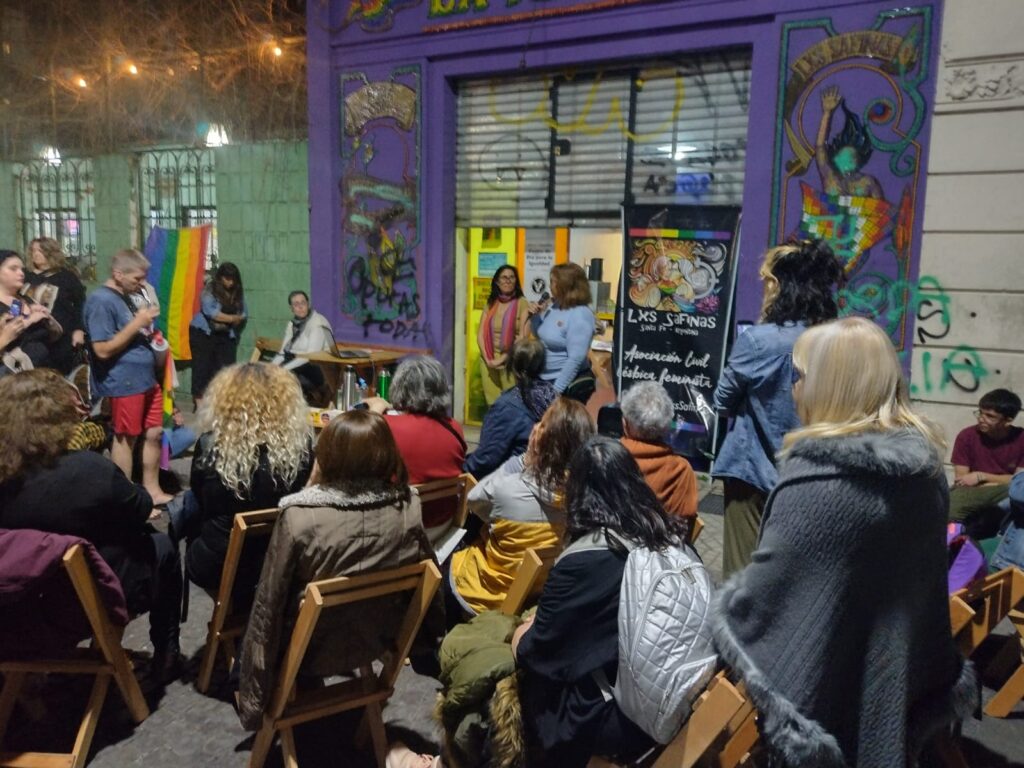
It was a year of numerous attacks on LGBT individuals and spaces, with various forms of violence. We documented these attacks in La Rioja, Lomas de Zamora (Buenos Aires province), Buenos Aires City, San Juan, Jujuy, and Salta. La Vulvería, the headquarters of the lesbian-feminist organization Las Safinas in Rosario, was vandalized with hate messages on August 31: “Die,” “All whores,” and “Dirty fat woman,” as well as swastikas.
In October, supporters of La Libertad Avanza attacked a booth at the Mendoza Book Fair because of its LGBT and feminist content. “When Milei wins, this will all be over,” said a group of anti-rights activists, who threatened to burn down a booth at the fair that featured feminist and LGBTQ+ content. A mural celebrating diversity was also attacked in Mendoza.
The victory of far-right candidate Javier Milei marked a setback in the prevailing climate , enabling the public expression of discriminatory and homophobic opinions. It also led to an increase in symbolic and physical violence in public spaces. In late November, the incident involving a 34-year-old non-binary music teacher on a public bus raised alarms throughout the LGBTQ+ community nationwide.
Manu Mireles, was also . "Violence is resolved with education, dialogue, and rights," she told Presentes at the time.
Disinformation in the campaign
Disinformation spread in 2023 like never before. During the campaign, it often originated from the candidates themselves. In an interview with Villarruel conducted by Luis Novaresio on LN+ , the current vice president and then-candidate spread misinformation about the equal marriage law, which has been in effect in Argentina since 2010. Villarruel, a militant denier of state terrorism in Argentina, said that same-sex unions were already “guaranteed by civil unions.” This information is deliberately false.
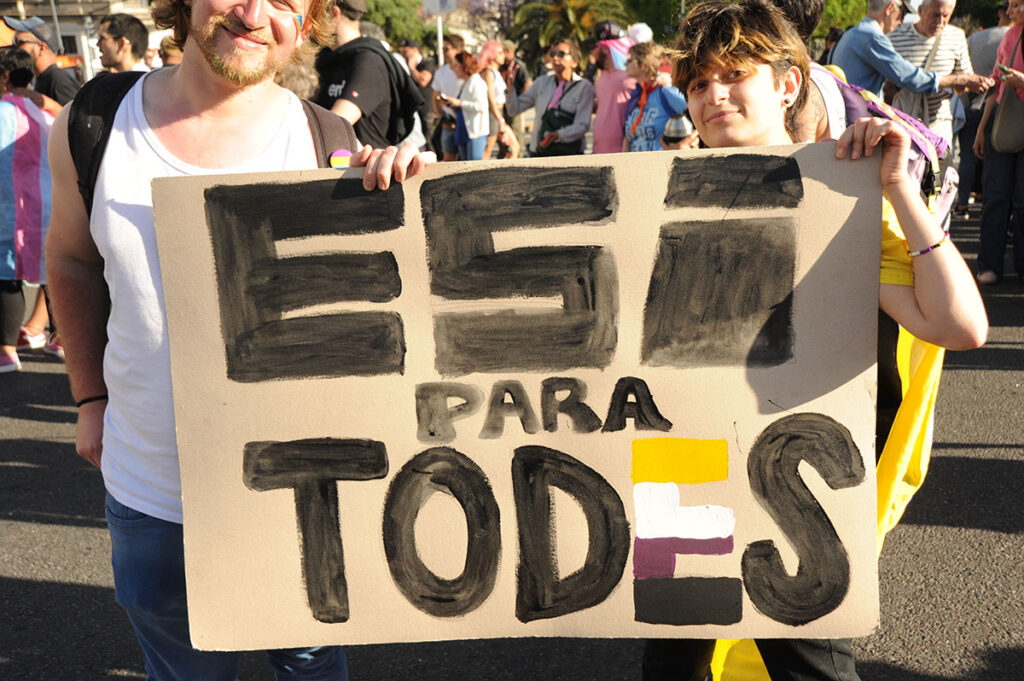
This year, in connection with the rise of the right wing and the disinformation spread by politicians, there were also coordinated and planned attacks against Comprehensive Sexuality Education (CSE): in August, schools and kindergartens in La Plata were vandalized with graffiti that read: “CSE is corruption of minors” and “CSE is pedophilia.” This attack occurred just after CSE Week—August 21-25—a period dedicated to reinforcing the content stipulated by National Law No. 26150 .
There were also threats through social media, and public expressions , such as the normalization of homophobia by the economist Carlos Rodríguez, towards the gay journalist Luis Novaresio.
Other violence occurred in the health system: Quimey Ramos, Nina Pizzi and NM, transvestite and trans people, had requested surgical interventions in 2022 protected by the Gender Identity Law, but their prepaid health plans presented them with obstacles : increasing the monthly fee and, in case the increase was not accepted, disaffiliating them.
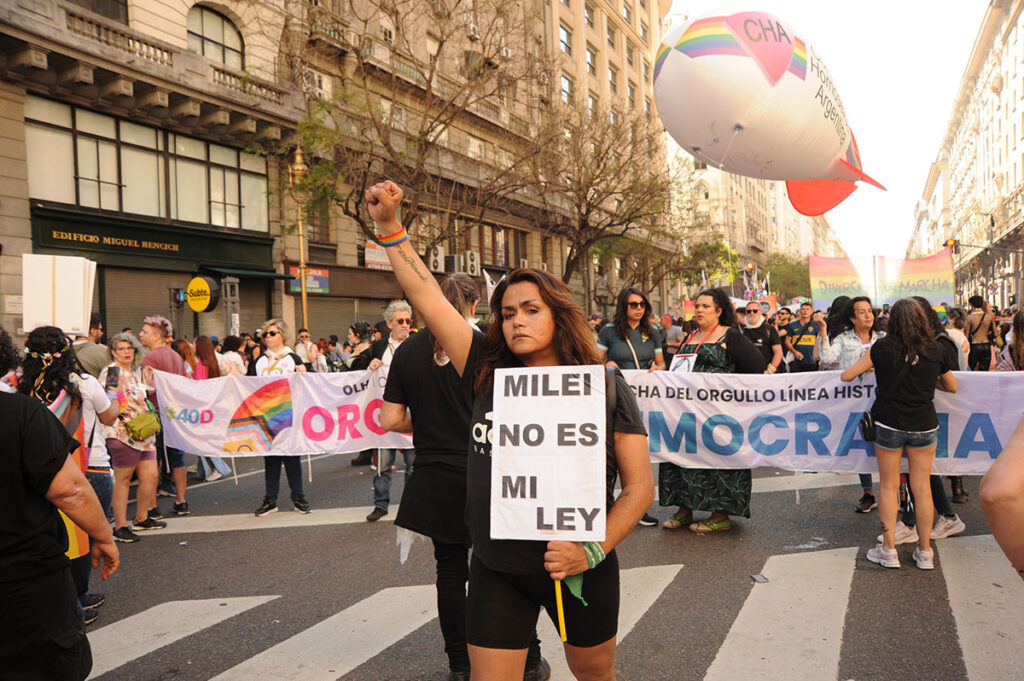
To close out the year, the new government, through the Ministry of Security headed by Patricia Bullrich, announced a protocol for the heavy-handed repression of social protest. LGBT+ groups are reminded of the one implemented by the same official in 2017 during Mauricio Macri's administration. That protocol authorized federal police and security forces to subject LGBT+ individuals to special detention conditions and was repealed in 2020.
It had been strongly condemned by human rights and LGBTQ+ organizations, who interpreted it as a warning. The current decree, however, is addressed to the entire population and has already been condemned and denounced before the IACHR and the UN. On Monday, December 18, CELS presented these bodies with more than 1,700 signatures from political, social, labor, and feminist organizations, requesting its repeal for violating constitutional norms regarding the right to protest, freedom of association, and freedom of expression.
We are present
We are committed to journalism that delves into the territories and conducts thorough investigations, combined with new technologies and narrative formats. We want the protagonists, their stories, and their struggles to be present.
SUPPORT US

FOLLOW US
Related notes
We are present
This and other stories are not usually on the media agenda. Together we can bring them to light.