

Guatemala 2022: The best and worst news of the year for sexual diversity
Among the advances for the LGBT community is the creation of a specialized prosecutor's office for hate crimes. The setbacks.


Share

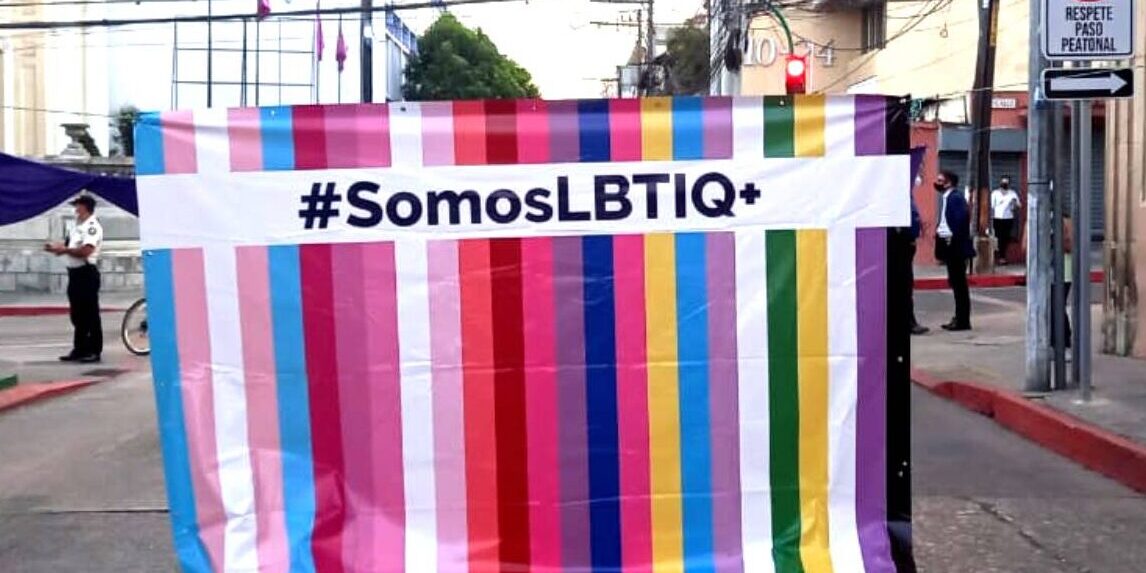
GUATEMALA CITY, Guatemala. In Guatemala, 2022 saw progress in advocacy by civil society organizations, but it was not a good year for the human rights of LGBT+ people. This was due, in part, to the anti-rights legislation introduced by Congress and the executive branch, in collusion with religious groups and conservative politicians linked to the #PactofCorrupts. The term emerged in 2017 to describe the corruption uncovered among state officials and members of Congress.
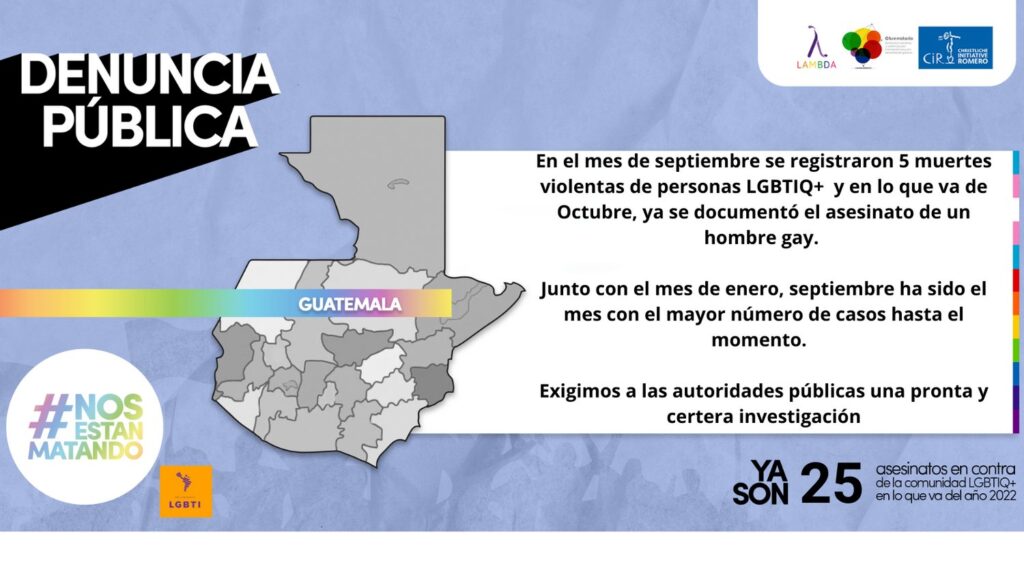
The National Observatory for LGBTIQ+ Human Rights of the Lambda Association (@ObservatorioLam) had already registered five hate-motivated homicides in the first month of the year. The same source emphasizes that of more than 60 cases since 2019, only three have resulted in arrests. And only the case of the murderer of Andrea González, president of the Trans Queens of the Night Organization (@infootrans), has gone to trial this year, but so far there has been no conviction.
Among the setbacks at the national level in 2022, Guatemala experienced events that further complicated the human rights situation of women and the sexual diversity community.
A Day for “Life and Family”
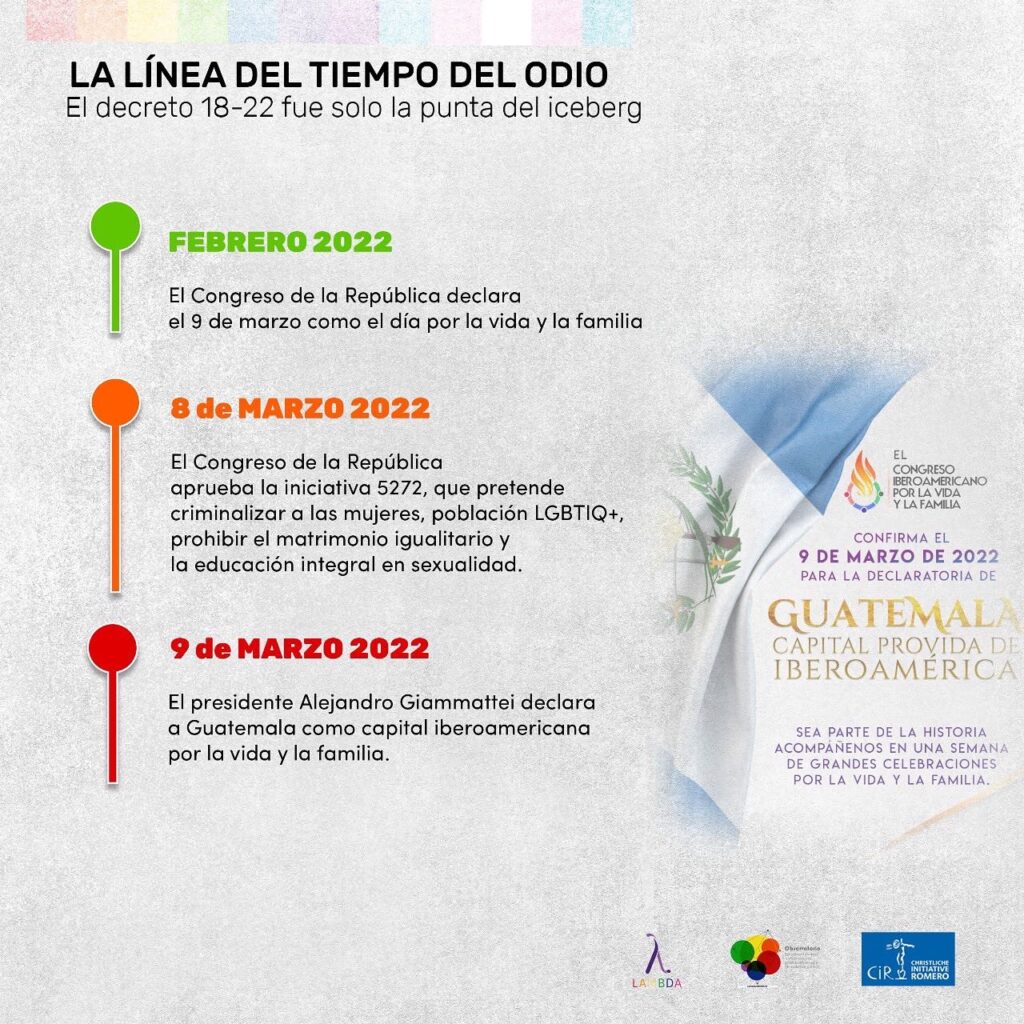
The Official Gazette of Central America officially published Decree 9-2022, which declared March 9 as the Day for Life and Family, a proposal by President Alejandro Giamattei.
The twists and turns of an anti-rights law
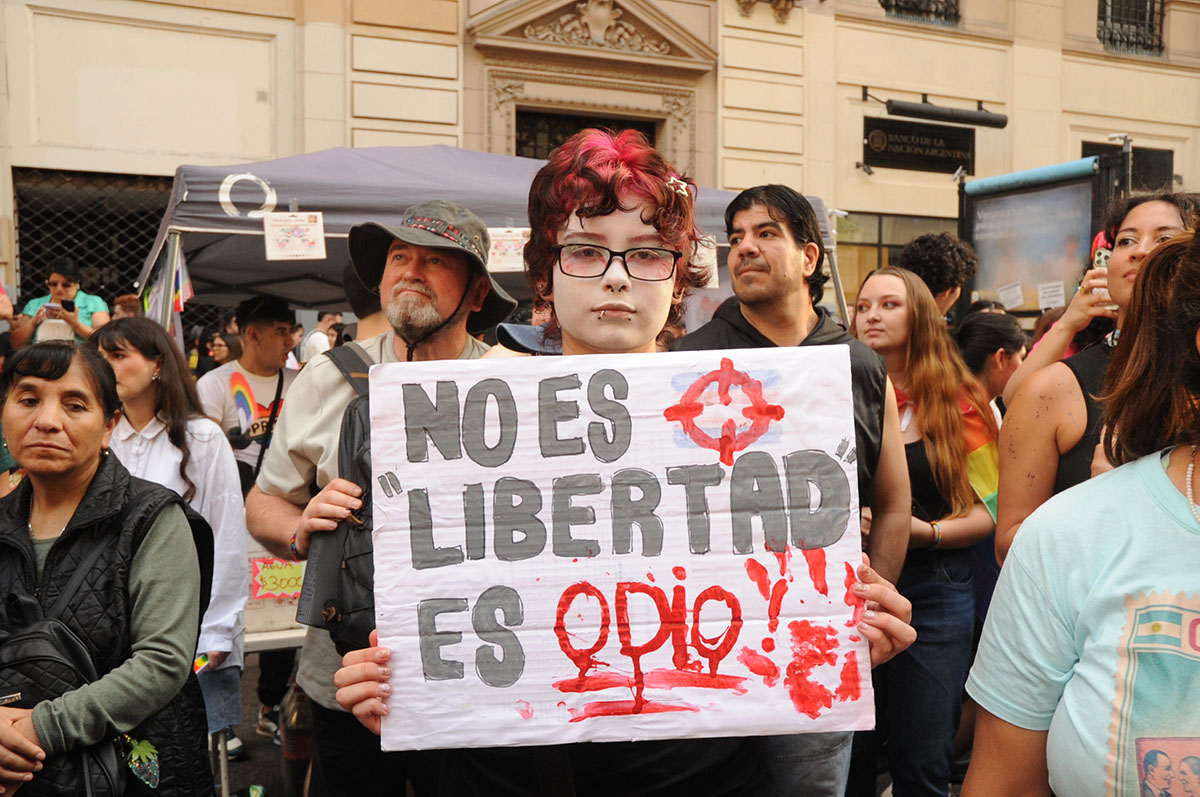
The Congress of the Republic, after lobbying since 2017, approved the “Law for the Protection of Life and Family,” or Law 5272. The law amended the Penal Code to criminalize miscarriages and impose prison sentences on anyone who “promotes or facilitates access to abortion.” It also expressly prohibited same-sex marriage, as well as the teaching of sexual diversity, comprehensive sexuality education (CSE), and gender equality in private schools and educational centers. The law would also prohibit the prosecution of individuals or groups for discriminating against and committing violence against others based on their sexual orientation or gender identity. Days after its approval, a multitude of people—mostly young people from the LGBTQ+ community—took to the streets in protest.
Archived for violating rights
Following these protests, the president, despite his opposition to LGBTQ+ rights, was forced to address members of Congress via national television and social media, urging them to veto the bill . After losing the president's support, Congress decided to shelve it: it was a clear violation of the Constitution and international conventions to which Guatemala is a signatory.

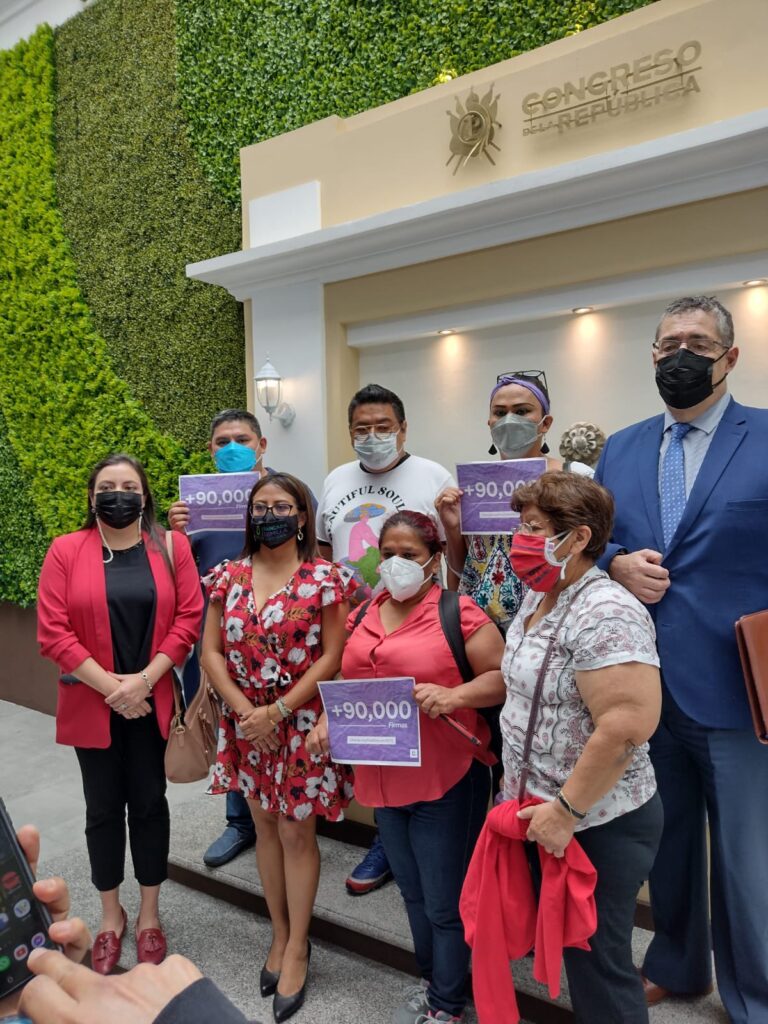
Meanwhile, civil society organizations called on March 15 to accompany the delivery of 90,000 signatures collected through change.org to progressive members of Congress in rejection of decree 18-2022.
Specialized prosecutor's office for hate crimes
On the eve of the election for Attorney General, and the nomination process to choose a list of candidates for Attorney General and Head of the Public Ministry (MP), actions emerged from civil society organizations defending the human rights of the sexual diversity communities to demand a prosecutor to investigate crimes of prejudice and hate in Guatemala and a specialized prosecutor's office to investigate hate crimes against the LGBTIQ+ population .
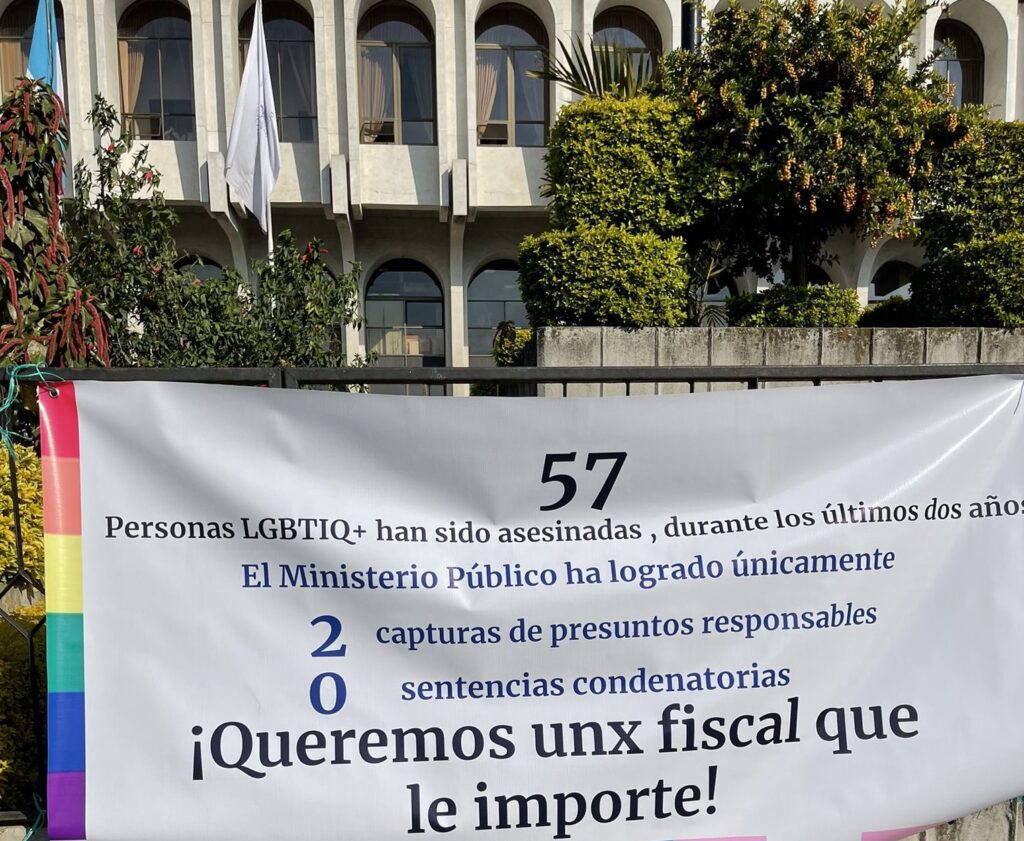
Silvia Patricia Juárez was the only candidate for Attorney General who proposed a specialized unit to investigate hate crimes. Juárez is currently the prosecutor for Environmental Crimes and a former special prosecutor for the Specialized Unit against Criminal Organizations involved in Drug Trafficking and/or Money Laundering and Other Assets and Tax Offenses (Unilat). She was disqualified on a technicality, and the current Attorney General, María Consuelo Porras, won reelection, despite being accused of corruption and showing little interest in investigating hate crimes during her current administration.
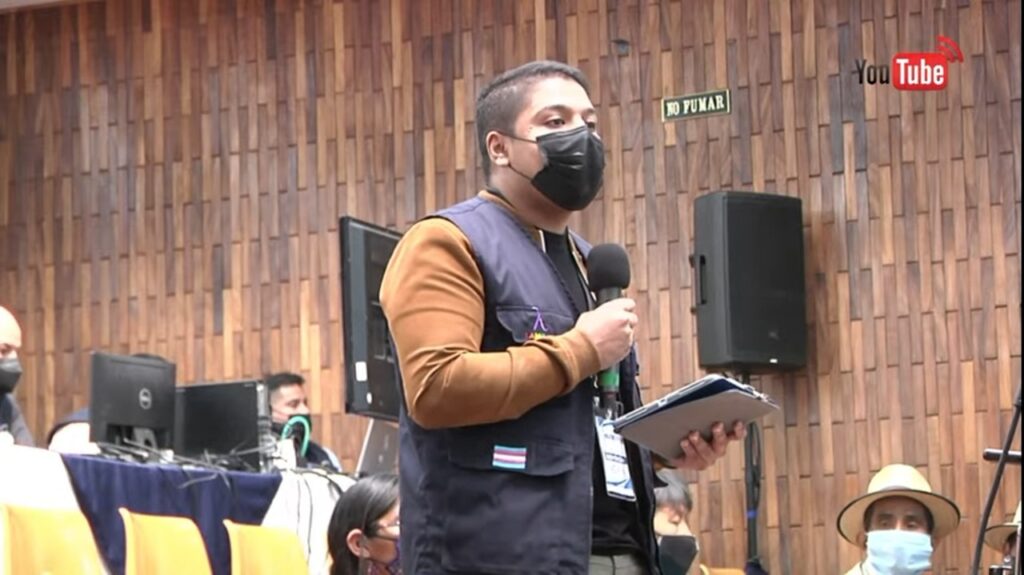
Diego Lima of the Lambda Human Rights Observatory @ObservatorioLam explained during the selection process for Attorney General and Head of the Public Ministry the importance of choosing an Attorney General who is inclusive of the LGBTIQA+ population
Currently, there is an instruction from the Public Prosecutor's Office containing an Investigation Protocol for crimes of violence against women in the public and private spheres, which recognizes that the concept of "woman" includes trans women. To date, this protocol has not been implemented. The case of the transfemicide of Andrea González of the Trans Queens of the Night Organization @InfoOTRANS is a clear example that crimes against trans women are not being treated as transfemicides in Guatemala by the Public Prosecutor's Office. @ObservatorioLam.
One good thing: a decent repair
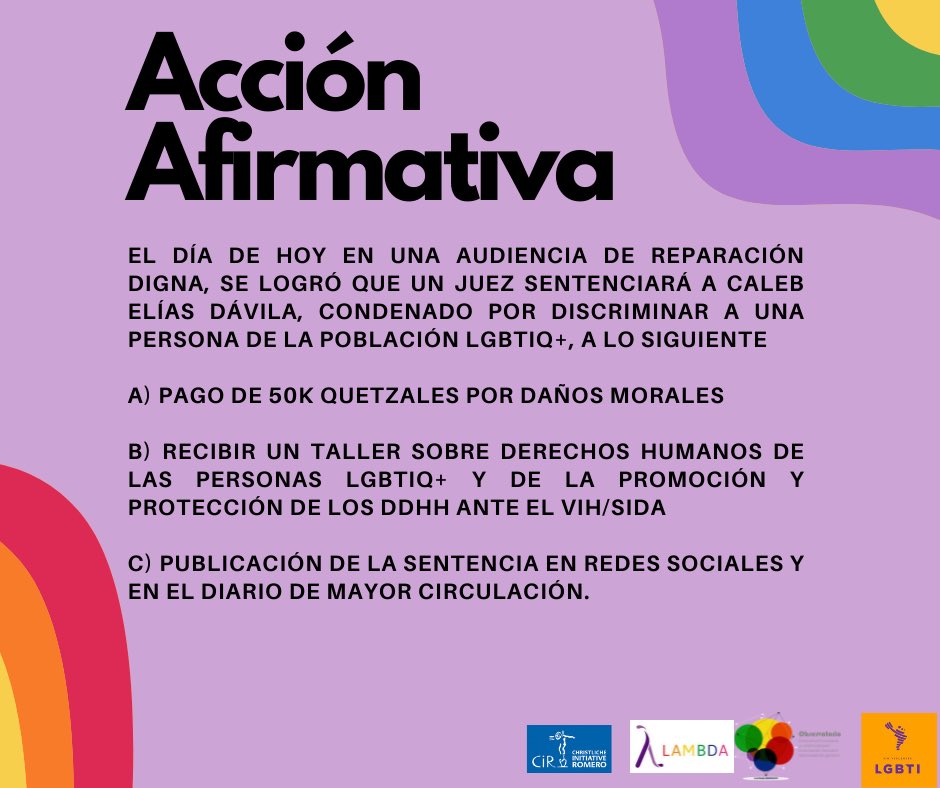
For the first time in Guatemala, a person was sued and prosecuted for disclosing that someone is HIV-positive. Caleb Elías Dávila Cornejo was sentenced to pay a fine of approximately US$6,500 for moral and non-material damages. He was also ordered to attend a workshop on the human rights of LGBTQ+ individuals and the promotion, protection, and defense of human rights in the context of HIV/AIDS at the Human Rights Ombudsman's Office (@PDHgt).
This sets a precedent in compliance with the penal code, which must also guarantee non-discrimination against sexual diversity communities.
Bill against transgender children and adolescents
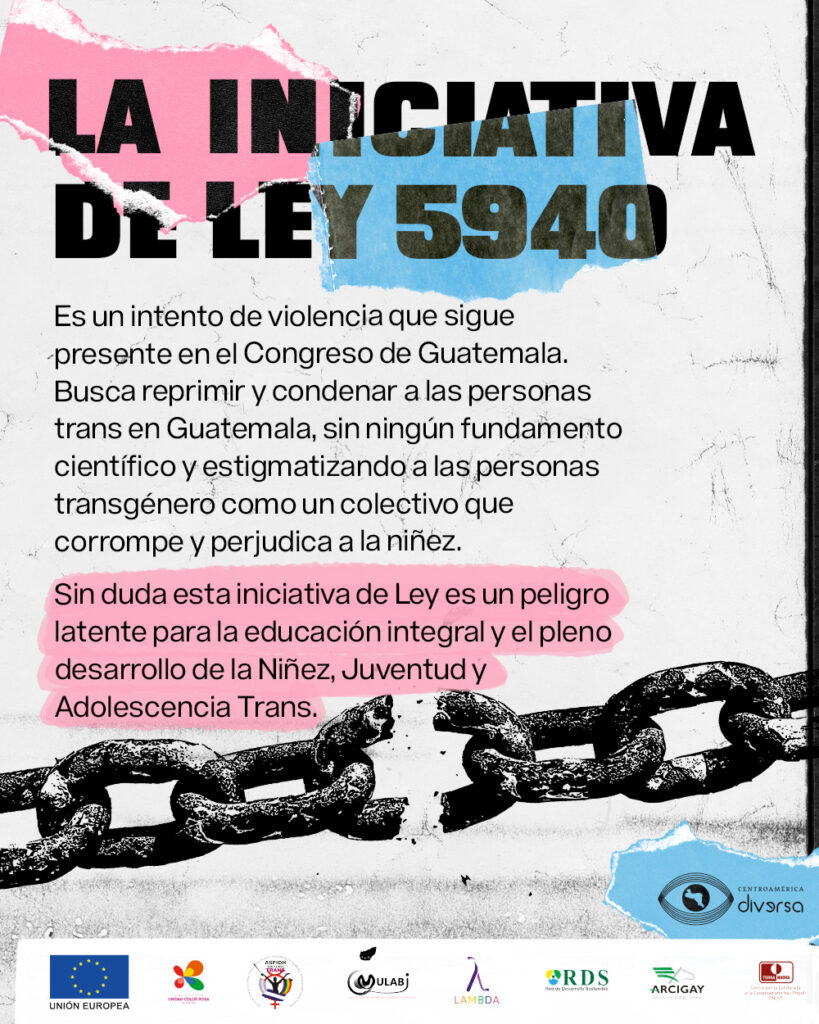
Initiative 5940 is a proposed law that seeks to remove the right to self-determination of gender identity for transgender children and adolescents. It was presented to the Legislative Directorate on July 12, 2022. Its sponsors are 16 male and three female members of Congress, including Lucrecia de Palomo, who last year served on the Education Committee in the Congress of the Republic and is a staunch opponent of comprehensive sexuality education.
Paradoxically, it states that it seeks to "guarantee" children and adolescents "the effective fulfillment of their right to self-identity according to their sex at birth, thus safeguarding their identity and sexual integrity." The proposal, through the reform of several articles of the aforementioned law, aims to:
Prohibit transgender children and adolescents from freely expressing their gender identity. (Article 14. Identity. Comprehensive Protection of Children and Adolescents Act).
-Prohibit comprehensive sex education through printed, visual, electronic or audio material that addresses gender identity and sexual orientation. (Article 59. Protection. Comprehensive Protection of Children and Adolescents Act)
-Prohibit the dissemination to minors of information related to sexual orientation and gender identity through shows or programs. (Article 60. Media. Comprehensive Protection of Children and Adolescents Act)
-Recommends: “To ensure that public or private institutions that care for children and adolescents whose rights are threatened or violated respect and restore these rights, especially their right to life, security, cultural identity, identity according to their sex at birth, customs, traditions and language, and provide them with comprehensive and dignified treatment.” (Article 76. State Obligation. Comprehensive Protection of Children and Adolescents Law)
The initiative is still pending approval by three committees of deputies in Congress, where the majority of members belong to the ruling party; these committees include the Human Rights Committee. After approval, it would go to the full Congress for final and official passage.
The Psychiatric Association endorsed the pathologizing approach to sexual diversity
In November 2022, the Association organized the 64th National Congress of Medicine, where Dr. Edgar Rolando Hernández presented his paper, “New Psychopathology of Human Sexuality.” This paper proposes the pathologization of sexual orientation and gender identity, ignoring the fact that these concepts have already been depathologized. Although the psychiatric association states that it did not endorse its content, it allowed his participation, thus facilitating the dissemination of the pathologization of sexual orientation and gender identity.
At least 25 hate crimes in 2022
As of the closing of this note, 25 hate crimes had been recorded, a figure that is about to equal the number of violent deaths in 2021, which counted 33 people from the LGBTIQA+ community murdered in Guatemala.
We are present
We are committed to journalism that delves into the territories and conducts thorough investigations, combined with new technologies and narrative formats. We want the protagonists, their stories, and their struggles to be present.
SUPPORT US

FOLLOW US
Related notes

We are present
This and other stories are not usually on the media agenda. Together we can bring them to light.