

Mexico City: For the first time, a man is prosecuted for the femicide of a trans woman
Transfemicide is not a crime in the country, so this ruling sets a precedent in cases of hate crimes.


Share

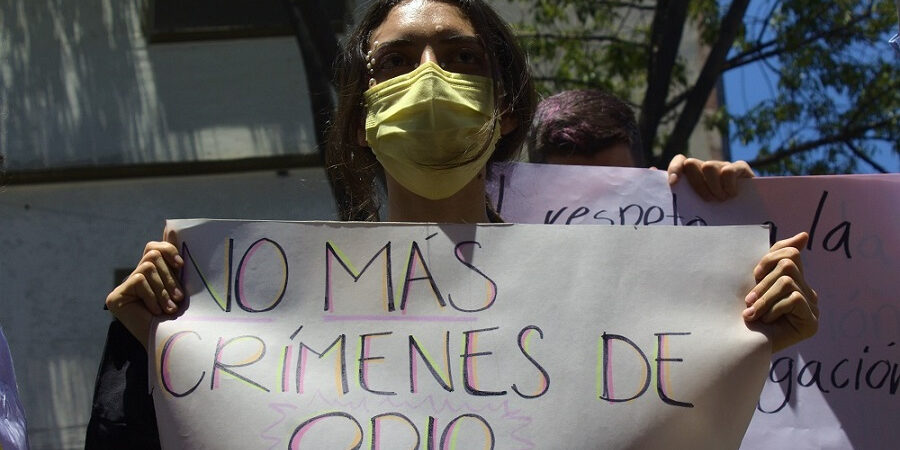
MEXICO CITY, Mexico. For the first time, a man has been formally charged in the femicide of a transgender woman in Mexico City. According to official figures, as of May 2021, there were 25 open investigations into the violent deaths of transgender women in the nation's capital.
Despite the existence of legislative initiatives in Mexico City to criminalize hate crimes against members of the trans community, such as the Paola Buenrostro law, the local Congress has yet to legislate.
Attorney General Ernestina Godoy announced the outcome of the process in a video statement. “We succeeded in having a judge, for the first time in Mexico City, formally charge a man for his alleged involvement in the femicide of a transgender member of the LGBTIQ+ community,” she said.
The victim's body was found in the Río de los Remedios. This prompted the corresponding Public Prosecutor's Office to open an investigation and begin inquiries.
Testimonies gathered indicate that Gustavo “N”, the victim's partner (whose name has not been released by authorities), attacked her with an object after an argument. The trans femicide occurred in a public place, under a bridge on Río de los Remedios Avenue. Gustavo “N” then moved the body to the sewage canal.
In 2021, the organization Letra S recorded 78 hate crimes, 55 of which were committed against trans women. 51% of the victims were murdered or their bodies were dumped in public places: vacant lots, fields, rivers, etc.
The case of La Soñaré: a benchmark for justice for victims of transfeminicide
On August 3, 2022, a judge sentenced two soldiers for the murder of Naomi Nicole, a 26-year-old trans woman and sex worker from Veracruz, known as La Soñaré.
It was the second ruling of its kind in Mexico recognizing the gender identity of a trans woman in a judicial process with a gender and human rights perspective. The first occurred in the state of Morelos in 2020 for the femicide of Ana Paula 'N', a trans woman.
In the case of La Soñaré, the crime for which the judge found the two soldiers guilty was homicide. There is no specific crime of transfeminicide in the Mexico City Penal Code.
In the nation's capital, the only aggravating circumstance is hate based on sexual orientation and gender identity in the crime of homicide.
With the indictment of “Gustavo N”, it is the first time that a judge has determined that femicide is a crime of which a trans woman can also be a victim and a criminal process is initiated against someone.

To define the crime of transfeminicide
In the local Congress, there are two initiatives to punish the murders of trans women. Since October 2021, legislator Temístocles Villanueva, of the Morena party, has presented the Paola Buenrostro bill. It proposes reforming the penal code to create the crime of transfemicide with a sentence of between 35 and 70 years in prison.
“The criminalization of transfeminicide is merely the first step in addressing the situation of systemic violence and discrimination experienced by trans women and people with a feminine gender expression,” the congressman said at the presentation of the initiative.
This project was not approved because it is in the Joint Committees on Administration and Justice and Special Attention to Victims.
Another proposal comes from Representative Janecarlo Lozano Reynoso, also of Morena. He seeks to add hate crimes based on “gender expression” to Article 138 of the Penal Code, which defines homicide.
On November 19, Representative Flores Pecheco introduced a bill to amend the Federal Penal Code and create the crime of transfemicide, which would apply in all 32 states of the country. The bill is currently under review by the Justice Committee and the Diversity Committee.
The project's proposal is that, for the accreditation of the crime of transfeminicide, the requirements established by the National Protocol of Action for Personnel of the Justice Administration Agencies of the Country, in cases involving sexual orientation or gender identity.
The initiative stipulates that public servants who delay or obstruct the administration of justice may face three to eight years in prison and a fine of 500 to 1,500 days.
Specialized Investigation Unit on Transfemicides
On the International Day Against Homophobia, Prosecutor Sayuri Herrera presented some of the work of the Transfemicide Investigation Unit, created in June 2020 and the only one of its kind. This unit is part of the Specialized Prosecutor's Office for the Investigation of the Crime of Femicide.
“It is the partners of trans women who murder them. People who are in a relationship with them in an affective, sentimental, or professional way: as clients of sex work who hire their services. In addition, they perpetrate degrading and mutilating injuries on their bodies,” the prosecutor explained in the discussion.
One of the objectives of this Unit is to determine if the authorities made mistakes in registering the gender identity of the victims.
Layla Vázquez, a consultant for the prosecutor's office, a human rights advocate, and a member of the trans community, systematized the information from the investigation files received by the Prosecutor's Office for Femicides.
During a discussion organized by the UN Human Rights Office in Mexico on May 19, 2021, she explained that she searches through dozens of case files to see if the victims wore or had in their homes clothing considered socially feminine, if they had undergone surgical procedures, if there were any indications of a transition process, and in witness statements. Anything that indicates that a trans person was killed.
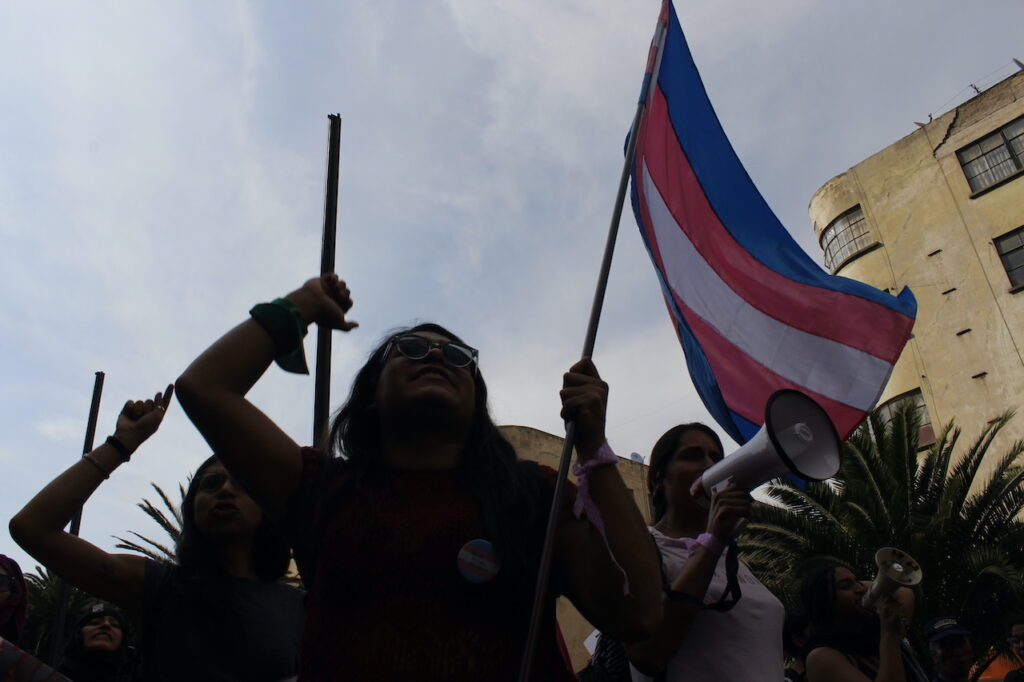
The victims: migrants, without legal recognition of their identity and in vulnerable conditions
As of May 2021, the Unit had a record of 25 investigations related to violent deaths of trans women since 2016. While 2019 was the year with the most victims, when at least ten transfeminicides occurred in the Capital.
Transfeminicide is concentrated in the Cuauhtémoc borough. Layla explains that this is because many of the hotels and avenues where sex workers operate are located there. “In these contexts, they are much more visible, much easier to locate, and that exposes them to this violence again,” she stated.
The second borough is Iztapalapa. For Layla, the context that fosters this is the lack of health services and the displacement of trans women to the outskirts of the city.
Although Mexico City was the first place to legally change one's gender identity in 2014, 93% of the victims did not have this legal recognition. Furthermore, 56% were not originally from Mexico City: they were from Veracruz, the State of Mexico, Chiapas, Morelos, and Puebla.
Of the 25 investigation files, arrest warrants were issued in four; three were initiated with one detainee and 22 with none.
According to Layla Vázquez's analysis, discriminatory conditions force trans women to take informal jobs. This exposes them to vulnerable situations: of all the cases registered, 45% were sex workers and 26% were hairstylists.
We are present
We are committed to journalism that delves into the territories and conducts thorough investigations, combined with new technologies and narrative formats. We want the protagonists, their stories, and their struggles to be present.
SUPPORT US

FOLLOW US
Related notes

We are present
This and other stories are not usually on the media agenda. Together we can bring them to light.