

Four Mapuche women under house arrest: they plead for children and the ceremonial site
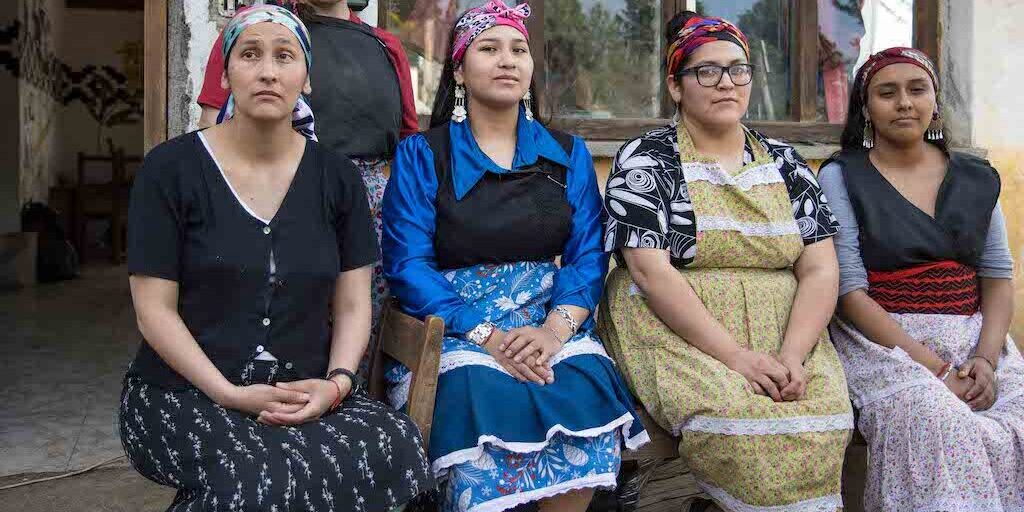
Presentes spoke with the Mapuche women under house arrest, along with nine children, at the Mapuche Center in Bariloche.


Share

At the Mapuche Center in Bariloche, where four women from that Indigenous nation remain detained, the voices, cries, and laughter of children resonate. Today, nine children are under house arrest there with their mothers, ever since the Unified Command evicted the Lof Lafken Winkul Mapu community from Villa Mascardi. A month after the operation, one of the community's main demands is respect and care for them: the children.
“There’s a lot of talk these days about children. But it seems that if they’re Mapuche, they don’t matter,” Luciana Jaramillo, one of the women arrested, tells Presentes. She says this was already evident during the operation: “When the eviction happened, the police saw them running towards the winkul (the mountain). Nevertheless, they fired shots knowing they were children of 6, 8, and 9 years old. They were just running out of fear.”
When the mothers were arrested with their babies, they alerted Federal Judge Silvina Domínguez of Bariloche that their older children had escaped uphill and were still in the woods, being pursued by the police. “We told the judge: there are more of our children, other kids, they’re up there,” Luciana recounts. “'Well, I’m going to give the order that you don’t fire,' the judge said.” It seems that the protection of children only extends as far as not killing them.
Homeless and under house arrest
Now, while under house arrest, the mothers face difficult explanations. “We had to explain to the adults what was happening, but the little ones don’t understand,” says Luciana. “'Why don’t we go back to the rukas?' they ask.” The community has lived there for five years. The case for trespassing on National Parks land hasn’t gone to trial yet, but after this latest operation, the rukas, the families’ homes, were demolished by court order. Therefore, even though they were granted house arrest, their homes no longer exist.
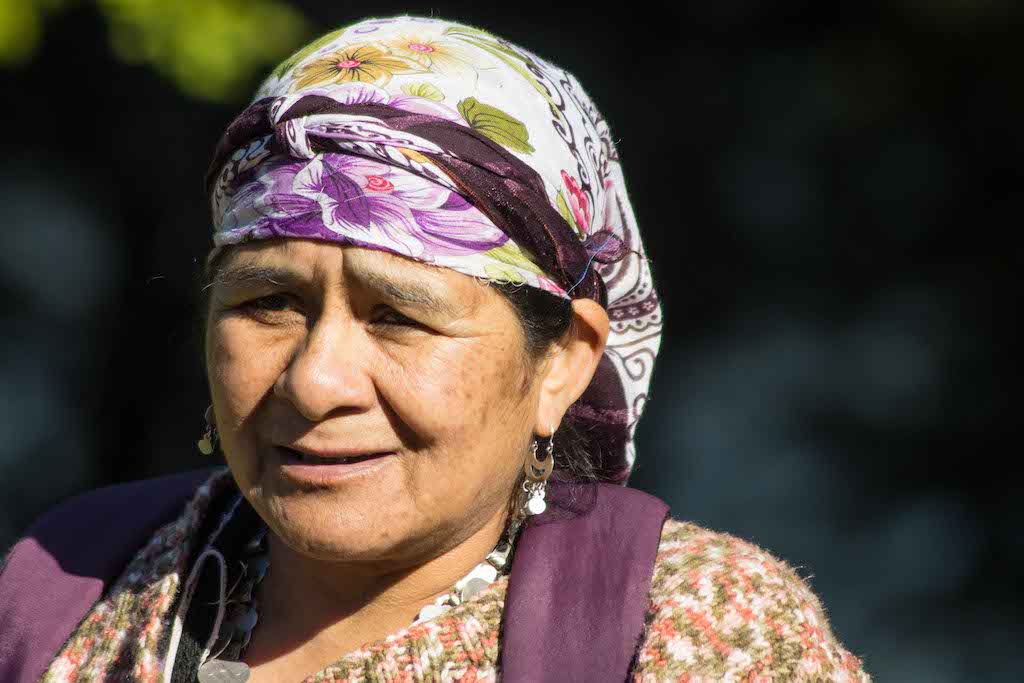
María Nahuel, mother of the machi Betiana Colhuan Nahuel—who is also under arrest at the house—and grandmother of several of the children detained with their mothers, explains that supportive people “have brought them many gifts, and that is very much appreciated. But they are used to something else, to running, climbing trees, recognizing plants. Not to being locked up in a house.”
Romina Rosas gave birth while in detention. “We had a vegetable garden, animals. We were working on the children's education. Within the community, we had a place where we held ceremonies, where the children shared lessons in Mapuzungun, our worldview, and lawén, our traditional medicine, and explored the forest. Every day they were playing, exploring, learning. That's the life they had in the community, and that's what they miss today,” Romina says. Now they have a house with just a few meters of land around it—a gravel parking lot, a bit of grass, and a small greenhouse.
They used to attend school in Villa Mascardi, but now they can't continue their classes because it's 40 kilometers away, and their mothers can't leave. Their parents remain hidden in the mountains, enduring the elements for over a month.
Public Defender Roxana Fariña filed a request with Federal Judge Silvina Domínguez, in charge of the operation, the case, and the entire situation, to guarantee the right to education of the affected children.
Marcela Cano, from the Second Independence Movement within the Multisectoral Alliance Against Repression in Bariloche, has been supporting the detainees. She explains: “Generally, when a child can’t attend school for any reason, a teacher is sent to their home. We consulted with SENAF [Secretariat for Children, Adolescents, and Families], and they said that the situation of mothers under house arrest wasn’t covered. So, what we’re doing, from a place of solidarity, is trying to organize not only educational but also recreational activities so they can relax a little. But it’s not the same as school.”
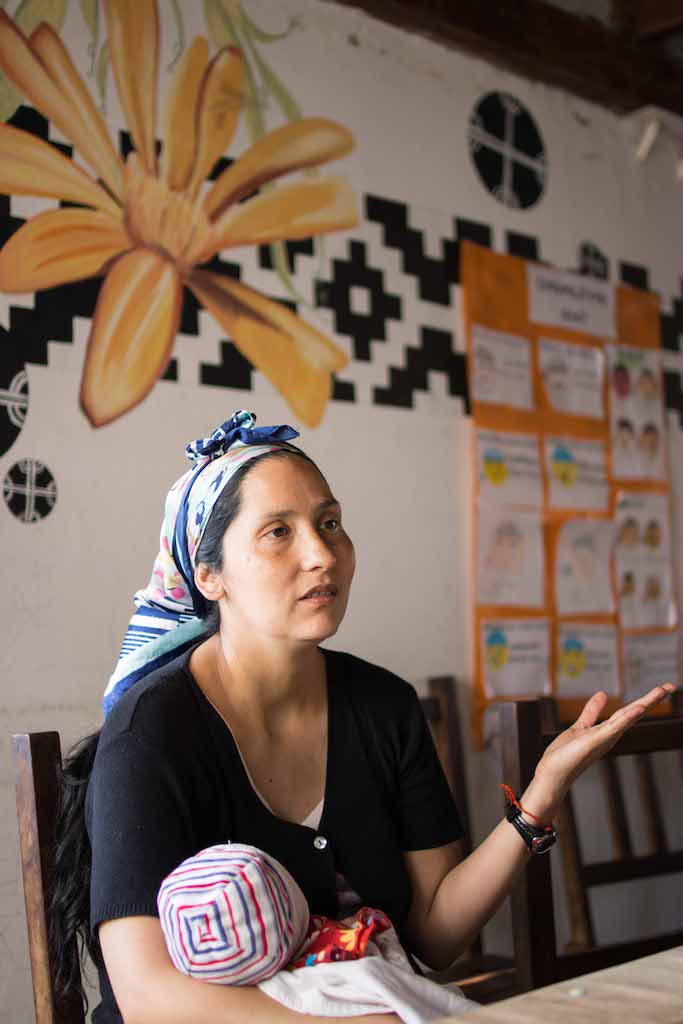
The walls of the Mapuche Center are adorned with posters in the Mapuzungun and children's drawings. On Monday, November 7th, some teachers and the principal of the Mascardi school, along with the education supervisor, came to discuss the possibilities. But the meeting ended without a concrete plan.
The relationship with the school has always been complex and nuanced. Jaramillo recounts: “In 2017, the Gendarmerie entered the school to identify which children belonged to the community. The [previous] principal pointed each one out.” Furthermore, “in front of the school, at 3:00 a.m. on the 4th (when the Unified Command was established), they were stopping all the vehicles. The school was notified of what was going to happen, and Frutos—Diego Frutos, president of the Neighborhood Council and leader of the campaign against the community—was right there wearing a police vest, personally directing traffic. Everyone is complicit. The principal knew this, so why didn't she tell us? They suspended classes without saying why.”
Safeguarding the ceremonial space
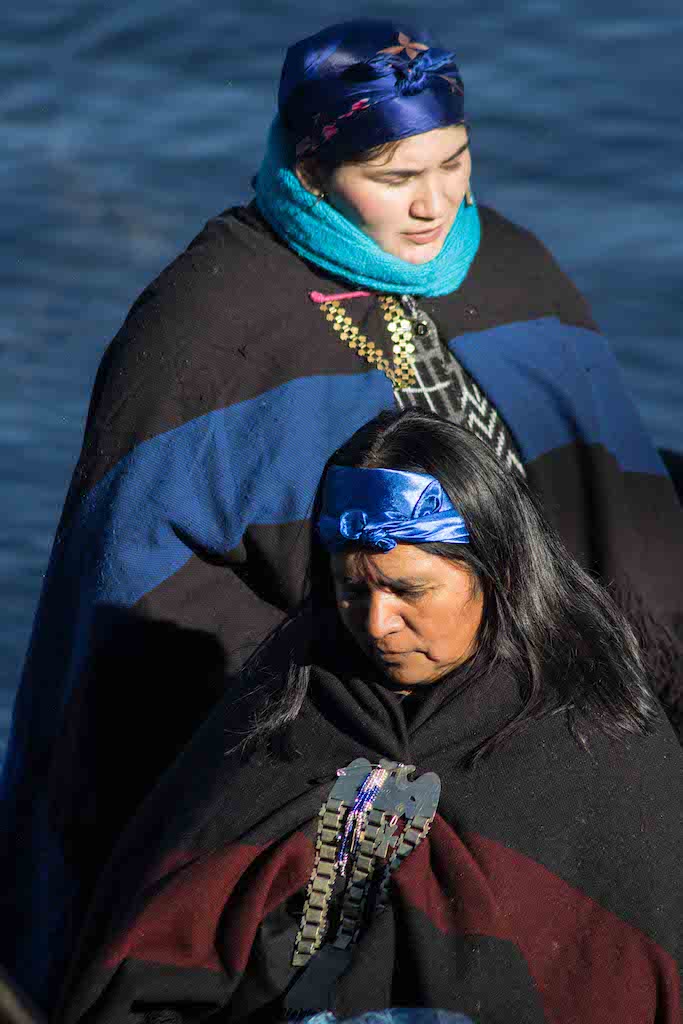
The difficulties faced by Mapuche children are not new. María Nahuel recounts her daughter Betiana's childhood: "We were always persecuted, because from a young age it was known that she was going to be a machi." That this childhood persecution has reached the point where Betiana, the only machi in Argentina, is now imprisoned, leads us to another key demand: the protection of the rewe, the ceremonial site.
On November 2nd, people from various communities gathered on the shores of Relmu Lafken (Lake Mascardi) to perform another ceremony. The territory remains militarized, including several kilometers of Route 40, and the prohibition against entering the sacred space is absolute. Therefore, the lake was chosen as the location, as close as possible to the rewe). After the ceremony, the group went to the Nahuel Huapi National Park headquarters in Bariloche and requested a meeting with the park superintendent.

After settling into the entrance hall - there were about 30 people of all ages, from children to an 80-year-old woman - the meeting began with pillan kushe Maria Elena Tripaylaf, from the Lof Painefilú (near Junín de los Andes, Neuquén).
-We come to dialogue because our greatest weapon, our greatest tool, is the word.
That word was passed around among representatives of different communities in Chubut, Río Negro, and Neuquén. The conversation revolved around Federal Judge Silvina Domínguez's decision to return the disputed lands to the private owners and the National Park, but she clarified that the rewe (sacred site) must be protected for Mapuche ceremonial use.
“Protecting a rewe is not an administrative act. This goes beyond the situation of a single community. It concerns the entire Mapuche people,” explained Mauro Millán, lonko of Lof Pillan Mawiza (Corcovado, Chubut).
“To ensure that a rewe is cared for, it is we, the Mapuche people, who can do it—neither parks, nor the justice system, nor the police can do it,” warned Carlos Curruhuinca, lonko of the Lof Curruhuinca (San Martín de los Andes, Neuquén).
The superintendent of Nahuel Huapi National Park, Horacio Paradela, made it clear that everything depends on higher-level political decisions. “At this moment, which I understand may be more urgent for some, no decision has yet been made,” he said. He also reaffirmed that “the National Parks Administration maintains its institutional position of not recognizing this community in this area.”
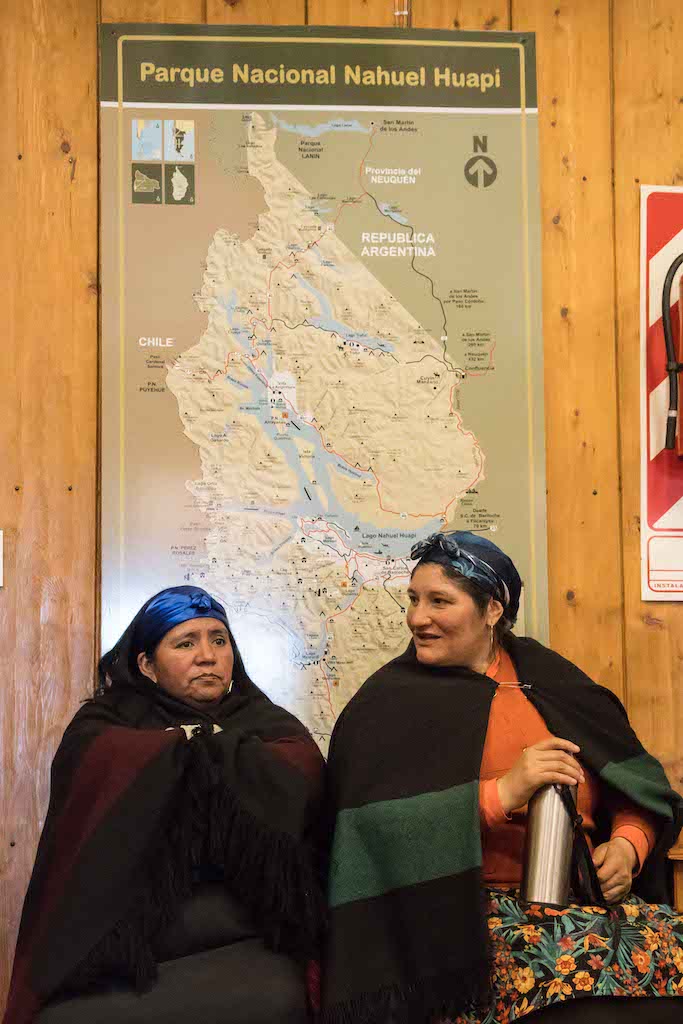
“On this side of the mountain range, the only machi is Betiana Colhuan Nahuel, hers is the only machi rewe, and her spiritual importance is inseparable from the physical place,” explained pillan kushe María Elena. “That newén of the machi must be in her rewe, not in another place.”
Maitén Cañicul Quilaleo, also from the Junín de los Andes area, asked: “Are you going to continue choosing the path of criminalization to resolve this? Because if you do, know that you are doing it against all of us, not just against María [pointing to her side] or against the machi Betiana.”
In closing, Mauro Millán summarized the complaint: “Sooner or later you will have to clarify that you are protecting a Mapuche rewe, belonging to the Mapuche people. You will have to account for this great contradiction.”

Dialogue yes, violence no
While the meeting concluded with the understanding that a decision from the National Parks Administration should be awaited, everyone agreed that this is how conflicts should be resolved—through direct, open, and serious dialogue. María Elena Tripaylaf put it this way: “For me, violence is unacceptable, but dialogue is. But they have to listen; otherwise, it's useless.” For his part, Mayor Paradela expressed his gratitude that the communities had come forward and had the opportunity to speak calmly, face to face, rather than through intermediaries.
Claims for territory, for children's rights, and for ancestral spirituality are inseparable. Resolving these conflicts requires a greater understanding of this throughout society. As Soraya Maicoño, a Mapuche singer and actress, said in a talk at the Teacher Training Institute in El Bolsón: “Wouldn't it be good if white society evolved? So much shamanism, so many alternative therapies, but it all disappears when it comes to an Indigenous, dark-skinned people fighting for their rights.”
Meanwhile, at the Mapuche Center where she is being held, Romina Rosas calls for people to “compassionately support the machi so she can return to her rewe, to demand justice for our children, for every ancestral authority, for every territory being devastated right now. It is very important that the machi can return to her rewe and territory; that is the urgent need now. We are connected to that land; the placentas of our children are buried there.” What she doesn't say is that the placenta of the baby she is holding is not there, because she gave birth while deprived of her freedom.
We are present
We are committed to journalism that delves into the territories and conducts thorough investigations, combined with new technologies and narrative formats. We want the protagonists, their stories, and their struggles to be present.
SUPPORT US

FOLLOW US
Related notes
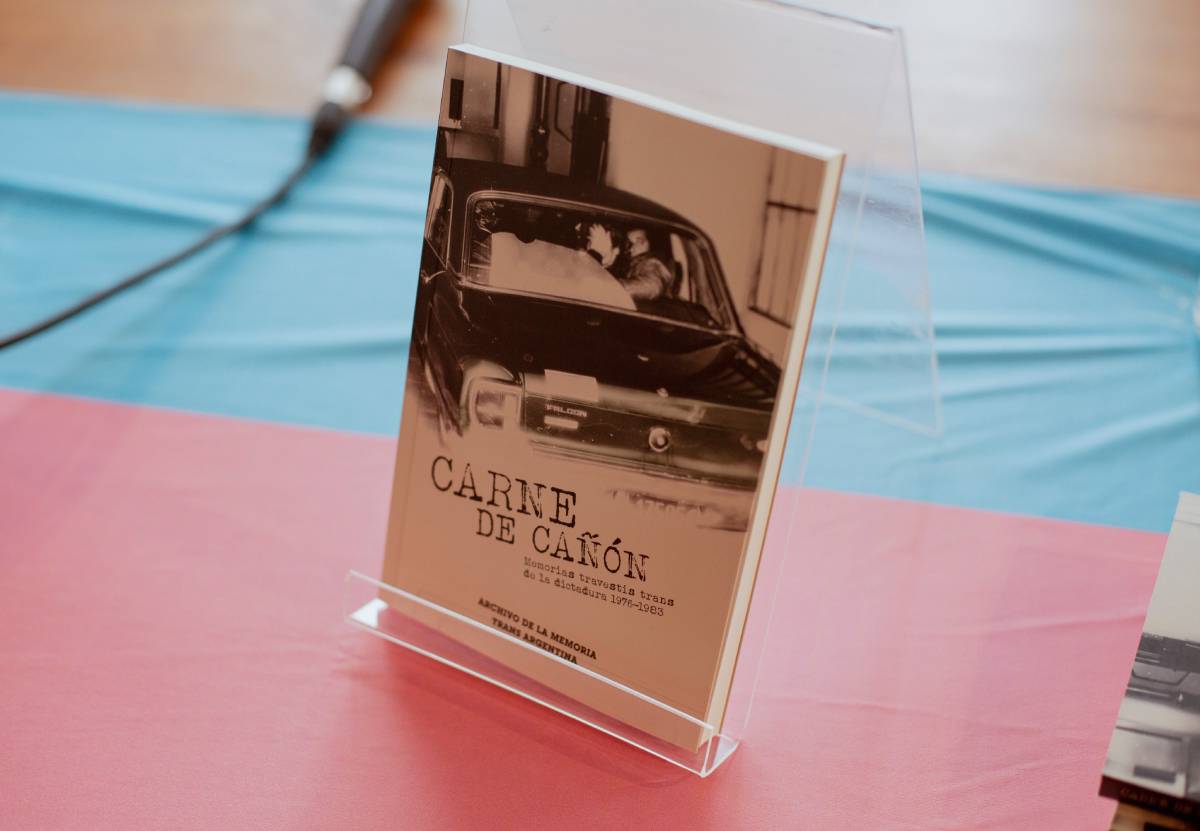
Cannon fodder: the book that recovers silenced stories of transvestites and trans people during the civic-military dictatorship
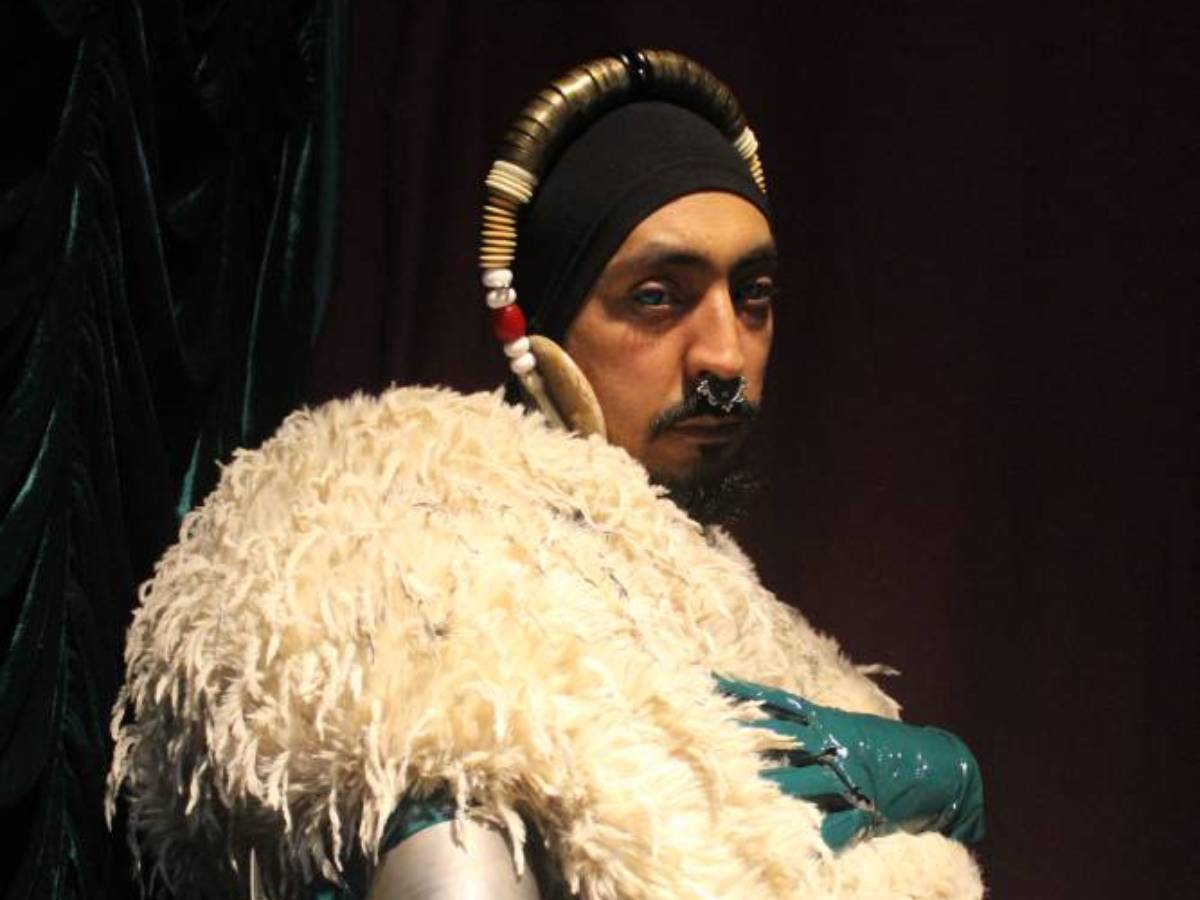
Lechedevirgen: “Undoing art means restoring its ritual and collective dimension”

Why the trial for the murder of Eldin and Milton could be historic for Guatemala's LGBT community
We are present
This and other stories are not usually on the media agenda. Together we can bring them to light.