

Lesbocides in Mexico: unpunished and invisible
Investigations do not take into account the sexual orientation of the victims, which hinders access to justice.


Share

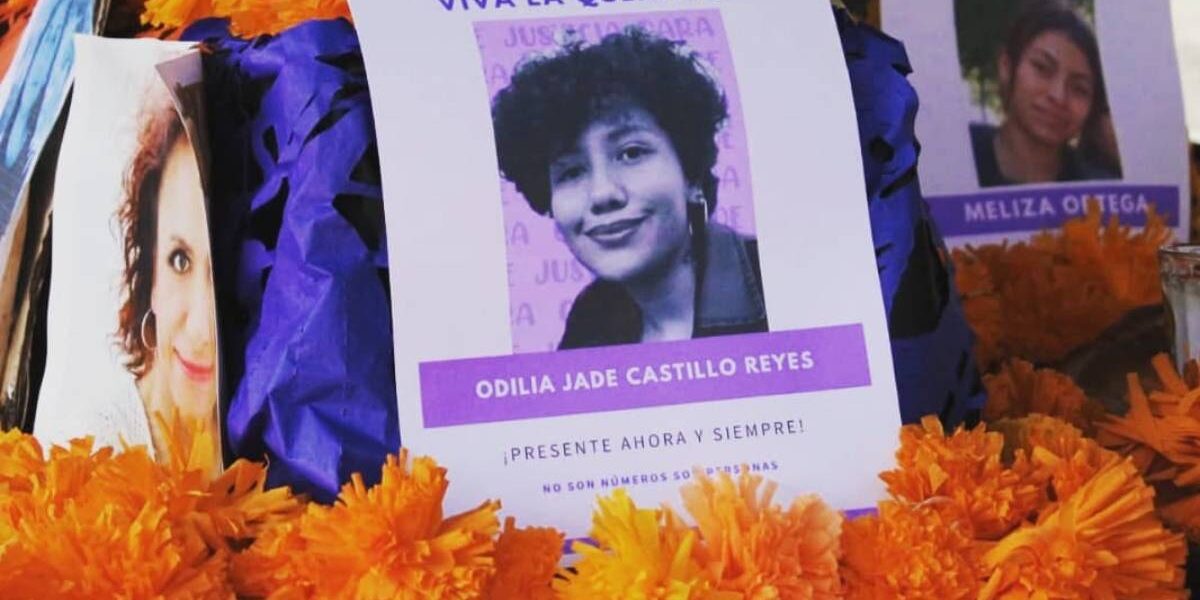
MEXICO CITY, Mexico. Karen Janelly Pereyra, 24, was murdered, and her girlfriend, Berenice Moreno, 21, survived an attempted lesbian attack at their home in Tijuana. In southern Mexico, in Córdoba, Veracruz, 17-year-old Odilia Castillo was disappeared, tortured, and murdered. All three were openly lesbian young women in their communities. Local collectives denounce these crimes as hate crimes motivated by lesbophobia. They point out that the invisibility of these murders hinders access to justice.
The organization Letra S reported a total of 28 lesbian murders between 2015 and 2021. At the beginning of this year, Nohemí and Yuliza , another lesbian couple, were brutally murdered in Chihuahua.
“The low number of recorded violent deaths of lesbian women should not be misinterpreted to underestimate the impact of this type of gender-based violence, as these cases are usually investigated solely based on gender, disregarding the victim's sexual orientation as a possible motivation for the crime. Because of this, the only cases of murdered lesbians that gain public visibility are those perpetrated when the victim or victims were in a relationship,” warns in its latest report.
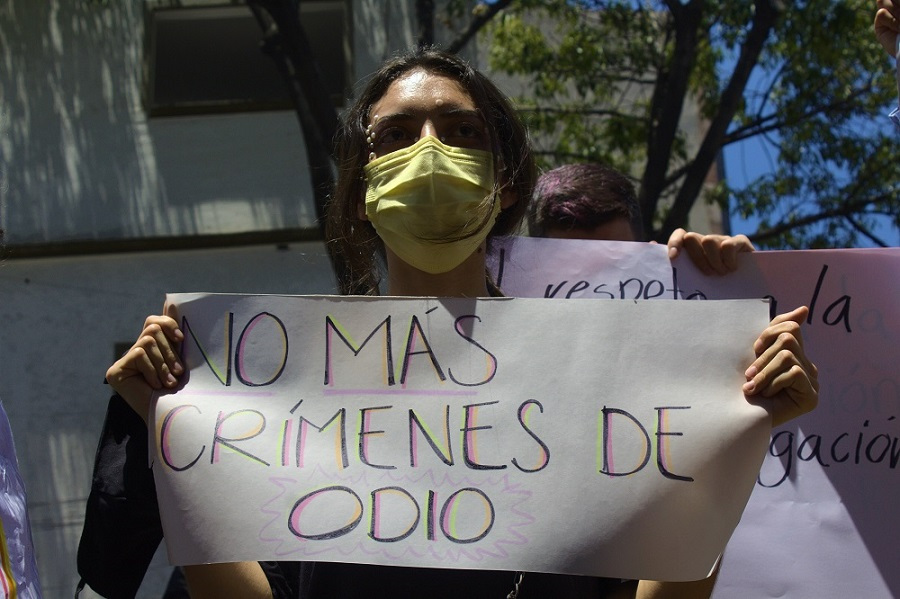
“Ignoring the fact that they were lesbians dilutes the chains of violence.”
Invisibility is a common feature in Mexico when lesbian women and transgender people are murdered or are victims of any type of lesbophobic attack. This applies to everything from how the events are reported in the press to how the justice system investigates these crimes.
“Ignoring the fact that the victims were lesbians obscures the cycles of violence to which lesbians may be subjected. And in the justice system, it prevents us from seeing that there is discrimination, hatred, misogyny, lesbophobia, even an attempt to 'correct' our desires. Failing to name it translates into silence for the communities, an institutional and social invisibility, and it's an omission in how investigations are conducted, where the common factor continues to be impunity,” commented Cristina Lozano, a member of the legal team at LenXolas , an interdisciplinary network of lesbian women in Mexico, in an interview.
“In Córdoba, neither the Prosecutor’s Office nor the media mentioned that Odi was a lesbian. Even on social media, the word ‘lesbian’ was criminalized, and people were horrified when we said that Odi was a lesbian and a racialized Afro-Mexican woman. Making it visible that this was a lesbofemicide is very important because lesbians are killed for being lesbians, not just for being women. We are killed for not conforming to heteronormative and/or binary standards,” a member of Colectiva Ko’olelm , an Afro-transfeminist organization from the high mountain region of Veracruz, Presentes
“In Tijuana, there can be a lot of hypocrisy about who can be visible and who is silenced. Tijuana can be a liberal place for some people. But being a migrant or being from this city, the fact of walking down the street with your partner, being visibly butch or lesbian, can bring moral condemnation, sexual harassment, corrective rape, and lesbian murders,” Nicolasa Córdova, co-founder of the migrant shelter Casa Arcoíris .
Karen and Berenice: Lesbocide and attempted lesbocide in Tijuana
On the night of October 9th in the border city of Tijuana, 24-year-old Karen Janelly Pereda and 21-year-old Berenice Moreno were attacked in their home. Karen and Berenice were girlfriends and originally from the state of Michoacán.
The weekly newspaper Zeta reported that at 9:45 p.m., two men who knew Karen and Berenice entered their home, beat them, and attacked them with a bladed weapon. They also stole their cell phones and cash.
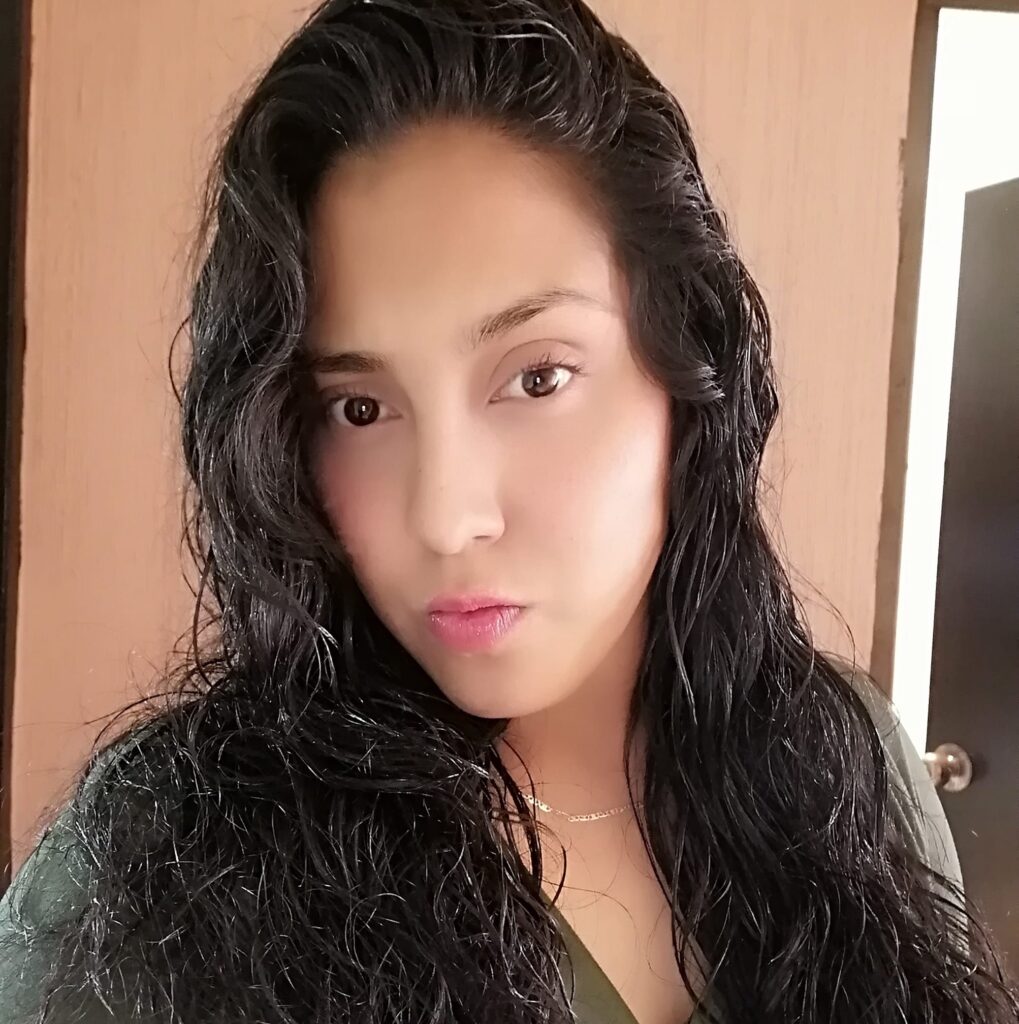
Karen was murdered. Berenice survived an attempted lesbian murder; she was knocked unconscious and upon waking called the emergency number.
“Berenice and Karen lived in La Libertad, one of the oldest neighborhoods right next to the border wall in Tijuana. Most of the people who live there work on the other side (in the United States) or in the maquiladoras. These girls lived alone; they came from Michoacán, which is also very common and the story of many of us who arrive here, sometimes without support networks. I think that part of the silence and invisibility surrounding this crime, or whether the outcry is stronger, is often influenced by classism, racism, and the conditions of migration,” adds Nicolasa Córdova.
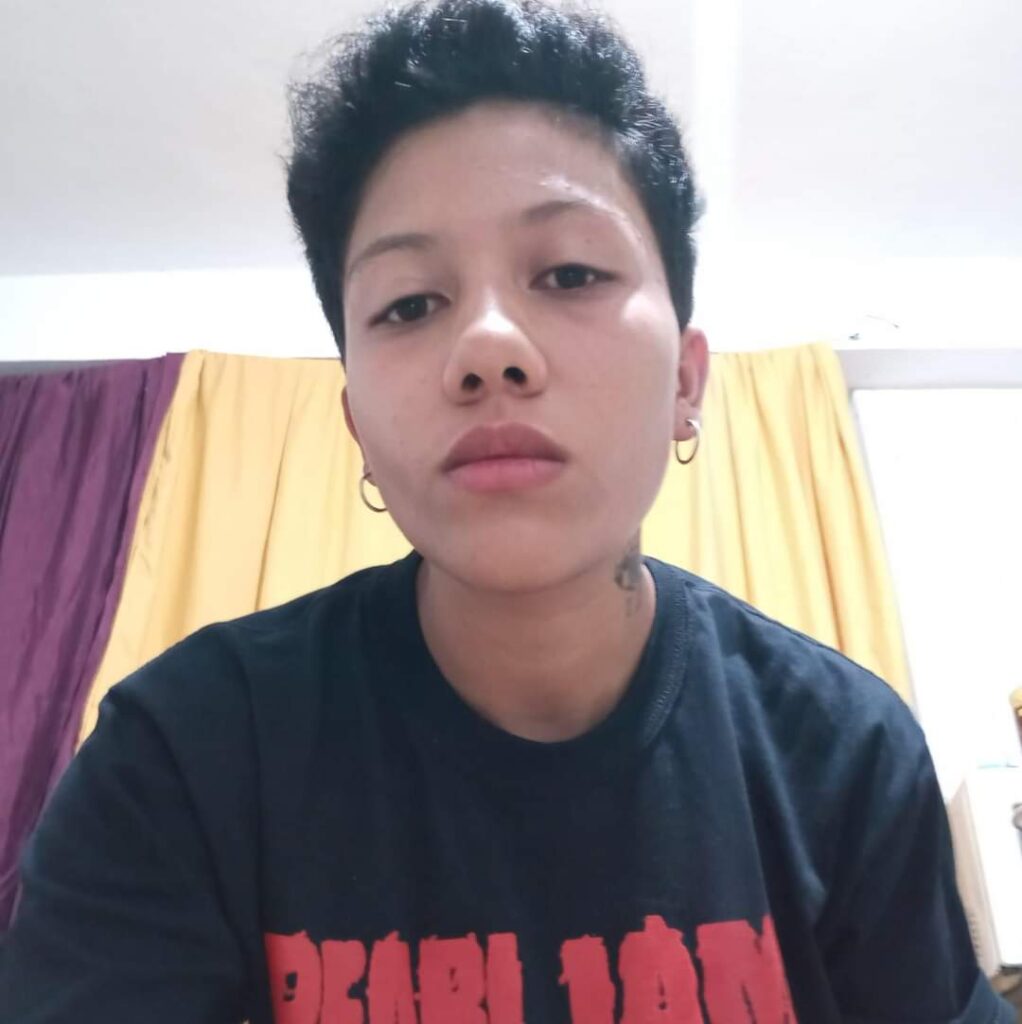
“Odi was also a victim of a hate crime for being a lesbian”
Odilia Castillo was 17 years old, a young, openly lesbian woman originally from Córdoba, a city located in the high mountains of Veracruz.
On August 26, Odilia Castillo disappeared “under suspicious circumstances.” When she didn't return home, her parents reported her missing, and a missing person alert was issued. Local media reported that six days later, farmworkers found Odilia's body inside a cistern in a vacant lot in Fortín de las Flores, a municipality near Córdoba.
According to local media , Odilia's body showed signs of torture, her hands were tied, and she had gunshot wounds.
“It is important to name that Odi was a lesbian, otherwise she becomes invisible and marginalized, not only Odi but all the people who find a place of political identity and desire there,” a member of the Ko'olelm Collective Presentes
There are detainees in both incidents
According to the Baja California Prosecutor's Office, in the early morning of October 10, the police found the attackers thanks to the geolocation of Karen and Berenice's cell phones; and a judge ordered preventive detention.
On October 17, the judge of control, Cecilia Osuna, linked Miguel Ángel 'N', 18 years old, and Juan Carlos 'N', 27 years old, to the process for the crimes of femicide, aggravated homicide with advantage, aggravated homicide in the degree of attempt and aggravated robbery with violence against Karen Janelly Pereyra and Berenice Moreno.
The weekly newspaper Zeta reported that a three-month period for further investigation was granted. That period will conclude on January 18, 2023, and as a precautionary measure, pretrial detention was ordered.
In Veracruz, the Specialized Prosecutor's Office for Crimes against Women reported on October 27 that Román Samuél 'N' was placed at the disposal of the alleged perpetrator of the crime of femicide against Odilia Castillo and was recorded in criminal proceedings 398/2022.
“The justice system assumes that all women are heterosexual.”
The demands for justice for the murders of Karen and Odilia, and the attempted murder of Berenice, were concentrated primarily at the local level. Statements , urging authorities to investigate with a gender perspective.
Letra S points out in its reports that these events "are usually investigated only based on gender, leaving aside the sexual orientation of the victim as a possible motivation for the crime."
“When these types of crimes occur, the sexual orientation of the women involved is not usually mentioned. Sometimes, this information is withheld due to family reasons. But also because, despite the existence of a protocol, the Prosecutor's Offices do not generate disaggregated data. In Mexico, the justice system assumes that all women who are victims of violence are heterosexual,” added Cristina Lozano of LenXolas.
“Visibility calls us to connect”
For Miriam Ruh, a member of LenXolas, when hate crimes against lesbians become visible, the messages they convey can take several directions. One of them is the opportunity to connect.
“I think the messages conveyed when a lesbian colleague is murdered take many forms. Yes, it can be a message of great pain and a reminder. But I also think that we often lose sight of the fact that talking about this also calls us to resist, to connect, to build networks so we can be stronger.”
In that same vein, Alex de LenXolas adds that visibility is a commitment to life.
“A protocol for action will not guarantee our lives. We need public policies that truly address the root of the problems to transform our lives because life is our commitment and counterproposal to the capitalist civilizational model that is in crisis, the model of death, necropolitics, and exploitation. I do believe that with our visibility and presence we are committed to a dignified life, to enjoyment, to fulfillment.”
We are present
We are committed to journalism that delves into the territories and conducts thorough investigations, combined with new technologies and narrative formats. We want the protagonists, their stories, and their struggles to be present.
SUPPORT US

FOLLOW US
Related notes
We are present
This and other stories are not usually on the media agenda. Together we can bring them to light.